Patients › Wrist
Wrist Ganglia
Wrist ganglia are common, fluid-filled lumps – often painless – and this page covers observation, aspiration, and excision.
What you're feeling
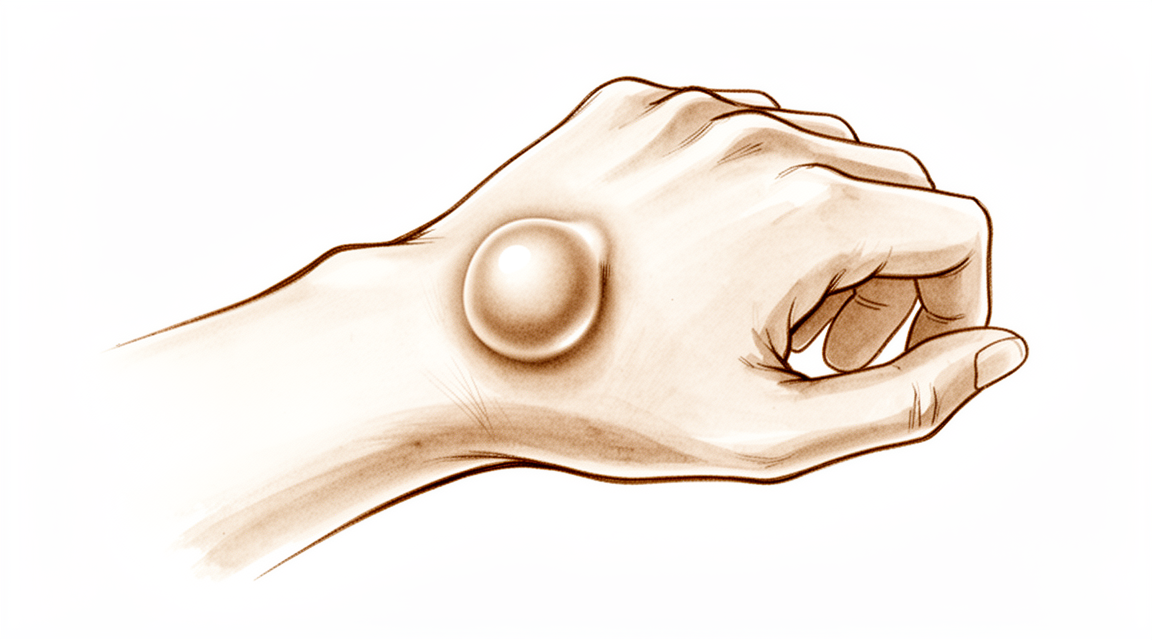
A wrist ganglion is a fluid-filled lump that grows from a wrist joint or tendon. You will usually notice it as a smooth bump on the back of your wrist, directly over the middle of the joint. Some lumps sit on the palm side instead, near the front crease of your wrist. The lump can change in size. It may feel firm and it usually stays in one place.
The lump itself is often the first thing you see, but aching is common too. The pain tends to sit right at the lump and can spread a little into the wrist. It often flares after activity, especially anything that bends the wrist back under load, such as pushing up from a chair, carrying shopping bags, or leaning on your hand to rise from the floor. Rest and splinting may settle it. Some people notice the ache more at night or first thing in the morning.
Daily tasks that need a strong, stable wrist can become awkward. Pressing down with your palm, wringing out a cloth, lifting a heavy kettle, or gripping a tool can all aggravate it. Some lumps press on nearby structures and can cause clicking, catching, or a weak grip.
A few things are worth knowing. Most of these lumps on the back of the wrist shrink or settle on their own over time, and about 40% get smaller over the first 6 years. In children under 10, most lumps on the palm side go away by themselves within 12 to 18 months. Some lumps are small on the surface but reach further into the wrist than they look, which is why we check them carefully before advising anything.
If the lump is painless and not bothering you, watching and waiting is a reasonable choice. If it aches, limits your hand, or keeps you up at night, that is when treatment becomes worth discussing.
What's actually happening
A ganglion is a sac filled with a thick, jelly-like fluid. It grows from the lining of a wrist joint or from a tendon sheath nearby. Think of the joint lining as a soft gasket that seals and cushions the joint. When part of that gasket weakens, fluid can push through and balloon out under the skin, like a small water blister on a garden hose.
The lump is not the whole story. It usually stays connected to the joint by a narrow stalk, a bit like a straw. Fluid moves along that stalk between the joint and the lump, which is why the lump can swell and shrink. On the back of the wrist, the stalk almost always leads to one particular small ligament in the middle of the joint. On the palm side, it usually leads to a joint near the base of the thumb.
That connection explains your symptoms. When you bend your wrist back under load, fluid is squeezed along the stalk and the lump tightens, which is why the ache flares after activity. The lump can also sit close to nerves or blood vessels on the palm side, which can add to the discomfort.
Sometimes the ligament near the stalk is itself irritated or mildly sprained. This can cause a deep ache even when the lump is small. It is worth knowing that a lump on the back of the wrist can occasionally be linked to a small gap or weakness in that ligament, so we assess the whole wrist, not just the bump.
A few other things can look similar. A hard bony bump at the base of the thumb or index knuckle is one. A thickening along a tendon on the back of the wrist is another. These are treated differently, so we confirm what your lump actually is before advising anything.
What we can do about it
Dr Kieran Hirpara, an upper-limb surgeon at Mater Private Hospital Rockhampton, starts with the least invasive options that suit your condition. Patients are generally referred to our clinic by their GP; if a physiotherapist has suggested you see us, you will still need a referral from your GP in order to be eligible for the Medicare rebate. At your first visit we take a history, examine your wrist, and arrange imaging only if it will change what we advise. Many wrist lumps do not need scans at all.
Because these lumps often settle on their own, we usually begin with watching and waiting. Rest, avoiding the movements that flare the ache, and a wrist splint can all help settle symptoms. Hand therapy aims to settle the ache and keep your wrist moving while the lump shrinks or stays the same. Some lumps shrink slowly over years, so we often suggest giving simple measures a fair go before anything more active.
If the lump is painful, draining it with a needle is an option. The fluid is thick and jelly-like, so the lump can come back afterwards. Draining the lump, with or without a cortisone injection around it, works in about 35% to 50% of cases. We discuss this with you and weigh it up together.
Surgery comes into the picture when the ache will not settle, the lump keeps coming back after draining, or it is pressing on something in your wrist. The operation removes the lump and the small stalk connecting it to the joint, which is where the fluid comes from. Some lumps can be treated through keyhole surgery using a tiny camera inside the joint. Others need a small open incision. The operation has its own page, and we will talk you through which approach suits your lump.
Surgery removes the lump more reliably than draining it, but it is not perfect. The lump comes back after surgery in about 10% of cases. As with any operation on the wrist, there are risks including infection, injury to small nerves, and stiffness. We will go through all of this with you before any decision is made, and the choice is always yours.
What to expect
The outlook depends a lot on which treatment path you take. If you leave the lump alone, there is a real chance it settles by itself. Many lumps shrink or disappear over time, and children under 10 with a lump on the palm side do especially well without any treatment at all. Watching and waiting costs you nothing except patience, and some lumps take years to fade.
Draining the lump with a needle is quicker, but the fluid often builds up again. That is why we usually treat it as one step in a longer plan rather than a cure. If the lump keeps returning after draining, surgery becomes the more lasting option.
Surgery gives the most reliable result. Most people are happy with the outcome once the wrist has settled.
Recovery after surgery is usually straightforward. Your wrist will feel sore and a bit stiff at first, and gentle movement is encouraged early, often within the first 2 weeks. Keeping the wrist moving from the start lowers the chance of lasting stiffness. Stiffness is less common after surgery on the palm side than the back of the wrist, but it can happen if you do not keep it moving.
A few things are worth knowing before you decide. Some people are left with a mild ache in the wrist after surgery, and this is more likely if your job or hobbies need you to bend the wrist back under force. Women with pain before surgery are also more likely to have some discomfort afterwards. The scar can be noticeable, and small nerves near the lump can occasionally be irritated. We will talk through all of this with you before any decision is made.
If the lump is not bothering you, leaving it alone is a perfectly reasonable choice. If it aches, limits your hand, or keeps coming back after draining, surgery offers a lasting fix for most people.
When to see someone
Most wrist lumps are not urgent, and many settle on their own. Ask your GP for a specialist review if the lump aches, limits your hand, or keeps coming back after draining. Get your wrist checked sooner if a lump is growing quickly, feels hard and fixed rather than fluid-filled, or sits near a nerve and causes tingling, numbness or weakness in your fingers. A lump that presses on a nerve can sometimes cause lasting irritation, so that is worth sorting out early. Go to an emergency department if you notice sudden colour change, coldness or loss of pulse in your hand, which can point to a problem with a blood vessel. If a child has a lump that has not settled after about 2 months of watching and splinting, or it keeps coming back, ask for a specialist review.
In more depth
Advanced reading: the deeper science (optional)
This section goes further than you need for your own treatment decisions. Wrist ganglia are worth the extra reading because the choice is genuinely between accepting a recurrence risk and accepting an operation, and the numbers behind that trade are clear enough to decide on.
Aspiration recurs; excision does not, as often
The two active treatments are drawing the cyst out with a needle, and removing it surgically along with its stalk. Pooling 2,239 patients, open surgical excision offers a significantly lower chance of recurrence than aspiration. Arthroscopic excision has produced promising results, but comparative trial data are limited and have not demonstrated its superiority [1].
The mechanism explains the difference. A ganglion is not a free-floating sac of fluid; it connects by a stalk to the underlying joint capsule, and the joint keeps producing the fluid. Aspiration empties the reservoir and leaves the source, so refilling is a common outcome rather than a treatment failure. Excision aims to trace and remove the stalk at its origin.
Keyhole and open removal perform alike
Where excision is chosen, the approach has been compared directly. Across 910 patients, arthroscopic and open approaches have comparable outcome profiles for recurrence and complications, with the authors calling for standardised, adequately powered studies [2].
That places the decision on secondary grounds, scar, surgeon familiarity, and whether other intra-articular pathology needs inspecting at the same time, rather than on recurrence risk.
Nobody agrees on what to do afterwards, and it may not matter
A small, honest finding. A systematic review and survey of hand surgeons found them divided on whether to immobilise the wrist after dorsal ganglion excision, and in terms of functional outcome there is no compelling data to suggest one strategy is superior [3].
It is worth knowing that instructions varying between surgeons here reflects genuine equipoise rather than one of them being wrong.
The strongest argument is often for doing nothing
None of the above establishes that a ganglion should be treated. These are benign cysts. They frequently fluctuate in size, and a proportion resolve without any intervention. They do not turn into anything else.
That reframes the decision. The reasons to treat are pain, interference with wrist movement or grip, pressure on a nearby nerve, or a size that genuinely bothers the person, not the existence of the lump. Given that aspiration carries a meaningful recurrence rate and excision carries the risks of an operation on a joint capsule, watchful waiting is a legitimate first position, and one worth stating explicitly rather than treating as a failure to act.
The exception is a ganglion causing nerve symptoms, numbness, weakness, or pain radiating into the hand, where the cyst is compressing a structure that does not tolerate it indefinitely, and watchful waiting is no longer the low-risk option.
References for the advanced reading
- Head L, Gencarelli JR, Allen M, Boyd KU. Wrist ganglion treatment: systematic review and meta-analysis. J Hand Surg Am. 2015;40(3):546-553.e8.
- Crawford C, Keswani A, Lovy AJ, Levy I, Lutz K, Kim J, et al. Arthroscopic versus open excision of dorsal ganglion cysts: a systematic review and meta-analysis. J Hand Surg Eur Vol. 2017;43(6):659-64.
- Wong CR, Karpinski M, Hatchell AC, McRae MH, Murphy J, McRae MC. Immobilization of the wrist after dorsal wrist ganglion excision: a systematic review and survey. Hand (N Y). 2021;18(2):254-63.
Evidence & references
This is the clinical evidence summary written for health professionals. It is technical, and it lists the research this page was built from. You do not need to read it to understand your treatment or to make a decision about it.
Overview
Epidemiology and Natural History
- The dorsal wrist ganglion is the prototype of all hand and wrist ganglions, accounting for 60% to 70% of all hand and wrist ganglions [1].
- The volar wrist ganglion is the second most common ganglion of the hand and wrist, accounting for 18% to 20% of cases [7].
- Pediatric ganglions of the hand have a greater rate of resolution than ganglions of the wrist [2].
- Observation and/or splinting will likely be helpful in the resolution of a majority of pediatric hand and wrist ganglions [17].
- There is no consensus within the literature regarding the best management of pediatric wrist ganglia, and no single treatment modality confers a particular advantage or disadvantage over another [11].
Clinical Characteristics and Diagnosis
- The main cyst of a dorsal wrist ganglion is usually located directly over the scapholunate ligament [1].
- Dorsal wrist ganglions may occur anywhere else between the extensor tendons and can be connected to the scapholunate ligament through an elongated pedicle [1].
- Careful preoperative palpation of a dorsal wrist ganglion with digital compression often reveals its extent and the direction of the pedicle [1].
- Transillumination or aspiration confirms the diagnosis of a dorsal wrist ganglion preoperatively [1].
- Review of preoperative radiographs is recommended to rule out an interosseous component in dorsal wrist ganglions [1].
- The majority of volar wrist ganglions occur either directly over the distal edge of the radius or slightly more distally over the scaphoid tubercle [7].
- Volar wrist ganglions arising from the radiocarpal joint occur under the volar wrist crease between the flexor carpi radialis and abductor pollicis longus tendons [7].
- The main cyst of a volar wrist ganglion may be intertwined with bifurcating branches of the radial artery [7].
- Volar wrist ganglions may appear small clinically but can be surprisingly extensive at surgery, with multiloculated cysts extending under the thenar muscles, along the flexor carpi radialis tendon, into the carpal canal, and under the first extensor compartment [7].
- The Allen test should be performed routinely to assess the patency of the radial and ulnar arteries before volar wrist ganglion surgery [7].
- Routine wrist radiography is not cost-effective in the evaluation and treatment decision-making process for patients with a wrist ganglion due to a low prevalence of therapeutically significant findings [4].
Operative Treatment: Dorsal Wrist Ganglion
- Most dorsal wrist ganglions can be approached through a transverse incision over the proximal carpal row [1].
- A modified incision or second transverse incision may be necessary for dorsal ganglions not directly over the scapholunate ligament [1].
- The diagnosis of ganglion cyst should be made before commitment to a transverse incision because this type of incision is not readily incorporated into a limb-sparing incision in the event of a subsequent diagnosis of a malignant soft tissue tumor [1].
- Failure to identify and excise the pedicle attachment to the scapholunate ligament increases the likelihood of recurrence in dorsal wrist ganglions [1].
- The main cyst and its pedicle are mobilized down to the underlying joint capsule, which is opened along the border of the radius and scaphoid's proximal pole with the wrist in volar flexion [1].
- A small, mucin-filled duct is invariably seen piercing the transverse fibers of the scapholunate ligament, connecting the underlying scapholunate joint with the main cyst [1].
- The ganglion and its capsular attachments are tangentially excised off the scapholunate ligament [1].
- Arthroscopic resection of dorsal wrist ganglions is supported as a treatment option based on outcomes, recurrence, and complication rates over a minimum follow-up of 4 years [16].
- Arthroscopic ganglionectomy through an intrafocal cystic portal is a safe and efficacious option for the treatment of painful wrist ganglia [26].
- Routine midcarpal joint exploration during arthroscopic excision of dorsal wrist ganglions appeared to reduce recurrence at 1 year without negatively impacting patient outcomes [9].
- The ideal working portal for arthroscopic excision of a dorsal wrist ganglion is the 3-4 portal with visualization from the 4-5 or 6R portals [21].
Operative Treatment: Volar Wrist Ganglion
- The surgical technique for excision of a volar ganglion is similar to that for a dorsal ganglion, but exposure and precise identification of the capsular attachments are more difficult [7].
- Longitudinal incisions allow for optimal visualization during volar wrist ganglion excision [7].
- The radial artery is frequently intimately attached to the wall of a volar ganglion and may even be completely encircled by the ganglion [7].
- Loupe magnification aids in the dissection of the radial artery from a volar ganglion [7].
- The pedicle of a volar ganglion is traced to the volar joint capsule, usually the scaphotrapezial or radiocarpal ligament [7].
- The incision for volar wrist ganglion excision must be planned to allow for extension into the carpal tunnel or base of the thenar muscles [7].
- Arthroscopic resection of radiocarpal volar ganglia is a reasonable alternative to open excision with decreased postoperative morbidity, easy technique, and high rate of good results [31].
- Sonography-assisted arthroscopic resection is safer and more reliable for treating volar wrist ganglia [6].
- The best indication for arthroscopic volar wrist ganglionotomy is a sessile type of volar wrist ganglion arising from the radiocarpal joint and centered on the proximal wrist crease [10].
- Mobile ganglia with long pedicles are poor candidates for arthroscopic surgery of the volar wrist [10].
- Preoperative ultrasound scanning helps to confirm the articular origin and nature of a volar wrist ganglion cystic mass [10].
- An intraoperative arthrogram can identify the stalk of a volar ganglion arising from the radiocarpal joint, with absence of demonstrable contrast filling the stalk precluding the use of the arthroscopic technique [10].
- Ganglia arising from the midcarpal joint or scaphotrapezial (STT) joint will not be revealed by an arthrogram of the radiocarpal joint unless an interosseous ligament at the proximal carpal row is ruptured [10].
- The radioscaphocapitate and long radiolunate ligament interval may be the site of origin for the volar wrist ganglion [21].
Outcomes and Complications
- Surgical excision of primary wrist ganglia significantly reduces patient symptoms with low recurrence rates and high patient satisfaction [12].
- Open surgical excision offers a significantly lower chance of recurrence compared with aspiration in the treatment of wrist ganglions [32].
- Female patients who have preoperative pain around dorsal wrist ganglia were the most likely to have residual pain after surgery [3].
- Unexpected branches of the radial sensory or lateral antebrachial cutaneous nerves may be injured during volar wrist ganglion excision, leading to troublesome neuromas [7].
- Extensions of the routine incision into the carpal canal must avoid injury to the palmar cutaneous branch of the median nerve during volar wrist ganglion excision [7].
- Injuries to the radial artery during volar wrist ganglion excision can be repaired microscopically [7].
- Some authors recommend leaving a portion of the cyst wall attached to the radial artery to avoid arterial injury during volar wrist ganglion excision [7].
- Stiffness of the wrist is less common with volar ganglions than with dorsal ganglions, but it can occur if early motion is not encouraged [7].
- Curved incisions appear to consistently provide more attractive scars, especially near the volar wrist creases [7].
- Wrist arthroscopy is typically safe, with minor and transient complications [21].
- Nerve injury during wrist arthroscopy is related to portal placement or suture of the TFCC and typically affects the dorsal sensory branch of the radial or ulnar nerve [21].
- The superficial branch of the radial nerve averages 16 mm (5 to 22 mm) from the 3-4 portal [21].
- The dorsal sensory branch of the ulnar nerve averages 8 mm (0 to 14 mm) from the 6R portal [21].
- The 1-2 portal carries a high risk of injury to the superficial branch of the radial nerve [21].
- The 6U portal carries a high risk of injury to the dorsal sensory branch of the ulnar nerve [21].
Anatomy & Pathophysiology
Dorsal Wrist Ganglion
- The dorsal wrist ganglion accounts for 60% to 70% of all hand and wrist ganglions [1].
- Dorsal wrist ganglions may occur anywhere else between the extensor tendons, connected to the scapholunate ligament through an elongated pedicle [1].
- Failure to identify and excise the pedicle attachment to the scapholunate ligament increases the likelihood of recurrence [1].
- Dorsal wrist ganglions can be confused with carpal bosses, which are osteoarthritic spurs or prominences that develop at the base of the second or third carpometacarpal joints [18].
- A small ganglion is associated with a carpal boss in 30% of cases [18].
- Arthroscopic assessment found abnormalities in the scapholunate joint in 10 of 16 wrists with painful dorsal ganglia [78].
- In most cases of dorsal wrist ganglion, there is a mild chronic sprain of the scapholunate ligament which does not give rise to well-recognised radiological and clinical features associated with scapholunate instability [78].
Volar Wrist Ganglion
- The majority of volar ganglions occur either directly over the distal edge of the radius or slightly more distally over the scaphoid tubercle [7].
- Volar ganglions arising from the distal edge of the radius arise from the capsular and ligamentous fibers of the radiocarpal joint and occur under the volar wrist crease between the flexor carpi radialis and abductor pollicis longus tendons [7].
- Volar ganglions arising from the scaphoid tubercle arise from the capsule of the scaphotrapezial joint [7].
- The main cyst of a volar ganglion may be intertwined with bifurcating branches of the radial artery [7].
- Volar ganglions can be multiloculated, extending under the thenar muscles, along the flexor carpi radialis tendon, into the carpal canal, and under the first extensor compartment [7].
- Ganglia arising from the interval between the radioscapocapitate (RSC) and long radiolunate ligament (LRL) appear at the more lateral aspect of the distal radius on arthrogram [10].
- Ganglia arising from the interval between the long radiolunate ligament (LRL) and short radiolunate ligament (SRL) appear at a more central position of the distal radius on arthrogram [10].
- Ganglia arising from the midcarpal or scaphotrapezial (STT) joint will not be revealed by an arthrogram of the radiocarpal joint unless an interosseous ligament at the proximal carpal row is ruptured [10].
General Pathophysiology & Anatomy
- The articular (synovial) theory has gained worldwide acceptance as a scientifically proven explanation for the formation of ganglions [22].
- Intraneural ganglions of the hand and wrist are rare, with the ulnar nerve being the most commonly involved nerve in the upper extremity [22].
- The wrist is an anatomic region between the forearm and the hand, including the distal radioulnar, radiocarpal, and ulnocarpal joints and the eight carpal bones [37].
- The carpus comprises eight ossicles separated into a proximal row (scaphoid, lunate, triquetrum, pisiform) and a distal row (trapezium, trapezoid, capitate, hamate) [39].
- The scapholunate interosseous ligament is C-shaped in the sagittal plane, with the dorsal third being the thickest and strongest portion [39].
- The triangular fibrocartilage complex (TFCC) is formed by the central meniscus homolog, dorsal and volar radioulnar ligaments, the floor of the extensor carpi ulnaris tendon sheath, and volar ulnocarpal ligaments [39].
- The terminal branches of the radial, ulnar, and anterior interosseous arteries provide extraosseous blood supply to the carpus through three dorsal and three palmar transverse arterial arches [41].
- The dorsal radiocarpal ligament originates at the dorsal lip of the distal radius adjacent to Lister's tubercle and inserts into the lunate and triquetrum [39].
- The proximal carpal row has no muscular or tendinous attachments and functions as an intercalary segment [39].
Classification
Anatomical Location and Prevalence
- Dorsal wrist ganglions typically appear between the extensor pollicis longus and extensor digitorum communis tendons [1].
- In a cohort of 543 ganglions, 57% occurred over the dorsal aspect of the wrist [77].
- In a cohort of 543 ganglions, 17% occurred over the volar aspect of the wrist [77].
- In a cohort of 543 ganglions, 26% occurred on the fingers [77].
- In a cohort of 543 ganglions, 7% were mucous cysts [77].
- Ganglions in pediatric populations most commonly affect the dorsal wrist [14].
- In children aged <10 years, ganglions mainly occur on the volar wrist [8].
Demographics
- In a cohort of 543 ganglions, there were 363 females and 180 males, an almost 2 to 1 ratio [77].
- In a cohort of 543 ganglions, 80% of patients were between twenty and fifty years of age [77].
- Ganglions in pediatric populations demonstrate a female predilection [14].
- Most patients with intraneural ganglions are aged 30 to 50 years [22].
- The incidence of dorsal wrist ganglia was higher in the military compared with the civilian population [13].
Size and Duration
- In a cohort of 543 ganglions, 90% were less than two centimeters in diameter [77].
- In a cohort of 543 ganglions, 50% were between 0.5 and 2.0 centimeters in diameter [77].
- In a cohort of 543 ganglions, the majority had been present for less than two years [77].
- In a cohort of 543 ganglions, 150 had been present for less than three months [77].
- In a cohort of 543 ganglions, 99 had been present for more than five years [77].
Clinical Presentation
- Only one-fourth of patients in a cohort of 543 ganglions complained of pain when first seen [77].
- All patients in a cohort of 543 ganglions complained of a mass or lump in an extremity [77].
- Specific injury related to the onset of ganglion occurred in only fifty patients in a cohort of 543 [77].
- Most patients with intraneural ganglions present with a painless mass [22].
- Some patients with intraneural ganglions present with symptoms of nerve irritation or entrapment neuropathy [22].
Subtypes and Variants
- Intraneural ganglions of the hand and wrist are rare [22].
- The ulnar nerve is the most commonly involved nerve in intraneural ganglions of the upper extremity [22].
- The development of a trigger wrist is atypical, with multiple causes for its development [24].
Clinical Presentation
Dorsal Wrist Ganglion
- MRI scans provide relatively good reliability in establishing the diagnosis of an occult dorsal wrist ganglion, with a sensitivity of 83% when using intra-operative findings as the standard [15].
Volar Wrist Ganglion
- Volar ganglions arising from the radiocarpal joint occur under the volar wrist crease between the flexor carpi radialis and abductor pollicis longus tendons [7].
- Although volar ganglions may appear small clinically, they can be surprisingly extensive at surgery, potentially extending under the thenar muscles, along the flexor carpi radialis tendon, into the carpal canal, and under the first extensor compartment [7].
- Extensions of volar ganglions can often be appreciated preoperatively by careful palpation and digital compression [7].
- The Allen test should be performed routinely to assess the patency of the radial and ulnar arteries in patients with volar wrist ganglions [7].
Pediatric Ganglions
- In children aged <10 years, 69% to 79% of volar wrist ganglions display spontaneous regression within a span of 12-18 months [8].
- Ganglions in pediatric populations most commonly affect the dorsal wrist and demonstrate a female predilection [14].
- In a child with a wrist ganglion, if the cyst ultimately resolved, it usually did so within 18 months [29].
General Clinical Features and Diagnosis
- Most patients with intraneural ganglions are aged 30 to 50 years, though occurrence in children has also been reported [22].
- Most patients with intraneural ganglions present with a painless mass, while some may present with symptoms of nerve irritation or entrapment neuropathy [22].
- The ulnar nerve is the most commonly involved nerve in the upper extremity for intraneural ganglions [22].
- In patients with a clinical diagnosis of wrist ganglion cyst, the prevalence of a concordant pathological diagnosis is 98.6% [45].
- The prevalence of a discrepant pathological diagnosis in wrist ganglion specimens is 1.4%, and the prevalence of a discordant diagnosis is zero [45].
Investigations
Clinical Examination and Physical Diagnosis
- Careful preoperative palpation of a dorsal wrist ganglion with digital compression often reveals the extent of the cyst and the direction of the pedicle [1].
- A firm, bony, nonmobile, tender mass visible and palpable at the base of the carpometacarpal joints, especially when the wrist is flexed, is characteristic of a carpal boss [18].
- Sonography can localize occult ganglia [68].
Radiography
- Review of preoperative radiographs is wise to rule out an interosseous component in dorsal wrist ganglions [1].
- A carpal boss mass is best visualized radiologically with the hand in 30 to 40 degrees of supination and 20 to 30 degrees of ulnar deviation [18].
Magnetic Resonance Imaging (MRI)
- MRI is an excellent diagnostic modality to evaluate rapidly growing upper extremity masses and distinguish ganglions from malignant processes [54].
- Convolutional neural networks (CNNs) can detect ganglion cysts in wrist MRI [66].
- A lipoma or a ganglion can be clearly differentiated from dense tumors using CT scan, though it is difficult to be sure whether the tumor is benign or malignant [70].
Arthrography
- A wrist arthrogram can be performed immediately prior to arthroscopic intervention or as a separate investigative procedure for volar wrist ganglions [10].
- Intraoperative arthrogram of a ganglion arising from the radiocarpal joint involves injecting 3 to 5 cc of nonionic contrast solution admixed with 2% lidocaine into the radiocarpal joint at the 3-4 portal site under fluoroscopic guidance [10].
- Absence of demonstrable contrast filling the stalk with communication from the radiocarpal joint may preclude the use of arthroscopic volar wrist ganglionotomy [10].
- Ganglia arising from the interval between the RSC and LRL ligaments show up at the more lateral aspect of the distal radius on arthrogram, while those arising from the interval between the LRL and SRL ligaments show up at a more central position [10].
- Ganglia arising from the midcarpal joint or STT joint will not be revealed by arthrogram of the radiocarpal joint unless an interosseous ligament at the proximal carpal row is ruptured and creates free communication between the radiocarpal and midcarpal joints [10].
Treatment
Non-Operative Management
- The spontaneous resolution rate for wrist ganglia is reported to be between 28% and 58% [50].
- Aspiration, with or without cortisone injection, has an average success rate of 35% to 50% [50].
- In children aged <10 years, ganglions mainly occur on the volar wrist and can be treated expectantly, with 69% to 79% displaying spontaneous regression within a span of 12-18 months [8].
- Surgical excision is indicated for pediatric ganglions that are symptomatic, do not resolve after approximately 2 months of observation and/or splinting, or recur [17].
- Aspiration with triamcinolone acetonide injection plus wrist immobilization is an alternative method, but surgery was the most successful form of treatment when considering the cure rate of dorsal wrist ganglion [46].
- Open surgical excision offers significantly lower chance of recurrence compared with aspiration in the treatment of wrist ganglions [32].
- It is important to ascertain the precise concerns of patients with ganglia and not assume that they attend the hand clinic with symptoms which justify surgical excision [33].
Operative Management: Dorsal Wrist Ganglion
- Failure to identify the pedicle and excise its attachment to the scapholunate ligament increases the likelihood of recurrence [1].
- Careful preoperative palpation of the cyst with digital compression often reveals its extent and the direction of the pedicle [1].
- Transillumination or aspiration confirms the diagnosis preoperatively [1].
- Review of the patient's preoperative radiographs to rule out an interosseous component is wise [1].
- The study concludes that routinely performing wrist radiography is not cost-effective in the evaluation and treatment decision-making process for patients with a wrist ganglion due to a low prevalence of therapeutically significant findings [4].
- Most dorsal ganglions can be approached through a transverse incision over the proximal carpal row [1].
- A modified incision or second transverse incision may be necessary for ganglions not directly over the scapholunate ligament [1].
- Typically, a dorsal ganglion appears between the extensor pollicis longus and extensor digitorum communis tendons, which are retracted radially and ulnarly, respectively [1].
- The main cyst and its pedicle are mobilized down to the underlying joint capsule [1].
- With the wrist in volar flexion, the joint capsule is opened along the border of the radius and scaphoid's proximal pole [1].
- The capsule is elevated and retracted distally to expose the capsular attachments to the scapholunate ligament [1].
- Smaller intraarticular cysts are often seen attached to the scapholunate ligament [1].
- The capsular incision is continued around the ganglion, but all capsular attachments to the ligament are left intact [1].
- The capsular incision is extended more laterally if any capsular ducts, which can be identified by small amounts of mucin drainage, are encountered during the dissection [1].
- The ganglion and its capsular attachments are then tangentially excised off the scapholunate ligament [1].
- A small, mucin-filled duct is invariably seen piercing the transverse fibers of the scapholunate ligament [1].
- This duct appears to connect the underlying scapholunate joint with the main cyst [1].
- Synovial and capsular attachments along the distal margin of the scapholunate ligament are also excised to give an unobstructed view of the head and neck of the capitate [1].
- If the ganglion ruptures and its anatomic features are lost during the dissection, it should [1].
- The outcomes, recurrence, and complications rates after 4 years of follow-up presented in this study support the use of arthroscopy as a treatment for dorsal wrist ganglion [16].
- Nine of 54 (16.7%) arthroscopic excisions resulted in cyst recurrence, while 8 of 118 (6.8%) open excisions resulted in cyst recurrence (P = .044) [19].
- Two of 9 (22%) recurrences after arthroscopic ganglion excision versus 2 of 8 (25%) recurrences after open ganglion excision underwent repeat surgical intervention [19].
- Time to recurrence, as well as final follow-up, was not statistically different between groups in the comparison of arthroscopic and open excision [19].
- The proposed classification of ganglia helps minimize the area of resection required [25].
- Recurrence of the wrist ganglion cyst occurred in five patients (9%) in a cohort of 53 patients undergoing arthroscopic resection [58].
- PRWE scores were significantly higher in patients with a recurrence (30 vs. 12, p = 0.002) [58].
- Patients initially presenting with a new ganglion cyst had fewer recurrences at final follow-up compared with patients initially presenting with recurrence (4 vs. 15%, respectively) [58].
- Three of the 53 patients (6%) had a complication in the arthroscopic resection cohort [58].
- One patient experienced neuropraxia of the radial superficial nerve, which resolved spontaneously [58].
- One patient developed extensor carpi ulnaris (ECU) tendinitis which was successfully treated with splinting [58].
- One patient experienced painful scar tissue, which was successfully removed surgically [58].
- Three of the five recurrences occurred among the first five patients operated on, whereas two recurrences occurred later in the series [58].
- The systematic review and survey of Canadian hand surgeons reveal that hand surgeons are divided regarding the need to immobilize the wrist after dorsal wrist ganglion excision [60].
- Patients are seen in the office approximately 5 to 7 days after arthroscopic surgery, at which time the dressing and splint are taken down and the incisions are inspected [61].
- Sutures are typically removed at the first postoperative visit [61].
- Patients are then allowed to begin active and passive wrist motion, and no further splinting is used [61].
- The patients have no restrictions in terms of activity or weight lifting after arthroscopic ganglion excision [61].
- The patients are seen back at 4 to 8 weeks postoperatively for a repeat clinical evaluation [61].
- Recurrence rates following arthroscopic excision of dorsal ganglions have been reported from 0% to 17% [61].
- In a study of 18 patients undergoing arthroscopic excision of dorsal ganglions, the stalk could be identified in 61% of the cases, and the reported number of recurrences at an average of 16 months was 0 [61].
- In a study of 30 patients, the ability to identify the stalk was 79% of cases, and 2 of the patients had a recurrence at the final follow-up [61].
- Edwards and Johansen reported a 0% recurrence in their study of 45 patients and were able to identify the stalk in only 16% of the cases [61].
Operative Management: Volar Wrist Ganglion
- The volar wrist ganglion is the second most common ganglion of the hand and wrist, accounting for 18% to 20% [7].
- The main cyst may be intertwined with bifurcating branches of the radial artery, thus making delicate dissection imperative [7].
- Another type of volar ganglion arises from the capsule of the scaphotrapezial joint [7].
- Although volar ganglions may appear small clinically, they can be surprisingly extensive at surgery [7].
- Multiloculated cysts extending under the thenar muscles, along the flexor carpi radialis tendon, into the carpal canal, and under the first extensor compartment adjacent to the dorsal branch of the radial artery and as far dorsally as the first web space may be encountered [7].
- These extensions can often be appreciated preoperatively by careful palpation and digital compression of the ganglion [7].
- It is important to assess the patency of the radial and ulnar arteries [7].
- The Allen test should be performed routinely and ulnar artery occlusion excluded [7].
- The surgeon must be aware of the importance of preserving the radial artery, particularly in patients with a radial-dominant circulation [7].
- The surgical technique of excision of a volar ganglion is similar to that for a dorsal ganglion, but exposure and precise identification of the capsular attachments of a volar ganglion are more difficult [7].
- The incision must be planned to allow for extension into the carpal tunnel or base of the thenar muscles [7].
- Longitudinal incisions allow for optimal visualization [7].
- With the skin flaps retracted, the forearm fascia is incised longitudinally and the dome of the cyst identified and mobilized [7].
- Particular care should be taken to identify and protect the radial artery, which is frequently intimately attached to the wall of the ganglion and may even be completely encircled by the ganglion [7].
- Loupe magnification aids in this dissection [7].
- The pedicle is traced to the volar joint capsule (usually the scaphotrapezial or radiocarpal ligament) [7].
- The joint is opened and explored and the ganglion attachments are excised (approximately 3 ± 4 mm) [7].
- Once the ganglion has been excised, the surrounding tissues can be compressed digitally to rule out further mucin-filled pockets [7].
- If unidentified extensions are present, they must be excised [7].
- Hemostasis, wound lavage, and a simple skin closure (preferably subcuticular) complete the operation [7].
- Capsular closure is unnecessary and only delays early mobilization [7].
- A bulky bandage and elevation of the hand ensure early postoperative comfort [7].
- Motion of the wrist should begin within the first 2 weeks after surgery [7].
- Unexpected branches of the radial sensory or lateral antebrachial cutaneous nerves may be injured and lead to troublesome neuromas [7].
- Extensions of the routine incision into the carpal canal must avoid injury to the palmar cutaneous branch of the median nerve [7].
- Injuries to the radial artery can be repaired microscopically [7].
- Some authors recommend leaving a portion of the cyst wall attached to the artery to avoid arterial injury [7].
- Stiffness of the wrist is less common than with dorsal ganglions, but it can occur if early motion is not encouraged [7].
- Unpleasant scars are not an uncommon problem [7].
- The best indication for arthroscopic treatment of volar wrist ganglion is sessile type of volar wrist ganglion arising from the radiocarpal joint and centered on the proximal wrist crease [10].
- Mobile ganglia with long pedicle are poor candidates for arthroscopic surgery [10].
- Preoperative ultrasound scanning helps to confirm the articular origin and nature of the cystic mass [10].
- Arthroscopic drainage of a ganglion from the STT joint is feasible with the addition of new portals [10].
- The author prefers to perform arthroscopic volar wrist ganglionotomy under PSLA without the use of a tourniquet as this can help monitor any possible iatrogenic damage to the radial artery and its branches during the surgery [10].
- A wrist arthrogram can be performed immediately prior to the arthroscopic intervention or as a separate investigative procedure [10].
- The use of an intraoperative arthrogram of a ganglion as arising from the radiocarpal joint is described [10].
- Absence of demonstrable contrast filling the stalk with communication from the radiocarpal joint may preclude the use of the technique [10].
- 3 to 5 cc of nonionic contrast solution is admixed with 2% lidocaine and injected into the radiocarpal joint at the 3-4 portal site under fluoroscopic guidance [10].
- Typically, the stalk of the ganglion, and occasionally the cyst itself, can be identified at one of the volar radiocarpal ligament intervals [10].
- Ganglia arising from the interval between the RSC and the LRL ligament will show up at the more lateral aspect of the distal radius [10].
- Ganglia arising from the interval between the LRL and SRL ligaments will show up at a more central position of the distal radius [10].
- The relative position of the contrast-filling stalk can aid the identification of the true stalk during the actual arthroscopic procedure and hence facilitate subsequent decompression [10].
- As a rule, ganglia arising from the midcarpal joint or STT joint will not be revealed by arthrogram of the radiocarpal joint, unless one of the interosseous ligaments at the proximal carpal row is ruptured and creates a free communication between the radiocarpal and the midcarpal joint [10].
- For a right-handed surgeon operating on the right wrist, the scope entry site is typically 1-2, and working portal is 3-4 [10].
- For the left wrist, the sites are reversed [10].
- The outflow portal is 6U [10].
- Routine diagnostic arthroscopic examination of the radiocarpal joint is performed, followed by localization of the ganglion [10].
- This method is safer and more reliable for treating volar wrist ganglia [6].
- The arthroscopic resection of radiocarpal volar ganglia is a reasonable alternative to open excision with decreased postoperative morbidity, easy technique, and high rate of good results [31].
Other Locations and Considerations
- Dorsal wrist ganglions can be confused with carpal bosses, which are osteoarthritic spurs or prominences that develop at the base of the second or third carpometacarpal joints (or both) [18].
- A firm, bony, nonmobile, tender mass is visible and palpable at the base of the carpometacarpal joints, especially when the wrist is flexed [18].
- Radiologically, the mass is best visualized with the hand in 30 to 40 degrees of supination and 20 to 30 degrees of ulnar deviation (“carpal boss view”) [18].
- Bosses are more common in women, in the right hand, and between the third and fourth decades [18].
- The mass may be asymptomatic, or the patient may complain of considerable pain and aching [18].
- Every effort should be made to treat the carpal boss nonoperatively [18].
- Splinting, nonsteroidal antiinflammatory medications, and ultrasound-guided cortisone injections should be used or strongly considered prior to proceeding with surgery for carpal boss [18].
- The potential for persistent symptoms following surgery for carpal boss must be emphasized [18].
Complications
Recurrence
- Failure to identify and excise the pedicle attachment to the scapholunate ligament increases the likelihood of recurrence for dorsal wrist ganglions [1].
- Nine of 54 (16.7%) arthroscopic excisions resulted in cyst recurrence [19].
- Eight of 118 (6.8%) open excisions resulted in cyst recurrence [19].
- Routine midcarpal joint exploration during arthroscopic excision of dorsal wrist ganglions appeared to reduce recurrence at 1 year [9].
Nerve Injury
- Nerve injury in wrist arthroscopy typically affects the dorsal sensory branch of the radial or ulnar nerve and is related to portal placement or suture of the TFCC [21].
Vascular Injury
- The radial artery is frequently intimately attached to the wall of a volar ganglion and may be completely encircled by it [7].
- Injuries to the radial artery during volar ganglion excision can be repaired microscopically [7].
- Some authors recommend leaving a portion of the cyst wall attached to the radial artery to avoid arterial injury [7].
Pain and Stiffness
- Wrist stiffness is less common with volar ganglions than with dorsal ganglions but can occur if early motion is not encouraged [7].
- Wrist stiffness is an uncommon complication of wrist arthroscopy of uncertain etiology [21].
Other Complications
- Infection is an uncommon complication of wrist arthroscopy [21].
- ECU tendinitis may be related to portal placement or the suture knot after TFCC repair in wrist arthroscopy [21].
- Improper portal placement in wrist arthroscopy may result in tendon injury [21].
- Metacarpophalangeal joint pain caused by overdistraction is a transient complication of wrist arthroscopy [21].
- Unpleasant scars are not an uncommon problem following volar wrist ganglion excision [7].
Recovery
- Wrist motion should begin within the first 2 weeks after volar wrist ganglion excision surgery [7].
- A bulky bandage and elevation of the hand are used to ensure early postoperative comfort following volar wrist ganglion excision [7].
- Stiffness of the wrist is less common after volar wrist ganglion excision than after dorsal ganglion excision, but it can occur if early motion is not encouraged [7].
- In children aged <10 years, 69% to 79% of volar wrist ganglions display spontaneous regression within a span of 12-18 months when treated expectantly [8].
- Postoperative recovery of the wrist was rapid following an unusual carpometacpal fracture-dislocation, though extension of the fingers remained poor for over 3 months [35].
Key Evidence
- [L4] Pediatric ganglions of the hand have a greater rate of resolution than ganglions of the wrist. [2] (10.1016/j.jhsa.2023.07.002)
- [L4] Female patients who have preoperative pain around dorsal wrist ganglia were the most likely to have residual pain after surgery. [3] (10.1016/j.arthro.2013.04.002)
- [L4] The study concludes that routinely performing wrist radiography is not cost-effective in the evaluation and treatment decision-making process for patients with a wrist ganglion due to a low prevalence of therapeutically significant findings. [4] (10.1007/s11552-007-9032-8)
- [Paper] This method is safer and more reliable for treating volar wrist ganglia. [6] (10.1016/j.eats.2011.12.007)
- [L4] In children aged <10 years, ganglions mainly occur on the volar wrist and can be treated expectantly, with 69% to 79% displaying spontaneous regression within a span of 12-18 months. [8] (10.1016/j.jhsa.2021.12.015)
- [L3] Routine midcarpal joint exploration during arthroscopic excision of dorsal wrist ganglions appeared to reduce recurrence at 1 year without negatively impacting patient outcomes. [9] (10.1177/17531934251405730)
- [L4] There is no consensus within the literature regarding the best management of pediatric wrist ganglia, and no single treatment modality confers a particular advantage or disadvantage over another. [11] (10.1177/1558944720966716)
- [L4] Surgical excision of primary wrist ganglia significantly reduces patient symptoms with low recurrence rates and high patient satisfaction. [12] (10.1177/1753193411434376)
- [L3] The incidence of dorsal wrist ganglia was higher in the military compared with the civilian population. [13] (10.1016/j.jhsg.2020.08.001)
- [L2] Ganglions in pediatric populations, which most commonly affect the dorsal wrist, demonstrate a female predilection. [14] (10.1016/j.jhsa.2021.02.026)
- [L3] MRI scans provide relatively good reliability in establishing the diagnosis of an occult dorsal wrist ganglion, with a sensitivity of 83% when using intra-operative findings as the standard. [15] (10.1177/1753193408092041)
- [L4] The outcomes, recurrence, and complications rates after 4 years of follow-up presented in this study support the use of arthroscopy as a treatment for dorsal wrist ganglion. [16] (10.1177/1558944717743601)
- [L4] While observation and/or splinting will likely be helpful in resolution of a majority of pediatric hand and wrist ganglions, surgical excision is indicated for those that are symptomatic, do not resolve after approximately 2 months of observation and/or splinting, or recur. [17] (10.1007/s11552-008-9122-2)
- [L3] [19] (10.1177/15589447211003184)
- [L4] [22] (10.1016/j.jhsa.2015.05.025)
- [L5] The development of a trigger wrist is atypical, with multiple causes for its development. [24] (10.1177/15589447241284303)
- [L4] The proposed classification of ganglia helps minimize the area of resection required. [25] (10.1054/jhsb.2001.0620)
- [L4] Arthroscopic ganglionectomy through an intrafocal cystic portal is a safe and efficacious option for the treatment of painful wrist ganglia. [26] (10.1016/j.arthro.2009.08.021)
- [L4] In a child with a wrist ganglion, if the cyst ultimately resolved, it usually did so within 18 months. [29] (10.1016/j.jhsa.2019.10.032)
- [L1] The arthroscopic resection of radiocarpal volar ganglia is a reasonable alternative to open excision with decreased postoperative morbidity, easy technique, and high rate of good results. [31] (10.1080/02844310802210897)
- [L1] Open surgical excision offers significantly lower chance of recurrence compared with aspiration in the treatment of wrist ganglions. [32] (10.1016/j.jhsa.2014.12.014)
- [L4] It is important to ascertain the precise concerns of patients with ganglia and not assume that they attend the hand clinic with symptoms which justify surgical excision. [33] (10.1054/jhsb.2000.0504)
- [L5] Postoperatively recovery of the wrist was rapid, though extension of the fingers remained poor for over 3 months. [35] (10.1016/0020-1383(94)90161-9)
- [L3] [45] (10.1016/j.jhsa.2010.03.021)
- [Paper] Although aspiration with triamcinolone acetonide injection plus wrist immobilization is an alternative method, surgery was the most successful form of treatment when considering the cure rate of dorsal wrist ganglion. [46] (10.1007/s12593-011-0039-6)
- [L4] [50] (10.1016/s0749-0712(21)00020-2)
- [L4] MRI is an excellent diagnostic modality to evaluate rapidly growing upper extremity masses and distinguish ganglions from malignant processes. [54] (10.1007/s11552-007-9083-x)
- [L4] [58] (10.1055/s-0040-1716509)
- [L2] The systematic review and survey of Canadian hand surgeons reveal that hand surgeons are divided regarding the need to immobilize the wrist after dorsal wrist ganglion excision. [60] (10.1177/15589447211014631)
- [L4] [61] (10.1016/j.hcl.2013.08.020)
- [L4] CNNs can detect ganglion cysts in wrist MRI. [66] (10.1186/s12891-025-09011-1)
- [L4] [77] (10.2106/00004623-197254070-00009)
- [L4] [78] (10.1080/028443101750523267)
References
[1] Green S Operative Hand Surgery. BOX 59.1 Ganglions of the Hand and Wrist > Operative Treatment > Dorsal Wrist Ganglion.
[2] Natural History of Pediatric Hand and Wrist Ganglion Cysts: Longitudinal Follow-Up of a Prospective, Dual-Center Cohort. The Journal of Hand Surgery. 2023. DOI: 10.1016/j.jhsa.2023.07.002
[3] Arthroscopic Excision of Dorsal Wrist Ganglion: Factors Related to Recurrence and Postoperative Residual Pain. Arthroscopy. 2013. DOI: 10.1016/j.arthro.2013.04.002
[4] The Use of Routine Wrist Radiography is Not Useful in the Evaluation of Patients with a Ganglion Cyst of the Wrist. HAND. 2007. DOI: 10.1007/s11552-007-9032-8
[6] Sonography‐Assisted Arthroscopic Resection of Volar Wrist Ganglia: A New Technique. Arthroscopy Techniques. 2012. DOI: 10.1016/j.eats.2011.12.007
[7] Green S Operative Hand Surgery. BOX 59.1 Ganglions of the Hand and Wrist > Operative Treatment > Volar Wrist Ganglion.
[8] Pediatric Ganglions of the Hand and Wrist: A Review of Current Literature. The Journal of Hand Surgery. 2022. DOI: 10.1016/j.jhsa.2021.12.015
[9] Arthroscopic resection of dorsal wrist ganglions with or without midcarpal exploration. Journal of Hand Surgery (European Volume). 2025. DOI: 10.1177/17531934251405730
[10] Green S Operative Hand Surgery. AUTHOR'S PREFERRED METHOD OF TREATMENT: ARTHROSCOPIC PARTIAL WRIST FUSION > Volar Wrist Ganglion.
[11] Wrist Ganglion Cysts in Children: An Update and Review of the Literature. HAND. 2020. DOI: 10.1177/1558944720966716
[12] Patient outcomes following wrist ganglion excision surgery. Journal of Hand Surgery (European Volume). 2012. DOI: 10.1177/1753193411434376
[13] Epidemiology of Symptomatic Dorsal Wrist Ganglia in Active Duty Military and Civilian Populations. Journal of Hand Surgery Global Online. 2020. DOI: 10.1016/j.jhsg.2020.08.001
[14] Clinical Presentation and Characteristics of Hand and Wrist Ganglion Cysts in Children. The Journal of Hand Surgery. 2021. DOI: 10.1016/j.jhsa.2021.02.026
[15] Magnetic Resonance Imaging in the Diagnosis of Occult Dorsal Wrist Ganglions. Journal of Hand Surgery (European Volume). 2008. DOI: 10.1177/1753193408092041
[16] Arthroscopic Resection of Dorsal Wrist Ganglion: Results and Rate of Recurrence Over a Minimum Follow-up of 4 Years. HAND. 2017. DOI: 10.1177/1558944717743601
[17] Pediatric Ganglion Cysts of the Hand and Wrist: An Epidemiologic Analysis. HAND. 2008. DOI: 10.1007/s11552-008-9122-2
[18] Green S Operative Hand Surgery. BOX 59.1 Ganglions of the Hand and Wrist > Carpmetacarpal Boss.
[19] Recurrence Rates of Dorsal Wrist Ganglion Cysts After Arthroscopic Versus Open Surgical Excision: A Retrospective Comparison. HAND. 2021. DOI: 10.1177/15589447211003184
[21] Aaos Comprehensive Orthopaedic Review 3. Wrist Arthroscopy > V. Complications.
[22] Intraneural Ganglions of the Hand and Wrist. The Journal of Hand Surgery. 2015. DOI: 10.1016/j.jhsa.2015.05.025
[24] Rupture of the Fibro-Osseous Septum of the Second Extensor Compartment as the Cause of True Dorsal Trigger Wrist: Case Report. HAND. 2024. DOI: 10.1177/15589447241284303
[25] Arthroscopic Diagnosis and Treatment of Dorsal Wrist Ganglion. Journal of Hand Surgery. 2001. DOI: 10.1054/jhsb.2001.0620
[26] Arthroscopic Ganglionectomy Through an Intrafocal Cystic Portal for Wrist Ganglia. Arthroscopy. 2010. DOI: 10.1016/j.arthro.2009.08.021
[29] Wrist Ganglia in Children: Nonsurgical Versus Surgical Treatment. The Journal of Hand Surgery. 2020. DOI: 10.1016/j.jhsa.2019.10.032
[31] Articular ganglia of the volar aspect of the wrist: Arthroscopic resection compared with open excision. A prospective randomised study. Scandinavian Journal of Plastic and Reconstructive Surgery and Hand Surgery. 2008. DOI: 10.1080/02844310802210897
[32] Wrist Ganglion Treatment: Systematic Review and Meta-Analysis. The Journal of Hand Surgery. 2015. DOI: 10.1016/j.jhsa.2014.12.014
[33] Ganglia: The Patient’s Perception. Journal of Hand Surgery. 2000. DOI: 10.1054/jhsb.2000.0504
[35] An unusual carpometacarpal fracture—dislocation. Injury. 1994. DOI: 10.1016/0020-1383(94)90161-9
[37] Campbell S Operative Orthopaedics 4 Volume Set. NERVE INJURIES AT THE LEVEL OF THE HAND AND WRIST > ANATOMY.
[39] Aaos Comprehensive Orthopaedic Review 3. Anatomy of the Hand and Wrist > VII. The Wrist.
[41] Campbell S Operative Orthopaedics 4 Volume Set. NERVE INJURIES AT THE LEVEL OF THE HAND AND WRIST > CIRCULATION.
[45] Necessity of Routine Pathological Examination After Surgical Excision of Wrist Ganglions. The Journal of Hand Surgery. 2010. DOI: 10.1016/j.jhsa.2010.03.021
[46] Surgical Excision Versus Aspiration Combined with Intralesional Triamcinolone Acetonide Injection Plus Wrist Immobilization Therapy in the Treatment of Dorsal Wrist Ganglion; A Randomized Controlled Trial. Journal of Hand and Microsurgery. 2011. DOI: 10.1007/s12593-011-0039-6
[50] ARTHROSCOPIC RESECTION OF DORSAL GANGLION OF THE WRIST. Hand Clinics. 1995. DOI: 10.1016/s0749-0712(21)00020-2
[54] Compression Neuropathy of the Radial Nerve Due to Ganglion Cysts. HAND. 2008. DOI: 10.1007/s11552-007-9083-x
[58] Patient-Related Outcomes of Arthroscopic Resection of Ganglion Cysts of the Wrist. Journal of Wrist Surgery. 2020. DOI: 10.1055/s-0040-1716509
[60] Immobilization of the Wrist After Dorsal Wrist Ganglion Excision: A Systematic Review and Survey of Current Practice. HAND. 2021. DOI: 10.1177/15589447211014631
[61] Arthroscopic Excision of Ganglion Cysts. Hand Clinics. 2014. DOI: 10.1016/j.hcl.2013.08.020
[66] Automated detection of wrist ganglia in MRI using convolutional neural networks. BMC Musculoskeletal Disorders. 2025. DOI: 10.1186/s12891-025-09011-1
[68] Exam Of The Hand Wrist 2Ed. Special techniques for imaging the hand and wrist.
[70] Exam Of The Hand Wrist 2Ed. CT scans.
[77] Ganglions of the Wrist and Hand. The Journal of Bone & Joint Surgery. 1972. DOI: 10.2106/00004623-197254070-00009
[78] Arthroscopic findings in patients with painful wrist ganglia. Scandinavian Journal of Plastic and Reconstructive Surgery and Hand Surgery. 2001. DOI: 10.1080/028443101750523267