What you're feeling
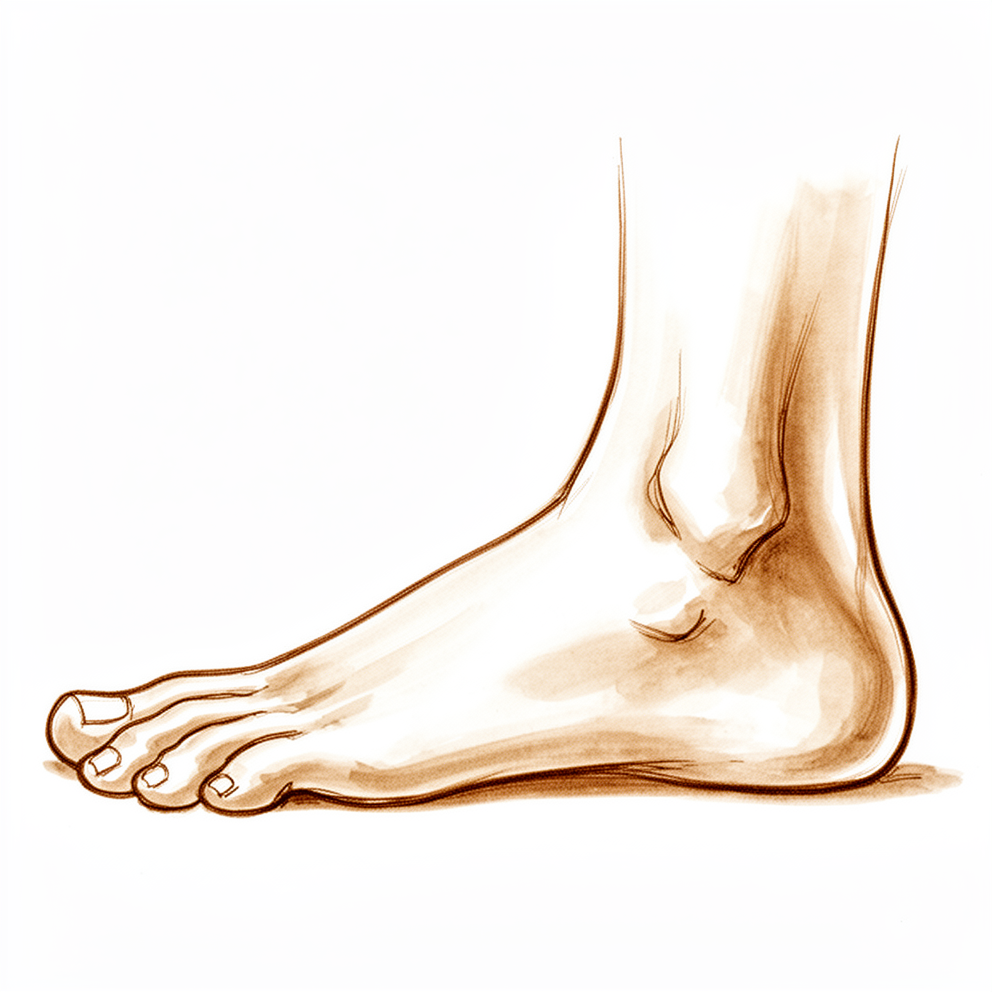
Hallux valgus is the medical name for a bunion. It means your big toe has drifted sideways, towards your other toes, while the long bone in your foot behind it has shifted the other way. The bump this creates on the inner side of your foot is called the medial eminence.
The most common symptom is pain over that bump, where your shoe presses on it. Many people also get pain in the joint itself at the base of the big toe. Another common spot is pain under the ball of your foot, beneath your second toe. This happens because your big toe is not taking its normal share of the load, so the pressure moves across to the smaller toes.
The deformity can make shoes hard to wear. Narrow or tight shoes rub on the bump and can leave the skin over it red and swollen. The skin can also thicken into a callus from repeated rubbing. Some people notice numbness on the inner side of the big toe from constant pressure inside a shoe. Standing, walking and sport can all become uncomfortable, and you may find yourself choosing wider shoes or avoiding longer walks.
The toe can slowly drift further over time. As it leans across, the tendons that straighten and bend the toe slide out of line, which pulls it even further in that direction. The joint capsule, the sleeve of tissue around the joint, stretches on the inner side and tightens on the outer side, holding the toe in its new position. The two small bones under the big toe joint, called sesamoids, can also slide out of place.
Your foot will be examined while you stand and walk, because the deformity often looks different when you are bearing weight. Weight-bearing X-rays are used to measure the angles of the toe and the long bone behind it. These measurements help decide which type of correction suits your foot.
What's actually happening
A bunion is a slow shift in the balance of your big toe joint. The long bone behind your toe, the first metatarsal, drifts inwards while your toe leans the other way, towards your smaller toes. The end of that bone pushes out on the inner side of your foot, and that is the bump you can see and feel.
This happens because the soft tissues holding the toe straight gradually give way. Think of them as guy ropes holding a tent pole upright. The sleeve of tissue on the inner side of the joint stretches out, while the tissues on the outer side tighten up. Once that happens, the tendons that bend and straighten your toe sit to the outer side of the joint instead of straight down the middle, so every step pulls the toe further across. The two small bones under the joint, the sesamoids, slide out from beneath the toe as well, so your big toe takes less of your weight and the ball of your foot under your second toe takes more. That is why pain there often goes with a bunion.
Several things raise the chance of this happening. It runs in families: about 70% of people with a bunion have a relative who has one too. It is about ten times more common in women than men, and it usually shows up between the ages of thirty and fifty. Shoes with a narrow toe box play a part, because they squeeze the toes together. So can loose ligaments, the shape of the joint itself, and conditions such as rheumatoid arthritis, which is joint damage caused by the immune system inflaming the lining of the joint rather than by wear and tear.
As the toe leans further across, it can crowd and push on your second toe, sometimes bending it into a hammer toe. The toe can also rotate, so the nail turns towards your other toes. These changes tend to build slowly over years, which is why the bump and the drift seem to creep up rather than appear overnight.
What we can do about it
The angles of the deformity on weight-bearing X-rays, along with how much the toe can be pushed back into line, help us match the treatment to your foot.
Non-operative care cannot straighten the toe once it has drifted, but it can settle the symptoms. Wider shoes with a roomy toe box take pressure off the bump. Toe spacers and a splint worn at night can ease discomfort, though they are unlikely to correct the deformity. Simple pain medication and anti-inflammatories can help you stay active. We usually suggest giving these measures a fair trial before talking about surgery.
Surgery is considered when non-operative care has not given you enough relief, or when the deformity is severe. The operation is tailored to your foot: the type and severity of the deformity decide which correction is used. Options range from cutting and realigning the metatarsal through small incisions, to fusing joints when the deformity is large or the joint is arthritic. For children and teenagers whose bones are still growing, surgery is usually delayed and non-operative care is tried first, because the toe is more likely to drift back after surgery in that age group. We will talk through the options with you and decide together which suits your foot and your goals.
What to expect
A bunion is a slow-moving problem. The drift tends to build gradually over years rather than appear suddenly, and it does not usually settle on its own. Because the toe leans further across as time passes, the discomfort you feel now is likely to continue, and may grow, if the underlying causes are left alone.
Non-operative care can make a real difference to how your foot feels day to day. Wider shoes, spacers and simple pain relief cannot pull the toe back straight, but they can settle the symptoms enough for many people to stay active without surgery. If those measures stop working, or the deformity becomes severe, surgery is the step that actually corrects the position of the toe.
Surgery works well for most people. Reported success rates range from 80% to 95%. The type of correction used is matched to your foot, and mild to moderate deformities and severe ones each have reliable options. Age on its own does not change the outlook for one common procedure, and carrying extra weight has not been shown to spoil the result of another. For severe deformities, 86% of people said the operation was worthwhile eight years later.
It is honest to say that results are not perfect for everyone. When people are followed up many years after surgery, about 25.9% report they were dissatisfied. The main reasons are a deformity that was not fully corrected in the first place, or pain under the ball of the foot that develops later. There is also a small chance the toe drifts back again over time, which is more likely in children and teenagers whose bones are still growing. If that happens, further surgery is possible and newer keyhole techniques can correct a recurring bunion with a low rate of complications.
Recovery after surgery takes weeks to months rather than days, and your surgeon will talk you through what that looks like for your particular operation. The realistic goal is a straighter, more comfortable foot that lets you wear normal shoes and walk without the pain you have now.
When to see someone
See your GP if the pain over the bump or under the ball of your foot keeps troubling you despite wider shoes and simple pain relief, or if shoes have become genuinely hard to wear. Ask for a specialist review if your big toe is drifting further over time, if it is crowding or bending your second toe, or if the toe has started to rotate so the nail turns towards your other toes. Numbness on the inner side of the big toe from shoe pressure is also worth having checked. Seek review sooner if the skin over the bump becomes red, swollen or ulcerated, or if you notice changes in the circulation or feeling in your foot, such as absent pulses or skin that looks dusky.
Evidence & references
This is the clinical evidence summary written for health professionals. It is technical, and it lists the research this page was built from. You do not need to read it to understand your treatment or to make a decision about it.
Anatomy & Pathophysiology
Definition and Etiology
- Hallux valgus is defined as lateral deviation of the great toe with medial deviation of the first metatarsal [4].
- Hallux valgus is defined as lateral deviation of the proximal phalanx on the first metatarsal head [7].
- The etiology of hallux valgus is likely multifactorial, involving intrinsic factors such as genetic predisposition, ligamentous laxity, and predisposing anatomy (convex metatarsal head, pes planus) [4].
- Extrinsic factors such as certain types of shoewear (narrow toe box, high heels) play a role in the pathophysiology of hallux valgus [4].
- Hallux valgus is more common in women than in men [7].
- Hallux valgus is 10 times greater in incidence in women than in men [14].
- The incidence of hallux valgus is significantly higher in shod populations than unshod ones [14].
- Of patients with hallux valgus, 70% have a family history of the condition, suggesting a hereditary component [7].
- Other causes of hallux valgus include rheumatoid arthritis, connective tissue disorders, and cerebral palsy [7].
- Hallux valgus deformity is not associated with chronic tightness of the Achilles tendon or gastrocnemius, increased first ray mobility, bilaterality, or pes planus [14].
- Hallux valgus is frequently associated with medial deviation of the first metatarsal [7].
- The deformity of hallux valgus is usually progressive, although the rate and degree of progression is often nonlinear [10].
- Hallux valgus is most commonly seen in female patients in their fourth or fifth decades of life [10].
Pathoanatomy
- The pathoanatomy of hallux valgus involves gradual failure of the medial supportive structures (medial collateral ligament and tibial sesamoid) resulting in a varus position of the first metatarsal [10].
- Valgus deviation at the metatarsophalangeal joint of the proximal phalanx subsequently develops as the deformity progresses [10].
- As the deformity progresses, the alignment of the flexor and extensor hallucis longus tendons shifts laterally relative to the metatarsophalangeal joint, further exacerbating the deformity [10].
- The first metatarsal varus results in a prominent first metatarsal head medially, which is the bump or "bunion" reported by the patient [10].
- Medial capsular attenuation is a component of the pathoanatomy of hallux valgus [4].
- The proximal phalanx drifts laterally, leading to plantar-lateral migration of the abductor hallucis [4].
- Plantar-lateral migration of the abductor hallucis causes the proximal phalangeal unit to plantar flex and pronate the hallux [4].
- The pronation of the hallux is amplified by the proximal phalangeal attachment of the adductor hallucis [4].
- Stretching of the extensor hood of the extensor hallucis longus occurs as part of the pathoanatomy [4].
- Lateral deviation of the extensor hallucis longus and flexor hallucis longus causes a muscular imbalance and deforming force for valgus progression and pronation of the great toe [4].
- The first metatarsal head moves medially off the sesamoids, increasing the intermetatarsal angle [4].
- Pronation leads to rounding of the lateral metatarsal head, which should have a flat contour with no rotational deformity [4].
- Secondary contracture of the lateral capsule, adductor hallucis, and lateral metatarsal-sesamoid and intermetatarsal ligaments occurs in hallux valgus [4].
- With chronic deformity, the medial joint capsule becomes attenuated, and the lateral joint capsule becomes contracted [14].
- The sesamoids slowly erode the crista as the metatarsal head is pushed medially, allowing for lateral subluxation of the sesamoids from directly plantar to the first metatarsal [14].
- With severe deformity, both extrinsic and intrinsic muscles lie lateral to the longitudinal axis of the first metatarsophalangeal joint, thereby further enhancing the deformity [14].
- Pronation of the hallux occurs because attenuation of the weakest portion of the capsule (the dorsomedial aspect) allows the abductor hallucis tendon to slide beneath the metatarsal head and rotate the proximal phalanx into a position of pronation [14].
- More rapid progression of the deformity may occur in a small percentage of patients whose first metatarsocuneiform joint demonstrates a significant degree of instability [14].
- If the valgus angle of the first metatarsophalangeal joint exceeds 30 to 35 degrees, pronation of the great toe usually results [16].
- With abnormal rotation, the flexion-extension axis of the first metatarsophalangeal joint moves farther plantarward [16].
- The adductor hallucis, unopposed by the abductor hallucis, pulls the great toe farther into valgus, stretching the medial capsular ligament and allowing the metatarsal head to drift medially from the sesamoids [16].
- The flexor hallucis brevis, flexor hallucis longus, adductor hallucis, and extensor hallucis longus increase the valgus moment at the metatarsophalangeal joint [16].
- The sesamoid ridge on the plantar surface of the first metatarsal head (the crista) flattens because of pressure from the tibial sesamoid [16].
- With loss of the crista restraint, the fibular sesamoid displaces partially or completely into the first intermetatarsal space [16].
- The patient bears less weight on the first ray and more on the lesser metatarsal heads, increasing the likelihood of transfer metatarsalgia, calluses, and stress fracture of a lesser metatarsal [16].
- Secondary pathology and deformity can develop in the lesser toes, such as hammertoes and claw toes [10].
- The valgus posture of the great toe frequently causes a hammer toe-like deformity of the second toe [16].
Radiographic Angles and Measurements
- The hallux valgus angle (HVA) is the angle formed by the line along the first metatarsal shaft and the line along the shaft of the proximal phalanx [4].
- The normal hallux valgus angle is less than 15 degrees [4].
- The first-second intermetatarsal angle (IMA) is the angle formed by lines along the first and second metatarsal shafts [4].
- The normal first-second intermetatarsal angle is less than 9 degrees [4].
- The hallux valgus interphalangeus (HVI) angle is the angle formed by lines along the shafts of the proximal phalanx and distal phalanx [4].
- The normal hallux valgus interphalangeus angle is less than 10 degrees [4].
- The distal metatarsal articular angle (DMAA) is the angle formed by the line along the articular surface of the first metatarsal and the line perpendicular to the axis of the first metatarsal [4].
- The normal distal metatarsal articular angle is less than 10 degrees [4].
- An increased distal metatarsal articular angle is associated with a congruent deformity [4].
- The hallux valgus angle identifies the degree of deformity at the metatarsophalangeal joint [7].
- The intermetatarsal angle is not influenced by overresection of the medial eminence and is not accurate for postoperative evaluation of distal osteotomies [7].
- The offset of the distal metatarsal articular angle is a predisposing factor in the development of hallux valgus [7].
- The proximal phalangeal articular angle (PPAA) is the articular angle of the base of the proximal phalanx in relation to its longitudinal axis [7].
- The offset of the proximal phalangeal articular angle is a predisposing factor in the development of hallux valgus [7].
- The normal proximal phalangeal articular angle is less than or equal to 10 degrees [7].
- The normal distal metatarsal articular angle is less than or equal to 15 degrees [7].
- A congruent joint has no lateral subluxation of the proximal phalanx in relation to the first metatarsal head [14].
- An incongruent joint has lateral subluxation of the proximal phalanx on the metatarsal head [14].
- Weight-bearing radiographs are important to evaluate the type and severity of the hallux valgus deformity [14].
- Non-weight-bearing radiographs tend to underestimate the deformity [10].
Juvenile and Adolescent Hallux Valgus
- Juvenile hallux valgus occurs more commonly in girls than in boys [20].
- The angular deformity associated with hallux valgus is typically less severe in children than in adults [20].
- Large medial prominences are rare in juvenile hallux valgus [20].
- A congruent joint with an increased distal metatarsal articular angle is more common in juvenile hallux valgus than in the adult condition [20].
- Juvenile hallux valgus is sometimes associated with other deformities, such as metatarsus adductus [20].
- Generalized ligamentous laxity may be more common in children with hallux valgus than in the general population [20].
- Hallux valgus that occurs in the preteen or teenage years is often associated with a smaller medial eminence prominence and increased magnitude of the first-second intermetatarsal angle [23].
- Juvenile hallux valgus is associated with increased hypermobility of the first tarsometatarsal joint and less pronation than in the adult cohort [23].
- Juveniles are more likely to have bilateral deformities and a family history of hallux valgus [23].
- Recurrence rates of up to 50% have been noted with surgical treatment of juvenile hallux valgus [20].
- In adolescent hallux valgus, the deformity is frequently hereditary and usually seen in early adolescence [8].
- Adolescent hallux valgus is almost always found in conjunction with a wide forefoot caused by varus (medial deviation) of the first metatarsal shaft (metatarsus primus varus) [8].
- The wide forefoot allows severe lateral deviation of the great toe, causing the prominent base of the great toe to rub against the inside of the shoe [8].
- Varus of the first metatarsal with a large intermetatarsal angle is commonly present in juvenile and adolescent hallux valgus [21].
- The distal metatarsal articular angle is typically increased in juvenile and adolescent hallux valgus [21].
- Hallux valgus interphalangeus may be present in juvenile and adolescent hallux valgus [21].
- A history of Ehlers-Danlos or Marfan syndrome should be elicited in patients with juvenile and adolescent hallux valgus [21].
Hallux Varus
- Hallux varus is defined as a hallux valgus angle measuring 0 degrees or less [13].
- Hallux varus is described as a medial deviation of the great toe at the metatarsophalangeal joint [3].
- The most common cause of hallux varus is iatrogenic deformity resulting from hallux valgus repair [13].
- The incidence of iatrogenic hallux varus ranges from 2% to 10% [13].
- Causes of iatrogenic hallux varus include excessive tightening of the medial joint capsule, excessive resection of the medial eminence, overcorrection of the intermetatarsal angle, excision of the fibular sesamoid, or excessive lateral capsular release [13].
- Hallux varus may be associated with inflammatory conditions, such as rheumatoid arthritis, or neurologic conditions, such as Charcot-Marie-Tooth disease [13].
- Hallux varus can be classified into two types: static (supple) and dynamic (fixed) [11].
- Static hallux varus is asymptomatic and mainly a cosmetic complication [11].
- In static hallux varus, the hallux rests in varus, the metatarsophalangeal joint rests in a normal position in the sagittal plane, and the interphalangeal joint is in a normal position [11].
- Dynamic hallux varus deformity is a multiplanar deformity that is often fixed, symptomatic, and difficult to correct surgically [11].
- In dynamic hallux varus, the first metatarsophalangeal joint is hyperextended and the interphalangeal joint is acutely flexed [11].
- The hallux is rotated in dynamic hallux varus, and its varus and extended posture makes shoe wear difficult [11].
- Congenital hallux varus can be divided into three types: isolated with a normal first metatarsal, coexisting with other malformations of the foot, or part of an underlying skeletal dysplasia [3].
- In isolated congenital hallux varus, a taut fibrous band runs from the medial side of the great toe to the base of the first metatarsal, leading to medial deviation [3].
- Congenital hallux varus may coexist with other malformations such as a longitudinal bracket epiphysis of the first metatarsal or preaxial polydactyly [3].
- Congenital hallux varus is uncommonly part of an underlying skeletal dysplasia, such as diastrophic dwarfism [3].
- Symptoms from hallux varus are both cosmetic and related to the ability to wear shoes [3].
- Shoe wear is nearly impossible with hallux varus deviation of the great toe [3].
- The deformity of hallux varus is believed to worsen with age [3].
- Hallux varus is typically unilateral and associated with a short, thick first metatarsal, accessory bones or toes, varus deformity of lateral metatarsals, or a firm fibrous band extending from the medial side of the great toe to the base of the first metatarsal [24].
- The explanation for congenital hallux varus is that two great toes originate in utero, but the medial or accessory one fails to develop [24].
- The rudimentary medial toe, together with the band of fibrous tissue, acts like a taut bowstring and gradually pulls the more fully developed great toe into a varus position [24].
Hallux Rigidus
- Hallux rigidus is the name for arthrosis of the first metatarsophalangeal joint [9].
- Hallux rigidus is seen in patients from their thirties onward [9].
- The reason why arthritis of this joint is seen in younger patients is unclear but may be associated with an unrecognized chondral injury to the metatarsal head [9].
- Hallux rigidus is associated with hallux valgus interphalangeus, bilateral involvement in those with a family history, and female gender [9].
- Hallux rigidus is not associated with elevatus, first ray hypermobility, a long first metatarsal, Achilles tightness, abnormal foot posture, symptomatic hallux valgus, adolescent onset, shoe wear, or occupation [9].
- Patients with hallux rigidus complain primarily of pain of the first metatarsophalangeal joint, especially with extension [9].
- The dorsal eminence in hallux rigidus may prevent shoewear and have associated swelling and redness [9].
- Weight-bearing radiographs of the foot in hallux rigidus demonstrate arthritic changes, including loss of joint space, subchondral sclerosis, and the presence of osteophytes, especially on the dorsal aspect of the metatarsal neck [9].
Cerebral Palsy
- Hallux valgus deformity in patients with cerebral palsy is usually associated with other deformities, such as equinovalgus foot, heel valgus, and external rotation of the tibia [19].
- These conditions cause the foot to pronate, forcing the first metatarsophalangeal joint into abduction and creating a hallux valgus deformity [19].
- The extensor hallucis tendon may sublux into the first web space and become an abductor of the hallux, leading to further deformity in patients with cerebral palsy [19].
- Isolated soft-tissue procedures for hallux valgus in patients with cerebral palsy rarely are successful and have a high recurrence rate [19].
- Great toe metatarsophalangeal joint fusion is recommended for hallux valgus in patients with cerebral palsy [19].
Clinical Presentation
Hallux Valgus
- Hallux valgus is defined as the lateral deviation of the proximal phalanx of the first metatarsophalangeal joint [10].
- Hallux valgus is a complex deformity that includes lateral deviation of the proximal phalanx and the resultant medially directed pressure exerted against the metatarsal head [14].
- The incidence of hallux valgus deformity is 10 times greater in women than in men [14].
- Hallux valgus is frequently hereditary, usually seen in early adolescence, and almost always found in conjunction with a wide forefoot caused by varus of the first metatarsal shaft [8].
- Of patients with hallux valgus, 70% have a family history of the condition [7].
- The most common symptom of hallux valgus is pain over the medial eminence [14].
- Patients with hallux valgus complain of pain in the joint and pain under the second metatarsal head [14].
- The deformity may prevent shoewear, and activity limitation may be part of the constellation of symptoms [14].
- Numbness can occur in the dorsal medial cutaneous nerve distribution because of external pressure from a shoe [10].
- Secondary pathology and deformity can develop in the lesser toes, such as hammertoes and claw toes, which may be symptomatic [10].
- Lateral deviation of the hallux may lead to overcrowding of the lateral toes and sometimes over-riding [18].
- The elements of the deformity are lateral deviation and rotation of the hallux, together with a prominence of the medial side of the head of the first metatarsal [18].
- There may be an overlying bursa and thickened soft tissue associated with hallux valgus [18].
- Pronation of the great toe is easily noted by comparing the angulation of the nail of the great toe in relation to the floor [4].
- The severity of the hallux valgus deformity and any associated pes planus can be best assessed while the patient is standing [10].
- While seated, the first metatarsophalangeal joint area is evaluated for signs of local irritation and bursal hypertrophy secondary to shoe wear [10].
- Tenderness over the medial eminence is evaluated during the physical examination of hallux valgus [10].
- Range of motion of the first metatarsophalangeal joint is evaluated, and any pain with motion may suggest arthritis within the joint [10].
- The first tarsometatarsal joint is evaluated for hypermobility, which remains a diagnostic challenge with poor reproducibility [10].
- Diagnostic confirmation of hallux valgus is made with the use of standard AP and lateral weight-bearing radiographs [10].
- Non-weight-bearing radiographs tend to underestimate the deformity of hallux valgus [10].
- Radiographs are assessed for presence of arthritis at the first metatarsophalangeal joint, severity of the deformity, sesamoid subluxation, and the hallux valgus angle [10].
- Radiographs are assessed for first tarsometatarsal hypermobility and congruency of the metatarsophalangeal joint [10].
- The hallux valgus angle is the angle formed by line along first metatarsal shaft and line along shaft of proximal phalanx [4].
- The first-second intermetatarsal angle is the angle formed by lines along first and second metatarsal shafts [4].
- The hallux valgus interphalangeus angle is the angle formed by lines along shafts of the proximal phalanx and distal phalanx [4].
- The distal metatarsal articular angle is the angle formed by line along articular surface of first metatarsal and line perpendicular to axis of first metatarsal [4].
- The intermetatarsal angle is not influenced by overresection of medial eminence and is not accurate for postoperative evaluation of distal osteotomies [7].
- The distal metatarsal articular angle offset is a predisposing factor in development of hallux valgus [7].
- The proximal phalangeal articular angle offset is a predisposing factor in development of hallux valgus [7].
- Arthrosis of the metatarsophalangeal joint is characterized by joint space narrowing, subchondral sclerosis, and osteophyte formation [14].
Hallux Rigidus
- Hallux rigidus is defined as a condition in which there is restriction of motion at the first metatarsophalangeal joint [25].
- Hallux rigidus is a common entity and frequently affects patients at a much younger age than arthritis of other joints [9].
- Hallux rigidus is far more common in older adults, but it can rarely occur in adolescents [25].
- Girls are affected more often than boys with hallux rigidus [25].
- Hallux rigidus is frequently bilateral [25].
- There may be a positive family history for hallux rigidus [25].
- Hallux rigidus is associated with hallux valgus interphalangeus [9].
- Hallux rigidus is associated with bilateral involvement in those with a family history and female gender [9].
- The dorsal eminence may prevent shoewear and have associated swelling and redness in hallux rigidus [9].
- Weight bearing and sports activities exacerbate the pain of hallux rigidus [9].
- Initial symptoms of hallux rigidus mainly consist of pain during gait [25].
- Discomfort in the metatarsophalangeal joint is greatest during heel rise because the great toe normally dorsiflexes at this time [25].
- Physical examination reveals painful limitation in dorsiflexion of the first metatarsophalangeal joint in hallux rigidus [25].
- Dorsiflexion is lost before plantar flexion is in hallux rigidus [25].
- There is often a palpable osteophyte on the dorsum of the joint in hallux rigidus [25].
- Swelling may be present in hallux rigidus [25].
- The base of the metatarsal appears more plantar than normal, and the metatarsal head is elevated in hallux rigidus [25].
- Observation of gait shows that patients with hallux rigidus walk on the lateral border of the feet to avoid rolling over the great toe [25].
- Weight-bearing radiographs of the foot demonstrate arthritic changes, including loss of joint space, subchondral sclerosis, and the presence of osteophytes [9].
- Osteophytes are especially present on the dorsal aspect of the metatarsal neck in hallux rigidus [9].
- Lateral plain films can demonstrate dorsal osteophytes at the base of the proximal phalanx and metatarsal head in hallux rigidus [25].
- The exostoses may become quite large and obscure visualization of the joint itself in hallux rigidus [25].
- Osteochondritic lesions of the metatarsal head can be seen in young patients with hallux rigidus [25].
Hallux Varus
- Hallux varus is defined as a hallux valgus angle measuring 0° or less [13].
- The condition can be associated with an extension deformity of the metatarsophalangeal joint and flexion of the interphalangeal joint [13].
- Supination of the hallux may be seen with hallux varus [13].
- In children, hallux varus can be either congenital or acquired, but acquired hallux varus is rare in children [3].
- In adults, hallux varus is usually acquired as a complication of hallux valgus surgery [3].
- Shoe wear is nearly impossible with the deviation of the great toe in hallux varus [3].
- Hallux varus is principally asymptomatic [13].
- The most commonly reported symptom of hallux varus is difficulty with shoe wear because of a prominent interphalangeal joint [13].
- Transfer lesions may develop along the lesser metatarsals in hallux varus [13].
- Few patients with hallux varus complain about appearance unless the varus is greater than 10 to 15 degrees [11].
- Discomfort from hallux varus is rare and usually associated with degenerative changes of the first metatarsophalangeal joint [11].
- Most often, the hallux is not rotated abnormally in an axial plane and does not assume a "snake-in-the-grass" appearance in the frontal plane in static hallux varus [11].
- All the deformity occurs at the metatarsophalangeal joint, but only in the transverse or frontal plane, in static hallux varus [11].
- Dynamic hallux varus deformity is a multiplanar deformity that often is fixed, symptomatic, and difficult to correct surgically [11].
- In dynamic hallux varus, the first metatarsophalangeal joint is hyperextended, usually with some degree of fixed soft-tissue contracture [11].
- In dynamic hallux varus, the interphalangeal joint is acutely flexed [11].
- The hallux is rotated in dynamic hallux varus [11].
- The varus and extended posture of the hallux makes shoe wear difficult in dynamic hallux varus [11].
- The most common complaint in dynamic hallux varus is that the toe box of the shoe rubs on the dorsomedial surface of the interphalangeal joint [11].
- A keratotic lesion may be present beneath the first metatarsal head, caused by the extended hallux pushing the first metatarsal head plantarward, in dynamic hallux varus [11].
- The lesser toes may develop a hammer deformity and metatarsalgia as the hallux assists less and less in the stance phase of the gait cycle in dynamic hallux varus [11].
- It must be determined whether the metatarsophalangeal and interphalangeal joint deformities are fixed or passively correctable in hallux varus [13].
- Weight-bearing radiographs can help determine the degree of arthrosis in hallux varus [13].
Investigations
Radiographic Angles and Measurements
- The hallux valgus angle (HVA) is defined as the angle formed by the intersection of lines along the longitudinal axes of the first metatarsal shaft and the proximal phalanx shaft [4].
- The first-second intermetatarsal angle (IMA) is defined as the angle formed by lines along the shafts of the first and second metatarsals [4].
- The hallux valgus interphalangeus (HVI) angle is defined as the angle formed by lines along the shafts of the proximal phalanx and distal phalanx [4].
- An increased hallux valgus interphalangeus angle is associated with a congruent deformity [4].
- The distal metatarsal articular angle (DMAA) is defined as the angle formed by the line along the articular surface of the first metatarsal and a line perpendicular to the axis of the first metatarsal [4].
- The proximal phalangeal articular angle (PPAA) is defined as the articular angle of the base of the proximal phalanx in relation to its longitudinal axis [7].
- An offset in the distal metatarsal articular angle is a predisposing factor in the development of hallux valgus [7].
- An offset in the proximal phalangeal articular angle is a predisposing factor in the development of hallux valgus [7].
- The intermetatarsal angle is not influenced by overresection of the medial eminence [7].
- The intermetatarsal angle is not accurate for postoperative evaluation of distal osteotomies [7].
- The normal distal metatarsal articular angle is less than 10 degrees of lateral deviation [14].
- The normal distal metatarsal articular angle is generally considered to be 10 to 15 degrees [16].
- The normal range for the phalangeal articular angle is generally considered to be 7 to 10 degrees [16].
Imaging Modalities and Assessment
- Radiographic evaluation includes assessing the congruency of the first metatarsophalangeal joint, where a congruent joint has no lateral subluxation of the proximal phalanx and an incongruent joint has lateral subluxation [14].
- Radiographs should be assessed for the presence of arthritis at the first metatarsophalangeal joint [10].
- Radiographs should be assessed for sesamoid subluxation [10].
- Radiographs are assessed for first tarsometatarsal hypermobility [10].
- The first metatarsocuneiform joint is examined for hypermobility by stabilizing the medial cuneiform and ranging the first metatarsal dorsomedially and plantolaterally [14].
- Arthrosis of the metatarsophalangeal joint is identified by joint space narrowing, subchondral sclerosis, and osteophyte formation [14].
- Weight-bearing radiographs of the foot demonstrate arthritic changes in hallux rigidus, including loss of joint space, subchondral sclerosis, and the presence of osteophytes [9].
- Osteophytes in hallux rigidus are especially present on the dorsal aspect of the metatarsal neck [9].
- Weight-bearing CT scan assessment is used for foot alignment in patients with hallux rigidus [1].
- The position of the medial sesamoid is noted in relation to a line drawn down the midaxis of the first metatarsal [7].
- Patients whose postoperative sesamoid is in position 5 to 7 have a much higher recurrence of deformity compared with those with a more medial position for the sesamoid [7].
- The characteristics of the medial eminence are evaluated, especially size, as measured from the sagittal groove [14].
Clinical Examination
- Tenderness over the medial eminence is evaluated during the clinical examination [10].
- Range of motion of the first metatarsophalangeal joint is evaluated during the clinical examination [10].
- Pain with motion of the first metatarsophalangeal joint may suggest arthritis within the joint [10].
- The amount of motion limitation of the first metatarsophalangeal joint gives the surgeon insight into the degree of surgical correction that can be obtained at the joint without impairing motion [14].
- It must be determined whether the metatarsophalangeal and interphalangeal joint deformities in hallux varus are fixed or passively correctable [13].
Indications for Specific Investigations
- Indications for soft-tissue repair for recurrent hallux valgus include a first-second intermetatarsal angle of 13 degrees or less [6].
- Indications for soft-tissue repair for recurrent hallux valgus include a hallux valgus angle of 30 degrees or less [6].
- Indications for soft-tissue repair for recurrent hallux valgus include a normal distal metatarsal articular angle of less than 10 to 15 degrees [6].
- Indications for soft-tissue repair for recurrent hallux valgus include minimal degenerative changes at the first metatarsophalangeal joint [6].
- Indications for soft-tissue repair for recurrent hallux valgus include 50 to 60 degrees of passive motion of the first metatarsophalangeal joint [6].
- Indications for soft-tissue repair for recurrent hallux valgus include subluxation but not complete dislocation of sesamoid bones [6].
- Indications for soft-tissue repair for recurrent hallux valgus include the ability to displace the first metatarsal laterally at the metatarsocuneiform joint from its abnormal varus inclination [6].
- Indications for soft-tissue repair for recurrent hallux valgus include some degree of longitudinal arch present when weight bearing, determined clinically and radiographically [6].
- If the arch is improved with passive dorsiflexion of the hallux while standing, the deformity is not fixed (structural pes planus) and a soft-tissue repair is likely to endure [6].
Treatment
Non-Operative Management
- Conservative treatment for hallux rigidus consists of nonsteroidal anti-inflammatory drugs (NSAIDs) and wearing a stiff-soled shoe with a deep toe box [9].
- An orthotic device with a Morton’s extension or a carbon fiber plate is beneficial for hallux rigidus as it prevents extension in late stance phase [9].
- A rocker-bottom shoe is helpful for the conservative management of hallux rigidus [9].
- In older (>60 years), sedentary patients with hallux rigidus, conservative measures are usually adequate [9].
- Nonsurgical treatment for juvenile hallux valgus includes shoe-wear modification and education [20].
- Shoes with a wide toe box, toe spacers, and night splints may be used for symptomatic management of juvenile hallux valgus until physeal closure [23].
- Nonsurgical management should be considered first in all patients with juvenile hallux valgus, especially those with ligamentous laxity or neuromuscular disorders, because of the higher recurrence rate with surgical intervention [23].
- Nonoperative treatment for acquired hallux varus is limited to accommodation of the deformity with shoe modifications and shoe stretching [21].
Operative Management: Hallux Valgus
- The Akin closing wedge osteotomy of the proximal phalanx is indicated for hallux valgus interphalangeus, congruent deformity, or when combined with other surgical procedures [7].
- The Akin osteotomy is performed when the proximal phalangeal articular angle is >10° [7].
- Distal soft-tissue release combines a release of the lateral structures with medial eminence resection and exostectomy [7].
- Distal soft-tissue release is indicated for incongruent deformity with an intermetatarsal angle (IMA) < 11° and hallux valgus angle (HVA) < 35° [7].
- Fibular sesamoid excision should be avoided during distal soft-tissue release to decrease the risk of hallux varus [7].
- Distal metatarsal osteotomy (chevron) involves a lateral translation of the metatarsal head after osteotomy [7].
- Distal metatarsal osteotomy is indicated for congruent or incongruent deformity with an IMA < 13° and HVA < 30° [7].
- A biplanar (closing wedge) distal metatarsal osteotomy is used for a distal metatarsal articular angle (DMAA) > 15° [7].
- An extensive lateral capsular release should be avoided during distal metatarsal osteotomy to minimize the risk of osteonecrosis [7].
- Proximal metatarsal osteotomy brings the metatarsal shaft laterally to reduce the IMA [7].
- Proximal metatarsal osteotomy is indicated when combined with a distal soft-tissue release for HVA > 25° and IMA > 13° [7].
- Overcorrection of the IMA during proximal metatarsal osteotomy can lead to hallux varus [7].
- Dorsiflexion at the osteotomy site during proximal metatarsal osteotomy can result in transfer metatarsalgia [7].
- The Lapidus procedure (metatarsal cuneiform fusion) is indicated when combined with a distal soft-tissue release for hypermobility of the first ray [7].
- A 10%-15% nonunion rate is noted for the Lapidus procedure, although many are asymptomatic [7].
- Shortening and dorsiflexion at the Lapidus fusion must be avoided to prevent metatarsalgia [7].
- Keller arthroplasty involves resection of the base of the proximal phalanx [7].
- Keller arthroplasty is indicated for elderly, low-demand patients with mild deformity and/or arthritic changes in the joint [7].
- Keller arthroplasty can lead to a cock-up toe deformity and transfer metatarsalgia [7].
- Metatarsophalangeal fusion is indicated for severe deformities (HVA > 40°), arthritic changes in the joint, inflammatory conditions such as rheumatoid arthritis, or neurologic conditions such as cerebral palsy [7].
- First metatarsophalangeal joint fusion should attempt to fuse in 10°-15° of valgus and 10°-15° of dorsiflexion relative to the first metatarsal [7].
- Medial eminence resection (Silver procedure) is rarely indicated and reserved for elderly patients with minimal functional demands [7].
- The medial eminence incision places the dorsomedial cutaneous nerve, a branch of the superficial peroneal nerve, at risk [7].
- In juvenile hallux valgus, an increased intermetatarsal angle (IMA) is corrected with a medial opening wedge cuneiform osteotomy rather than a proximal metatarsal osteotomy or fusion in the presence of open physes [20].
- Increased DMAA in juvenile hallux valgus can be addressed with a distal biplanar chevron first metatarsal osteotomy [20].
- In cases of ligamentous laxity in juvenile hallux valgus, a first TMT arthrodesis substitutes for a proximal osteotomy to correct the IMA, and the first metatarsal physeal plate must be closed [21].
- For juvenile hallux valgus with HVI and increased DMAA but IMA ≤ 13°, an Akin osteotomy is combined with a biplanar distal chevron osteotomy [21].
- For juvenile hallux valgus with IMA > 13° and increased DMAA, a biplanar distal chevron osteotomy is combined with an open-wedge medial cuneiform osteotomy [21].
- For juvenile hallux valgus with HVI, increased DMAA, and IMA > 13°, an Akin osteotomy, biplanar distal chevron osteotomy, and open-wedge medial cuneiform osteotomy are performed [21].
- Arthrodesis of the metatarsophalangeal joint is appropriate in patients with juvenile hallux valgus who have ligamentous laxity (Ehlers-Danlos syndrome), cerebral palsy, Down syndrome, and rheumatoid arthritis [23].
- Underlying deformities such as heel valgus or external rotation of the tibia should be corrected before surgical correction of hallux valgus in patients with cerebral palsy [19].
- First metatarsophalangeal joint fusion has been shown to provide the best overall outcome with functional gains and anatomic correction of the deformity being maintained in patients with cerebral palsy [19].
- Indications for soft-tissue repair for recurrent hallux valgus include a first-second intermetatarsal angle of ≤13 degrees [6].
- Indications for soft-tissue repair for recurrent hallux valgus include a hallux valgus angle of ≤30 degrees [6].
- Indications for soft-tissue repair for recurrent hallux valgus include a normal distal metatarsal articular angle (<10-15 degrees) [6].
- Indications for soft-tissue repair for recurrent hallux valgus include some degree of longitudinal arch present when weight bearing [6].
- If the arch is improved with passive dorsiflexion of the hallux while standing, the deformity is not fixed and a soft-tissue repair is likely to endure [6].
- The adductor hallucis tendon is removed from the capsule, capsulosesamoid ligament, and lateral border of the fibular sesamoid during soft-tissue repair for recurrent hallux valgus [6].
- The deep transverse intermetatarsal ligament is sectioned to allow medial mobility of the fibular sesamoid during soft-tissue repair for recurrent hallux valgus [6].
- If the fibular sesamoid cannot be placed into its facet or the hallux reduced, the lateral capsule is sectioned from dorsal to the fibular sesamoid [6].
Operative Management: Hallux Rigidus
- Cheilectomy is indicated for patients with mild to moderate arthrosis but who have a large dorsal osteophyte [9].
- Approximately one fourth to one third of the dorsal metatarsal head is excised with an osteotome during cheilectomy [9].
- Postoperatively, patients regain up to 50% of their dorsiflexion and have improvement of their total motion after cheilectomy [9].
- More than 90% of patients have improvement of pain, ability to wear shoes, and increased physical abilities after cheilectomy [9].
- Cheilectomy is less likely to have a favorable outcome on joints with advanced arthritis [9].
- A Keller procedure is a resection arthroplasty that may be useful in older, less active patients with hallux rigidus [9].
- Prosthetic replacement of the arthritic first metatarsophalangeal joint can be used in older, lower demand patients but has high rates of failure in younger, more active individuals [9].
- First metatarsophalangeal joint arthrodesis is a predictable and durable procedure for hallux rigidus [9].
- The drawback of first metatarsophalangeal joint arthrodesis is lost motion at the joint [9].
- Patients can remain quite active with a first metatarsophalangeal joint fusion [9].
Operative Management: Hallux Varus
- Surgery for congenital hallux varus consists of release of the tight tissues on the medial side of the toe, including the abductor hallucis and the medial capsule of the MTP joint [3].
- The great toe is usually syndactylized to the second toe to maintain correction after surgery for congenital hallux varus [3].
- The lateral MTP joint may be reefed, and extensor hallucis brevis rerouting has been described for congenital hallux varus [3].
- Accessory ossicles or bones should be excised if present during surgery for congenital hallux varus [3].
- Temporary fixation of the MTP joint with a Kirschner wire should be done to maintain position while the tissues heal during surgery for congenital hallux varus [3].
- Arthrodesis of the first MTP joint is reserved for those in whom primary reconstruction fails and painful arthritis develops in congenital hallux varus [3].
- Flexible hallux varus deformity can be corrected with a soft tissue procedure involving release of the ABH muscle and fascia [21].
- Transfer of a portion of EHL or extensor hallucis brevis (EHB) tendon under the transverse intermetatarsal ligament to the distal metatarsal neck is used for flexible hallux varus [21].
- The distal portion of the tendon is left intact, creating a dynamic stabilizer to correct the deformity in flexible hallux varus [21].
- Suture button augmentation is commonly used with a tendon reconstruction but should not be utilized in isolation for flexible hallux varus [21].
- Fixed hallux varus deformity, deformity with limited first MTP motion, joint pain, or presence of first MTP DJD is treated with a first MTP arthrodesis [21].
Complications
- Acquired hallux varus is usually acquired in adults as a complication of hallux valgus surgery [3].
- Causes of acquired hallux varus include overcorrection from bunion surgeries such as the McBride procedure, trauma, and systemic arthritis [3].
- Hallux varus is described as a medial deviation of the great toe at the MTP joint [3].
- Congenital hallux varus may occur in isolation with a normal first metatarsal, where a taut fibrous band runs from the medial side of the great toe to the base of the first metatarsal [3].
- Congenital hallux varus may coexist with other malformations of the foot, such as a longitudinal bracket epiphysis of the first metatarsal or preaxial polydactyly [3].
- Shoe wear is nearly impossible with the deviation of the great toe seen in hallux varus [3].
- Surgical correction of congenital hallux varus consists of release of the tight tissues on the medial side of the toe, including the abductor hallucis and the medial capsule of the MTP joint [3].
- In surgical correction of congenital hallux varus, the great toe is usually syndactylized to the second toe to maintain correction [3].
- The lateral MTP joint may be reefed during surgical correction of congenital hallux varus [3].
- Extensor hallucis brevis rerouting has been described for surgical correction of congenital hallux varus [3].
- When present, accessory ossicles or bones should be excised during surgical correction of congenital hallux varus [3].
- Temporary fixation of the MTP joint with a Kirschner wire should be done to maintain position while tissues heal during surgical correction of congenital hallux varus [3].
- Mills and Menelaus reported satisfactory results at 12.7 years in 12 of 17 feet that had undergone surgical correction of congenital hallux varus with the Farmer and McElvenny procedures [3].
- Arthrodesis of the first MTP joint is reserved for those in whom primary reconstruction fails and painful arthritis develops [3].
- Many authors have reported surgical correction of acquired hallux varus after hallux valgus surgery [3].
Recovery
- Return to sport and physical activities is a documented outcome following first metatarsophalangeal joint arthrodesis in young patients [1].
- Improved ankle push-off power is observed following cheilectomy for hallux rigidus [1].
- Patient-focused outcomes are reported at eleven-year follow-up for dorsiflexory phalangeal osteotomy for grade II hallux rigidus [1].
- Long-term results are reported for surgical treatment of Valenti procedures for hallux rigidus with a minimum ten-year follow-up [1].
- Long-term follow-up data is available for cheilectomy for degenerative joint disease of the first metatarsophalangeal joint [1].
- Long-term follow-up data is available for cheilectomy for treatment of hallux rigidus [1].
- Long-term results are reported following Keller resection arthroplasty for hallux rigidus [1].
- Mid-term implant survival, functional outcome, and cost analysis are reported for metallic hemiarthroplasty for end-stage hallux rigidus [1].
- Midterm outcomes are reported for a synthetic cartilage implant for the first metatarsophalangeal joint in advanced hallux rigidus [1].
- Short-term functional outcomes are reported for first metatarsophalangeal total joint replacement for hallux rigidus [1].
- Long-term outcome is reported for first metatarsophalangeal joint fusion in the treatment of severe hallux rigidus [1].
- Outcomes are reported after interpositional arthroplasty of the first metatarsophalangeal joint [1].
- Outcomes are reported for the distal metatarsal dorsiflexory osteotomy for advanced hallux rigidus [1].
- Early outcomes and complications are reported for synthetic cartilage implant for treatment of hallux rigidus in the United States [1].
- Modified Valenti arthroplasty outcomes are analyzed in running and jumping athletes with hallux limitus/rigidus [1].
- Dorsal wedge phalangeal osteotomy outcomes are reported for grade II-III hallux rigidus in active adult patients [1].
- Treatment of advanced stages of hallux rigidus with cheilectomy and phalangeal osteotomy is reported [1].
- Surgical treatment of advanced hallux rigidus by interpositional arthroplasty is reported [1].
- Second-generation ceramic first metatarsophalangeal joint replacement for hallux rigidus is reported [1].
- Total arthroplasty of the metatarsophalangeal joint of the hallux is reported [1].
- Modified oblique Keller capsular interposition arthroplasty (MOKCIA) for treatment of late-stage hallux rigidus is reported [1].
- Metatarsal head resurfacing for advanced hallux rigidus is reported [1].
- Biplanar proximal phalanx closing wedge osteotomy for hallux rigidus is reported [1].
- Hallux metatarsophalangeal arthrodesis is described as a surgical option [2].
- The Lapidus procedure is used as salvage after surgical treatment of hallux valgus [2].
- The Mitchell procedure is used for the treatment of adolescent hallux valgus [2].
- Modified Peterson bunion procedure early results are reported for adolescent hallux valgus [2].
- Adolescent hallux valgus etiology and surgical management are described [2].
- Great toe metatarsophalangeal arthrodesis is used for hallux valgus deformity in ambulatory adolescents with spastic cerebral palsy [2].
- Modified Lapidus procedure is used for the treatment of hypermobile hallux valgus [2].
- Scarf osteotomy is used for hallux valgus correction [2].
- Distal chevron osteotomy with intra-articular lateral soft-tissue release is used for treatment of moderate to severe hallux valgus deformity [2].
- Proximal crescentic osteotomy is used for surgery for hallux valgus [2].
- Ludloff osteotomy is used for correction of adult hallux valgus [2].
- Proximal chevron and Ludloff osteotomies are compared for the correction of hallux valgus [2].
- Basal metatarsal osteotomy is used for hallux valgus [2].
- Akin’s phalangeal osteotomy is used for bunion repair [2].
- Austin-Leventen osteotomy is a horizontally directed V displacement osteotomy of the metatarsal head for hallux valgus and primus varus [2].
- Carr-Boyd correctional osteotomy is used for metatarsus primus varus and hallux valgus [2].
- Case-Taylor-Ackroyd new osteotomy is used for the treatment of hallux valgus and metatarsus primus varus [2].
- Proximal metatarsal osteotomy is used in hallux valgus [2].
- Mobilization and transfer of the intrinsics of the great toe is used for hallux valgus [2].
- Effect of hallux sesamoid excision on the flexor hallucis longus moment arm is described [2].
- Mechanical comparison of cyclic loading in five different first metatarsal shaft osteotomies is reported [2].
- Anatomical basis for the degree of displacement of the distal chevron osteotomy in the treatment of hallux valgus is described [2].
- Intra- and inter-observer reliability of the distal metatarsal articular angle in adult hallux valgus is reported [2].
- First intermetatarsal angle in hallux valgus measurement reliability and error are analyzed [2].
- Three-dimensional computer analysis of the modified Ludloff osteotomy is reported [2].
- Surgical procedures for hallux valgus are reviewed [2].
- Evaluation and operative procedures for hallux valgus deformity are described [2].
- Hallux valgus and hallux rigidus operative results are critically surveyed [2].
- Revision rates in forefoot surgery are reported [2].
- Primary deformity in hallux valgus and metatarsus primus varus is described [2].
- Pathology and treatment of hallux valgus are described [2].
- Treatment of hallux valgus is described [2].
- Operation for hallux valgus is described [2].
- New operative procedure for the treatment of hallux valgus and its results are reported [2].
References
[1] Campbell S Operative Orthopaedics 4 Volume Set. MULTIPLE Z-PLASTY RELEASE OF A CONGENITAL RING > HALLUX RIGIDUS.
[2] Campbell S Operative Orthopaedics 4 Volume Set. MULTIPLE Z-PLASTY RELEASE OF A CONGENITAL RING > HALLUX VALGUS.
[3] Tachdjian S Pediatric Orthopaedics From The Texas Scottish Rite Hospital For Children E Book. Plate 15.3 Kramer/Barmada Osteotomy of the Base of the Femoral Neck for Slipped Capital Femoral Epiphysis > Distal Metatarsal Osteotomy > Hallux Varus.
[4] Miller S Review Of Orthopaedics. SECTION 16 PATELLAR TRACKING IN TOTAL KNEE ARTHROPLASTY > ADULT HALLUX VALGUS.
[6] Campbell S Operative Orthopaedics 4 Volume Set. MULTIPLE Z-PLASTY RELEASE OF A CONGENITAL RING > RECURRENT HALLUX VALGUS WITH NORMAL DISTAL METATARSAL ANGLE AFTER BUNIONECTOMY > BOX 82.6.
[7] Aaos Comprehensive Orthopaedic Review 3. Disorders of the First Ray > I. Hallux Valgus.
[8] A Lange Medical Book Current Diagnosis Treatment In Orthopedics Fifth Edition. 10Pediatric Orthopedic Surgery > 9. Adolescent Bunions (Hallux Valgus).
[9] A Lange Medical Book Current Diagnosis Treatment In Orthopedics Fifth Edition. 8Foot and Ankle Surgery > 2. Hallux Rigidus.
[10] Orthopaedic Knowledge Update 13 Ebook Without Multimedia. Foot and Ankle Reconstruction > Hallux Valgus.
[11] Campbell S Operative Orthopaedics 4 Volume Set. MULTIPLE Z-PLASTY RELEASE OF A CONGENITAL RING > ACQUIRED HALLUX VARUS AND INTRINSIC MINUS HALLUX.
[13] Aaos Comprehensive Orthopaedic Review 3. Disorders of the First Ray > III. Hallux Varus.
[14] A Lange Medical Book Current Diagnosis Treatment In Orthopedics Fifth Edition. 8Foot and Ankle Surgery > 1. Hallux Valgus.
[16] Campbell S Operative Orthopaedics 4 Volume Set. MULTIPLE Z-PLASTY RELEASE OF A CONGENITAL RING > HALLUX VALGUS (BUNION).
[18] Apley And Solomon S Concise System Of Orthopaedics And Trauma. HALLUX VALGUS.
[19] Campbell S Operative Orthopaedics 4 Volume Set. COMBINED ONE-STAGE CORRECTION OF SPASTIC DISLOCATED HIP > HALLUX VALGUS DEFORMITY.
[20] Aaos Comprehensive Orthopaedic Review 3. Disorders of the First Ray > II. Juvenile Hallux Valgus.
[21] Miller S Review Of Orthopaedics. JUVENILE AND ADOLESCENT HALLUX VALGUS.
[23] Orthopaedic Knowledge Update. Congenital Disorders of the Foot* > Juvenile Hallux Valgus.
[24] Campbell S Operative Orthopaedics 4 Volume Set. AMPUTATION OF AN EXTRA TOE (SIMPLE POSTAXIAL POLYDACTYLY) > CONGENITAL HALLUX VARUS.
[25] Tachdjian S Pediatric Orthopaedics From The Texas Scottish Rite Hospital For Children E Book. Plate 15.3 Kramer/Barmada Osteotomy of the Base of the Femoral Neck for Slipped Capital Femoral Epiphysis > Hallux Rigidus.