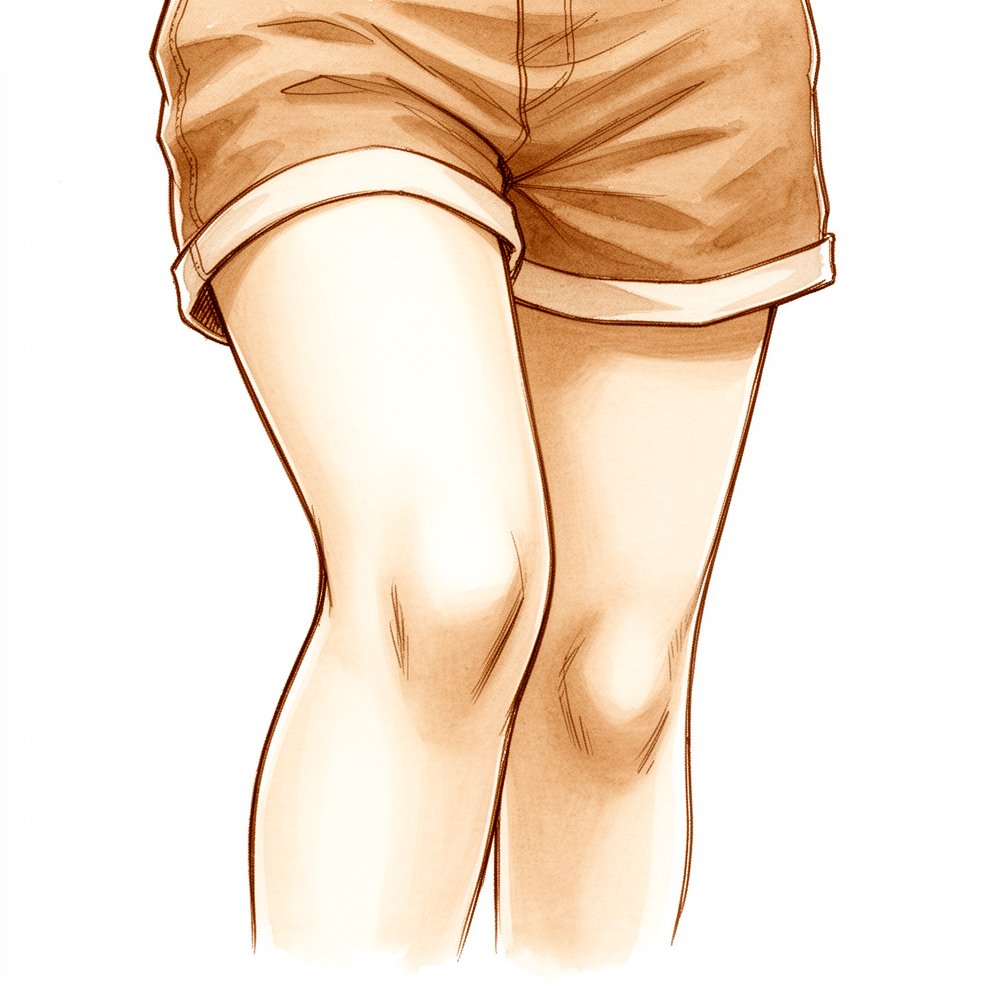
Why this operation has been suggested
This operation rebuilds a ligament on the inner side of your kneecap. That ligament, the MPFL, holds the kneecap in its groove and stops it sliding out. We suggest it when the kneecap has dislocated more than once and bracing or physiotherapy has not given enough improvement. It is not offered for kneecap pain alone, or for wear-and-tear arthritis. Before deciding, we check your kneecap, your joint shape, and the cartilage behind the kneecap. Some people also need a procedure to move or reshape bone, and we plan for that if your joint shape calls for it. The operation aims to keep your kneecap in place, so you can move and use your knee without it giving way.
Before the operation
You will need some imaging before surgery so we can plan it. This is usually an X-ray and an MRI scan, which takes detailed pictures of the soft tissues in your knee. Sometimes an ultrasound is used as well.
In the weeks before your operation, we will give you clear instructions. You will need to stop eating and drinking seven hours before surgery. We ask for seven hours rather than six so we can bring you forward if the theatre list runs early. Some medications may need to be paused; we will tell you which ones and when. Bring a written list of everything you take, including any supplements. Arrange for someone to drive you home afterwards, as you will not be able to drive yourself. Wear loose, comfortable clothing on the day.
If you have other medical conditions, you may need blood tests or a review with the anaesthetist (the specialist who looks after you during the operation). Most people do not need either.
On the day
You arrive at the hospital's surgical admissions unit, where you are checked in and prepared for theatre. You will meet the anaesthetist there. This operation is done under general anaesthetic. A regional nerve block is sometimes added for post-operative pain relief; the anaesthetist will discuss this with you on the day. You are then taken into the operating theatre, where the operation is performed.
You wake up in the recovery area, where nurses monitor you while the anaesthetic wears off. Once you are stable, you either go to the ward or go home, depending on the procedure and your recovery. If you go home the same day, the person you arranged earlier will drive you.
What the operation involves
Your surgeon rebuilds the MPFL, the ligament on the inner side of your kneecap that holds it in its groove. The new ligament is made from a piece of tendon. This may come from your own body, most often from the hamstring tendons, or from donated tendon tissue. Both work equally well, and your surgeon will choose the one that suits you.
The surgeon makes small cuts around your knee to reach the kneecap and the thigh bone beside it. The tendon graft is then attached to the inner side of the kneecap and to the thigh bone, so it holds the kneecap in its groove as your knee bends and straightens. The graft is held in place with small screws or anchors (small devices fixed into the bone). These hold it firmly while it heals into position. The cuts are closed with stitches and covered with a dressing.
Sometimes the joint shape of the knee also needs attention. If your kneecap sits too high, or the groove it runs in is too shallow, your surgeon may move or reshape bone at the front of the shin during the same operation. This is planned before surgery using your X-rays and scans. If the cartilage behind the kneecap is damaged, that can be treated at the same time as well.
The aim of all of this is a kneecap that stays in its groove when you move, bend, and put weight on your leg.
After the operation
You will wake up in the recovery area, where nurses watch over you while the anaesthetic wears off. Your knee will be covered with a dressing, and you may have a supportive sleeve rather than a heavy brace. Nurses will help you manage any pain, and they will check on you regularly. Most people stand and take a few steps with help on the same day, and a physiotherapist may show you how to walk safely. Because you may feel drowsy or unsteady, someone should stay with you for the first 24 hours after you get home. Your team will tell you whether you go home the same day or stay one night in hospital. We leave the dressing on for about 10 days; please do not take it off before then unless we tell you to. We change or remove it when we see you.
Recovery
For the first few days your knee will be sore and swollen. This is normal and settles gradually over the coming weeks. Rest, ice, and the pain medication your team prescribes will ease the discomfort. Keeping your leg raised when you sit also helps the swelling go down.
Most people stand and take a few steps with help on the day of surgery. After that, a physiotherapist guides your rehabilitation. Early on, you will work on bending and straightening the knee and switching the thigh muscles back on. As movement returns, you move on to strength work and exercises that use several joints together, such as controlled squats or step-ups. Your physiotherapist will tailor the program to you and progress it as your knee allows. You can move around the house and do light daily tasks, but you should avoid twisting, pivoting, or pushing off hard on the operated leg until your team says it is safe.
Recovery varies between individuals, and your timeline may differ from someone else's. Your surgeon and physiotherapist will guide you at each stage. It is worth being patient: returning to sport before your knee is fully ready can lead to more pain and poorer function later on. Waiting until your strength, movement, and confidence are back gives the new ligament the best chance to serve you well. Some people also feel nervous about the kneecap giving way again as they get back to activity. That is common, and talking it through with your team can help you work through it.
What can go wrong
Most patients do well, but problems can occasionally happen. Your surgeon and the team monitor you closely to spot any issue early.
The most common problem is stiffness, where the knee does not bend as far as it should. You might notice you cannot fully bend or straighten the knee, or that it feels tight and resists movement. This can happen if the new ligament is a little too tight. Tell your team at your next review; early treatment with physiotherapy often helps.
The kneecap can still slip or dislocate again, though this is uncommon. You would feel the same sudden giving way you knew before surgery, often with pain and swelling. If it happens, contact the clinic. Sometimes the feeling is milder: a sense that the kneecap might slide, or a loss of trust in the knee when you turn. Mention this at your review, as it can be checked and treated.
Rarely, the kneecap can break. This causes sudden, sharp pain at the front of the knee, often with swelling, and you may not be able to put weight on the leg or straighten it against gravity. Go to the emergency department if this happens.
The position where the graft attaches to the thigh bone matters. If it is not quite right, the kneecap may still feel unstable or the knee may not track smoothly. If your knee does not feel settled after several months, bring it up at review so it can be assessed.
Some people need a further operation. Reasons include a kneecap that still dislocates, ongoing stiffness, or discomfort from the small screws or anchors used to hold the graft. If you feel a nagging ache near one of these, or notice the knee catching, let us know.
If your operation also included moving or reshaping bone at the front of the shin, the overall chance of problems is somewhat higher, though the kneecap tends to stay put more reliably. Your team will discuss this with you before surgery.
The complications table on this page lists typical rates if you want the specifics.
When to call us
Most problems show up early, and we would rather hear about them sooner than later. Call us if you have a fever, if the skin around the wound becomes more red or starts to leak fluid, or if your pain suddenly gets much worse. Go to emergency if you have swelling or pain in your calf, or shortness of breath, as these can be signs of a blood clot. Also go to emergency if your leg goes numb, changes colour, or you cannot move it.
Evidence & references
This is the clinical evidence summary written for health professionals. It is technical, and it lists the research this page was built from. You do not need to read it to understand your treatment or to make a decision about it.
Anatomy & Pathophysiology
Bony Anatomy
- The bones of the knee are the distal femur, the proximal tibia, and the patella [1].
- The medial femoral condyle is larger and projects farther posteriorly and distally than the lateral condyle [3].
- The lateral femoral condyle projects farther anteriorly and is wider in the medial-lateral direction than the medial femoral condyle [3].
- The sulcus terminalis is a small ridge on the lateral femoral condyle just distal to the intercondylar notch that separates the patellofemoral and tibiofemoral articular surfaces [3].
- The trochlear groove separates the femoral condyles anteriorly and constitutes the patellofemoral articulation [3].
- The intercondylar notch is of variable width and is the site of attachment of the cruciate ligaments [3].
- The tibial articular surface slopes 7° to 10° in the sagittal plane [3].
- The medial tibial plateau is larger than the lateral plateau and is concave in its frontal and sagittal planes [3].
- The lateral tibial plateau is smaller and more circular than the medial plateau, concave in the frontal plane and convex in the sagittal plane [3].
- The tibial tuberosity is the site of attachment of the patellar tendon and is typically located in the midline anteriorly but may be slightly lateral [3].
- Gerdy’s tubercle is the insertion site of the iliotibial band and is located 2 to 3 cm lateral to the tibial tubercle on the proximal tibia [3].
- The patella is the largest sesamoid bone in the body and averages 2.5 cm in thickness [3].
- The patella has the thickest articular surface in the body, approximately 5 mm in the midportion and 2 mm on the sides [3].
- The articular surface of the patella contains a vertical, central ridge that separates the broader lateral facet from the medial facet, and a smaller, more medial facet called the odd facet [3].
- The posterior slope of the tibia is a mean of 10.7° in the medial plateau and 7.2° in the lateral plateau [17].
- The fibular head is located a mean of 1.5 cm distal to the joint line, with a range of 6 to 32 mm below the joint line [17].
- The MCL originates on the femoral sulcus approximately 3.2 cm proximal and 4.8 cm posterior to the articular surface of the femur at the knee [17].
- The lateral trochlear facet resists lateral subluxation of the patella [17].
- The sulcus terminalis is a transverse ridge extending from the oblique facets of the femoral trochlea that is deeper on the lateral condyle than on the medial condyle [17].
- The PCL inserts on the anteromedial wall of the intercondylar notch and the ACL inserts on the posterolateral wall [17].
Vascular and Nerve Anatomy
- The blood supply to the knee is formed from an anastomosis around the knee derived from the descending geniculate artery, medial and lateral superior geniculate arteries, medial and lateral inferior geniculate arteries, middle geniculate artery, and anterior tibial recurrent arteries [3].
- The middle geniculate artery supplies both the anterior and posterior cruciate ligaments [3].
- The inferior geniculate arteries pass deep to their respective collateral ligaments [3].
- The blood supply of the patella is derived from the geniculate artery complex with some contribution from the anterior tibial recurrent artery and primarily exists in the middle to inferior portions of the patella [3].
- The knee is innervated by branches of the femoral nerve (L2, L3, L4), obturator nerve (L2, L3, L4), and sciatic nerve (L4, L5, S1, S2) [3].
- The largest nerve providing innervation of the intra-articular knee is the posterior articular branch of the tibial nerve [3].
- The posterior articular branch of the tibial nerve supplies the infrapatellar fat pad, the synovial covering over the cruciate ligaments, and the periphery of the meniscus [3].
- Nerves to the cruciate ligaments contain vasomotor and pain fibers as well as mechanoreceptors that may be involved in proprioception [3].
- The infrapatellar branch of the saphenous nerve arises proximal to the knee joint medially and crosses distal to the patella to innervate the skin over the region of the anterior knee and proximal tibia [3].
- The popliteus artery travels through the adductor hiatus, where it is relatively immobile, and distally through the fibrous arch deep to the soleus muscle [23].
- The common peroneal nerve travels along the posterior edge of the biceps femoris and continues distally around the fibular neck [23].
- The tibial nerve, after branching from the sciatic nerve, courses distally through the center of the popliteus fossa [23].
Ligaments
- The ACL travels from the medial border of the lateral femoral condyle to its insertion site anterolateral to the medial tibial spine [1].
- The ACL prevents anterior translation and rotation of the tibia on the femur [1].
- The PCL prevents posterior subluxation of the tibia on the femur [1].
- The PCL runs from the lateral aspect of the medial femoral condyle to the posterior aspect of the tibia, just below the joint line [1].
- The medial collateral ligament has superficial and deep portions which stabilize the knee to valgus stresses [1].
- The lateral collateral or fibular collateral ligament runs from the lateral femoral condyle to the head of the fibula [1].
- The lateral collateral ligament is the main stabilizer against varus stress [1].
- The popliteofibular ligament is present in 90% of knees and runs from the tendon of the popliteus muscle to the styloid on the posterior fibular head [1].
- The ACL is composed of 90% type I collagen and 10% type III collagen [3].
- The mean length of the ACL is 33 mm and the mean midsubstance width is 11 mm [3].
- The femoral attachment of the ACL is a semicircular area (20 mm long and 10 mm wide) on the posteromedial aspect of the lateral femoral condyle [3].
- The tibial attachment of the ACL is a broad, irregular, oval-shaped area (30 mm long and 10 mm wide) slightly medial and anterior to the midline and between the medial and lateral tibial spinous processes [3].
- The ACL is an intra-articular ligament but technically extrasynovial as it is surrounded by synovium [15].
- The ACL has a variable length of 22 to 41 mm and width of 7 to 12 mm, consistently narrowest in the midsubstance [15].
- The femoral origin of the ACL is on the posteromedial edge of the lateral femoral condyle, posterior to the lateral intercondylar ridge (Resident’s ridge) [15].
- The AM bundle of the ACL arises from the superior and anterior aspects of the femoral attachment and the PL bundle arises from the posterior and inferior aspects [15].
- The AM and PL bundles of the ACL are often separated by the lateral bifurcate ridge [15].
- Using a clock-face description based on the posterior outlet of the femoral intercondylar notch, the bulk of the AM bundle is attached between 9.30 and 11.30 o'clock and the PL bundle between 8.30 and 10 o'clock [15].
- The distance on the femur between the centers of the AM and PL bundles varies from 8 to 10 mm [15].
- The tibial footprint of the ACL is on the tibial plateau in the anterior intercondylar fossa between the medial and lateral tibial spines [15].
- The tibial insertion of the ACL is 120% larger than the femoral insertion [15].
- The tibial insertion of the ACL is anterolateral to the medial tibial spine, with some fibers passing deep to the transverse meniscal ligament and some merging with the anterior aspect of the lateral meniscus [15].
- The most commonly used landmarks for the tibial footprint of the ACL are the anterior aspect of the PCL (7 to 10.4 mm anterior to the PCL), the posterior border of the anterior horn of the lateral meniscus, and the medial tibial spine [15].
- The center of the PL bundle is 4 ± 1 mm from the medial tibial spine and the center of the AM bundle is 5 ± 1 mm from this landmark [15].
- The PCL has a mean length of 38 mm and mean width of 13 mm [17].
- The PCL has a broad, crescent-shaped femoral attachment on the anterolateral medial femoral condyle with a mean length of 30 mm and mean width of 5 mm [17].
- The tibial insertion of the PCL onto the posterior central sulcus is 10 to 15 mm distal to the joint line of the knee [17].
- The middle geniculate artery is the primary blood supply to the PCL [17].
- The popliteal artery is near the PCL, and the distance increases with knee flexion [17].
- The posterior articular branch of the posterior tibial nerve provides innervation to the PCL [17].
- The anterolateral bundle of the PCL is stronger and stiffer than the posteromedial bundle [17].
- The anterolateral bundle of the PCL is tight in knee flexion and the posteromedial bundle is tight in knee extension [17].
- The ACL is typically subjected to peak loads of 170 N during walking and up to 500 N with running [18].
- The ultimate strength of the ACL in young patients is about 1750 N [18].
- The ACL fails by serial tearing at 10% to 15% elongation [18].
- Sectioning the PCL increases contact pressures in the medial compartment and the patellofemoral joint [18].
- The ACL's primary function is to resist anterior translation of the tibia relative to the femur [23].
- The ACL's secondary function is to resist varus/valgus stresses in full extension [23].
- The PCL's primary function is to resist posterior translation of the tibia relative to the femur [23].
- The PCL's secondary function is to resist tibial external rotation [23].
- The MCL resists valgus stress [23].
- The FCL resists varus stress [23].
- The posterolateral corner (PLC) resists posterior translation, external rotation, and varus angulation of the tibia [23].
- The posteromedial corner (PMC) resists valgus stress [23].
- The anteromedial bundle of the ACL is tight in knee flexion and the posterolateral bundle is tight in knee extension [17].
- The posterolateral bundle of the ACL is responsible for preventing the pivot-shift phenomenon and stabilizes against anterior translation with 30° of knee flexion [17].
- The anteromedial bundle of the ACL increases anterior tibial translation at 60° and 90° of knee flexion [17].
- The AM bundle of the ACL originates proximal to the bifurcate ridge and is tight in flexion [4].
- The PL bundle of the ACL originates distal to the bifurcate ridge and is tight in extension [4].
- The AM bundle of the ACL is primarily an anterior restraint evaluated by Lachman and anterior drawer tests [4].
- The PL bundle of the ACL is primarily a rotatory restraint evaluated by pivot shift test [4].
- The ACL has a length of 30 mm and diameter of 11 mm [4].
- The sMCL proximal division resists valgus tibial translation and tibial external rotation [4].
- The sMCL distal division resists tibial external rotation in knee extension and tibial internal rotation [4].
- The deep MCL resists valgus translation and tibial internal and external rotation [4].
- The posterior oblique ligament resists tibial internal rotation (especially in knee extension) and tibial external rotation [4].
- The lateral collateral ligament resists varus tibial translation and tibial external rotation (especially at 30 degrees of knee flexion) [4].
- The popliteus tendon resists tibial external rotation (especially in knee flexion) and varus tibial translation [4].
- The popliteofibular ligament resists tibial external rotation (especially in knee flexion) and posterior tibial displacement [4].
- The oblique popliteal ligament resists knee hyperextension and varus tibial translation [4].
Menisci
- The menisci are C-shaped fibrocartilaginous disks in the knee that provide shock absorption, allow for increased congruency between joint surfaces, enhance joint stability, and aid in distribution of synovial fluid [1].
- The medial meniscus is firmly attached to the joint capsule along its entire peripheral edge [1].
- The lateral meniscus is attached to the anterior and posterior capsule, but there is a region posterolaterally where it is not firmly attached [1].
- The medial meniscus has less mobility than the lateral meniscus and is more susceptible to tearing when trapped between the femoral condyle and tibial plateau [1].
- The lateral meniscus is larger than the medial meniscus and carries a greater share of the lateral compartment pressure than the medial meniscus carries for the medial compartment [1].
- The knee menisci are wedge-shaped fibrocartilaginous structures situated between the femoral condyles and tibial plateau [13].
- The medial meniscus has a semicircular shape, which covers approximately 50% to 60% of the medial tibial plateau in adulthood [13].
- The posterior horn of the medial meniscus averages 11 mm in the anterior-posterior dimension, whereas the anterior horn is narrower [13].
- The anterior horn of the medial meniscus attaches to the tibia anterior to the ACL near the intercondylar fossa [13].
- The transverse, or intermeniscal, ligament connects the anterior horns of the medial and lateral menisci [13].
- The posterior root attachment of the medial meniscus lies in the posterior intercondylar fossa between the lateral meniscus and PCL [13].
- The meniscotibial (coronary) ligament stabilizes the medial meniscus through its attachment from the inferior aspect of the posterior horn to the tibia [13].
- The medial meniscus is firmly attached to the deep medial collateral ligament and joint capsule, limiting its mobility [13].
- The lateral meniscus has a more circular C-shape with symmetric sizes of the anterior and posterior horns [13].
- The lateral meniscus anterior root attaches anterior to the intercondylar eminence and just lateral to the ACL insertion site on the tibia [13].
- The lateral meniscus posterior root attaches posterior to the lateral tibial spine just anterior to the medial meniscus posterior root [13].
- The popliteomeniscal fascicles extend from the lateral meniscus to the posterior capsule to create the popliteal hiatus [13].
- The meniscofemoral ligaments are variably present structures which connect the posterior horn of the lateral meniscus to the medial femoral condyle [13].
- The ligament of Humphrey crosses anterior to the PCL and the ligament of Wrisberg crosses posteriorly [13].
- The less continuous attachment of the lateral meniscus to the capsule allows for greater meniscal mobility [13].
- Mean lateral meniscus excursion is 11.2 mm versus a mean medial meniscus excursion of 5.1 mm occurring from knee extension to flexion [13].
- Menisci have three zones based on vasculature and extracellular matrix composition: white-white (ww), red-white (rw), and red-red (rr) [13].
- The inner one-third of the meniscus is avascular and called the white-white zone (WWZ) [13].
- The middle zone is called the red-white zone (RWZ) because it has limited vasculature [13].
- The back one-third is called the red-red zone (RRZ) because it is the most vascularized tissue region that has access to blood supply through vessels arising from the geniculate arteries [13].
- The menisci are crescent-shaped, fibrocartilaginous structures with a triangular cross section [17].
- The menisci consist of type I collagen fibers arranged obliquely, radially, and vertically [17].
- Vascular supply to the menisci is derived from the geniculate arteries, which penetrate into 20% to 30% of the peripheral medial meniscus and 10% to 25% of the peripheral lateral meniscus [17].
- The menisci are attached to collateral ligaments via coronary ligaments [17].
- The medial meniscus is crescent-shaped and attaches more anterior and posterior [17].
- The lateral meniscus is circular in shape and covers a larger proportion of the tibial plateau [17].
- The anterior attachment of the lateral meniscus is adjacent to the tibial insertion of the ACL [17].
Investigations
Plain Radiography
- Plain radiographs are appropriate initial imaging studies for most knee conditions because they allow the assessment of traumatic injury, arthritis, patellofemoral alignment, osteochondral injury, bone neoplasm, and surgical implants [21].
- Imaging studies should include at least two perpendicular views: AP and lateral [21].
- Weight-bearing AP (extension) views are used to assess cartilage loss from the distal femur and tibial plateau [21].
- Weight-bearing PA (Rosenberg; flexion) views are used to assess cartilage loss from the posterior femur and tibial plateau [21].
- Patellofemoral views are used to assess patellofemoral alignment (tilt/subluxation), patellar and trochlear morphology, osteochondral injury, and patellofemoral arthritis [21].
- A notch view is used to assess posterior femoral cartilage, notch width, and osteophytes [21].
- Radiographs should be inspected for acute fracture, lateral capsular avulsion (Segond fracture), loose bodies, Pellegrini-Stieda lesion (MCL calcification), and evidence of patellar dislocation [9].
- Lateral capsular avulsion (meniscotibial ligament) is pathognomonic but not essential for ACL injury [21].
- Avulsion of the medial femoral epicondyle (Pellegrini-Stieda lesion) may appear within a few weeks of proximal MCL avulsion injury [21].
- Stress radiographs should be obtained in patients prior to skeletal maturity to rule out an epiphyseal fracture [9].
- Radiographs can underestimate isolated chondral lesions but may demonstrate joint space narrowing, osteophytes, sclerosis, and cysts [25].
- Weight-bearing AP and lateral views and an axial view of the patellofemoral joint should be reviewed for articular cartilage evaluation [25].
- The ability to detect subtle narrowing or an isolated chondral defect on the flexion surface may be improved with a semiflexed PA view [25].
- Long leg alignment views are used to determine the mechanical axis [25].
- If the mechanical axis traverses the involved compartment (varus knees with medial compartment lesions or valgus knees with lateral compartment lesions), realignment may need to be considered as an initial procedure or as an adjunct to a cartilage restorative procedure [25].
- Radiographs should be inspected for fibular head avulsions in patients with suspected LCL injury [30].
- With chronic posterolateral instability, degenerative changes of the lateral compartment are often noted on radiographs, including lateral joint space narrowing with osteophytes and subchondral sclerosis [30].
- Stress radiographs can help to better quantify the amount of varus angulation present in LCL injuries [30].
Computed Tomography
- Computed tomography provides a three-dimensional study with enhanced bone detail [21].
- Imaging in the axial, sagittal, and coronal planes may help visualize fracture lines and displacement, osteolytic lesions around joint arthroplasty, and cortical disruption in cases of infection or neoplasia [21].
- Three-dimensional reconstructions may help with preoperative planning for complex intra-articular fractures, multiplanar osteotomy for limb malalignment, and reconstitution of bone loss in joint arthroplasty [21].
- Axial plane imaging of the hip and knee can help assess the rotational alignment of components of a total knee arthroplasty in cases of patellar maltracking [21].
- Three-dimensional CT with remodeling is used for preoperative planning for reconstruction associated with dysplasia, post-trauma planning, and complex total knee arthroplasty (TKA) planning [29].
Magnetic Resonance Imaging
- Increasing strength of the magnetic field (measured in Tesla units) increases the resolution of images [21].
- An injected contrast agent (intravenous or intra-articular) may help delineate specific tissues of interest on MRI [21].
- The presence of edema, intra-articular fluid, disruption of ligament fibers, and an atypical ligament contour may suggest cruciate ligament injury on MRI [21].
- Patterns of meniscal injury can be identified by location (anterior, midbody, posterior, peripheral, articular), pattern (horizontal, longitudinal, radial, complex), and displacement on MRI [21].
- MRI may identify the degree of articular cartilage injury (chondrosis, full-thickness cartilage loss), the presence of associated bone marrow edema, and the location (medial condyle, lateral condyle, trochlea, patella; anterior, posterior) [21].
- Edema, avulsion, or discontinuity may be identified for the MCL/lateral collateral ligament (LCL) or associated posteromedial and posterolateral ligamentous complexes on MRI [21].
- MRI may be used to assess the continuity of the quadriceps or patellar tendon [21].
- MRI may be used to assess the margin of resection for a neoplasm, identify vascular malformation, or define the location of nerves or vessels relative to popliteal cysts [21].
- MRI is useful for confirming MCL injury and identifying the site of injury [9].
- MRI is useful to detect the presence of meniscal and other injuries to the knee in the context of MCL injury [9].
- Relative indications for an MRI include an uncertain ACL status despite multiple examinations, evaluation of a suspected meniscal tear, or preoperative evaluation for a planned MCL reconstruction or repair [9].
- MRI is often a useful adjunct for diagnosing posterolateral corner and LCL injuries in the severely injured knee [30].
- MRI findings can refocus the examination to the posterolateral structures when posterolateral injury can often go unnoticed during an initial evaluation [30].
- MRI is not indicated if the joint space is significantly narrowed on radiograph in the arthritic patient population [29].
- MRI is used when osteonecrosis is suspected in the arthritic patient population [29].
- MRI can be used to evaluate articular cartilage morphology [25].
- A systematic review quantified the accuracy of MRI for detection of meniscal injury and ACL tear [27].
- Compositional MRI techniques (ie, T1ρ, T2*, dGEMRIC, gagCEST) have been used for early recognition of cartilage degeneration [27].
Physical Examination
- The physical examination begins with observation of the patient’s gait [1].
- The uninjured knee is examined as a basis of comparison with the injured knee [1].
- Any swelling or effusion should be noted during physical examination [1].
- A small effusion will cause obliteration of the recesses on the medial and lateral aspects of the patellar tendon [1].
- With a larger effusion, diffuse swelling is present in the region of the suprapatellar pouch [1].
- A fluid wave can be palpated on the sides of the patella with a larger effusion [1].
- Active and then passive range of motion is tested carefully [1].
- The knee is palpated to define areas of localized tenderness [1].
- The joint lines are located at the level of the inferior pole of the patella when the knee is flexed to 90 degrees [1].
- Laxity to valgus stresses is assessed by the amount of medial joint space opening that occurs at 30 degrees of flexion for MCL injuries [9].
- It is important to stress the knee at 30 degrees of flexion because with the knee in full extension the posterior capsule and PCL will stabilize the knee to valgus stress [9].
- Zero opening is considered normal, with 1-4 mm indicating a grade I injury, 5–9 mm indicating a grade II injury, and 10–15 mm indicating a complete or grade III injury for MCL injuries [9].
- Grade I and II MCL injuries typically have a firm end point, whereas a grade III injury tends to have a soft end point to valgus stress [9].
- The integrity of the LCL is assessed by placing a varus stress, with the knee in full extension and 30 degrees of flexion [30].
- Baseline varus opening is widely variable and should be compared to the contralateral leg [30].
- The average baseline for varus opening is 7 degrees [30].
- Exam findings with an isolated LCL injury should include varus laxity at 30 degrees of flexion and no instability in full extension [30].
- The most useful test to evaluate for posterolateral instability is the dial test [30].
- The dial test is performed at 30 and 90 degrees of flexion with a significant difference being an angle 5 degrees or greater than the contralateral leg [30].
- Injury to the posterolateral capsule alone is confirmed with greater external rotation at 30 degrees, an isolated PCL at 90 degrees, and to both structures when there is greater rotation at 30 and 90 degrees compared to the uninjured leg [30].
- A careful neurovascular examination should be performed as the incidence of neurovascular injury, particularly peroneal nerve injury, has been reported in 12–29% of posterolateral knee injuries [30].
- An examination under anesthesia can be valuable when physical examination is unreliable because of the patient guarding the knee [9].
- Diagnostic arthroscopy can be used to evaluate for coexisting pathology [9].
- Both examination under anesthesia and diagnostic arthroscopy have largely been replaced by MRI [9].
Nuclear Medicine
- Nuclear medicine involves labeled radionuclide injection followed by delayed imaging of gamma radiation [21].
- Areas of increased radionuclide concentration appear bright or “hot” [21].
- Nuclear medicine provides a nonspecific study that does not define the etiology of an abnormality but rather the presence of an abnormality that may correlate with a clinical concern [21].
- Increased radionuclide activity in bone may be a normal postoperative finding for up to 6 to 12 months after a fracture repair or arthroplasty [21].
- Technetium-99 (Tc-99) is a radionuclide that may help identify infection, neoplasia, occult fracture, bone healing, active phases of heterotopic ossification, implant loosening, or failure of osseointegration [21].
- Gallium-67 (Ga-67) is a radionuclide that may help differentiate between aseptic and septic prosthetic loosening; 24 to 72 hours are needed for a complete study [21].
References
[1] A Lange Medical Book Current Diagnosis Treatment In Orthopedics Fifth Edition. 3Sports Medicine > Image KNEE INJURIES.
[3] Aaos Comprehensive Orthopaedic Review 3. Anatomy and Biomechanics of the Knee > I. Anatomy.
[4] Miller S Review Of Orthopaedics. SECTION 1 KNEE > ANATOMY (FIG. 4.1).
[9] A Lange Medical Book Current Diagnosis Treatment In Orthopedics Fifth Edition. 3Sports Medicine > 1. Medial Collateral Ligament Injuries.
[13] Orthopaedic Basic Science Fifth Edition Print Ebook. Biology and Mechanics of the Skeletal Extracellular Matrix > Gross Anatomy.
[15] Rockwood And Green S Fractures In Adults. 59: Patellar Fractures and Dislocations and Extensor Mechanism Injuries > Anterior Cruciate Ligament Anatomy.
[17] Aaos Comprehensive Orthopaedic Review 3. Radiographic Evaluation and Surgical Anatomy of the Knee > II. Surgical Anatomy of the Knee.
[18] Miller S Review Of Orthopaedics. ARTHRODESIS PERSON > Kinetics.
[21] Aaos Comprehensive Orthopaedic Review 3. Radiographic Evaluation and Surgical Anatomy of the Knee > I. Radiographic Evaluation.
[23] Aaos Comprehensive Orthopaedic Review 3. Knee Dislocations and Patellar Fractures* > I. Knee Dislocations.
[25] Aaos Comprehensive Orthopaedic Review 3. Articular Cartilage Injury and Treatment > IV. Full-Thickness Outerbridge Grade IV Defects.
[27] Orthopaedic Knowledge Update 13 Ebook Without Multimedia. Knee Arthroscopy and Preservation, Knee Reconstruction > Annotated References.
[29] Miller S Review Of Orthopaedics. SECTION 16 PATELLAR TRACKING IN TOTAL KNEE ARTHROPLASTY > SECTION 11 KNEE ARTHRITIS ASSESSMENT.
[30] A Lange Medical Book Current Diagnosis Treatment In Orthopedics Fifth Edition. 3Sports Medicine > 2. Lateral Collateral Ligament Injuries.