Patients › Hand
Fingertip Injuries
Crush, laceration, nail-bed and amputation injuries of the fingertip and their management.
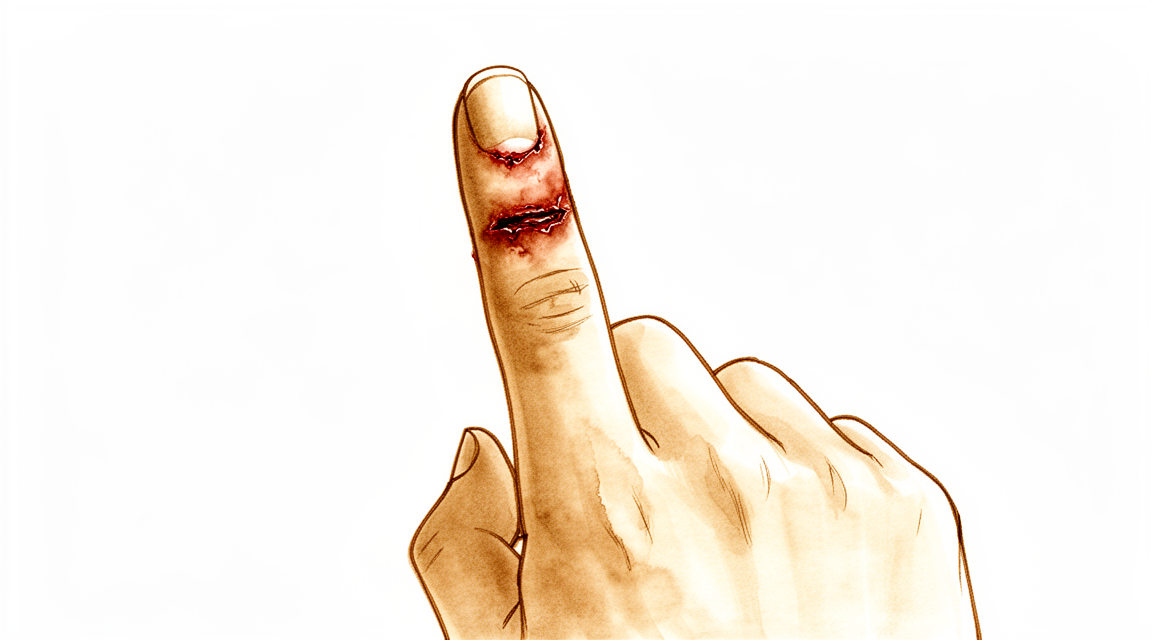
What you're feeling
A fingertip injury usually hurts right at the end of the finger, where the skin, nail and bone are close together. The pain is often sharp at first, then settles into a throbbing ache. It tends to flare when you knock the finger, grip something firmly, or use the finger to pinch or press. Cold can also set symptoms off in the hand, and this is a common cause of ongoing trouble after a fingertip injury.
Everyday tasks can become awkward. Doing up buttons, tying shoelaces, turning a key, picking up coins and holding a pen all rely on a fingertip that can feel and grip. If your fingertip is numb, weak or painful, these small jobs take longer and feel clumsy. If the injury is on your thumb or your dominant hand, writing, eating and using a phone can be harder still.
You may notice the finger feels different at night or first thing in the morning, and it often complains after a busy day of use. Numbness, tingling and weakness are worth telling your surgeon about, along with how the injury happened, which hand you favour, your work, whether you smoke, and any past operations or health conditions. All of this shapes the plan for your care.
One more thing worth knowing. Fingertip injuries are often treated as minor, and many people are sent off with no follow-up at all. They deserve the same care as any other hand injury. Infection after these injuries is uncommon, at 2.5%, so routine antibiotics are not always needed. Some people also find a fingertip injury weighs on their mood, especially when the finger cannot do what it used to. If that is you, mention it. It is a real part of the injury, and it belongs in the conversation.
What's actually happening
Your fingertip is the last part of the finger, past where the tendons that bend and straighten it attach. It is a small, busy piece of anatomy: skin, pulp, nail and bone packed close together, with fine nerves that give it its sharp sense of touch. That sense of touch is the whole point of a fingertip. It is what lets you feel a coin in your pocket or a key in a lock.
When the tip is crushed or cut, several of these parts can be hurt at once. A crush, like a finger caught in a door, can bleed under the nail, split the nail bed, or break the small bone at the tip. A cut from glass or a knife can take away skin and pulp, and in some cases take the tip off completely. Doctors describe these injuries as open or closed, depending on whether tissue has been lost. They also look at three parts of the tip: the pulp, the nail and the bone, because any of them can be damaged alone or together.
The symptoms you read about above follow from this. Numbness and tingling come from injured nerves. Cold sensitivity comes from damaged circulation in the tip. Nail changes come from injury to the nail bed, and scar pain comes from the healing skin itself.
The good news is that these injuries are mostly preventable, and most happen at home, in a door or a window. They are also very treatable. The aim of care is simple: cover the tip with healthy skin, keep as much feeling as possible, and keep the finger a useful length and shape. Getting there takes the same careful attention any hand injury deserves, because a fingertip that cannot feel or grip changes how your whole hand works.
What we can do about it
Dr Kieran Hirpara, an upper-limb surgeon at Mater Private Hospital Rockhampton, matches the treatment to your specific injury. Patients are generally referred to our clinic by their GP; if a physiotherapist has suggested you see us, you will still need a referral from your GP in order to be eligible for the Medicare rebate. At the clinic visit we take a history, examine the finger, and arrange imaging if it is needed. That tells us which parts of the tip are hurt: the skin, the pulp, the nail or the bone.
Many fingertip injuries heal without an operation. We often start with a dressing that stays on while the tip heals itself. This kind of care can work even when a little bone is showing, and it means no hospital stay and no time in theatre. It suits many injuries to the tip, including the thumb, and aims to restore the shape of the finger and its sense of touch. Hand therapy may be added to keep the rest of the finger moving while the tip heals.
Medicines are a supporting role, not the main treatment. Simple pain relief taken as directed can get you through the first days. Antibiotics are not routine for these injuries, as we covered above, because infection is uncommon. If a wound looks red, weeping or increasingly painful, tell us rather than waiting.
Surgery comes into the picture when the tip cannot heal well on its own, or when too much of the finger has been lost. If the tip has been completely cut off, it can sometimes be reattached. This is called replantation. It is finer, longer work than shortening the finger, and the recovery takes longer too. The goal is not just a finger that survives, but one you can actually use. For children, we aim to reattach the tip whenever it is possible. Age on its own does not rule out replantation either.
When part of the tip is missing but cannot simply be stitched back, we can rebuild it. Skin can be moved from a nearby finger, or from elsewhere on the hand, to cover the bare tip and give it padding. The nail bed can be repaired or grafted so the nail grows back as normally as possible. If you kept the amputated part, bring it with you, chilled and wrapped, because it can sometimes be used for later rebuilding.
Some severe injuries, such as fingers caught in machinery, may need bigger decisions, including shortening or reshaping a finger. Whatever the option, we will talk it through with you and decide together what suits your hand and your life.
What to expect
Most fingertip injuries settle with the right care. The aim of treatment is to stop long-term problems, and with careful attention the tip usually heals into a finger that looks and works well. Many heal with dressings alone, even when a little bone is showing. If the tip has been reattached, the outlook for function is better than if the finger is simply shortened, but the recovery takes longer and the work is finer.
Some things can linger. Cold intolerance, meaning the finger aches or stings in the cold, is common after these injuries. Numbness or changed feeling in the tip, scar pain and nail changes can also stay on. One in three people who have the finger shortened for an acute injury report long-term nerve pain. These problems are hard to put a number on, because many people are never sent for follow-up after a fingertip injury, so the true rate of ongoing trouble is unclear.
A few things shape your outlook. Injuries to the very tip of the finger and to the thumb, being male, and a longer gap before a reattached part is back on its blood supply are linked with a somewhat worse outlook after replantation. For a finger torn away by something grabbing it, like a ring catching on machinery, how well the finger survives depends mostly on how much hidden damage the injury did inside the finger. Severe crush injuries, such as those from machinery, tend to do worse when the damage is widespread.
Leaving a fingertip injury alone is not always harmless. If a wound is missed or treated wrongly at the start, it can delay your return to work, and some people need further operations later. Children's fingertip injuries mostly happen at home, in a door or a window, and are mostly preventable, so take them seriously rather than waiting to see.
Recovery is gradual. The tip heals over weeks, and feeling, strength and confidence in the finger return slowly over months. Hand therapy helps the rest of the finger keep moving while the tip heals. If any of the ongoing problems above appear, tell us, because they deserve attention just as much as the wound itself.
When to see someone
Most fingertip injuries can wait for a GP visit or a routine review. Some cannot. Go to an emergency department if the tip has been completely cut off, if the finger is pale, blue or cold, or if the wound is from a firework, machinery or an animal bite. These injuries can involve skin, muscle, tendon, nerve, vessel and bone all at once, and they need same-day assessment. Ask for a specialist review if you have numbness, weakness or pain that is not settling, if the finger looks shortened or misshapen after a crush, or if a wound becomes red, weeping or increasingly painful. Take children's fingertip injuries seriously rather than waiting to see. Most happen at home, in a door or a window, and they deserve proper care.
In more depth
Advanced reading: the deeper science (optional)
This section goes further than you need for your own treatment decisions. Fingertip injuries are worth the extra reading because the treatment with the best combination of outcomes is the one that involves no operation at all, a finding that runs against the instinct to close a wound.
Letting it heal open outperforms closing it
When a fingertip is amputated, the reconstructive options are a flap, a graft, or dressings and time — allowing the wound to close by secondary intention, from the edges inwards.
Reviewing 1,592 cases of secondary healing, conservative wound management with dressings and protective splints allows patients to avoid immobilisation and donor site morbidity, achieves near-normal sensibility and minimal cold intolerance, and enables early return to work [1].
Four separate advantages, and each addresses a specific cost of the surgical alternatives. A flap requires taking tissue from somewhere else, which creates a second wound and often needs the finger immobilised while it heals. Flap tissue brings its own nerve supply, which is not the fingertip's, so sensation is different in quality. Cold intolerance, an underappreciated long-term complaint after fingertip injury, is reported as minimal with secondary healing.
The fingertip has a remarkable capacity to regenerate its own contour and sensation when given the conditions to do so, particularly where bone is not exposed. The main costs of the conservative route are the time involved and the dressing changes, which is a real burden but a temporary one.
Where a graft is used, age predicts survival
Composite grafting, replacing the amputated part as a graft without reconnecting blood vessels, is described as feasible and effective for restoring an aesthetically functional digit across 720 patients, with the graft surviving in the majority and a more significant survival pattern among younger populations [2].
That age effect is worth knowing before the decision is made, because a composite graft that fails leaves a wound that then has to heal by the conservative route anyway, having lost time.
Replantation: what it can and cannot restore
Where a whole digit is amputated, replantation reconnects the vessels. The honest summary of its results across 619 patients is that digit replant does not restore premorbid hand function, but does result in adequate hand function, and that this expectation should form part of the decision-making [3].
The survival factors are also better defined than commonly assumed. Across 2,641 replantations, gender and ischaemia time had no significant influence on survival, while age, which hand, injury type, zone, and the method used to preserve the amputated part all did [4].
Ischaemia time not reaching significance is the surprising one, given the urgency that surrounds these injuries. It should not be read as time being unimportant, it likely reflects that appropriately preserved digits tolerate longer delays than expected, which is precisely why the preservation method mattered. The practical instruction that follows: wrap the amputated part in damp gauze, seal it in a bag, and place that on ice, never the part directly on ice.
The nail bed is the part that determines appearance
Much of the long-term appearance of a fingertip injury is decided by the nail bed beneath the nail plate. A nail bed laceration repaired accurately usually produces a normal nail; one left unrepaired, or healed over a fragment of bone that has shifted, produces a split, ridged or hooked nail permanently. This is why an apparently minor injury with a nail bed component is treated with more care than its size suggests.
References for the advanced reading
- Krauss EM, Lalonde DH. Secondary healing of fingertip amputations: a review. Hand (N Y). 2014;9(3):282-8.
- Elameen AM, Dahy AA, Abu-Elsoud A, Gad AA. Factors predicting composite grafts survivability in patients with fingertip amputation: a systematic review and meta-analysis. J Orthop Surg Res. 2024;19(1).
- Shaterian A, Sayadi LR, Tiourin E, Gardner DJ, Evans GRD, Leis A. Predictors of hand function following digit replantation: quantitative review and meta-analysis. Hand (N Y). 2019;16(1):11-7.
- Ma Z, Guo F, Qi J, Xiang W, Zhang J. Effects of non-surgical factors on digital replantation survival rate: a meta-analysis. J Hand Surg Eur Vol. 2015;41(2):157-63.
Evidence & references
This is the clinical evidence summary written for health professionals. It is technical, and it lists the research this page was built from. You do not need to read it to understand your treatment or to make a decision about it.
Overview
- Fingertip injuries in children are common and result in significant burden [1].
- Most fingertip injuries in children occur at home in a door or window [1].
- Fingertip injuries in children are mostly preventable [1].
- The Fingertip Injury Outcome Score (FIOS) is the most complete fingertip-specific outcome instrument [2].
- FIOS should be adopted as the primary standard for outcome reporting and long-term follow-up across fingertip injuries [2].
- Conservation of amputated fingertips provides the hand surgeon with new possibilities for late reconstruction of an injured digit [3].
- The parallelogram flap is a better choice for reconstruction of fingertip injury with bone exposure compared to the homodigital island flap [4].
- The incidence of infection following distal fingertip amputation and crush injury is 2.5% [5].
- There is a lack of a meaningful difference in infection rates between groups regarding antibiotic prophylaxis after distal fingertip injuries [5].
- The low incidence of infection and lack of meaningful difference between groups call into question prophylactic antibiotic prescribing after distal fingertip injuries [5].
- Secondary procedures are often necessary following hand and digit replants [9].
- Demographics play a significant role in the decision for finger replantation and its outcomes in pediatric patients [10].
- Injury factors play a significant role in the decision for finger replantation and its outcomes in pediatric patients [10].
- Donor finger morbidity is a common occurrence following cross-finger flaps [13].
- Donor finger morbidity following cross-finger flaps can produce a donor finger that is stiff and cosmetically displeasing [13].
- There is insufficient evidence to determine the best treatment method for composite defects of the fingertips [19].
- The lack of prospective randomized trials and disparate retrospective case series contributes to the insufficient evidence for treating composite fingertip defects [19].
- The philosophy of digital replantation aims to ensure not only the survival of a digit but its functional use as well [26].
- Current data are inadequate to make comments regarding donor site morbidity for toe-to-thumb transfers [27].
- An evidence-based recommendation for the superiority of a specific type of toe-to-thumb transfer cannot be made [27].
- Patient preference is not driving the decrease in finger replantations in the United States [50].
Anatomy & Pathophysiology
Fingertip Definition and Function
- The fingertip is defined as the portion of the finger distal to the insertion of the flexor and extensor tendons [20].
- The fingertip is the most commonly injured part of the hand [20].
- The unique anatomy and specialized structure of the fingertip make it critical for functions such as sensation, fine handling, and gripping [20].
- The nail plate plays an important role in the normal function of the hand by protecting the fingertip from injury, regulating the circulation of the fingertip, providing the counterforce necessary to pick up small objects, and contributing to the tactile sensation of the fingertip [78].
General Hand Anatomy and Architecture
- The hand is both an organ designed to obtain information and an organ of execution [34].
- The hand consists of 19 bones, 17 articulations, and 19 muscles situated entirely within the hand, and about the same number of tendons activated by the forearm muscles [34].
- The digits are divided into the thumb and four fingers [34].
- The thumb has a more proximal and lateral position, allowing movement inward and outward from the palm [34].
- The four fingers are the distal extension of the carpometacarpal part of the hand [34].
- When the fingers are extended and separated, the tips of the fingers lie on the circumference of a circle whose center is the head of the third metacarpal [34].
- The hand’s blood and nerve supplies are continuous with those of the rest of the limb [34].
- Some of the hand's muscles, the extrinsic muscles, arise in the arm and forearm [34].
Cutaneous Anatomy and Functional Units
- There are “functional cutaneous units” in the hand similar to the ones customarily described in the face [35].
- The dorsal integument of the distal phalanx is very special because of the nail bed with its matrix [35].
- The palmar integument of the digits may be subdivided into phalangeal units separated by the digital flexion folds [35].
- When a digit is completely flexed, the integument of the adjacent phalanges comes into contact in the zones of the flexion creases, establishing areas of cutaneous contact in the form of a diamond [35].
- The sides of this diamond do not undergo variations in length during the movements of flexion and extension [35].
- Incisions made along the level of the diamond's sides present a minimal chance of retraction [35].
- The web spaces are formed from the union of two nonsymmetrical cutaneous surfaces [35].
- The dorsal slope of the web space has a gradual incline and its supple skin is not adherent to the subjacent region [35].
- The palmar surface of the web space is flat and precipitously interrupted, and the skin is densely adherent to the commissural skeleton [35].
- The commissural skeleton is formed by the interdigital palmar (natatory) ligament between the fingers and by the distal transverse ligament at the level of the thumb web [35].
Vascular Anatomy
- The arteries of the thumb vary in both size and number, making surgical reconstruction delicate [40].
- The most common variations of the palmar arteries can be schematized by dividing the thumb into three segments defined by the metacarpophalangeal and interphalangeal flexion creases [40].
- In the classical layout, the “princeps pollicis” artery crosses the first intermetacarpal space and runs along the ulnar side of the first metacarpal bone [40].
- The princeps pollicis artery emerges onto the subcutaneous palmar tissue at the level of the cutaneous flexion crease of the metacarpophalangeal joint [40].
- At the metacarpophalangeal joint, the princeps pollicis divides into two terminal rami, namely the collateral palmar arteries of the thumb [40].
- The collateral palmar arteries run along the digital tunnel symmetrically and are of equal caliber [40].
- The collateral palmar arteries head distally to finally unite in the pulp arcade [40].
- During their transit in the digital tunnel, the collateral palmar arteries break off into numerous collateral branches, either cutaneous, articular or osseous [40].
- An arcade located deep in the flexor tendon joins together the two arteries at the level of the distal metaphysis of the first phalanx [40].
- From the distal metaphysis arcade, vessels originate which enter the “vincula” and irrigate the flexor tendon [40].
- Only 15% of dissections fall into the category of the classical description of the palmar arteries of the thumb [40].
- In the second segment of the thumb, the two arteries run alongside the flexor tendon and behind the collateral nerves [40].
- In the second segment, the main artery is the ulnar collateral artery [40].
- The subtendinous anastomosis situated at the level of the neck of the first phalanx acts as “moderator” between the two arteries [40].
- In cases where the palmar ulnar collateral artery is absent, the dorsal artery takes its place by means of a branch through the subtendinous arcade [40].
- In the pulp segment, the two arteries are of similar size and run through the thick fatty subcutaneous padding [40].
- In the pulp segment, the arteries cross over and convert into the ends of the digital nerves at the level of the median axis [40].
- The posterior area of the thumb is vascularized by two arteries which originate from the palmar arteries at the level of the first metacarpal [40].
- These dorsal arteries run laterally along the metacarpophalangeal joint and continue obliquely from volar to dorsal [40].
- At the level of the neck of the first phalanx, an anastomosis can be found which originates from the palmar arteries [40].
- The dorsal arteries are joined by three arcades: one inconstant arcade located under the extensor tendon at the level of the neck of the first phalanx, the arcade of the nail matrix, and the arcade of the nailbed [40].
Muscular Anatomy
- There are seven interosseous muscles, four dorsal and three volar [36].
- The dorsal interossei are abductors [36].
- The anatomic axis of the hand coincides with the axis of the third metacarpal [36].
- The dorsal interossei lie to the radial side of the index and middle fingers and the ulnar side of the middle and ring fingers [36].
- The little finger is abducted by the abductor digiti quinti [36].
- The volar interossei are adductors [36].
- The volar interossei lie to the ulnar side of the index finger and the radial side of the ring and little fingers [36].
- The middle finger has two dorsal interossei (abductors) and no volar interossei (adductors) because the central axis of the hand lies within it [36].
- Each dorsal interosseous muscle, with the exception of the third, has two muscle heads [36].
- The superficial head of the dorsal interosseous arises most dorsally from the shaft of the contiguous metacarpals [36].
- The superficial head is inserted deeply by a medial tendon onto the lateral tubercle of the base of the proximal phalanx [36].
- The superficial head abducts and weakly flexes the proximal phalanx [36].
- The superficial head has no direct effect on the middle or distal phalanges [36].
- The deep head of each dorsal interosseous muscle forms a lateral tendon, or lateral band, at the level of the MP joint [36].
- The deep head flexes and weakly abducts the proximal phalanx while extending the middle and distal phalanges [36].
- At the level of the middle of the proximal phalanx, transverse fibers arch dorsally from each lateral band to join each other over the dorsum of the finger [36].
- These transverse fibers flex the proximal phalanx [36].
- More distally, oblique fibers (spiral fibers) from the lateral bands sweep over the distal third of the proximal phalanx to insert onto the lateral tubercles at the base of the middle phalanx [36].
- The oblique fibers extend the middle phalanx (PIP joint) [36].
- More distally, the lateral bands are joined by the lateral slips of the extensor tendon to form the conjoined lateral band [36].
- The two conjoined lateral bands to each finger unite at the distal third of the middle phalanx to form the terminal tendon [36].
- The terminal tendon inserts at the base of the distal phalanx to extend it [36].
- The flexor digiti quinti brevis is structurally and functionally similar to the deep head of the dorsal interossei [36].
- The flexor digiti quinti brevis forms the ulnar lateral band of the little finger [36].
- The three volar interossei arise from adjacent surfaces of contiguous metacarpal shafts [36].
- Each volar interosseous muscle has only one muscle head and none of them insert onto the proximal phalanx [36].
- The volar interossei form the ulnar lateral band of the index finger and the radial lateral band of the ring and little fingers [36].
- The volar interossei send oblique or spiral fibers that insert onto the base of the middle phalanx at its lateral tubercle [36].
- All lateral bands are joined by the lateral slips of the extensor tendon to form a conjoined lateral band and finally a terminal tendon that extends to the distal phalanx [36].
- The abductor digiti quinti and flexor digiti quinti brevis are similar in both structure and function to the superficial and deep heads of the dorsal interossei, respectively [36].
- The abductor digiti quinti arises from the fifth metacarpal [36].
- The abductor digiti quinti inserts onto the ulnar lateral tubercle at the base of the proximal phalanx of the little finger [36].
- The flexor digiti quinti forms the ulnar lateral band [36].
- The opponens digiti quinti lies deepest among the hypothenar muscles [36].
- The opponens digiti quinti arises from the pisohamate ligament and the hook of the hamate [36].
- The opponens digiti quinti inserts onto the ulnar side of the diaphysis of the fifth metacarpal [36].
- The opponens digiti quinti flexes and supinates the fifth metacarpal [36].
Pathophysiology and Injury Patterns
- Fingertip injuries in children are common and result in significant burden, yet are mostly preventable [1].
- The precise management of a fingertip injury in adults depends on the degree of injury itself [7].
- A number of operative and non-operative techniques may be successfully employed for fingertip injuries in adults [7].
- Subungual hematomas are caused by crush injuries to the fingertip and are one of the most common injuries to the hand [78].
- Associated injuries to subungual hematomas include distal phalanx fractures, nail plate disruption, nail matrix laceration, and partial or complete fingertip amputation [78].
- Without proper treatment, injury to the nail complex (perionychium) has potential complications [78].
- The conservation of amputated finger-tips provides the hand surgeon with new possibilities for late reconstruction of an injured digit [3].
- Factors including mechanism of injury, preservation and condition of the amputated part, ischemia time, availability of a trained team at an institution, and adequacy of resources can substantially influence and even preclude the capability of performing a distal replantation [20].
- Digit replant does not restore premorbid hand function but does result in adequate hand function [52].
- In addition to injury factors, demographics play a significant role in the decision for finger replantation and its outcomes [10].
Classification
- Amputations are distinguished into two main categories: complete and incomplete [74].
- In incomplete amputations, the distal segment is connected to the proximal stump by bridging tissue [74].
- Incomplete amputations are further divided into incomplete non-viable and incomplete viable amputations based on the viability of the amputated part [74].
- In incomplete viable amputations, the distal segment maintains sufficient blood circulation and does not need major additional microvascular reconstruction [74].
- In incomplete non-viable amputations, circulation is inadequate and necessitates microvascular reconstruction [74].
- Avulsion injuries constitute a distinct category due to extensive damage of vessels and nerves [74].
- In avulsion injuries, stretched vessel walls and nerve fibers may be found at various distances from the actual severing point [74].
- The presence of the 'ribbon sign' suggests longitudinally transmitted injury to the vessel wall and indicates poor prognosis [74].
- Ring injuries are a special type of avulsion injury [74].
- Urbaniak classified ring injuries into three types [74].
- Type I ring injuries are characterized by adequate circulation [74].
- Type II ring injuries are characterized by inadequate circulation and viability of the digit after vessel repair [74].
- Type III ring injuries are characterized by complete degloving or complete amputation [74].
- Beris et al. further divided complete amputated ring avulsion injuries into two subtypes based on the involvement of the PIP joint and the rupture of the flexor tendon [74].
- Ring injuries are defined as class IIIa in case of skin avulsions at the level of the proximal phalanx, amputation at the distal interphalangeal joint with an intact flexor digitorum superficialis [74].
- Ring injuries are defined as class IIIb in case of skin avulsion and complete amputation at the level of the proximal phalanx, with severance [74].
- Hand wounds are classified according to the method or agent of injury into two main types: lacerating violence and crushing violence [75].
- Lacerating injuries are caused by cutting instruments, sharp pieces of metal, and glass [75].
- Crushing injuries are open contusions seen after the hand has been caught in power presses, doors, and hammers [75].
- Open contusions are more severe than lacerations of the same extent due to a higher incidence of damage to bone and other deep structures [75].
- Open contusions are more severe than lacerations of the same extent due to progressive oedema for the first twenty-four to forty-eight hours after injury [75].
- Open contusions are more severe than lacerations of the same extent due to the indeterminate extent of deep-tissue loss in the early stages [75].
- The natural history of open contusion wounds is for healing to take two to three weeks [75].
- Healing in lacerating injuries may be expected in one week after full orthodox treatment [75].
Clinical Presentation
History and Epidemiology
- Fingertip injuries in children are common and result in significant burden, yet are mostly preventable, with most injuries occurring at home in a door or window [1].
- Assessment of patients with fingertip injuries should include a focused history including age, sex, handedness, mechanism of injury, occupation, smoking status, medical comorbidities, tetanus vaccination, and previous operations on the affected hand [6].
- The examiner should also elicit any subjective symptoms including numbness, weakness, or pain [6].
- Patients presenting with abuse are significantly more likely to have fingertip injuries during childhood compared with those without recorded abuse, which suggests that these injuries may be ones of abuse or neglect [11].
- In non-work-related finger amputations in the United States (2001-2002), hand injuries are common presentations in the emergency department [46].
- In upper extremity amputations from lawn mower-related injuries, 40- to 60-year-old men were most often involved, most commonly leading to amputation of the third finger in isolation [22].
Physical Examination and Evaluation
- Clinical evaluation of the injured or dysfunctional hand and wrist can be a daunting task because painless and full hand function requires seamless integration of joints, muscles, and nerves to complete even the most basic task [17].
- Patients often have difficulty accurately describing their symptoms and may incorrectly attribute pathology to a perceived deficit, whether real or imagined [17].
- The task of the astute clinician is to combine the patient history with a careful physical examination to pinpoint or at least narrow the scope of possible pathologic processes [17].
- Diagnostic tests such as imaging and serum laboratory studies are useful in this determination but can be expensive, time consuming, and often nonspecific [17].
- A careful physical examination is essential to direct care and future testing if indicated [17].
- With so many structures in such a small space, a systematic method to approaching the physical examination is essential [17].
- Some clinicians may prefer to organize their examination by anatomic location or region of the hand, while others may choose to proceed by organ system or pathology [17].
Functional Outcomes and Comorbidities
- FIOS is the most complete fingertip-specific outcome instrument and should be adopted as the primary standard for outcome reporting and long-term follow-up across fingertip injuries [2].
- There is a correlation between experienced loss of function and an estimated diagnosis of major depression in patients with a fingertip injury [8].
Investigations
- The examiner should elicit subjective symptoms including numbness, weakness, or pain during the assessment of fingertip injuries [6].
- A correlation exists between experienced loss of function and an estimated diagnosis of major depression in patients with a fingertip injury [8].
- Patients presenting with abuse are significantly more likely to have fingertip injuries during childhood compared with those without recorded abuse [11].
- Radial-digit involvement and no prior tobacco use were associated with replantation success [23].
Treatment
General Principles and Evaluation
- The examiner should elicit any subjective symptoms including numbness, weakness, or pain during the assessment of patients with fingertip injuries [6].
- A number of operative and non-operative techniques may be successfully employed for the management of a fingertip injury in adults [7].
Non-Operative Management
- Conservative treatment with semiocclusive dressings has become more acceptable due to excellent results in restoring contour, sensibility, and aesthetics for fingertip and thumb tip injuries [59].
- The low incidence of infection (2.5%) and lack of a meaningful difference between groups call into question prophylactic antibiotic prescribing after distal fingertip injuries [5].
Operative Management: Replantation and Revascularization
- Although replantation of an amputated fingertip may be the best way to achieve aesthetic and functional reconstruction, this is not always possible [20].
- The most significant guideline underlining the philosophy of digital replantation today reflects the aim of not only ensuring the survival of a digit, but its functional use as well [26].
- Age alone should not be an absolute contraindication to finger replantation [45].
- The need for a vein graft for a large zone of injury should not be considered a relative contraindication to perform revascularization or replantation of dysvascular digits [47].
- Age, injured hand, injury type, zone, and the method of preservation the amputated digit significantly influence the survival rate of digital replantation [55].
- The treatment of the mutilated hand is perhaps the most challenging acute hand injury that hand surgeons treat [12].
- Venous congestion after digital replantation or revascularization threatens digit survival in the immediate postoperative period [56].
- External bloodletting, including leech therapy, provides a central role in salvage of the congested finger following digital replantation or revascularization [56].
- Negative pressure wound therapy (NPWT) maintains wound homeostasis and reduces wound exudate and soft tissue edema in the treatment of extremity salvage [57].
- Use of NPWT on the amputation stump may shorten the delay from initial ectopic banking to subsequent delayed replantation [57].
Operative Management: Flap Reconstruction
- When replantation of a fingertip amputation is not possible, flap reconstruction may be necessary for a functional and aesthetically pleasing outcome [20].
- There is insufficient evidence to determine the best treatment method for composite defects of the fingertips due to the lack of prospective randomized trials and disparate retrospective case series [19].
- After surgery for direct dorsal digital island flaps, the injured finger is placed in a splint with the interphalangeal joints in slight flexion and the metacarpophalangeal joint in extension position so as to maintain a tension-free pedicle [58].
- Patients treated with direct dorsal digital island flaps have the splint removed and start active range-of-motion exercises with the help of a physical therapist after 2 weeks [58].
- A reversed digital artery island flap based on the ulnar digital artery can be used to reconstruct full-thickness electrical burn defects at the fingertip [49].
- The secondary defect following a reversed digital artery island flap can be closed with a full thickness skin graft [49].
Rehabilitation
- Clinical outcomes indicate that remote and in-person hand therapy provide similar results for patients with flexor tendon repairs in zones 1 and 2 [25].
Complications
- There is no meaningful difference in infection rates between groups regarding prophylactic antibiotic prescribing after distal fingertip injuries [5].
- Unplanned reoperation occurred in 44% of patients treated with repair for combined index finger injury [67].
- Unplanned reoperation occurred in 21% of patients treated with immediate amputation for combined index finger injury [67].
- Patients are twice as likely to have an unplanned reoperation after a repair for combined injury of the index finger compared with an immediate amputation [67].
- Six patients (18%) had amputation after initial repair of a combined index finger injury [67].
- Patients who had a reoperation for fingers other than the index finger were at risk for unplanned reoperation after repair [67].
- Women were more likely to have an unplanned reoperation than men following combined index finger injury [67].
- Patients who had a ray amputation were at risk for unplanned reoperation after immediate amputation [67].
- There is no significant difference in the incidence of unplanned or secondary revision of fingertip amputation rate after the initial procedure was performed in the emergency department versus the operating room [70].
- Donor finger morbidity from cross-finger flaps can produce a donor finger that is stiff and cosmetically displeasing [13].
Recovery
- Remote and in-person hand therapy provide similar clinical results for patients with flexor tendon repairs in zones 1 and 2 [25].
- Both functional outcomes and patient-reported outcomes together facilitate a comprehensive assessment of the benefits of replantation for amputation injuries in the hand [53].
- The results of delaying replantation of digits overnight give results comparable with those of immediate replantation in selected cases [62].
Key Evidence
- [L4] Fingertip injuries in children are common and result in significant burden, yet are mostly preventable, with most injuries occurring at home in a door or window. [1] (10.1177/1558944716670139)
- [L3] FIOS is the most complete fingertip-specific outcome instrument and should be adopted as the primary standard for outcome reporting and long-term follow-up across fingertip injuries. [2] (10.2106/jbjs.rvw.25.00128)
- [L4] The conservation of these finger-tips provides the hand surgeon with new possibilities for late reconstruction of an injured digit. [3] (10.1016/s0020-1383(73)80022-1)
- [L2] This method is a better choice for reconstruction of fingertip injury. [4] (10.1186/s13018-022-03214-1)
- [L3] The low incidence of infection (2.5%) and lack of a meaningful difference between groups call into question prophylactic antibiotic prescribing after these distal fingertip injuries. [5] (10.1016/j.jhsg.2023.07.010)
- [L5] [6] (10.5435/jaaos-d-24-00818)
- [Paper] However, the precise management of a fingertip injury in adults depends on the degree of injury itself, and a number of operative and non-operative techniques may be successfully employed. [7] (10.1016/j.injury.2017.10.042)
- [L3] We have found a correlation between experienced loss of function and an estimated diagnosis of major depression in patients with a fingertip injury. [8] (10.1177/15589447211060456)
- [Paper] Secondary procedures are often necessary following hand and digit replants. [9] (10.1055/s-0039-1681981)
- [L3] Our findings demonstrate that in addition to injury factors, demographics play a significant role in the decision for finger replantation and its outcomes. [10] (10.1177/1558944719873150)
- [L3] Patients presenting with abuse are significantly more likely to have fingertip injuries during childhood compared with those without recorded abuse, which suggests that these injuries may be ones of abuse or neglect. [11] (10.1016/j.jhsg.2019.09.001)
- [L5] The treatment of the mutilated hand is perhaps the most challenging acute hand injury that hand surgeons treat. [12] (10.1016/s0749-0712(02)00137-3)
- [L4] We can confirm the anecdotal reports of donor finger morbidity and have shown that these are in fact a common occurrence, and at times produce a donor finger which is both stiff and cosmetically displeasing. [13] (10.1016/s0020-1383(99)00205-3)
- [L5] There is insufficient evidence to determine the best treatment method for composite defects of the fingertips due to the lack of prospective randomized trials and disparate retrospective case series. [19] (10.1016/j.jhsa.2008.07.001)
- [L5] [20] (10.1016/j.jhsa.2015.02.010)
- [L4] When these events did occur, 40- to 60-year-old men were most often involved, most commonly leading to amputation of the third finger in isolation. [22] (10.1177/15589447241300697)
- [L4] Radial-digit involvement and no prior tobacco use were associated with replantation success. [23] (10.2106/jbjs.l.01219)
- [L3] Clinical outcomes indicate that remote and in-person hand therapy provide similar results for patients with flexor tendon repairs in zones 1 and 2. [25] (10.1177/15589447251339498)
- [L5] The most significant guideline underlining the philosophy of digital replantation today reflects the aim of not only ensuring the survival of a digit, but its functional use as well. [26] (10.1054/jhsb.2001.0595)
- [L2] The current data are inadequate to make any comments with regards to donor site morbidity, and an evidence-based recommendation for the superiority of a specific type of toe-to-thumb transfer cannot be made. [27] (10.1007/s11552-011-9340-x)
- [L3] Age alone should not be an absolute contraindication to finger replantation. [45] (10.1016/j.jhsa.2011.01.031)
- [L4] [46] (10.1016/j.annemergmed.2004.10.012)
- [L3] The need for a vein graft for a large zone of injury should not be considered a relative contraindication to perform revascularization or replantation of dysvascular digits. [47] (10.1016/j.jhsa.2017.06.080)
- [L5] [49] (10.1016/s0020-1383(03)00100-1)
- [L3] Patient preference is not driving the decrease in finger replantations in the US. [50] (10.1016/j.jhsa.2015.05.026)
- [L1] Digit replant does not restore premorbid hand function but does result in adequate hand function. [52] (10.1177/1558944719834658)
- [L4] Both functional outcomes and patient-reported outcomes together facilitate a comprehensive assessment of the benefits of replantation for amputation injuries in the hand. [53] (10.1016/j.hcl.2018.12.008)
- [L5] Age, injured hand, injury type, zone, and the method of preservation the amputated digit significantly influence the survival rate of digital replantation. [55] (10.1177/1753193415594572)
- [L5] [56] (10.1016/j.jhsa.2020.03.026)
- [L4] [57] (10.1016/j.hcl.2019.01.002)
- [L4] [58] (10.1016/j.injury.2014.08.030)
- [L5] The article provides an update on the most commonly used flaps and semiocclusive dressing treatments for fingertip and thumb tip injuries, noting that conservative treatment with semiocclusive dressings has become more acceptable due to excellent results in restoring contour, sensibility, and aesthetics. [59] (10.1016/j.jhsa.2017.01.022)
- [L4] The results of delaying replantation of digits overnight give results comparable with those of immediate replantation in selected cases. [62] (10.1016/j.jhsa.2018.03.047)
- [L4] [67] (10.1016/j.jhsa.2015.12.013)
- [L3] There is no significant difference in the incidence of unplanned/secondary revision of fingertip amputation rate after the initial procedure was performed in the ED versus the OR. [70] (10.1177/1558944718790577)
- [L4] [74] (10.1007/s00402-009-1021-7)
- [L4] [75] (10.2106/00004623-195537030-00006)
- [L5] [78] (10.1016/j.jhsa.2013.04.009)
References
[1] Fingertip Injuries in Children: Epidemiology, Financial Burden, and Implications for Prevention. HAND. 2016. DOI: 10.1177/1558944716670139
[2] Outcome Scores for Fingertip Injuries. JBJS Reviews. 2025. DOI: 10.2106/jbjs.rvw.25.00128
[3] Preservation of amputated finger-tips. Injury. 1973. DOI: 10.1016/s0020-1383(73)80022-1
[4] Parallelogram flap versus homodigital island flap in the treatment of fingertip defects with bone exposure: a prospective controlled study. Journal of Orthopaedic Surgery and Research. 2022. DOI: 10.1186/s13018-022-03214-1
[5] Antibiotic Prophylaxis in the Management of Distal Fingertip Amputation and Crush Injury. Journal of Hand Surgery Global Online. 2023. DOI: 10.1016/j.jhsg.2023.07.010
[6] Fingertip Injuries: A Review and Update on Management. Journal of the American Academy of Orthopaedic Surgeons. 2024. DOI: 10.5435/jaaos-d-24-00818
[7] Management of partial fingertip amputation in adults: Operative and non operative treatment. Injury. 2017. DOI: 10.1016/j.injury.2017.10.042
[8] A Threshold QuickDASH Score for Estimating a Diagnosis of Major Depression in Patients With Fingertip Injuries in the American and Dutch Population. HAND. 2021. DOI: 10.1177/15589447211060456
[9] Characteristics of Secondary Procedures following Digit and Hand Replantation. Journal of Hand and Microsurgery. 2019. DOI: 10.1055/s-0039-1681981
[10] Pediatric Digit Replantation Following Traumatic Amputation: Nationwide Analysis of Patient Selection, Outcomes, and Cost. HAND. 2019. DOI: 10.1177/1558944719873150
[11] Pediatric Fingertip Injuries: Association With Child Abuse. Journal of Hand Surgery Global Online. 2020. DOI: 10.1016/j.jhsg.2019.09.001
[12] Replantation in the mutilated hand. Hand Clinics. 2003. DOI: 10.1016/s0749-0712(02)00137-3
[13] Donor finger morbidity in cross-finger flaps. Injury. 2000. DOI: 10.1016/s0020-1383(99)00205-3
[17] Orthopaedic Knowledge Update 13 Ebook Without Multimedia. Anatomy, Evaluation, Clinical Examination, and Imaging > Evaluation and Clinical Examination: Current Concepts.
[19] Fingertip Reconstruction. The Journal of Hand Surgery. 2008. DOI: 10.1016/j.jhsa.2008.07.001
[20] Reconstruction of Fingertip Injuries: Surgical Tips and Avoiding Complications. The Journal of Hand Surgery. 2015. DOI: 10.1016/j.jhsa.2015.02.010
[22] Epidemiological Analysis of Upper Extremity Amputations From Lawn Mower–Related Injuries. HAND. 2024. DOI: 10.1177/15589447241300697
[23] Digit Replantation. The Journal of Bone & Joint Surgery. 2013. DOI: 10.2106/jbjs.l.01219
[25] Telerehabilitation After Zone 1 and 2 Flexor Tendon Repairs: Comparison With In-Person Therapy. HAND. 2025. DOI: 10.1177/15589447251339498
[26] Indications and Selection for Digital Amputation and Replantation. Journal of Hand Surgery. 2001. DOI: 10.1054/jhsb.2001.0595
[27] A Systematic Review of Outcomes of Toe-to-Thumb Transfers for Isolated Traumatic Thumb Amputation. HAND. 2011. DOI: 10.1007/s11552-011-9340-x
[34] Exam Of The Hand Wrist 2Ed. INTRODUCTION.
[35] Exam Of The Hand Wrist 2Ed. Functional cutaneous units.
[36] Green S Operative Hand Surgery. Interosseous and Hypothenar Muscles.
[40] Exam Of The Hand Wrist 2Ed. Techniques of investigation of the arterial supply by J P Melki > Vascularization of the thumb > Palmar aspect.
[45] Adverse Events Following Digital Replantation in the Elderly. The Journal of Hand Surgery. 2011. DOI: 10.1016/j.jhsa.2011.01.031
[46] Non–Work-Related Finger Amputations in the United States, 2001-2002. Annals of Emergency Medicine. 2005. DOI: 10.1016/j.annemergmed.2004.10.012
[47] Survival Rate of Revascularization and Replantation of Digits with Vein Graft Versus Direct Arterial Anastomosis. The Journal of Hand Surgery. 2017. DOI: 10.1016/j.jhsa.2017.06.080
[49] Reverse digital artery island flap in the elderly. Injury. 2004. DOI: 10.1016/s0020-1383(03)00100-1
[50] A Comparative Study of Attitudes Regarding Digit Replantation in the United States and Japan. The Journal of Hand Surgery. 2015. DOI: 10.1016/j.jhsa.2015.05.026
[52] Predictors of Hand Function Following Digit Replantation: Quantitative Review and Meta-Analysis. HAND. 2019. DOI: 10.1177/1558944719834658
[53] Outcomes Following Replantation/Revascularization in the Hand. Hand Clinics. 2019. DOI: 10.1016/j.hcl.2018.12.008
[55] Effects of non-surgical factors on digital replantation survival rate: a meta-analysis. Journal of Hand Surgery (European Volume). 2015. DOI: 10.1177/1753193415594572
[56] Leech Therapy Following Digital Replantation and Revascularization. The Journal of Hand Surgery. 2020. DOI: 10.1016/j.jhsa.2020.03.026
[57] Revascularization and Replantation in the Hand. Hand Clinics. 2019. DOI: 10.1016/j.hcl.2019.01.002
[58] Direct and reversed dorsal digital island flaps: A review of 65 cases. Injury. 2014. DOI: 10.1016/j.injury.2014.08.030
[59] Fingertip and Thumb Tip Wounds: Changing Algorithms for Sensation, Aesthetics, and Function. The Journal of Hand Surgery. 2017. DOI: 10.1016/j.jhsa.2017.01.022
[62] Immediate Versus Overnight-Delayed Digital Replantation: Comparative Retrospective Cohort Study of Survival Outcomes. The Journal of Hand Surgery. 2018. DOI: 10.1016/j.jhsa.2018.03.047
[67] Reoperation After Combined Injury of the Index Finger: Repair Versus Immediate Amputation. The Journal of Hand Surgery. 2016. DOI: 10.1016/j.jhsa.2015.12.013
[70] Cost-Effectiveness of Initial Revision Digit Amputation Performed in the Emergency Department Versus the Operating Room. HAND. 2018. DOI: 10.1177/1558944718790577
[74] Digit and hand replantation. Archives of Orthopaedic and Trauma Surgery. 2009. DOI: 10.1007/s00402-009-1021-7
[75] THE CARE OF OPEN INJURIES OF THE HAND AND FINGERS WITH SPECIAL REFERENCE TO THE TREATMEN OF TRAUMATIC AMPUTATIONS. The Journal of Bone & Joint Surgery. 1955. DOI: 10.2106/00004623-195537030-00006
[78] Controversies in the Treatment of Nail Bed Injuries. The Journal of Hand Surgery. 2013. DOI: 10.1016/j.jhsa.2013.04.009