Clinicians › Hand
Fingertip Injuries
Crush, laceration, nail-bed and amputation injuries of the fingertip and their management.
For patients: a plain-language version of this topic is available. See the patient guide.
Overview
Fingertip injuries are common in children, frequently resulting from door or window accidents at home, yet they impose a significant burden and are largely preventable [1]. These injuries must be managed with the same rigour as all other hand surgery, with the primary goal of providing high-quality skin coverage and optimal sensibility to the digit [2]. While conservative treatment using silver sulphadiazine dressings is a safe and simple option that avoids hospital admission and operating theatre time, even when bone is exposed [15, 18], replantation is recommended whenever possible due to superior functional results compared to revision amputation [16, 19]. Although replantation is more technically demanding and requires longer recovery [19], appropriate understanding of involved structures and meticulous management generally lead to esthetic and functional outcomes [4]. The Fingertip Injury Outcome Score (FIOS) is the most complete specific instrument and should be adopted as the primary standard for outcome reporting and long-term follow-up [5].
Complication rates are low, with an infection incidence of 2.5% after distal amputation or crush injury [6]. Given the lack of meaningful difference in infection rates between groups, prophylactic antibiotic prescribing is called into question [6]. For reconstruction, the parallelogram flap is preferred over the homodigital island flap when bone exposure is present [11], and simultaneous primary reconstruction of dorsal and palmar injuries restores a satisfying fingertip [32]. The extended step-advancement flap serves as a viable alternative to replantation [60]. In cases of ring avulsion, finger survival is mostly influenced by the extent of intrinsic damage despite microsurgical advances [13]. Conservation of amputated fingertips provides new possibilities for late reconstruction [3], and secondary procedures are often necessary following hand and digit replants [20].
The philosophy of digital replantation aims to ensure not only digit survival but its functional use as well [58]. Minimal requirements for the hand include a stable wrist and two opposing sensate digits, with preservation of thumb-finger pinch and digito-palmar grip taking priority for function [37]. Demographics play a significant role in the decision for replantation and its outcomes, in addition to injury factors [34]. Specific indications for toe transfers are defined based on the presence or absence of the thumb and fingers [38], with excellent outcomes when cases are well selected [31]. However, current data are inadequate to comment on donor site morbidity for toe-to-thumb transfers, and an evidence-based recommendation for the superiority of a specific transfer type cannot be made [59]. There is insufficient evidence to determine the best treatment for composite fingertip defects due to the lack of prospective randomized trials [42], and it is highly difficult to conduct well-designed prospective studies for very distal finger replantation [24].
Anatomy & Pathophysiology
General Principles
Fingertip injuries in children are common, result in significant burden, and are mostly preventable [1]. Most occur at home involving a door or window [1]. These injuries are often deemed minor, leading to conservative management with no routine follow-up [10]. Recognition and proper management are important to prevent long-term disability [10]. Patients may suffer from cold-intolerance, sensory disturbance, scar pain, and nail deformities [10]. Symptoms in the hand on exposure to cold are often cited as a cause of disability after injury [10]. The fingertip is defined as the portion of the finger distal to the insertion of the flexor and extensor tendons [68]. The unique anatomy and specialized structure of the fingertip make it critical for functions such as sensation, fine handling, and gripping [68].
Functional requirements for the hand include a stable wrist and at least two sensate digits that can oppose with some power for functional prehension [30]. Minimal requirements are a stable wrist and 2 opposing sensate digits, with preservation of thumb-finger pinch and digito-palmar grip taking priority [37]. Sensation is the most important factor in thumb or fingertip repair, constituting 40% of the goal, while length and appearance account for 50% [55].
Injury Mechanisms and Classification
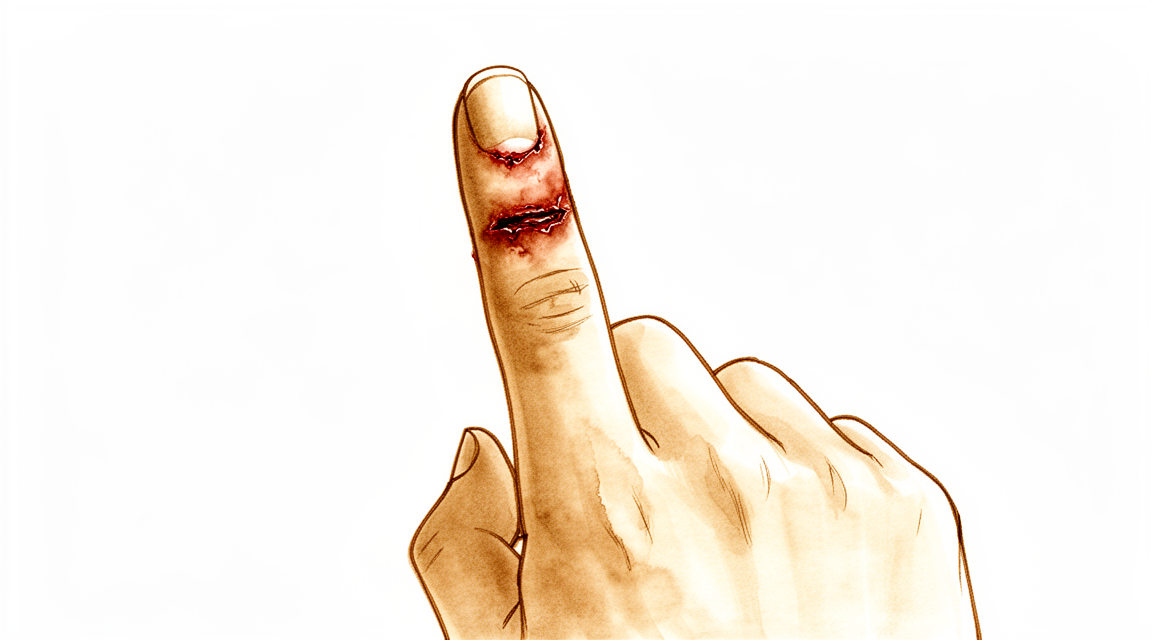
Blunt or crush injuries to the fingernail can result in subungual haematomas, nail bed lacerations, and fractures of the distal phalanx [10]. Incisional injuries, such as those caused by glass or knives, can result in minor or major soft tissue loss, including complete amputation [10]. Fingertip injuries are classified as 'open' or 'closed' depending on the presence of soft tissue loss [10]. Any soft-tissue damage in a fingertip injury can be associated with an underlying fracture to the distal phalanx [10]. The PNB Classification system for fingertip injuries is based on the effects to three components: the pulp, nail, and bone [10].
Firework-related hand injuries range from superficial burns to mangling injuries that involve skin, muscle, tendon, nerve, vessel, and bone [29]. These injuries can result in traumatic amputations [29]. The most common firework-related hand injuries are burns to the fingers, hand, and wrist [29].
Bony Anatomy
The skeleton of the hand consists of 27 bones, of which 19 are long bones [52]. The skeleton is divided into five rays, each ray making up a polyarticulated chain comprising the metacarpals and phalanges [52]. The radial ray or first ray is the shortest and is made up of only three bones: a metacarpal and two phalanges [52]. The other four digital rays are formed by four skeletal segments: a metacarpal and three phalanges [52]. The thumb metacarpal is the shortest, while the index finger metacarpal is the longest [52]. The proximal and middle phalanges of the long and ring fingers are longer than those of the index finger [52].
The epiphyseal plates are located at the proximal ends of the phalanges and the first metacarpal [52]. The epiphyseal plates are located at the distal ends of the other metacarpals [52]. The trapezium is angled out in front of the carpal plane so that the first metacarpal makes an angle of about 45 degrees with the second metacarpal in the sagittal plane [52]. The transverse axis of the palm forms an acute angle of approximately 75 degrees with the longitudinal axis [52].
Mobility varies across the metacarpals. The index metacarpal is the most firmly fixed [79]. The ring metacarpal has about 10 degrees of mobility in flexion and extension [79]. The fifth metacarpal has a range of flexion–extension of approximately 20 degrees [79].
Soft Tissue and Vascular Anatomy
The dorsal skin is thin, lined by a horny layer that is only 0.02 mm thick, and possesses a normal pilosebaceous system [85]. The dorsal skin has loose connections with deeper planes, allowing free gliding and full flexion at the digital joints [85]. Flexion of the fingers produces a significant lengthening of the dorsal skin, with an average increase of 3 cm in the middle finger from extension to full flexion [85]. The dorsal integument of the distal phalanx is characterized by the nail bed with its matrix [76].
The palmar integument of the digits is subdivided into phalangeal units separated by digital flexion folds [76]. When a digit is completely flexed, the integument of adjacent phalanges comes into contact in the zones of the flexion creases, establishing areas of cutaneous contact in the form of a diamond [76]. The sides of the diamond-shaped cutaneous contact zones do not undergo variations in length during flexion and extension movements [76]. The necessary skin to cover the thumb distal to the metacarpophalangeal joint is about 9 cm wide and 8 cm long [78]. The skin covering each finger is 7 cm by 10 cm on both the palmar and dorsal aspects [78].
The "princeps pollicis" artery is the terminal branch of the radial artery that crosses the first intermetacarpal space [80]. The princeps pollicis artery runs along the ulnar side of the first metacarpal bone and along the volar surface of the adductor muscle [80]. The princeps pollicis artery divides into two terminal rami, the collateral palmar arteries of the thumb, at the level of the cutaneous flexion crease of the metacarpophalangeal joint [80]. The collateral palmar arteries of the thumb run along the digital tunnel symmetrically and unite in the pulp arcade [80]. An arcade located deep in the flexor tendon joins together the two palmar arteries at the level of the distal metaphysis of the first phalanx [80]. Only 15% of anatomical dissections of the thumb palmar arteries fall into the classical layout category [80]. The ulnar collateral artery is often easier to dissect than the radial collateral artery in the second segment of the thumb [80]. The dorsal arteries of the thumb originate from palmar arteries at the level of the first metacarpal and head distally on the side of the two distal phalanges [80].
The digital neurovascular structures are surrounded by a diffuse network of thin transverse oblique fibers [86]. Fibers dorsal to the neurovascular bundle are collectively called Cleland ligament, and those palmar to the bundle are called Grayson ligament [86]. The superficial palmar fascia covers a triangular area of the central palm, with the proximal corner facing directly proximal [86]. The palmaris longus tendon, when present, terminates in continuity with the fibers of the proximal corner of the superficial palmar fascia [86].
Tendon and Extensor Mechanism Anatomy
The extrinsic extensors run through six different fibroosseous retinacular compartments at the wrist level [51]. The extensor digitorum communis inserts on the index, middle, ring, and, in some cases, little fingers [51]. The principal bony insertion of the extrinsic digital extensors is on the dorsal proximal aspect of the middle phalanx [51]. Metacarpophalangeal joint extension is provided by extrinsic extensor force transmitted through the sagittal bands [51]. Distal interphalangeal joint extension is achieved through the conjoined lateral bands composed of tendinous slips from extrinsic and intrinsic tendons [51].
The flexor digitorum profundus inserts on the proximal volar aspect of the distal phalanx [51]. The flexor digitorum superficialis inserts via radial and ulnar slips into the proximal metaphysis of the middle phalanx [83]. The fibroosseous tunnel, or digital flexor sheath, extends distally to the proximal aspect of the distal phalanx [83]. The A2 and A4 pulleys are the most essential in maintaining the mechanical advantage of the flexor tendons [83]. The tenosynovium lining the fibroosseous tunnel supplies nutrition and lubrication to the poorly vascularized flexor tendons [83]. Within the flexor tendon sheath, tendon vascularity is supplied via the vincula system, including the vinculum longus and brevis [83].
The dorsal interossei are abductors and lie to the radial side of the index and middle fingers and the ulnar side of the middle and ring fingers [77]. The volar interossei are adductors and lie to the ulnar side of the index finger and the radial side of the ring and little fingers [77]. The middle finger has two dorsal interossei and no volar interossei because the central axis of the hand lies within it [77]. The deep head of each dorsal interosseous muscle forms a lateral tendon, or lateral band, at the level of the metacarpophalangeal joint [77]. The lateral bands are joined by the lateral slips of the extensor tendon to form the conjoined lateral band [77]. The two conjoined lateral bands to each finger unite at the distal third of the middle phalanx to form the terminal tendon [77]. The terminal tendon inserts at the base of the distal phalanx to extend it [77].
Nail Complex Anatomy
The nail plate protects the fingertip from injury, regulates the circulation of the fingertip, provides counterforce for picking up small objects, and contributes to tactile sensation [148]. Subungual hematomas are caused by crush injuries to the fingertip [148]. Associated injuries to subungual hematomas include distal phalanx fractures, nail plate disruption, nail matrix laceration, and partial or complete fingertip amputation [148].
Classification
PNB Classification: The PNB classification categorizes fingertip injuries based on their effect on the pulp, nail, and bone [56, 10]. This system assigns a three-digit number that accurately describes the injury for documentation, treatment instructions, and referral indications [56]. It has been used to assess which types of fingertip injuries require surgical versus non-surgical treatment [10].
Arterial System-Based Classification: A three-dimensional concept classification based on the damaged arterial system is useful to predict the site of the ruptured artery to be anastomosed [93]. This classification can make distal fingertip replantation easier [93].
SATT Classification: The SATT classification system for open hand injuries identifies the severity of the initial injury and determines whether involved parts are viable [126]. It considers anatomical localisation (isolated vs. extended) and topography (volar vs. dorsal) to direct management [126]. The system also takes into account the type of injury (sharp vs. crush-avulsed) to ensure the hand will be functional to the full extent possible [126].
Allen's Classification: Allen's classification categorizes thumb fingertip amputations into types II, III, and IV [129].
Lister's Classification: Lister's classification is used to classify distal digital amputations into zones [125].
Major Degloving Injuries Classification: The proposed classification for major degloving injuries of the upper limb clarifies decision-making for revascularization [135]. In this classification, AV shunting alone is indicated for palm-only injuries [135]. Combined AV shunting and digital artery revascularization is required for injuries involving digits [135].
Other Considerations: Fingertip injuries are categorized by mechanism, including blunt or crush injuries resulting in subungual haematomas, nail bed lacerations, and distal phalanx fractures [10]. Incisional injuries to the fingertip can result in minor or major soft tissue loss, including complete amputation [10]. Soft-tissue damage in fingertip injuries can be associated with an underlying fracture to the distal phalanx [10].
Clinical Presentation
History and Epidemiology
Hand injuries are common presentations in the emergency department [94]. Demographics play a significant role in the decision for finger replantation and its outcomes [34]. Patients presenting with abuse are significantly more likely to have fingertip injuries during childhood compared with those without recorded abuse [27].
Mechanism of Injury
Firework-related hand injuries range from superficial burns to mangling injuries involving skin, muscle, tendon, nerve, vessel, and bone, even resulting in traumatic amputations [29]. The most common firework-related hand injuries are burns to the fingers, hand, and wrist (26.7%), followed by injuries to the eye (14.9%) and open injuries to the hand and wrist (6.5%) [29].
Clinical Evaluation
Assessment of patients with fingertip injuries should include a focused history including age, sex, handedness, mechanism of injury, occupation, smoking status, medical comorbidities, tetanus vaccination, and previous operations on the affected hand [9]. The examiner should elicit subjective symptoms including numbness, weakness, or pain during the assessment of fingertip injuries [9]. A systematic method to approaching the physical examination of the hand is essential due to the number of structures in a small space [36]. A careful physical examination is essential to direct care and future testing if indicated [36].
Classification and Assessment
FIOS is the most complete fingertip-specific outcome instrument and should be adopted as the primary standard for outcome reporting and long-term follow-up across fingertip injuries [5]. A correlation exists between experienced loss of function and an estimated diagnosis of major depression in patients with a fingertip injury [17].
Symptoms and Complications
Fingertip injuries are often deemed minor and conservative management with no routine follow-up is common-place [10]. Symptoms in the hand on exposure to cold are often cited as cause of disability after injury [10]. The low incidence of infection (2.5%) after distal fingertip amputation and crush injury calls into question prophylactic antibiotic prescribing [6].
Investigations
Clinical Assessment: The examiner should elicit any subjective symptoms, including numbness, weakness, or pain, during the assessment of fingertip injuries [9].
Other Considerations: Prognostic factors for cosmesis indicate that fingertip injuries in pediatric patients and those without distal phalanx fractures achieved better cosmesis scores [22]. Regarding cold intolerance after the reverse digital artery flap, significant differences were observed in age and the specific digit involved, with a lower incidence in younger patients and the ring finger group [21]. Sensory disturbance of the fingertip occurred and did not subside when an oblique triangular flap was advanced more than 12 mm for fingertip reconstruction [74].
Treatment
General Principles and Assessment
Fingertip injuries require the same level of care as all other hand surgery, aiming to provide coverage to the tip with high-quality skin and optimal sensibility [2]. Precise understanding of the involved structures and meticulous management generally lead to esthetic and functional results [4]. Sensation recovery is of primary importance [7], and the over-riding aim of treatment is to prevent long-term functional problems [10]. Management in adults depends on the degree of injury, with various operative and non-operative techniques available [14]. Treatment approaches vary significantly between Asian and European surgeons, with Europeans favoring conservative management and spontaneous regeneration while Asians more frequently utilize flaps and replantation [104].
Non-Operative
Conservative management is a viable option for many fingertip injuries. Silver sulphadiazine dressings offer the advantage of removing the need for hospital admission and operating theatre time [15]. Conservative nonsurgical treatment of fingertip amputations, even with bone exposure, can be successful without surgical intervention [108]. For thumb tip injuries, conservative treatment with semi-occlusive dressings yields excellent results in restoring contour and sensibility in pulp injuries [54]. This approach has become more acceptable for fingertip and thumb tip injuries due to its effectiveness in restoring contour, sensibility, and aesthetics [127].
Operative
Indications: Fingertip replantation is recommended whenever possible in paediatric patients due to good outcomes, despite being technically demanding [16]. Age alone should not be an absolute contraindication to finger replantation [90]. The philosophy of digital replantation aims not only to ensure digit survival but also its functional use [58].
Surgical Approach / Technique: Fingertip replantation offers better functional results than revision amputation, though it is more technically demanding and requires longer recovery time [19]. Favorable functional outcomes have been observed for distal fingertip replants without heparin [8]. Incorporating specific techniques improves efficiency and success in digit replantation [106]. While there is a lack of strong evidence such as randomized controlled trials to support clinical experience with very distal finger replantation, conducting well-designed prospective studies for this procedure is highly difficult [24]. Results confirm positive long-term functional outcomes of thumb replantation interventions [39].
Flaps and Reconstruction: Conservation of amputated finger-tips provides new possibilities for late reconstruction of an injured digit [3]. The split-thickness nail bed flap graft effectively achieves aesthetic and functional repair of distal partial digit defects [64]. In pediatric patients and those without distal phalanx fractures, better cosmesis scores were achieved when treated with repositioned native nail plate as a free graft or artificial nail plate [22]. The ulnar artery distal cutaneous descending branch free flap is ideal for finger wound coverage due to its simple surgical method and high survival rate [102]. The Moberg flap, first dorsal metacarpal artery island flap, and reverse flow homodigital flaps play roles in managing thumb tip injuries [54]. The volar cross-finger flap using the index finger was used for reconstruction of transverse and dorsal-oblique amputations of the distal thumb [103]. In this series, all flaps and skin grafts survived with no instances of flap loss, infection, or donor site complication [103]. Patients treated with volar cross-finger flaps for distal thumb amputations returned to their original jobs in on average 53 days [103]. The reverse digital artery island flap was used to reconstruct a full thickness electrical burn defect in the tip of the middle finger in a 94-year-old patient, resulting in good padding, pressure sensation, and function [107]. Intervention with early hand therapy and orthotics may be useful in elderly patients with delayed wound healing following homodigital island flap [140].
Other Considerations: The finger survival rate after ring avulsion injuries is mostly influenced by the extent of intrinsic damage, despite microsurgical advances and high levels of surgical expertise [13]. Radial-digit involvement and no prior tobacco use were associated with replantation success [47]. The surgical plan for acute burned upper extremity injuries should prioritize key functional recovery over range of motion of all individual joints [67]. Poor results of treatment for mutilating meat mincer injuries of the hand were found to be directly related to the extensive nature of the injury to the fingers [35]. The treatment of the mutilated hand is perhaps the most challenging acute hand injury that hand surgeons treat [41]. Early fourth ray amputation with fifth ray transposition is supported for the management of mutilating ring finger injuries [69].
Antibiotic Prophylaxis: The low incidence of infection (2.5%) and lack of a meaningful difference between groups call into question prophylactic antibiotic prescribing after distal fingertip injuries [6].
Rehabilitation and Long-term Outcomes: Primary terminalization for acute fingertip injuries is associated with excellent long-term patient-reported outcomes, high levels of satisfaction, and a low rate of complications, despite one in three patients reporting long-term neuropathic pain [45]. Fingertip injuries in children are common and result in significant burden, yet are mostly preventable, with most injuries occurring at home in a door or window [1].
Complications
Infection: The incidence of infection following distal fingertip amputation and crush injury is 2.5% [6]. Prophylactic antibiotic prescribing after distal fingertip injuries does not result in a meaningful difference in infection rates between groups [6]. In the context of secondary thumb reconstruction via ectopic banking, no bone graft infection was observed in any patients, and all surgical wounds at the banking site healed without complications [72]. An unrecognized animal bite of an index finger that was primarily sutured became infected, which subsequently delayed the patient's return to work [132].
Neuropathic Pain and Sensory Disturbance: One in three patients undergoing primary terminalization for acute fingertip injuries reports long-term neuropathic pain [45]. When an oblique triangular flap is advanced more than 12 mm for fingertip reconstruction, sensory disturbance of the fingertip occurs and does not subside [74].
Cold Intolerance: Significant differences in the prevalence of cold intolerance after the reverse digital artery flap are observed based on age and the specific digit involved [21]. The incidence of cold intolerance is lower in younger patients and in the ring finger group [21].
Wound Complications: Primary terminalization for acute fingertip injuries is associated with a low rate of complications [45]. In patients undergoing secondary thumb reconstruction via ectopic banking, all wraparound flap transfers remained viable, and no emergent re-explorations were required [72]. However, one patient was readmitted three weeks after discharge because of donor toe skin necrosis [72]. In two patients with a banked bone duration of more than 1 month, the bone cortex was visually thinner [72].
Other Considerations: Fingertip injuries are often deemed minor and managed conservatively without routine follow-up, making it difficult to ascertain the prevalence of long-term problems [10]. The finger survival rate after ring avulsion injuries is mostly influenced by the extent of intrinsic damage [13]. Amputations of the distal phalanx and the thumb, male sex, and ischemia time of greater than 12 hours are associated with a somewhat worse prognosis for digit replantation [44]. Repeated operations delayed return to work in five cases of hand injury, including three secondary amputations of non-viable digits and two revisions of unsuccessful tendon repairs [132]. One patient undergoing repeated operations for hand injury underwent six procedures in all, culminating in amputation [132]. Inappropriate initial treatment of hand injuries delayed return to work in three cases, including an unrecognized open injury to the distal interphalangeal joint and an unrecognized fracture-dislocation of a proximal interphalangeal joint [132]. Poor results of treatment for mutilating meat mincer injuries of the hand were directly related to the extensive nature of the injury to the fingers [35].
Firework-related hand injuries can result in life-altering disability, often at an early age [29]. Injuries range from superficial burns to mangling injuries involving skin, muscle, tendon, nerve, vessel, and bone [29]. The most common firework-related hand injuries are burns to the fingers, hand, and wrist (26.7%) [29]. Open injuries to the hand and wrist account for 6.5% of firework-related hand injuries [29]. Injuries to the eye account for 14.9% of firework-related injuries [29]. The average total hospital charge per patient for firework-related hand injuries has been estimated to be about $11,582, a figure that ignores follow-up care, late reconstructive procedures, and rehabilitation [29]. In 2010, emergency room charges in the United States for firework-related injuries totaled about $7.8 million [29].
Patients presenting with child abuse are significantly more likely to have fingertip injuries during childhood compared with those without recorded abuse [27]. Fingertip injuries in children are mostly preventable, with most occurring at home in a door or window [1]. These injuries result in significant burden [1].
Recovery
General Principles and Assessment: The over-riding aim of treatment is to prevent long-term functional problems [10]. Patients can suffer from cold-intolerance, sensory disturbance, scar pain, and nail deformities following fingertip injuries [10]. Because patients with fingertip injuries are often not referred for therapy initially, it is difficult to ascertain how common these long-term problems are [10].
Outcome Measurement: Both functional outcomes and patient-reported outcomes together facilitate a comprehensive assessment of the benefits of replantation for amputation injuries in the hand [117].
Replantation and Reconstruction Outcomes: Although fingertip replantation offers better functional results than does revision amputation, replantation is more technically demanding and requires longer recovery time [19]. Favorable functional outcomes have been observed for distal fingertip replants without heparin [8]. The amputations of the distal phalanx and the thumb, being male, and ischemia time of greater than 12 hours seem to have a somewhat worse prognosis [44]. Long-term results of thumb replantation confirm satisfactory outcomes in terms of general upper limb function, handgrip and pinch strength, and social and work reintegration [110]. Results confirm positive long-term functional outcomes of thumb replantation interventions [39]. The aesthetic and functional outcomes of reconstructed thumbs and fingers using the vascularized half–big toenail flap significantly improved, and donor site functional morbidity was minimum [46]. The outcomes of split-thickness nail bed flap grafts effectively achieve aesthetic and functional repair of a distal partial digit defect [64]. The patient regained satisfactory grip and thumb function with minimal donor site morbidity following functional reconstruction of a subtotal thumb metacarpal defect with a vascularized medial femoral condyle flap [12]. Early series of microvascular reconstruction of the traumatized thumb demonstrated survival in 13 of 15 transfers, with average two-point discrimination of 15 mm and interphalangeal joint range of motion 70% less than normal [146]. All phalangizations resulted in improvement in function in the twenty-four hands studied [25]. The rate of healing of the metacarpals is two times faster than that of the phalanges during distraction lengthening [147].
Terminalization and Wound Healing: Primary terminalization for acute fingertip injuries is associated with excellent long-term patient-reported outcomes, high levels of satisfaction, and a low rate of complications [45]. One in three patients reporting long-term neuropathic pain following primary terminalization for acute fingertip injuries [45]. The NCLF-US cohort exhibited larger initial fingertip amputations while demonstrating a time to healing nine times faster than those treated solely with local wound care [150].
Complications and Risk Factors: Surgeons may counsel patients that they are twice as likely to have an unplanned reoperation after a repair for combined injury of the index finger compared with an immediate amputation [75]. In the unskilled labourer, and indeed in many others, there is little place for elaborate reconstructive procedures in single-finger injuries or thumb injuries distal to the neck of the proximal phalanx [33].
Key Evidence
- [L4] Fingertip injuries in children are common and result in significant burden, yet are mostly preventable, with most injuries occurring at home in a door or window. [1] (10.1177/1558944716670139)
- [L5] Injuries to the fingertip must be treated with the same care as is used for all other hand surgery, providing coverage to the tip of the finger with good quality of skin and with the best sensibility possible. [2] (10.1016/s0749-0712(21)01040-4)
- [L4] The conservation of these finger-tips provides the hand surgeon with new possibilities for late reconstruction of an injured digit. [3] (10.1016/s0020-1383(73)80022-1)
- [L5] The appropriate understanding of the involved structures of a fingertip injury as well as the meticulous management of these injuries can generally lead to a very esthetic and functional fingertip. [4] (10.1016/s0749-0712(02)00075-6)
- [L3] FIOS is the most complete fingertip-specific outcome instrument and should be adopted as the primary standard for outcome reporting and long-term follow-up across fingertip injuries. [5] (10.2106/jbjs.rvw.25.00128)
- [L3] The low incidence of infection (2.5%) and lack of a meaningful difference between groups call into question prophylactic antibiotic prescribing after these distal fingertip injuries. [6] (10.1016/j.jhsg.2023.07.010)
- [L5] Sensation recovery is of primary importance for fingertip injuries. [7] (10.1177/1753193419876496)
- [L4] This study suggests favorable functional outcomes for distal fingertip replants without heparin. [8] (10.1016/j.jhsg.2024.02.018)
- [L5] [9] (10.5435/jaaos-d-24-00818)
- [L4] [10] (10.1177/175899830701200302)
- [L2] This method is a better choice for reconstruction of fingertip injury. [11] (10.1186/s13018-022-03214-1)
- [Case_report] The patient regained satisfactory grip and thumb function with minimal donor site morbidity. [12] (10.1016/j.jhsa.2014.06.002)
- [L4] Despite microsurgical advances and high levels of surgical expertise the finger survival rate after ring avulsion injuries still seems to be mostly influenced by the extent of intrinsic damage. [13] (10.1007/s00402-020-03576-3)
- [Paper] However, the precise management of a fingertip injury in adults depends on the degree of injury itself, and a number of operative and non-operative techniques may be successfully employed. [14] (10.1016/j.injury.2017.10.042)
- [L4] The management of fingertip injuries by this method has a number of advantages, including the removal of the need for hospital admission and operating theatre time. [15] (10.1016/s0020-1383(99)00296-x)
- [L4] Although technically demanding, paediatric fingertip replantation is recommended, whenever possible, because of the good outcomes achievable. [16] (10.1177/17531934211002476)
- [L3] We have found a correlation between experienced loss of function and an estimated diagnosis of major depression in patients with a fingertip injury. [17] (10.1177/15589447211060456)
- [L4] Conservative treatment is recommended as a safe and simple treatment after loss of a fingertip, even when bone is exposed in the wound. [18] (10.1016/0020-1383(87)90138-0)
- [L5] Although fingertip replantation offers better functional results than does revision amputation, replantation is more technically demanding and requires longer recovery time. [19] (10.5435/00124635-201312000-00006)
- [Paper] Secondary procedures are often necessary following hand and digit replants. [20] (10.1055/s-0039-1681981)
- [L4] Significant differences were observed in age and specific digit involved, with a lower incidence in younger patients and the ring finger group. [21] (10.1177/1753193415596438)
- [L3] Fingertip injuries in pediatric patients and fingertip injuries without distal phalanx fractures achieved better cosmesis scores. [22] (10.1016/j.jhsg.2023.04.002)
- [L5] The authors state there is a lack of strong evidence such as randomized controlled trials to support clinical experience with very distal finger replantation, though they believe it is highly difficult to conduct well-designed prospective studies for this procedure. [24] (10.1177/1753193419873554)
- [L3] Patients presenting with abuse are significantly more likely to have fingertip injuries during childhood compared with those without recorded abuse, which suggests that these injuries may be ones of abuse or neglect. [27] (10.1016/j.jhsg.2019.09.001)
- [L4] [29] (10.1016/j.jhsa.2014.08.041)
- [L5] The hand requires a stable wrist and at least two sensate digits that can oppose with some power for functional prehension. [30] (10.1016/s0749-0712(02)00130-0)
- [L4] The outcome of toe to hand transplantation is excellent when cases have been well selected. [31] (10.1177/175899839900400302)
- [L4] Simultaneous reconstruction of dorsal and palmar injuries should both be performed primarily resulting in the restoration of a satisfying fingertip. [32] (10.1177/1753193413489794)
- [Paper] In the unskilled labourer, and indeed in many others, there is little place for elaborate reconstructive procedures in single-finger injuries or thumb injuries distal to the neck of the proximal phalanx. [33] (10.1016/0020-1383(75)90204-1)
- [L3] Our findings demonstrate that in addition to injury factors, demographics play a significant role in the decision for finger replantation and its outcomes. [34] (10.1177/1558944719873150)
- [L4] The poor results of treatment were found to be directly related to the extensive nature of the injury to the fingers. [35] (10.1016/0020-1383(90)90068-6)
- [L5] Minimal requirements for the hand are a stable wrist and 2 opposing sensate digits, with preservation of thumb-finger pinch and digito-palmar grip taking priority. [37] (10.1016/j.hcl.2016.07.003)
- [L4] The study defines specific indications for toe transfers based on the presence or absence of the thumb and fingers. [38] (10.1007/s11552-013-9534-5)
- [L4] Results confirm and strengthen evidence of positive long-term functional outcomes of thumb replantation interventions. [39] (10.1016/j.injury.2020.11.006)
- [L5] The treatment of the mutilated hand is perhaps the most challenging acute hand injury that hand surgeons treat. [41] (10.1016/s0749-0712(02)00137-3)
- [L5] There is insufficient evidence to determine the best treatment method for composite defects of the fingertips due to the lack of prospective randomized trials and disparate retrospective case series. [42] (10.1016/j.jhsa.2008.07.001)
- [L1] The amputations of the distal phalanx and the thumb, being male, and ischemia time of greater than 12 hours seem to have a somewhat worse prognosis. [44] (10.1097/01.bth.0000225005.64605.17)
- [L4] Primary terminalization for acute fingertip injuries is associated with excellent long-term patient-reported outcomes, high levels of satisfaction, and a low rate of complications, despite one in three patients reporting long-term neuropathic pain. [45] (10.1177/17531934241247276)
- [L4] The aesthetic and functional outcomes of the reconstructed thumbs and fingers significantly improved, and donor site functional morbidity was minimum. [46] (10.1016/j.jhsg.2020.05.005)
- [L4] Radial-digit involvement and no prior tobacco use were associated with replantation success. [47] (10.2106/jbjs.l.01219)
- [L5] [54] (10.1016/j.jhsa.2014.09.028)
- [L5] Sensation is the most important factor in thumb or fingertip repair, constituting 40% of the goal, while length and appearance account for 50%. [55] (10.1177/17531934211051303)
- [L5] The PNB classification separates fingertip injuries into their effect on the pulp, nail, and bone, providing a three-digit number that accurately describes the injury for documentation, treatment instructions, and referral indications. [56] (10.1054/jhsb.1999.0305)
- [L5] The most significant guideline underlining the philosophy of digital replantation today reflects the aim of not only ensuring the survival of a digit, but its functional use as well. [58] (10.1054/jhsb.2001.0595)
- [L2] The current data are inadequate to make any comments with regards to donor site morbidity, and an evidence-based recommendation for the superiority of a specific type of toe-to-thumb transfer cannot be made. [59] (10.1007/s11552-011-9340-x)
- [L4] It is a viable alternative to replantation of the fingertip. [60] (10.1016/j.jhsa.2010.10.008)
- [L4] The outcomes showed that this technique effectively achieves aesthetic and functional repair of a distal partial digit defect. [64] (10.1016/j.jhsa.2020.02.018)
- [L5] The surgical plan should prioritize key functional recovery over range of motion of all individual joints. [67] (10.1016/j.jhsa.2025.02.020)
- [L5] [68] (10.1016/j.jhsa.2015.02.010)
- [L2] Our results support early fourth ray amputation with fifth ray transposition for mutilating ring finger injuries. [69] (10.1016/j.jhsa.2015.04.010)
- [L4] [72] (10.1016/j.jhsa.2022.06.027)
- [L3] In cases where the flap was advanced more than 12 mm, sensory disturbance of the fingertip occurred and did not subside. [74] (10.1016/j.jhsa.2008.02.022)
- [L4] Surgeons may counsel patients that they are twice as likely to have an unplanned reoperation after a repair for combined injury of the index finger compared with an immediate amputation. [75] (10.1016/j.jhsa.2015.12.013)
- [L3] Age alone should not be an absolute contraindication to finger replantation. [90] (10.1016/j.jhsa.2011.01.031)
- [Paper] This three-dimensional concept classification, based on the damaged arterial system, is useful to predict the site of the ruptured artery to be anastomosed and can make distal fingertip replantation easier. [93] (10.1007/s12593-012-0086-7)
- [L4] [94] (10.1016/j.annemergmed.2004.10.012)
- [L4] The simple surgical method and high survival rate make this flap design ideal for finger wound coverage. [102] (10.1016/j.injury.2009.04.009)
- [L4] [103] (10.1177/1753193414554752)
- [L5] Treatment approaches for common hand problems vary significantly between Asian and European surgeons, with Europeans favoring conservative management and spontaneous regeneration for fingertip defects while Asians more frequently utilize flaps and replantation. [104] (10.1016/j.hcl.2017.04.010)
- [L5] Incorporating specific techniques improves efficiency and success in digit replantation. [106] (10.1016/j.jhsg.2024.07.010)
- [L5] [107] (10.1016/s0020-1383(03)00100-1)
- [L4] This study demonstrated that conservative nonsurgical treatment of fingertip amputations with or without bone exposure can be treated successfully without surgical intervention. [108] (10.1016/j.jht.2013.08.018)
- [L4] The long-term results of thumb replantation confirm satisfactory outcomes in terms of general upper limb function, handgrip and pinch strength, and social and work reintegration. [110] (10.1016/j.injury.2012.11.009)
- [L4] Both functional outcomes and patient-reported outcomes together facilitate a comprehensive assessment of the benefits of replantation for amputation injuries in the hand. [117] (10.1016/j.hcl.2018.12.008)
- [L4] [125] (10.1177/1753193408098904)
- [L4] [126] (10.1016/j.injury.2008.06.007)
- [L5] The article provides an update on the most commonly used flaps and semiocclusive dressing treatments for fingertip and thumb tip injuries, noting that conservative treatment with semiocclusive dressings has become more acceptable due to excellent results in restoring contour, sensibility, and aesthetics. [127] (10.1016/j.jhsa.2017.01.022)
- [Paper] [129] (10.1007/s00402-015-2163-4)
- [L4] [132] (10.1016/0020-1383(81)90015-2)
- [L4] The proposed classification clarifies decision-making for revascularization: AV shunting alone is indicated for palm-only injuries, while combined AV shunting and digital artery revascularization is required for injuries involving digits. [135] (10.1016/j.injury.2013.01.025)
- [L2] Intervention with early hand therapy and orthotics may be useful in elderly patients with delayed wound healing. [140] (10.1016/j.jhsa.2015.08.008)
- [L5] Early series demonstrated survival in 13 of 15 transfers, with average two-point discrimination of 15 mm and interphalangeal joint range of motion 70% less than normal. [146] (10.1016/s0749-0712(21)00469-8)
- [L4] The rate of healing of the metacarpals is two times faster than that of the phalanges. [147] (10.1016/j.injury.2020.02.080)
- [L5] [148] (10.1016/j.jhsa.2013.04.009)
- [L4] The NCLF-US cohort exhibited larger initial fingertip amputations, while demonstrating a time to healing nine times faster than those treated solely with local wound care. [150] (10.1016/j.jhsg.2025.100843)
References
[1] Fingertip Injuries in Children: Epidemiology, Financial Burden, and Implications for Prevention. HAND. 2016. DOI: 10.1177/1558944716670139
[2] COMPLICATIONS OF FINGERTIP INJURIES. Hand Clinics. 1994. DOI: 10.1016/s0749-0712(21)01040-4
[3] Preservation of amputated finger-tips. Injury. 1973. DOI: 10.1016/s0020-1383(73)80022-1
[4] Acute nail bed injuries. Hand Clinics. 2002. DOI: 10.1016/s0749-0712(02)00075-6
[5] Outcome Scores for Fingertip Injuries. JBJS Reviews. 2025. DOI: 10.2106/jbjs.rvw.25.00128
[6] Antibiotic Prophylaxis in the Management of Distal Fingertip Amputation and Crush Injury. Journal of Hand Surgery Global Online. 2023. DOI: 10.1016/j.jhsg.2023.07.010
[7] Fingertip repair methods: choices for different fingers and sides emphasizing sensation. Journal of Hand Surgery (European Volume). 2019. DOI: 10.1177/1753193419876496
[8] Retrospective Analysis of Functional Outcome of Distal Fingertip Replants Without Heparin. Journal of Hand Surgery Global Online. 2025. DOI: 10.1016/j.jhsg.2024.02.018
[9] Fingertip Injuries: A Review and Update on Management. Journal of the American Academy of Orthopaedic Surgeons. 2024. DOI: 10.5435/jaaos-d-24-00818
[10] Patient-Reported Outcomes and Functional Assessment After Treatment of Open Fingertip Injuries. The British Journal of Hand Therapy. 2007. DOI: 10.1177/175899830701200302
[11] Parallelogram flap versus homodigital island flap in the treatment of fingertip defects with bone exposure: a prospective controlled study. Journal of Orthopaedic Surgery and Research. 2022. DOI: 10.1186/s13018-022-03214-1
[12] Functional Reconstruction of Subtotal Thumb Metacarpal Defect With a Vascularized Medial Femoral Condyle Flap: Case Report. The Journal of Hand Surgery. 2014. DOI: 10.1016/j.jhsa.2014.06.002
[13] Digital avulsion injuries: epidemiology and factors influencing finger preservation. Archives of Orthopaedic and Trauma Surgery. 2020. DOI: 10.1007/s00402-020-03576-3
[14] Management of partial fingertip amputation in adults: Operative and non operative treatment. Injury. 2017. DOI: 10.1016/j.injury.2017.10.042
[15] Late review of the use of silver sulphadiazine dressings for the treatment of fingertip injuries. Injury. 2000. DOI: 10.1016/s0020-1383(99)00296-x
[16] Comparative assessment of fingertip replantation in paediatric and adult patients within a single institution. Journal of Hand Surgery (European Volume). 2021. DOI: 10.1177/17531934211002476
[17] A Threshold QuickDASH Score for Estimating a Diagnosis of Major Depression in Patients With Fingertip Injuries in the American and Dutch Population. HAND. 2021. DOI: 10.1177/15589447211060456
[18] Conservative treatment of fingertip injuries. Injury. 1987. DOI: 10.1016/0020-1383(87)90138-0
[19] Fingertip Injuries: An Update on Management. Journal of the American Academy of Orthopaedic Surgeons. 2013. DOI: 10.5435/00124635-201312000-00006
[20] Characteristics of Secondary Procedures following Digit and Hand Replantation. Journal of Hand and Microsurgery. 2019. DOI: 10.1055/s-0039-1681981
[21] Prevalence, characteristics and natural history of cold intolerance after the reverse digital artery flap. Journal of Hand Surgery (European Volume). 2015. DOI: 10.1177/1753193415596438
[22] Appearance Outcomes of Repositioned Native Nail Plate as a Free Graft and Artificial Nail Plate in the Reconstruction of the Fingertip Injuries. Journal of Hand Surgery Global Online. 2023. DOI: 10.1016/j.jhsg.2023.04.002
[24] Finger amputations and pulp defects distal to the distal interphalangeal joint. Journal of Hand Surgery (European Volume). 2019. DOI: 10.1177/1753193419873554
[25] Phalangization of the First and Fifth Metacarpals: INDICATIONS, OPERATIVE TECHNIQUE, AND RESULTS.. The Journal of Bone and Joint Surgery. American Volume. 1974.
[27] Pediatric Fingertip Injuries: Association With Child Abuse. Journal of Hand Surgery Global Online. 2020. DOI: 10.1016/j.jhsg.2019.09.001
[29] Firework-Related Injuries of the Hand. The Journal of Hand Surgery. 2015. DOI: 10.1016/j.jhsa.2014.08.041
[30] Biomechanics and hand trauma: what you need. Hand Clinics. 2003. DOI: 10.1016/s0749-0712(02)00130-0
[31] The Restoration of Hand Function in Congenital Absence of Digits by Transplantation of a Toe - Surgical Aspects. The British Journal of Hand Therapy. 1999. DOI: 10.1177/175899839900400302
[32] Primary functional and aesthetic restoration of the fingernail in distal fingertip amputations with the eponychial flap. Journal of Hand Surgery (European Volume). 2013. DOI: 10.1177/1753193413489794
[33] Hyperbaric oxygen for burns. Injury. 1975. DOI: 10.1016/0020-1383(75)90204-1
[34] Pediatric Digit Replantation Following Traumatic Amputation: Nationwide Analysis of Patient Selection, Outcomes, and Cost. HAND. 2019. DOI: 10.1177/1558944719873150
[35] Mutilating meat mincer injuries of the hand. Injury. 1990. DOI: 10.1016/0020-1383(90)90068-6
[36] Orthopaedic Knowledge Update 13 Ebook Without Multimedia. Anatomy, Evaluation, Clinical Examination, and Imaging > Evaluation and Clinical Examination: Current Concepts.
[37] The Biomechanical Impact of Digital Loss and Fusion Following Trauma. Hand Clinics. 2016. DOI: 10.1016/j.hcl.2016.07.003
[38] Indications for Microsurgical Reconstruction of Congenital Hand Anomalies by Toe-To-Hand Transfers. HAND. 2013. DOI: 10.1007/s11552-013-9534-5
[39] Long-term clinical results of 33 thumb replantations. Injury. 2020. DOI: 10.1016/j.injury.2020.11.006
[41] Replantation in the mutilated hand. Hand Clinics. 2003. DOI: 10.1016/s0749-0712(02)00137-3
[42] Fingertip Reconstruction. The Journal of Hand Surgery. 2008. DOI: 10.1016/j.jhsa.2008.07.001
[44] A Meta-analysis of Success Rates for Digit Replantation. Techniques in Hand & Upper Extremity Surgery. 2006. DOI: 10.1097/01.bth.0000225005.64605.17
[45] Long-term outcomes after terminalization for acute fingertip injuries. Journal of Hand Surgery (European Volume). 2024. DOI: 10.1177/17531934241247276
[46] Aesthetic Reconstruction of Fingers and Thumbs With the Vascularized Half–Big Toenail Flap With Minimum Donor Site Morbidity. Journal of Hand Surgery Global Online. 2020. DOI: 10.1016/j.jhsg.2020.05.005
[47] Digit Replantation. The Journal of Bone & Joint Surgery. 2013. DOI: 10.2106/jbjs.l.01219
[51] A Lange Medical Book Current Diagnosis Treatment In Orthopedics Fifth Edition. 9Hand Surgery > Image DISORDERS OF THE MUSCULATURE OF THE HAND.
[52] Exam Of The Hand Wrist 2Ed. 1.1 SKELETON OF THE HAND > The osseous skeleton.
[54] Management of Thumb Tip Injuries. The Journal of Hand Surgery. 2015. DOI: 10.1016/j.jhsa.2014.09.028
[55] Soft and tissue repair of the hand and digital reconstruction. Journal of Hand Surgery (European Volume). 2021. DOI: 10.1177/17531934211051303
[56] A New Classification for Fingertip Injuries. Journal of Hand Surgery. 2000. DOI: 10.1054/jhsb.1999.0305
[58] Indications and Selection for Digital Amputation and Replantation. Journal of Hand Surgery. 2001. DOI: 10.1054/jhsb.2001.0595
[59] A Systematic Review of Outcomes of Toe-to-Thumb Transfers for Isolated Traumatic Thumb Amputation. HAND. 2011. DOI: 10.1007/s11552-011-9340-x
[60] Extended Step-Advancement Flap for Avulsed Amputated Fingertip—A New Technique to Preserve Finger Length: Case Series. The Journal of Hand Surgery. 2011. DOI: 10.1016/j.jhsa.2010.10.008
[64] Split-Thickness Nail Bed Flap Graft in the Management of Distal Partial Defect of the Nail Bed Combined With Soft Tissue. The Journal of Hand Surgery. 2020. DOI: 10.1016/j.jhsa.2020.02.018
[67] The Acute Burned Upper Extremity: Evolution of Practices and Management. The Journal of Hand Surgery. 2025. DOI: 10.1016/j.jhsa.2025.02.020
[68] Reconstruction of Fingertip Injuries: Surgical Tips and Avoiding Complications. The Journal of Hand Surgery. 2015. DOI: 10.1016/j.jhsa.2015.02.010
[69] Early Versus Delayed Fourth Ray Amputation With Fifth Ray Transposition for Management of Mutilating Ring Finger Injuries. The Journal of Hand Surgery. 2015. DOI: 10.1016/j.jhsa.2015.04.010
[72] Secondary Thumb Reconstruction via Ectopic Banking of Bony Phalanges From a Nonreplantable Amputated Thumb: A Follow-Up Study. The Journal of Hand Surgery. 2024. DOI: 10.1016/j.jhsa.2022.06.027
[74] Relationship Between Sensory Recovery and Advancement Distance of Oblique Triangular Flap for Fingertip Reconstruction. The Journal of Hand Surgery. 2008. DOI: 10.1016/j.jhsa.2008.02.022
[75] Reoperation After Combined Injury of the Index Finger: Repair Versus Immediate Amputation. The Journal of Hand Surgery. 2016. DOI: 10.1016/j.jhsa.2015.12.013
[76] Exam Of The Hand Wrist 2Ed. Functional cutaneous units.
[77] Green S Operative Hand Surgery. Interosseous and Hypothenar Muscles.
[78] Exam Of The Hand Wrist 2Ed. Planning skin cover of the hand and forearm.
[79] Exam Of The Hand Wrist 2Ed. The arches of the hand > The metacarpal arch.
[80] Exam Of The Hand Wrist 2Ed. Techniques of investigation of the arterial supply by J P Melki > Vascularization of the thumb > Palmar aspect.
[83] A Lange Medical Book Current Diagnosis Treatment In Orthopedics Fifth Edition. 9Hand Surgery > FLEXOR TENDON INJURY.
[85] Exam Of The Hand Wrist 2Ed. The dorsal skin.
[86] Green S Operative Hand Surgery. PERTINENT ANATOMY.
[90] Adverse Events Following Digital Replantation in the Elderly. The Journal of Hand Surgery. 2011. DOI: 10.1016/j.jhsa.2011.01.031
[93] Classification of Distal Fingertip Amputation Based on the Arterial System for Replantation. Journal of Hand and Microsurgery. 2013. DOI: 10.1007/s12593-012-0086-7
[94] Non–Work-Related Finger Amputations in the United States, 2001-2002. Annals of Emergency Medicine. 2005. DOI: 10.1016/j.annemergmed.2004.10.012
[102] Ulnar artery distal cutaneous descending branch as free flap in hand reconstruction. Injury. 2009. DOI: 10.1016/j.injury.2009.04.009
[103] Reconstruction of the transverse and dorsal-oblique amputations of the distal thumb with volar cross-finger flap using the index finger. Journal of Hand Surgery (European Volume). 2014. DOI: 10.1177/1753193414554752
[104] Common Hand Problems with Different Treatments in Countries in Asia and Europe. Hand Clinics. 2017. DOI: 10.1016/j.hcl.2017.04.010
[106] Efficient Replantation: Techniques, Tricks, and Secondary Procedures for Improved Functional Outcomes. Journal of Hand Surgery Global Online. 2025. DOI: 10.1016/j.jhsg.2024.07.010
[107] Reverse digital artery island flap in the elderly. Injury. 2004. DOI: 10.1016/s0020-1383(03)00100-1
[108] Conservative Wound Care Treatment of Fingertip Amputation Injuries With and Without Bone Exposure. Journal of Hand Therapy. 2014. DOI: 10.1016/j.jht.2013.08.018
[110] Functional and subjective results of 20 thumb replantations. Injury. 2013. DOI: 10.1016/j.injury.2012.11.009
[117] Outcomes Following Replantation/Revascularization in the Hand. Hand Clinics. 2019. DOI: 10.1016/j.hcl.2018.12.008
[125] The Gigogne Flap: An Original Technique for an Optimal Pulp Reconstruction. Journal of Hand Surgery (European Volume). 2009. DOI: 10.1177/1753193408098904
[126] Versatility of the island forearm flap in the management of extensive skin defects of the hand. Injury. 2008. DOI: 10.1016/j.injury.2008.06.007
[127] Fingertip and Thumb Tip Wounds: Changing Algorithms for Sensation, Aesthetics, and Function. The Journal of Hand Surgery. 2017. DOI: 10.1016/j.jhsa.2017.01.022
[129] Thumb fingertip reconstruction with palmar V–Y flaps combined with bone and nail bed grafts following amputation. Archives of Orthopaedic and Trauma Surgery. 2015. DOI: 10.1007/s00402-015-2163-4
[132] Time off work after hand injury. Injury. 1981. DOI: 10.1016/0020-1383(81)90015-2
[135] A new classification to aid the selection of revascularization techniques in major degloving injuries of the upper limb. Injury. 2013. DOI: 10.1016/j.injury.2013.01.025
[140] Predictors of Proximal Interphalangeal Joint Flexion Contracture After Homodigital Island Flap. The Journal of Hand Surgery. 2015. DOI: 10.1016/j.jhsa.2015.08.008
[146] MICROVASCULAR RECONSTRUCTION OF THE TRAUMATIZED THUMB. Hand Clinics. 1999. DOI: 10.1016/s0749-0712(21)00469-8
[147] The effectiveness of distraction lengthening in traumatic hand amputation with Ilizarov mini fixator. Injury. 2020. DOI: 10.1016/j.injury.2020.02.080
[148] Controversies in the Treatment of Nail Bed Injuries. The Journal of Hand Surgery. 2013. DOI: 10.1016/j.jhsa.2013.04.009
[150] Enhancing Healing with Noncontact Low-Frequency Ultrasound in Fingertip Amputation Treatment: A Comparative Pilot Study. Journal of Hand Surgery Global Online. 2026. DOI: 10.1016/j.jhsg.2025.100843