Patients › Wrist
Partial Wrist Fusion
Patient-facing topic for four-corner and capitolunate (two-corner) fusion of the wrist — joint-preserving alternative to total wrist fusion that retains some bending motion.
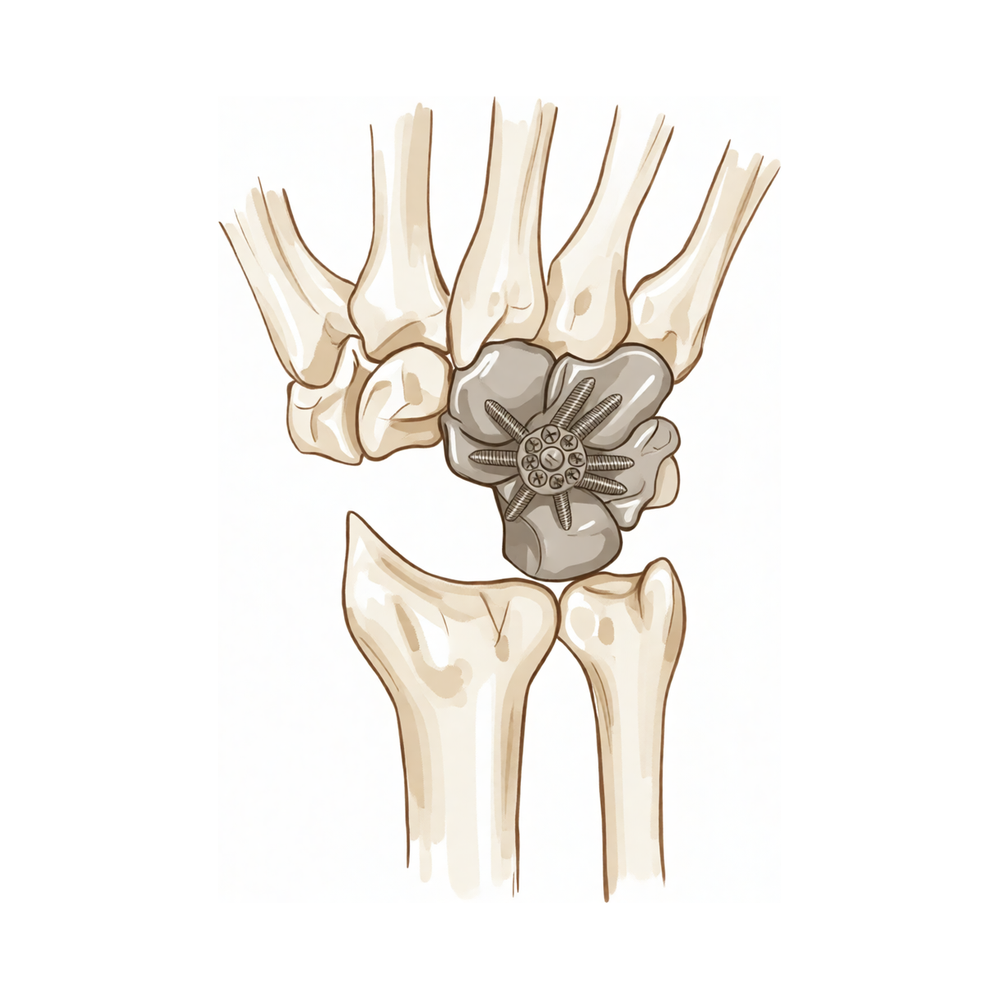
Why this operation has been suggested
Dr Kieran Hirpara, an upper-limb surgeon at Mater Private Hospital Rockhampton, starts with the least invasive options that suit your condition. Patients are generally referred to our clinic by their GP; if a physiotherapist has suggested you see us, you will still need a referral from your GP in order to be eligible for the Medicare rebate. We assess your history, examine your wrist, and arrange imaging where needed to work out what is causing your pain.
A partial wrist fusion joins together only some of the small bones of the wrist, leaving the rest to keep moving. It is usually offered when wear-and-tear arthritis has developed in part of the wrist, often after an old injury, and other treatments have not given enough relief. For long-standing problems like this, we usually try non-operative care first: activity change, physiotherapy or hand therapy, and splinting. Surgery is considered when that has not helped enough. The operation is a salvage procedure, which means it is used once arthritis has already damaged the joint. Its main aim is to relieve pain while keeping as much wrist movement, grip strength and stability as the remaining healthy joint allows. We will talk through the options with you and decide together what suits your wrist and your goals.
Before the operation
In the weeks before surgery we will arrange imaging of your wrist, such as X-rays or an MRI scan, so we can plan the operation around the parts of your wrist that are still healthy. On the day, you will need to stop eating and drinking seven hours beforehand. We ask for seven hours rather than a shorter time so your place on the theatre list can be brought forward if the day runs early. You may need to pause some of your regular medications before surgery; we will tell you which ones and for how long. Please bring a written list of everything you take. Arrange for someone to drive you home afterwards, and wear loose, comfortable clothing. If you have other medical conditions, you may need blood tests or a review with the anaesthetist before the day.
On the day
You will arrive at the hospital's surgical admissions unit, where you are checked in and prepared for theatre. You will meet the anaesthetist, the doctor who puts you to sleep and looks after you during the operation. This operation is done under general anaesthetic. You will be fully asleep for the operation. Some patients may also have a regional nerve block for post-operative pain relief; the anaesthetist decides on the day based on your individual circumstances. You are then taken into the operating theatre, where the operation is performed.
You will wake up in the recovery area, where nurses monitor you while the anaesthetic wears off. Once you are stable, you either go to the ward or go home, depending on the procedure and your recovery.
What the operation involves
Your surgeon performs a partial wrist fusion through one cut over the back of your wrist. Through this opening, your surgeon works on the small bones of the wrist. The worn-out joint surfaces between the affected bones are cleared away, and some damaged bone may be removed. In some patterns of arthritis, for example, the scaphoid, one of the small bones on the thumb side of the wrist, is taken out altogether.
The bones that are being joined are then held together with small metal screws. In some cases a small plate is used instead. A bit of your own bone, taken from nearby in the same wrist, may be packed between the bones to help them heal together. Over the following weeks and months, these bones grow into one solid block. The rest of your wrist, the parts that are still healthy, keeps moving.
Once the bones are in the right position and held firmly, your surgeon closes the cut with stitches and covers it with a dressing. The dressing stays on for about 10 days; the 'After the operation' section explains what happens next.
The exact bones involved depend on which part of your wrist has arthritis. Your surgeon plans the operation around the joints that are worn out and the joints that are still healthy, using the X-rays and scans taken beforehand. The aim throughout is to remove the painful, worn surfaces while protecting the movement you have left.
After the operation
Most patients stay one night in hospital after this operation, though some are able to go home the same day. You will wake up in the recovery area, then move to the ward. Nurses will check on you regularly and give you pain relief as you need it. Your wrist will be in a splint or cast, with dressings over the wound. Keep your hand raised on pillows when resting to help with swelling. You can get up and walk around soon after surgery, and move your fingers, elbow and shoulder as comfort allows. Please arrange for someone to stay with you for the first 24 hours after you get home. We leave the dressing on for about 10 days; please do not take it off before then unless we tell you to. We change or remove it when we see you.
Recovery
For the first few days your wrist will be sore and swollen. This settles gradually. Keeping your hand raised on pillows eases the swelling, and the pain relief we give you will help. You can move your fingers, elbow and shoulder as comfort allows; this keeps them from stiffening while your wrist rests.
Your wrist will be in a splint or cast while the bones heal together. Hand therapy after surgery is with Ruby Doolan at Extend Rehabilitation. Ruby is a hand therapist: she will guide your exercises and make any splint you need. The therapy starts gently, with movements that protect the healing bones, and builds as the fusion becomes solid. You will be able to manage most things at home with one hand, but you will need help with heavier tasks for a while.
Once the swelling settles and your therapist clears you, you will start working on wrist movement and grip. Everyday activities come back in stages: first light tasks, then tasks that need more grip and load. Driving is off the table until your cast is removed and your surgeon clears you; see our page on driving after upper-limb surgery. Work and sport return at their own pace, as your strength and comfort allow.
Recovery varies from person to person. Your timeline may differ; your surgeon and therapist will guide you.
What can go wrong
Most patients do well, but problems can occasionally happen. Your surgeon and the team monitor you closely to spot any issue early.
Sometimes the bones do not knit together into one solid block. You might notice a deep, aching pain in the wrist that does not settle, or a feeling that something is moving or grinding where it should feel firm. Bring this up at your next review, or call the clinic sooner if the pain is getting worse.
The metal screws or plate can also cause trouble. Some people feel a sharp ridge or clicking under the skin, or pain over the metal that flares with use. If this happens, the hardware can be taken out in a small operation. Mention it at your review appointment.
Infection is uncommon but needs quick attention. Watch for redness that spreads out from the wound, warmth, increasing swelling, or oozing from the dressing. You might feel feverish or generally unwell. If you see any of these signs, call the clinic straight away, or go to the emergency department if it is after hours or the redness is spreading fast.
The nerve that runs through the front of the wrist can become compressed by swelling after surgery. This causes tingling, pins and needles or numbness in the thumb, index and middle fingers, and it can feel worse at night. Tell your surgeon promptly if you notice these changes, as releasing the pressure may need a small operation.
Arthritis can sometimes progress in the joints that are still moving. You might notice pain or stiffness creeping back months or years later, or new grinding in the wrist. Raise this at your review so it can be checked with fresh X-rays.
Rarely, the partial fusion does not give enough relief and a full fusion of the wrist is offered instead. This is a bigger operation that stops wrist movement but aims to remove pain. Your surgeon will discuss it with you if it ever comes to that.
The complications table on this page lists typical rates if you want the specifics.
When to call us
Call us if you have a fever, or if the skin around your wound becomes redder, warmer or starts oozing. Call us if your pain suddenly gets worse or will not settle. Go to emergency if you have swelling or pain in your calf, or shortness of breath. Go to emergency if you lose feeling in your hand or cannot move your fingers, wrist or arm. If it is after hours and you are worried, go to emergency rather than waiting. When in doubt, call us; we would rather hear from you than have you sit on a problem at home.
Where to read more about the condition
This page is about the operation itself. The condition it treats, including what the evidence shows about when surgery helps and when it does not, is covered in more detail on the Wrist Osteoarthritis page.
Evidence & references
This is the clinical evidence summary written for health professionals. It is technical, and it lists the research this page was built from. You do not need to read it to understand your treatment or to make a decision about it.
Overview
- Total wrist fusion should only be used in exceptional circumstances [1, 2].
- Radioscapholunate fusion is a palliative procedure that preserves some of the wrist's mobility [5].
- Radioscapholunate fusion has a significant nonunion rate [5].
- Nonspanning arthrodesis is advocated as an alternative method for total wrist fusion [6].
- Nonspanning arthrodesis has a high union rate [6].
- Nonspanning arthrodesis has a minimal risk of complications at the carpometacarpal joint [6].
- There is a low rate of conversion to total wrist arthrodesis following scaphoid excision and four-corner arthrodesis for advanced carpal collapse [7].
- Total wrist arthrodesis and partial wrist arthroplasty have a noteworthy potential for complications requiring additional surgery [8].
- Total wrist arthrodesis provides reliable pain relief [13].
- Total wrist arthrodesis provides good functional outcomes [13].
- Total wrist arthrodesis has high patient satisfaction [13].
- Total wrist arthrodesis is particularly indicated for end-stage arthritis [13].
- Total wrist arthrodesis is used as a salvage technique [13].
- Additional studies are required to confirm findings regarding partial wrist denervation in wrist osteoarthritis [15].
- Additional studies are required to investigate who may benefit from partial wrist denervation [15].
- Proximal row carpectomy using decellularized dermal allograft adds another surgical option for the treatment of wrist arthritis [17].
- Proximal row carpectomy using decellularized dermal allograft expands the indications for proximal row carpectomy to include select patients with degeneration of the capitate head [17].
- Total wrist arthroplasty is an extremely cost-effective procedure [25].
- Total wrist arthrodesis is an extremely cost-effective procedure [25].
- Limited wrist arthrodesis techniques are reliable and effective for a wide range of wrist disorders [78].
- Limited wrist arthrodesis techniques have low complication rates [78].
- Limited wrist arthrodesis techniques have high patient satisfaction [78].
Anatomy & Pathophysiology
Bony Anatomy
- The wrist includes the distal radioulnar, radiocarpal, and ulnocarpal joints and the eight carpal bones and their proximal and distal articulations and attached ligaments [41].
- The proximal row of carpal bones consists of the scaphoid, lunate, triquetrum, and pisiform [41].
- The distal row of carpal bones consists of the trapezium, trapezoid, capitate, and hamate [41].
- The pisiform and trapezoid are the smallest carpal bones, while the capitate is the largest [41].
- The capitate articulates with seven other carpal bones, while the pisiform articulates with only one [41].
- The radiocarpal joints are formed by the articulation of the distal radius with the scaphoid and lunate through their respective concave facets on the distal radius and the triquetrum on the triangular fibrocartilage [41].
- The distal concave articular surfaces of the proximal carpal row form the midcarpal articulations with the distal row [41].
- The distal row articulates with the metacarpals, allowing mobility in the thumb, stability in the index and long finger metacarpals, and increased mobility in the ring and little finger metacarpals [41].
- The distal ulnar convexity articulates at the lesser sigmoid notch of the distal radius [41].
- The sigmoid notch articular surface accommodates the ulnar head through two thirds of its arc [41].
- There is about a 20-degree inclination of the distal ulna at its articulation with the radius [41].
- The distal radius has three articular components: the scaphoid and lunate fossae, and the sigmoid notch [45].
- Between the scaphoid and the lunate fossa is a ridge that corresponds with the scapholunate interval [45].
- The concave elliptical distal radius is oriented in the sagittal plane with an average of 11 degrees of volar tilt [45].
- In the frontal plane, the average radial inclination of the distal radius is 23 degrees [45].
- Radial length is measured from the tip of the radial styloid to the ulnar articular surface and averages 13 mm [45].
- The radius has a lateral bow that is crucial to the maintenance of full pronation and supination [45].
Ligamentous Anatomy
- Extrinsic carpal ligaments connect the radius or the ulna to the carpus [46].
- In general, the volar ligaments are stronger than the dorsal ligaments [46].
- The radioscaphocapitate ligament connects to the waist of the scaphoid, around which the scaphoid rotates, and limits ulnar translation of the carpus [46].
- The long radiolunate ligament helps to limit ulnar translocation of the carpus [46].
- The short radiolunate ligament helps control lunate position [46].
- The radioscapholunate ligament is a vascular conduit, not a true ligament, also known as the ligament of Testut [46].
- The ulnocapitate ligament attaches to the ulnar head and is the most superficial or palmar of the palmar ulnocarpal ligaments [46].
- The dorsal radiocarpal ligament has a trapezoidal shape and passes from the dorsal rim of the distal radius to the lunate and the triquetrum [46].
- The dorsal radiocarpal ligament fibers insert onto the dorsal lunotriquetral interosseous ligament [46].
- Damage to the dorsal radiocarpal ligament, when in conjunction with other intrinsic ligament injuries, confers further carpal instability [46].
- The scapholunate interosseous ligament is the major stabilizer of the wrist and the most commonly injured wrist ligament [46].
- The scapholunate interosseous ligament is C-shaped, consisting of dorsal, palmar, and interosseous portions, with the dorsal portion being the strongest and thickest [46].
- The scapholunate interosseous ligament provides a flexion force on the lunate given its attachment to the scaphoid [46].
- The lunotriquetral interosseous ligament is C-shaped, where the volar portion is the thickest and strongest [46].
- The lunotriquetral interosseous ligament provides an extension moment on the lunate given its attachment to the triquetrum [46].
- The capitohamate ligament is a thick ligament, 5 × 5 mm in cross section, with extensions to the third or fourth metacarpals [46].
- The dorsal intercarpal ligament passes from the dorsal tubercle of the triquetrum to the distal pole of the scaphoid [46].
- The dorsal intercarpal ligament reinforces the elastic dorsal wrist capsule and helps stabilize the scapholunate articulation with a contribution to the dorsal scapholunate interosseous ligament from its deep fibers [46].
- The space of Poirier is an area adjacent to the proximal capitate without ligamentous attachment, situated ulnar to the radioscaphocapitate ligament and radial to the long radiolunate in the floor of the carpal tunnel [46].
- The space of Poirier is a weak area that is vulnerable to instability, and the distal carpal row separates from the lunate through this space during a perilunate dislocation [46].
- The triangular fibrocartilage complex attaches to the ulnar margin of the lunate fossa of the radius and includes the ulnar collateral ligament, dorsal and volar radioulnar ligaments, articular disc, meniscal homologue, extensor carpi ulnaris sheath, and ulnolunate and ulnotriquetral ligament [41].
- The interosseous membrane connects the shafts of the radius and ulna, with a thickened central portion important in force transmission between the radius and ulna [45].
Biomechanics and Kinematics
- The wrist joint’s motion planes include flexion, extension, radial deviation, ulnar deviation, and circumduction [46].
- There is minimal carpal motion with pronosupination [46].
- Approximately 62° of wrist extension occurs through the radiocarpal joint [46].
- 62% of wrist flexion occurs through the midcarpal joint [46].
- The midcarpal joint is mostly responsible for 20° and 40° of radial and ulnar deviation, respectively [46].
- The midcarpal joint is responsible for the “dart thrower’s motion,” which involves moving from radial extension into ulnar flexion positioning of the wrist [46].
- The radius bears 80% of the axial load transmitted through the radiocarpal joint, while the ulna bears 20% in neutral ulnar variance [46].
- The proximal row of carpal bones forms an intercalated segment between the distal carpal row and the distal radius and is bound into a functional unit by the scapholunate and lunotriquetral interosseous ligaments [46].
- The distal row is rigid, with little motion between its bones due to stout intercarpal ligaments, and acts as a functional unit with the scaphoid bridging both rows [46].
- During wrist flexion from neutral, the distal row flexes and ulnarly deviates slightly while the scaphoid pronates [46].
- During wrist flexion from neutral, the proximal row flexes differentially, with more rotation through the scaphoid, followed by the triquetrum and the lunate [46].
- During wrist flexion from neutral, the proximal row translates dorsally [46].
- During wrist extension from neutral, the distal row extends and radially deviates slightly while the scaphoid supinates [46].
- During wrist extension from neutral, the proximal row extends differentially, with more motion in the scaphoid, followed by the triquetrum and then the lunate [46].
- During wrist extension from neutral, the proximal row translates palmarly [46].
- Between 30% and 50% of sagittal motion at the wrist occurs through the midcarpal joint, with the remainder through the radiocarpal joint [14].
- The eight carpal bones represent the most complex articular system in the human body, each capable of moving in different degrees or directions dependent on the position, motion, and force generation of the hand in space [42].
- The human wrist allows precise positioning of the hand and optimization of power and prehensile tasks throughout a nearly hemispherical arc of wrist motion [42].
- Injuries to the wrist mechanism can lead to instability, resulting in a painful lack of motion, strength, and function [42].
Innervation
- The anterior and posterior interosseous nerves innervate the central two-thirds of the anterior and posterior carpal joint capsule, respectively [24].
- The anterior and posterior interosseous nerves pass within 2 mm of each other just proximal to the distal radioulnar joint capsule, separated only by the interosseous membrane of the forearm [24].
- Partial denervation of the wrist reduces pain stemming from intra-articular pathology by resecting peripheral nerves whose terminal fibers innervate only the joint capsule [24].
Classification
- Total wrist fusion should only be used for exceptional circumstances [2].
- The choice of procedure depends on the pattern of wrist destruction and stability [3].
- Radiolunate arthrodesis is effective for unstable wrists with preserved midcarpal joint space [3].
- Good and excellent clinical results in the majority of patients following radiolunate fusion do not depend on the fixation device [4].
- Radioscapholunate (RSL) fusion is a palliative procedure that preserves some of the wrist's mobility [5].
- Radioscapholunate (RSL) fusion has a significant nonunion rate [5].
- Nonspanning arthrodesis is advocated as an alternative method for total wrist fusion with a high union rate and minimal risk of complications at the carpometacarpal joint [6].
- There is a low rate of conversion to total wrist arthrodesis following scaphoid excision and four-corner arthrodesis [7].
- Proximal row carpectomy (PRC) simplifies total wrist arthrodesis by obviating the need for an iliac bone graft [9].
- PRC performed concomitantly with total wrist arthrodesis in patients with rheumatoid arthritis produces good clinical and radiological outcomes without inducing loss of strength or digital deformities [9].
- The healing rate for total wrist arthrodesis combined with PRC was 92% (35/38 wrists) [9].
- No effects of carpal height loss on clinical or radiographic parameters were detected in patients undergoing total wrist arthrodesis combined with PRC [9].
- Patients undergoing proximal row carpectomy experienced good pain relief with preservation of wrist motion [10].
- Results for total wrist arthrodesis were slightly in favour of patients with a primary wrist arthrodesis compared to salvage of failed total wrist arthroplasty [11].
- Complications and reoperations occur frequently in total wrist arthrodesis, most often due to incomplete bone fusion or hardware-related problems [16].
- It remains unknown which implant type is best for total wrist arthrodesis or if the carpometacarpal joint should be included [16].
- Proximal row carpectomy (PRC) and four-corner arthrodesis (FCA) demonstrated similarly low rates of conversion to total wrist arthrodesis [18].
- Intercarpal arthrodesis is performed most commonly for the treatment of arthritis and carpal instability [19].
- The objective of intercarpal arthrodesis is minimizing or eliminating pain while maximizing motion and function [19].
- These goals are achieved by removing arthritic joint surfaces and by altering carpal motion and load transference [19].
- Some intercarpal fusion procedures have good, predictable outcomes with maintenance of results over time [19].
- Other intercarpal fusion procedures are infrequently used or of primarily historical interest owing to unpredictable results and high rates of complications [19].
- Proximal row carpectomy is a motion-preserving salvage procedure with a low rate of conversion to wrist arthrodesis [23].
- Joint arthrodesis procedures evaluated for the impact of smoking on delayed osseous union include complete wrist, carpometacarpal joint, metacarpophalangeal joint, proximal interphalangeal joint, distal interphalangeal joint, scaphoid excision/4-corner arthrodesis, and other limited carpal fusions [28].
- Union in upper extremity arthrodesis is defined as the appearance of trabeculae crossing the arthrodesis site on at least 2 of 4 cortices viewed on orthogonal radiographs [28].
- Cases that failed to demonstrate union across the arthrodesis site by 90 days after surgery are classified as delayed unions [28].
- Total wrist arthrodesis was performed in three patients for secondary arthrosis and in another three patients for progressive arthritic destruction following radiolunate arthrodesis [30].
- Radiographic changes following proximal row carpectomy were not significantly correlated with clinical findings, objective and subjective outcome measures, or time from surgery [39].
- A functional arc of wrist motion was maintained as measured by the flexion/extension arc and radial/ulnar deviation in all patients after at least 10 years follow-up following proximal row carpectomy [39].
- There was a significant decrease in grip strength following proximal row carpectomy [39].
- Upper extremity function as measured by the DASH and PRWE scores following proximal row carpectomy compared favorably with those reported postoperatively following four-corner arthrodesis [39].
- Patients who underwent total wrist fusion (TWF) after radioscapholunate fusion were considered as having poor clinical outcomes [73].
- Prognostic factors for good clinical outcome after radioscapholunate fusion are assessed based on global pain, wrist motion, and grip strength [73].
- Good clinical result after radioscapholunate fusion corresponds to global pain of none or slight (VAS ≤ 3) [73].
- Good clinical result after radioscapholunate fusion corresponds to functional wrist motion including flexion ≥ 5 degrees, extension ≥ 30 degrees, radial deviation ≥ 10 degrees, and ulnar deviation ≥ 15 degrees [73].
- Good clinical result after radioscapholunate fusion corresponds to grip strength of at least 50% of the contralateral side [73].
- Poor clinical result after radioscapholunate fusion corresponds to global pain of moderate or severe (VAS > 3) [73].
- Poor clinical result after radioscapholunate fusion corresponds to nonfunctional motion in at least one direction [73].
- Poor clinical result after radioscapholunate fusion corresponds to grip strength of less than 50% of the contralateral side [73].
- Signs of osteoarthritis development following limited intercarpal fusion or proximal row carpectomy are graded in five categories (none, doubtful, mild, moderate, and severe arthritis) according to the Kellgren-Lawrence Classification System [76].
- Results of 4-corner arthrodesis using headless compression screws were comparable to or better than previously published techniques in terms of fusion rates, alleviation of pain, grip strength, range of motion, Mayo wrist score, and Disabilities of the Arm, Shoulder, and Hand questionnaire score [77].
Clinical Presentation
- Total wrist fusion is reserved for exceptional circumstances [1].
- Good and excellent clinical results following radiolunate fusion do not depend on the fixation device [4].
- Nonspanning arthrodesis is an alternative method for total wrist fusion with a high union rate [6].
- Nonspanning arthrodesis carries a minimal risk of complications at the carpometacarpal joint [6].
- Total wrist arthroplasty and partial wrist arthroplasty have a noteworthy potential for complications requiring additional surgery [8].
- Proximal row carpectomy performed concomitantly with total wrist arthrodesis in patients with rheumatoid arthritis produces good clinical and radiological outcomes [9].
- Proximal row carpectomy performed concomitantly with total wrist arthrodesis in patients with rheumatoid arthritis does not induce loss of strength or digital deformities [9].
- Outcomes for total wrist arthrodesis are slightly in favor of patients with a primary wrist arthrodesis compared to salvage of failed total wrist arthroplasty [11].
- There is an approximate 10% risk of secondary wrist arthrodesis in patients with persistent or progressive ulnar wrist pain following partial wrist denervation [12].
- Total wrist arthrodesis provides reliable pain relief and good functional outcomes with high patient satisfaction [13].
- Total wrist arthrodesis is particularly indicated for end-stage arthritis and as a salvage technique [13].
- Between 30% and 50% of sagittal motion at the wrist occurs through the midcarpal joint [14].
- The remainder of sagittal motion at the wrist occurs through the radiocarpal joint [14].
- Total wrist arthrodesis with a Wrist Fusion Rod is expected to provide long-lasting pain relief and stability with severe wrist deterioration and ulnar carpal shift [34].
- Most patients report satisfactory functional outcomes despite the loss of wrist motion [20].
- Patients are able to accomplish most daily activities of living with some adaptation and compensation following wrist arthrodesis [20].
- Complications and reoperations occur frequently following total wrist arthrodesis [16].
- Incomplete bone fusion is a frequent cause of complications and reoperations following total wrist arthrodesis [16].
- Hardware-related problems are a frequent cause of complications and reoperations following total wrist arthrodesis [16].
- It remains unknown which implant type is best for total wrist arthrodesis [16].
- It remains unknown if the carpometacarpal joint should be included in total wrist arthrodesis [16].
- Fusion was successful in all but two patients in a series of 60 patients with rheumatoid wrist [54].
- All patients benefited by increased strength and function in the hand following fusion for rheumatoid wrist [54].
- The mean DASH score was 20.4 after an average follow-up time of 14.7 years following midcarpal fusion [55].
- Pain at rest was infrequent with a mean VAS pain score of 1.4 following midcarpal fusion [55].
- Pain with daily activity had a mean VAS pain score of 3.3 following midcarpal fusion [55].
- Only one patient (1.8%) sometimes needed painkillers because of the affected wrist following midcarpal fusion [55].
- An incomplete fusion was detected in 9 cases (15%) following midcarpal fusion [55].
- Regenerated bone in the scaphoid fossa was detected in over a half of the cases (53.3%) following midcarpal fusion [55].
- Both proximal row carpectomy and four-corner fusion provide improvements in pain and subjective outcome measures for patients with symptomatic and appropriately staged SLAC or SNAC wrists [58].
- Wrist arthrodesis with the AO/ASIF Titanium wrist fusion plate is an excellent option for treatment of various painful disorders of the wrist [63].
- Post-operative motion and grip strength values following proximal row carpectomy appear to remain stable over time [31].
- Surgical failure rates with conversion to wrist fusion after proximal row carpectomy occurred early within the post-operative follow-up [31].
- Many patients continued to complain of pain requiring daily medication after proximal row carpectomy [31].
- Many patients were unable to return to manual labor after proximal row carpectomy [31].
- Forty-six patients (74%) were not satisfied with the results of their surgery due to persistent pain or inability to return to previous occupational activities after proximal row carpectomy [31].
- Fifty-two patients required daily pain medication for wrist pain after proximal row carpectomy [31].
- Twelve patients had undergone a wrist arthrodesis after proximal row carpectomy [31].
- Plain films are unreliable in making a definitive assessment of union for midcarpal fusion [52].
- Computed tomography (CT) scan is more reliable than plain films for assessing union of a midcarpal fusion [52].
Investigations
Imaging Modalities
- MRI is the modality of choice for imaging radiographically occult fractures of the hand and wrist [47].
- The primary advantages of MRI compared with CT and radiography are improved tissue characterization, especially of soft tissues such as ligamentous structures in the wrist and synovium in the hand, and the lack of ionizing radiation [47].
- 3T MRI is much preferred for hand and wrist imaging, especially for imaging small fields of view [47].
- MRI with contrast enhancement is most commonly used to determine whether soft-tissue lesions are solid or cystic or, in the case of rheumatologic imaging, to better visualize erosions and synovial burden [47].
- MR arthrography can be performed for evaluation of the triangular fibrocartilage and intercarpal ligament tears, but this is generally unnecessary with the increasing availability of high field MRI [47].
- 26-33% of scaphoid fractures were judged nondisplaced on radiograph, but displaced on CT scan [81].
Kinematics and Biomechanics
- A study quantifies a normative range of median radiolunate interosseous proximities during wrist motion [33].
Treatment
Arthrodesis Techniques and Outcomes
- Radiolunate arthrodesis is effective for unstable wrists with preserved midcarpal joint space in the rheumatoid wrist [3].
- Radioscapholunate fusion is a palliative procedure that preserves some wrist mobility but has a significant nonunion rate [5].
- Nonspanning arthrodesis is an alternative method for total wrist fusion with a high union rate and minimal risk of complications at the carpometacarpal joint [6].
- Scaphoid excision and four-corner arthrodesis for advanced carpal collapse has a low rate of conversion to total wrist arthrodesis [7].
- Wrist arthrodesis is a well-established procedure that predictably relieves pain and provides a stable wrist for power grip [35].
- Plate fixation offers little benefit over previous stabilization techniques when performing scaphoid excision and four-corner fusion [29].
- Radioscapholunate arthrodesis with compression screws and local autograft achieves a 100% union rate at mean follow-up of 12 months with no complications in appropriately selected patients with a preserved midcarpal joint [62].
- Wrist arthrodesis with bone autograft and Hoffmann external fixation results in patients regaining full finger movements and rotation of the forearm, though complete pain relief is rare and patients have significant limitations in activities of daily living [80].
- Complications and reoperations following total wrist arthrodesis occur frequently, most often due to incomplete bone fusion or hardware-related problems [16].
- The lateral or radial approach for wrist arthrodesis avoids the distal radio-ulnar joint, preserving some useful pronation and supination [32].
- The lateral or radial approach for wrist arthrodesis avoids involvement of the extensor mechanism, allowing for faster mobilization of finger extensors [32].
- The lateral or radial approach for wrist arthrodesis preserves the normal appearance of the wrist and avoids the thickening commonly seen with the dorsal or medial approach [32].
- Between 10 to 15 degrees of dorsiflexion with slight ulnar deviation is the optimum position for wrist arthrodesis, aligning the shaft of the second metacarpal with the distal end of the radius [32].
- The second and third carpometacarpal joints are recommended to always be included in wrist arthrodesis to prevent abnormal painful motion [32].
- Proximal row carpectomy performed concomitantly with total wrist arthrodesis in rheumatoid arthritis produces good clinical and radiological outcomes without inducing loss of strength or digital deformities [9].
- In a study of 38 total arthrodeses of rheumatoid wrists combined with proximal row carpectomy, the healing rate was 92% (35/38 wrists) [9].
- In a study of 38 total arthrodeses of rheumatoid wrists combined with proximal row carpectomy, the mean VAS pain score was 0.4 and the mean PRWE score was 21 [9].
- In a study of 38 total arthrodeses of rheumatoid wrists combined with proximal row carpectomy, grip strength was 76% of the contralateral limb [9].
- No effects of carpal height loss on clinical or radiographic parameters were detected in total wrist arthrodesis combined with proximal row carpectomy [9].
Proximal Row Carpectomy
- Patients undergoing proximal row carpectomy experience good pain relief with preservation of wrist motion [10].
- For stage II SLAC wrist with a preserved capitolunate joint, proximal row carpectomy is preferred because it is technically less demanding and yields durable results [61].
- Proximal row carpectomy using decellularized dermal allograft expands the indications for PRC to include select patients with degeneration of the capitate head [17].
Arthroplasty and Cost-Effectiveness
- Total wrist arthroplasty and total wrist arthrodesis are both extremely cost-effective procedures [25].
- Newer fourth-generation wrist implants appear to be performing better than earlier designs [21].
- Arthroplasty should be used as an alternative to arthrodesis in the treatment of posttraumatic wrist arthritis, given proper patient selection and indications [69].
- Although total wrist arthrodesis and partial wrist arthroplasty are attractive treatment options for the painful arthritic wrist, there remains a noteworthy potential for complications requiring additional surgery [8].
Denervation
- Simple PIN wrist denervation offers comparable pain relief and functional benefits to wrist arthrodesis in the painful rheumatoid wrist [37].
- Arthroscopic radial styloidectomy provides significant pain relief and facilitates early functional recovery [79].
Complications
Nonunion and Conversion to Total Wrist Arthrodesis
- Proximal row carpectomy and four-corner arthrodesis demonstrated similarly low rates of conversion to total wrist arthrodesis [18].
- The conversion rate to wrist arthrodesis after proximal row carpectomy was 9% [75].
- The conversion rate to wrist arthrodesis after four-corner arthrodesis was 4% [75].
- The median time to conversion to wrist arthrodesis after proximal row carpectomy was 16 months [75].
- The median time to conversion to wrist arthrodesis after four-corner arthrodesis was 32 months [75].
- Persistent pain was the primary indication for conversion to wrist arthrodesis in 16 patients who underwent proximal row carpectomy [75].
- Infection was the primary indication for conversion to wrist arthrodesis in 1 patient who underwent proximal row carpectomy [75].
- Smoking was independently associated with conversion to wrist arthrodesis with an odds ratio of 4.9 [75].
- Anterior interosseous nerve and/or posterior interosseous nerve neurectomy was associated with a lower rate of conversion to wrist arthrodesis with an odds ratio of 0.18 [75].
- Subsequent total wrist arthrodesis was performed in 135 patients (2.67%) who had a previous four-corner fusion [51].
- Subsequent total wrist arthrodesis was performed in 65 patients (1.79%) with a previous proximal row carpectomy [51].
- Twelve patients had undergone a wrist arthrodesis following proximal row carpectomy in a cohort with an average follow-up of 19.8 years [31].
- Total wrist arthrodesis was performed in three patients for secondary arthrosis at 25, 54, and 87 months after primary radiolunate arthrodesis [30].
- Total wrist arthrodesis was performed in three patients for progressive arthritic destruction at 44, 63, and 72 months after primary radiolunate arthrodesis [30].
- An approximate 10% risk of secondary wrist arthrodesis exists in patients with persistent or progressive ulnar wrist pain following partial wrist denervation [12].
Hardware and Fixation Complications
- Seventy-five (1.48%) patients required a secondary procedure for removal of symptomatic fusion hardware after the index four-corner fusion procedure [51].
- Including both hardware removal and subsequent total wrist arthrodesis, 220 (4.16%) of four-corner fusion patients required a secondary procedure [51].
- The Spider plate showed 100% fusion rates in the first documented series for scaphoid excision with four-corner fusion [86].
- Hardware complications were common in wrist arthrodesis for cerebral palsy, leading to a recommendation for routine hardware removal [90].
- The complication rate was low, and the hardware did not have to be removed in most cases following modified Clayton-Mannerfelt arthrodesis [85].
- One patient's pain was relieved by removal of a screw which protruded into the midcarpal joint space 12 months after primary radiolunate arthrodesis [30].
- In three patients, a screw protruded into the midcarpal joint space and induced arthrosis following radiolunate arthrodesis [30].
- Fracture of a plate led to secondary osseous union in ulnar translation following radiolunate arthrodesis [30].
- There were seven complications reported in a series of 91 radiolunate arthrodesis cases, including one superficial wound problem, two fractures, and four displacements or malplacements of osteosynthetic material [30].
Infection and Other Complications
- Infection following wrist arthroplasty and arthrodesis is relatively uncommon in a nationally representative Medicare database cohort [89].
- Although total wrist arthrodesis and partial wrist arthroplasty are attractive treatment options, there remains a noteworthy potential for complications requiring additional surgery [8].
- Cautious patient selection and consideration of potential complications are crucial for good outcomes in wrist arthrodesis and soft tissue rebalancing in the spastic hand [88].
- Radiographic follow-up beyond 2 years following proximal row carpectomy revealed joint narrowing and arthritic changes within the radiocapitate joint [31].
- Of 82 patients in five studies where radiographic data was available following proximal row carpectomy, 65 had evidence of radiocapitate degenerative joint disease (79.3%) [39].
- Forty-six patients (74%) were not satisfied with the results of their proximal row carpectomy surgery due to persistent pain or inability to return to previous occupational activities [31].
- Fifty-two patients required daily pain medication for wrist pain following proximal row carpectomy [31].
Recovery
Functional Outcomes and Patient Satisfaction
- Most patients report satisfactory functional outcomes despite the loss of wrist motion, confirming they are able to accomplish most daily activities of living with some adaptation and compensation [20].
- Total wrist arthrodesis provides reliable pain relief and good functional outcomes with high patient satisfaction, particularly for end-stage arthritis and as a salvage technique [13].
- At a mean follow-up of 6 years following four-corner arthrodesis with a dorsal locking plate, pain was significantly reduced and wrist function was significantly improved compared with preoperative status [83].
- Four-corner bone wrist arthrodesis by dorsal rectangular plating achieves an acceptable preservation of range of motion with good pain relief [87].
Union and Complications
- Four-corner bone wrist arthrodesis by dorsal rectangular plating achieves an excellent consolidation rate and minimal complications [87].
- Radioscapholunate fusion is a palliative procedure that preserves some of the wrist's mobility but has a significant nonunion rate [5].
- Nonspanning total wrist arthrodesis with a low-profile locking plate is advocated as an alternative method for total wrist fusion with a high union rate and minimal risk of complications at the carpometacarpal joint [6].
Conversion and Salvage Rates
- Proximal row carpectomy and four-corner arthrodesis demonstrated similarly low rates of conversion to total wrist arthrodesis for Stage-II SLAC/SNAC arthritis [18].
Alternative Procedures and Long-term Data
- The results between patients undergoing salvage total wrist arthrodesis for failed total wrist arthroplasty and those undergoing primary wrist arthrodesis were slightly in favour of patients with a primary wrist arthrodesis [11].
- Robust long-term follow-up data on wrist arthroplasty are not yet available, although functional improvement was observed for arthroplasty patients [22].
- Findings suggest an approximate 10% risk of secondary wrist arthrodesis in patients with persistent or progressive ulnar wrist pain following partial wrist denervation in inflammatory arthritis [12].
- Additional studies are required to confirm findings and investigate who may benefit from partial wrist denervation in wrist osteoarthritis [15].
Key Evidence
- [L4] Total wrist fusion should only be used in exceptional circumstances. [1] (10.1097/01.sap.0000194245.94684.54)
- [L4] Total wrist fusion should only be used for exceptional circumstances. [2] (10.1054/jhsb.2000.0434)
- [L4] The choice of procedure depends on the pattern of wrist destruction and stability, with radiolunate arthrodesis being effective for unstable wrists with preserved midcarpal joint space. [3] (10.1016/j.hcl.2005.08.005)
- [L4] Good and excellent clinical results in the majority of the patients following radiolunate fusion do not depend on the fixation device. [4] (10.1177/1753193409342054)
- [L4] RSL fusion is a palliative procedure that preserves some of the wrist's mobility but has a significant nonunion rate. [5] (10.1016/j.otsr.2017.07.012)
- [L4] They advocate nonspanning arthrodesis as an alternative method for total wrist fusion with a high union rate and minimal risk of complications at the carpometacarpal joint. [6] (10.1055/s-0037-1606257)
- [L4] There is a low rate of conversion to total wrist arthrodesis. [7] (10.1016/j.jhsa.2010.01.025)
- [L4] Although TWA and partial wrist arthroplasty are attractive treatment options for the painful arthritic wrist, there remains a noteworthy potential for complications requiring additional surgery. [8] (10.1016/j.jhsa.2015.10.021)
- [Paper] [9] (10.1016/j.otsr.2015.09.032)
- [L3] Patients experienced good pain relief with preservation of wrist motion. [10] (10.1177/1753193415597096)
- [L3] The results between the two groups were slightly in favour of patients with a primary wrist arthrodesis. [11] (10.1177/17531934211057389)
- [L4] Our findings suggest an approximate 10% risk of secondary wrist arthrodesis in patients with persistent or progressive ulnar wrist pain. [12] (10.1007/s10067-019-04645-8)
- [L4] Total wrist arthrodesis provides reliable pain relief and good functional outcomes with high patient satisfaction, particularly for end-stage arthritis and as a salvage technique. [13] (10.5435/jaaos-d-15-00424)
- [L4] [14] (10.1016/j.hcl.2009.11.003)
- [L3] Additional studies are required to confirm these findings and investigate who may benefit from partial wrist denervation. [15] (10.1177/17531934261425490)
- [L5] Complications and reoperations occur frequently, most often due to incomplete bone fusion or hardware-related problems, and it remains unknown which implant type is best or if the carpometacarpal joint should be included. [16] (10.1177/17531934241295343)
- [L4] This technique adds another surgical option for the treatment of wrist arthritis and expands the indications for PRC to include select patients with degeneration of the capitate head. [17] (10.1016/j.jhsa.2018.01.012)
- [L3] PRC and FCA demonstrated similarly low rates of conversion to total wrist arthrodesis. [18] (10.2106/jbjs.19.00965)
- [L5] [19] (10.1016/j.jhsa.2013.09.014)
- [L5] Despite the loss of wrist motion, most patients report satisfactory functional outcomes, confirming that they are able to accomplish most daily activities of living with some adaptation and compensation. [20] (10.1016/j.hcl.2005.08.004)
- [L1] The newer fourth-generation wrist implants appear to be performing better than earlier designs. [21] (10.1055/s-0038-1646956)
- [L2] While functional improvement was observed for arthroplasty patients, robust long-term follow-up data on wrist arthroplasty are not yet available. [22] (10.1177/1753193420953683)
- [L3] Proximal row carpectomy is a motion-preserving salvage procedure with a low rate of conversion to wrist arthrodesis. [23] (10.1016/j.jhsa.2021.09.031)
- [L4] [24] (10.1097/00130911-199803000-00004)
- [L2] Total wrist arthroplasty and total wrist arthrodesis are both extremely cost-effective procedures. [25] (10.1016/j.jhsa.2009.12.013)
- [L2] [28] (10.1016/j.jhsa.2022.05.016)
- [L3] Plate fixation offers little benefit over previous stabilization techniques when performing scaphoid excision and four-corner fusion. [29] (10.1016/j.jhsa.2005.08.007)
- [L4] [30] (10.1054/jhsb.2001.0681)
- [L3] [31] (10.1007/s11552-011-9368-y)
- [Paper] This study quantifies a normative range of median radiolunate interosseous proximities during wrist motion. [33] (10.1177/15589447251352124)
- [L4] Total wrist arthrodesis with Wrist Fusion Rod is expected to provide long-lasting pain relief and stability with severe wrist deterioration and ulnar carpal shift. [34] (10.1016/j.jhsg.2026.101024)
- [L4] Wrist arthrodesis is a well-established procedure that predictably relieves pain and provides a stable wrist for power grip. [35] (10.5435/00124635-200101000-00006)
- [L3] Simple PIN wrist denervation offers comparable pain relief and functional benefits to wrist arthrodesis and remains an appealing surgical intervention in the painful rheumatoid wrist. [37] (10.1007/s00402-014-2018-4)
- [L4] [39] (10.1055/s-0032-1329547)
- [L3] [51] (10.1016/j.jhsa.2019.12.010)
- [Paper] [52] (10.1007/s12593-011-0030-2)
- [L4] [55] (10.1055/s-0032-1329616)
- [L4] Both procedures provide improvements in pain and subjective outcome measures for patients with symptomatic and appropriately staged SLAC or SNAC wrists. [58] (10.1177/1753193408100954)
- [L4] For stage II SLAC wrist with a preserved capitolunate joint, proximal row carpectomy is preferred because it is technically less demanding and yields durable results. [61] (10.5435/00124635-200307000-00007)
- [L4] This technique is an effective method to perform radioscapholunate arthrodesis in appropriately selected patients with a preserved midcarpal joint, achieving a 100% union rate at mean follow-up of 12 months with no complications. [62] (10.1016/j.jhsa.2013.01.026)
- [L4] Wrist arthrodesis with the AO/ASIF Titanium wrist fusion plate is an excellent option for treatment of various painful disorders of the wrist. [63] (10.1054/jhsb.2001.0600)
- [L3] Arthroplasty should be used as an alternative to arthrodesis in the treatment of posttraumatic wrist arthritis, given the proper patient selection and indications. [69] (10.1016/j.jhsa.2013.02.013)
- [L4] [73] (10.1055/s-0039-1688939)
- [L4] [75] (10.1016/j.jhsa.2019.10.023)
- [L3] [76] (10.1186/s13018-023-04177-7)
- [L4] The results were comparable to or better than previously published techniques in terms of fusion rates, alleviation of pain, grip strength, range of motion, Mayo wrist score, and Disabilities of the Arm, Shoulder, and Hand questionnaire score. [77] (10.1016/j.jhsa.2011.12.022)
- [L4] The study demonstrates that limited wrist arthrodesis techniques are reliable and effective for a wide range of wrist disorders, with low complication rates and high patient satisfaction. [78] (10.1054/jhsb.1999.0066)
- [Paper] This minimally invasive technique provides significant pain relief and facilitates early functional recovery. [79] (10.1002/atn2.70164)
- [L4] All patients regained full finger movements and rotation of the forearm, though complete pain relief was rare and patients had significant limitations in activities of daily living. [80] (10.1177/1753193411416565)
- [L3] 26-33% of scaphoid fractures were judged nondisplaced on radiograph, but displaced on CT scan. [81] (10.1016/j.jhsa.2015.06.021)
- [L4] At a mean follow-up of 6 years, pain was significantly reduced and wrist function was significantly improved compared with preoperative status. [83] (10.1177/1753193420930587)
- [L4] The complication rate was low, and the hardware did not have to be removed in most cases. [85] (10.1016/j.jhsa.2013.02.029)
- [Paper] The Spider plate is a recent advancement showing promise with 100% fusion rates in the first documented series. [86] (10.1016/j.hcl.2005.08.012)
- [L4] Four-corner bone wrist arthrodesis by dorsal rectangular plating achieves an acceptable preservation of range of motion with good pain relief, an excellent consolidation rate and minimal complications. [87] (10.1177/1753193409105684)
- [L4] Cautious patient selection and consideration of potential complications are crucial for good outcomes. [88] (10.1177/17531934231205548)
- [L3] Infection following wrist arthroplasty and arthrodesis is relatively uncommon in a nationally representative Medicare database cohort. [89] (10.1177/1558944719890036)
- [L4] Hardware complications were common, and consequently, the authors now routinely recommend hardware removal. [90] (10.1016/j.jhsa.2009.03.006)
References
[1] Long-Term Results of Midcarpal Arthrodesis in the Treatment of Scaphoid Nonunion Advanced Collapse (SNAC-Wrist) and Scapholunate Advanced Collapse (SLAC-Wrist). Annals of Plastic Surgery. 2006. DOI: 10.1097/01.sap.0000194245.94684.54
[2] Midcarpal Arthrodesis with Complete Scaphoid Excision and Interposition Bone Graft in the Treatment of Advanced Carpal Collapse (SNAC/SLAC Wrist): Operative Technique and Outcome Assessment. Journal of Hand Surgery. 2000. DOI: 10.1054/jhsb.2000.0434
[3] Partial Arthrodesis for the Rheumatoid Wrist. Hand Clinics. 2005. DOI: 10.1016/j.hcl.2005.08.005
[4] Radiolunate fusion in the rheumatoid wrist with Shapiro staples: clinical and radiological results of 22 cases. Journal of Hand Surgery (European Volume). 2009. DOI: 10.1177/1753193409342054
[5] Clinical and radiological outcomes following radioscapholunate fusion. Orthopaedics & Traumatology: Surgery & Research. 2017. DOI: 10.1016/j.otsr.2017.07.012
[6] Nonspanning Total Wrist Arthrodesis with a Low-Profile Locking Plate. Journal of Wrist Surgery. 2017. DOI: 10.1055/s-0037-1606257
[7] The Outcome of Scaphoid Excision and Four-Corner Arthrodesis for Advanced Carpal Collapse at a Minimum of Ten Years. The Journal of Hand Surgery. 2010. DOI: 10.1016/j.jhsa.2010.01.025
[8] Complications Following Partial and Total Wrist Arthroplasty: A Single-Center Retrospective Review. The Journal of Hand Surgery. 2016. DOI: 10.1016/j.jhsa.2015.10.021
[9] Proximal row carpectomy in total arthrodesis of the rheumatoid wrist. Orthopaedics & Traumatology: Surgery & Research. 2015. DOI: 10.1016/j.otsr.2015.09.032
[10] Factors associated with improved outcomes following proximal row carpectomy: a long-term outcome study of 144 patients. Journal of Hand Surgery (European Volume). 2015. DOI: 10.1177/1753193415597096
[11] Comparative outcomes of total wrist arthrodesis for salvage of failed total wrist arthroplasty and primary wrist arthrodesis. Journal of Hand Surgery (European Volume). 2021. DOI: 10.1177/17531934211057389
[12] Patient satisfaction and outcomes of partial wrist denervation in inflammatory arthritis. Clinical Rheumatology. 2019. DOI: 10.1007/s10067-019-04645-8
[13] Total Wrist Arthrodesis: Indications and Clinical Outcomes. Journal of the American Academy of Orthopaedic Surgeons. 2017. DOI: 10.5435/jaaos-d-15-00424
[14] Complications of Limited and Total Wrist Arthrodesis. Hand Clinics. 2010. DOI: 10.1016/j.hcl.2009.11.003
[15] Revision rate and long-term outcome after partial wrist denervation in wrist osteoarthritis. Journal of Hand Surgery (European Volume). 2026. DOI: 10.1177/17531934261425490
[16] Total wrist arthrodesis in patients with advanced osteoarthritis: current implants and outcomes. Journal of Hand Surgery (European Volume). 2025. DOI: 10.1177/17531934241295343
[17] Proximal Row Carpectomy Using Decellularized Dermal Allograft. The Journal of Hand Surgery. 2018. DOI: 10.1016/j.jhsa.2018.01.012
[18] Risk of Total Wrist Arthrodesis or Reoperation Following 4-Corner Arthrodesis or Proximal Row Carpectomy for Stage-II SLAC/SNAC Arthritis. Journal of Bone and Joint Surgery. 2020. DOI: 10.2106/jbjs.19.00965
[19] Intercarpal Arthrodeses. The Journal of Hand Surgery. 2014. DOI: 10.1016/j.jhsa.2013.09.014
[20] Wrist Arthrodesis. Hand Clinics. 2005. DOI: 10.1016/j.hcl.2005.08.004
[21] Systematic Review of Total Wrist Arthroplasty and Arthrodesis in Wrist Arthritis. Journal of Wrist Surgery. 2018. DOI: 10.1055/s-0038-1646956
[22] A systematic review of outcomes of wrist arthrodesis and wrist arthroplasty in patients with rheumatoid arthritis. Journal of Hand Surgery (European Volume). 2020. DOI: 10.1177/1753193420953683
[23] Risk of Total Wrist Arthrodesis Following Proximal Row Carpectomy: An Analysis of 1,070 Patients. The Journal of Hand Surgery. 2023. DOI: 10.1016/j.jhsa.2021.09.031
[24] Partial Denervation of the Wrist. Techniques in Hand & Upper Extremity Surgery. 1998. DOI: 10.1097/00130911-199803000-00004
[25] A Cost-Utility Analysis of Nonsurgical Management, Total Wrist Arthroplasty, and Total Wrist Arthrodesis in Rheumatoid Arthritis. The Journal of Hand Surgery. 2010. DOI: 10.1016/j.jhsa.2009.12.013
[28] The Impact of Smoking on Delayed Osseous Union After Arthrodesis Procedures in the Hand and Wrist. The Journal of Hand Surgery. 2023. DOI: 10.1016/j.jhsa.2022.05.016
[29] Complications and Outcome of Four-Corner Arthrodesis: Circular Plate Fixation Versus Traditional Techniques. The Journal of Hand Surgery. 2005. DOI: 10.1016/j.jhsa.2005.08.007
[30] Radiolunate Arthrodesis in the Rheumatoid Wrist: A Retrospective Clinical and Radiological Longterm Follow-Up. Journal of Hand Surgery. 2002. DOI: 10.1054/jhsb.2001.0681
[31] Long-Term Outcomes of Proximal Row Carpectomy: A Minimum of 15-Year Follow-up. HAND. 2011. DOI: 10.1007/s11552-011-9368-y
[32] Arthrodesis of the Wrist: A SURGICAL TECHNIQUE.. The Journal of Bone and Joint Surgery. American Volume. 1967.
[33] Four-Dimensional Computed Tomography-Derived Radiolunate Arthrokinematics With a Case Study in Four-Corner Arthrodesis. HAND. 2025. DOI: 10.1177/15589447251352124
[34] Total Wrist Arthrodesis Using a Wrist Fusion Rod for the Dislocated Rheumatoid Wrist. Journal of Hand Surgery Global Online. 2026. DOI: 10.1016/j.jhsg.2026.101024
[35] Wrist Arthrodesis: Review of Current Techniques. Journal of the American Academy of Orthopaedic Surgeons. 2001. DOI: 10.5435/00124635-200101000-00006
[37] Functional and patient-reported outcome of partial wrist denervation versus the Mannerfelt wrist arthrodesis in the rheumatoid wrist. Archives of Orthopaedic and Trauma Surgery. 2014. DOI: 10.1007/s00402-014-2018-4
[39] Long-Term Outcomes of Proximal Row Carpectomy: A Systematic Review of the Literature. Journal of Wrist Surgery. 2012. DOI: 10.1055/s-0032-1329547
[41] Campbell S Operative Orthopaedics 4 Volume Set. NERVE INJURIES AT THE LEVEL OF THE HAND AND WRIST > ANATOMY.
[42] Green S Operative Hand Surgery. INTRODUCTION.
[45] A Lange Medical Book Current Diagnosis Treatment In Orthopedics Fifth Edition. 2Musculoskeletal Trauma Surgery > FRACTURES AND DISLOCATIONS OF THE DISTAL AND MID-FOREARM.
[46] Aaos Comprehensive Orthopaedic Review 3. Carpal Instability* > II. Anatomy and Biomechanics (See Chapter 92).
[47] Orthopaedic Knowledge Update 13 Ebook Without Multimedia. Anatomy, Evaluation, Clinical Examination, and Imaging > Imaging: Advances in Imaging of the Hand and Upper Extremity > Magnetic Resonance Imaging.
[51] Proximal Row Carpectomy Versus 4-Corner Fusion: Incidence, Conversion to Fusion, and Cost. The Journal of Hand Surgery. 2020. DOI: 10.1016/j.jhsa.2019.12.010
[52] Reliability of the 8 Week Time Point for Single Assessment of Midcarpal Fusion by CT Scan. Journal of Hand and Microsurgery. 2011. DOI: 10.1007/s12593-011-0030-2
[54] Arthrodesis of the Rheumatoid Wrist: AN EVALUATION OF SIXTY PATIENTS AND A DESCRIPTION OF A DIFFERENT SURGICAL TECHNIQUE.. The Journal of Bone and Joint Surgery. American Volume. 1973.
[55] Long-Term Results after Midcarpal Arthrodesis. Journal of Wrist Surgery. 2012. DOI: 10.1055/s-0032-1329616
[58] Proximal Row Carpectomy vs Four Corner Fusion for Scapholunate (Slac) or Scaphoid Nonunion Advanced Collapse (Snac) Wrists: A Systematic Review of Outcomes. Journal of Hand Surgery (European Volume). 2009. DOI: 10.1177/1753193408100954
[61] Proximal Row Carpectomy and Intercarpal Arthrodesis for the Management of Wrist Arthritis. Journal of the American Academy of Orthopaedic Surgeons. 2003. DOI: 10.5435/00124635-200307000-00007
[62] Radioscapholunate Arthrodesis With Compression Screws and Local Autograft. The Journal of Hand Surgery. 2013. DOI: 10.1016/j.jhsa.2013.01.026
[63] Wrist Arthrodesis with the AO Titanium Wrist Fusion Plate: A Consecutive Series of 42 Cases. Journal of Hand Surgery. 2001. DOI: 10.1054/jhsb.2001.0600
[69] Clinical Outcomes of Arthrodesis and Arthroplasty for the Treatment of Posttraumatic Wrist Arthritis. The Journal of Hand Surgery. 2013. DOI: 10.1016/j.jhsa.2013.02.013
[73] Radioscapholunate Fusion for Radiocarpal Osteoarthritis: Prognostic Factors of Clinical and Radiographic Outcomes. Journal of Wrist Surgery. 2019. DOI: 10.1055/s-0039-1688939
[75] Factors Associated With Reoperation and Conversion to Wrist Fusion After Proximal Row Carpectomy or 4-Corner Arthrodesis. The Journal of Hand Surgery. 2020. DOI: 10.1016/j.jhsa.2019.10.023
[76] Limited intercarpal fusion versus proximal row carpectomy in the treatment of SLAC or SNAC wrist, results after 3.5 years. Journal of Orthopaedic Surgery and Research. 2023. DOI: 10.1186/s13018-023-04177-7
[77] Results of a Method of 4-Corner Arthrodesis Using Headless Compression Screws. The Journal of Hand Surgery. 2012. DOI: 10.1016/j.jhsa.2011.12.022
[78] One Thousand Intercarpal Arthrodeses. Journal of Hand Surgery. 1999. DOI: 10.1054/jhsb.1999.0066
[79] Arthroscopic Radial Styloidectomy: An All‐Dorsal Two‐Portal Surgical Technique. Arthroscopy Techniques. 2026. DOI: 10.1002/atn2.70164
[80] Arthrodesis of the wrist with bone autograft and Hoffmann external fixation. Journal of Hand Surgery (European Volume). 2012. DOI: 10.1177/1753193411416565
[81] Arthroscopy of the Distal Radioulnar Joint: Its Role in the Evaluation and Management of Ulnar Sided Wrist Pain and the Development of a Classification System for Proximal Partial Thickness Triangular Cartilage Complex Pathology. The Journal of Hand Surgery. 2015. DOI: 10.1016/j.jhsa.2015.06.021
[83] Four-corner arthrodesis with a dorsal locking plate: 4–9-year follow-up. Journal of Hand Surgery (European Volume). 2020. DOI: 10.1177/1753193420930587
[85] The Modified Clayton-Mannerfelt Arthrodesis of the Wrist in Rheumatoid Arthritis: Operative Technique and Report on 93 Cases. The Journal of Hand Surgery. 2013. DOI: 10.1016/j.jhsa.2013.02.029
[86] Scaphoid Excision with Four-Corner Fusion. Hand Clinics. 2005. DOI: 10.1016/j.hcl.2005.08.012
[87] Four-corner bone arthrodesis with dorsal rectangular plate: series and personal technique. Journal of Hand Surgery (European Volume). 2009. DOI: 10.1177/1753193409105684
[88] Wrist arthrodesis and soft tissue rebalancing in the spastic hand. Journal of Hand Surgery (European Volume). 2023. DOI: 10.1177/17531934231205548
[89] Risk Factors for Infection Following Total Wrist Arthroplasty and Arthrodesis: An Analysis of 6641 Patients. HAND. 2019. DOI: 10.1177/1558944719890036
[90] Wrist Arthrodesis in Cerebral Palsy. The Journal of Hand Surgery. 2009. DOI: 10.1016/j.jhsa.2009.03.006