Patients › Elbow
Distal Biceps Repair
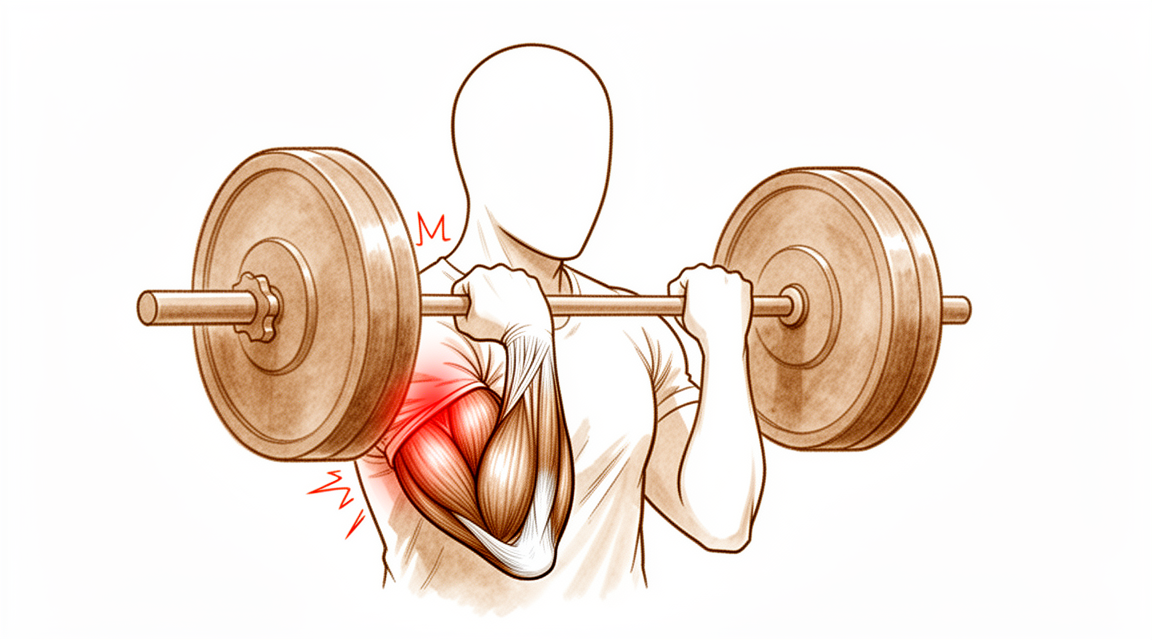
Distal biceps rupture repair — restoring elbow flexion strength and addressing the “Popeye” deformity.
Why this operation has been suggested
Dr Kieran Hirpara, an upper-limb surgeon at Mater Private Hospital Rockhampton, matches the treatment to your specific injury. Patients are generally referred to our clinic by their GP; if a physiotherapist has suggested you see us, you will still need a referral from your GP in order to be eligible for the Medicare rebate. At your appointment we take a history, examine your arm, and arrange scans if they are needed. A scan can confirm whether the tendon that joins your lower biceps muscle to the forearm bone has torn fully or partly.
This operation reattaches that torn tendon to the bone where it came from. It is usually offered for a complete tear, especially if you are active, work with your hands, or play sport. For a partial tear we usually try non-operative care first, such as activity change, physiotherapy or hand therapy, splinting, or injections. Surgery comes in when those have not given enough improvement. The aim is to restore the strength you use to bend your elbow and turn your palm up, so you can use your arm normally again.
Before the operation
Your surgeon will tell you which medicines to stop before surgery and when. You will need to stop eating seven hours beforehand, so we can bring you forward if the theatre list runs early. Arrange for someone to drive you home afterwards. Bring a list of your current medicines and wear comfortable, loose clothing. Scans such as an X-ray, ultrasound or MRI help plan the operation. If you have other medical conditions, you may need blood tests or a review with the anaesthetist.
On the day
You arrive at the hospital's surgical admissions unit, where you are checked in and prepared for theatre. You will meet the anaesthetist there. This operation is done under general anaesthetic. You will be fully asleep for the operation. Some patients may also have a regional nerve block for post-operative pain relief; the anaesthetist decides on the day based on your individual circumstances.
You are then taken into the operating theatre, where the operation is performed. When it is finished, you wake up in the recovery area. Nurses watch over you while the anaesthetic wears off. Once you are stable, you either go to the ward or go home, depending on the procedure and your recovery.
What the operation involves
The operation is done through one cut at the front of your elbow, over the spot where the tendon tore. Your surgeon moves the tissues aside to reach the forearm bone, which has a small raised spot where the tendon used to attach.
The torn tendon end is tidied up and stitched with strong stitches. Your surgeon then drills a small tunnel through the bone and threads the stitches through it. A small metal button travels with them and comes to rest flat against the far side of the bone, where it acts as an anchor. The stitches pull the tendon down into the tunnel, against fresh bone. That is where the tendon heals back on, reattaching it to the place it tore away from.
The wound is closed with stitches and covered with a dressing. The dressing stays on for about 10 days; the 'After the operation' section explains what happens then.
After the operation
You wake up in the recovery area, then move to the ward. Most patients stay one night in hospital after this operation, though some are able to go home the same day. Your arm rests in a sling for comfort, and gentle movement starts early. Nurses will give you pain relief and keep you comfortable. Someone should stay with you for the first 24 hours after you get home. We leave the dressing on for about 10 days; please do not take it off before then unless we tell you to. We change or remove it when we see you. You can move around the house and do light tasks with your other hand.
Recovery
For the first few days your elbow will be sore and swollen. This settles gradually. Pain relief and rest help, and keeping your hand raised on a pillow eases the throbbing. Some bruising down the forearm is common.
Your arm rests in a sling for comfort, and gentle movement starts early rather than your elbow being held still. Hand therapy after surgery is with Ruby Doolan at Extend Rehabilitation. Ruby directs your exercises and makes any splint you need. Early on, you will do simple movements to keep the elbow and wrist from stiffening. Light tasks around the house are fine with your other hand. You should not lift with the operated arm until your therapist clears you.
As the weeks pass, the swelling settles and your movement returns. Your therapist will add gentle strengthening as the tendon heals. Once you are out of the sling and your surgeon clears you, you can start driving again. See our page on driving after upper-limb surgery. Returning to work depends on what your job involves; desk work comes back sooner than heavy lifting. Sport comes later, once your strength and grip are back.
Most people get back to work and the activities they enjoy. Recovery varies from person to person, so your timeline may differ. Your surgeon and your hand therapist will guide you at each stage.
What can go wrong
Most patients do well, but problems can occasionally happen. Your surgeon and the team monitor you closely to spot any issue early.
Sometimes the repaired tendon does not hold. If you feel a sudden pop or snap in your elbow, or the strength you had been regaining suddenly drops away, contact the clinic straight away. This is uncommon, and when it happens it usually occurs in the first few weeks after surgery. Following your therapist's instructions about lifting and activity lowers the chance of it happening to you.
Nerves that run near the elbow can be irritated during surgery. If this happens you might notice tingling, numbness, or a patch of skin that feels dull or fuzzy. Some people notice weakness when straightening their fingers or thumb. This is often temporary, but tell your surgeon or therapist at your next review if you notice any of these changes. If the numbness or weakness is severe or getting worse, call the clinic rather than waiting.
The elbow can also become stiff if it does not move as planned. You might find it hard to straighten your arm fully or to bend it as far as before, and turning your palm up may feel blocked. Keep up your gentle movements and tell your therapist early if progress stalls. If stiffness becomes a real problem, your surgeon will discuss the next steps with you.
Bring up anything unusual at your review, even if it seems minor. Things that settle on their own are worth mentioning too, because early attention makes problems easier to sort out.
The complications table on this page lists typical rates if you want the specifics.
When to call us
Call us if you have a fever, or the wound becomes more red, swollen or starts to ooze. Call us if your pain suddenly gets worse, or if you feel a pop or snap in your elbow. Go to emergency if you have calf swelling or pain, or shortness of breath, as these can be signs of a blood clot. Go to emergency if you lose feeling in your arm or hand, or cannot move it. If you are unsure, call us. We would rather hear about a small worry than miss something that needs quick attention.
Where to read more about the condition
This page is about the operation itself. The condition it treats, including what the evidence shows about when surgery helps and when it does not, is covered in more detail on the Distal Biceps Rupture page.
Evidence & references
This is the clinical evidence summary written for health professionals. It is technical, and it lists the research this page was built from. You do not need to read it to understand your treatment or to make a decision about it.
Anatomy & Pathophysiology
Bony Anatomy
- The elbow is a trocho-ginglymoid joint consisting of medial and lateral articulations that provide bony stability [3].
- The medial ulnohumeral articulation is formed by the trochlea articulating with the ulna within the greater sigmoid notch [3].
- The ulnohumeral joint has highly congruent anatomy through almost 180° of articular contact, with the exception of a bare area in the greater sigmoid notch devoid of cartilage [3].
- The coronoid process has medial and lateral facets that buttress the trochlea anteriorly [3].
- The sublime tubercle is located just distal and medial to the coronoid and serves as the attachment site for the anterior bundle of the medial ulnar collateral ligament [3].
- The medial epicondyle is larger and more posteriorly oriented than the lateral epicondyle and serves as the attachment site for the origins of the flexor pronator mass [3].
- The lateral radiocapitellar joint is formed by the capitellum and radial head [3].
- The radius is held in close approximation to the ulna at the proximal radioulnar joint by the annular ligament [3].
- The area of the ulna that articulates with the margin of the radial head at the proximal radioulnar joint is known as the lesser sigmoid notch [3].
- The radial head is a concave elliptical structure covered with articular cartilage along the radiocapitellar joint and approximately 270° of the articular margin [3].
- The radial head articulates with both the capitellum and the lesser sigmoid notch [3].
- The lateral epicondyle is the origin of the lateral extensor musculature [3].
- The origin of the lateral ulnar collateral ligamentous complex is located just distal to the lateral epicondyle at the geometric center of the radiocapitellar articulation [3].
- The distal humeral articulation is angled 30° from the longitudinal axis [3].
- The anterior humeral line should pass through the center of the axis of rotation [3].
- The axis of rotation is 5° to 7° angulated in the coronal plane to the epicondylar axis, with the medial side more distal than the lateral side [3].
- This coronal angulation accounts for the change from a valgus carrying angle to a more varus position as the elbow is flexed [3].
- There is a high correlation between the size of the radial head and capitellum on the left and right sides of the same individual [2, 3].
- The olecranon provides a broad attachment site for the triceps [3].
- The ulna bends approximately 8° medially at 8 cm from the tip of the olecranon [3].
- The articulation to the tip of the coronoid is approximately 30° from the long axis of the ulna in the sagittal plane [3].
Ligaments & Soft Tissue
- Elbow stability is determined by primary stabilizers, which include the ulnohumeral articulation, the medial ulnar collateral ligament, and the lateral ulnar collateral ligament complex [1].
- Secondary stabilizers of the elbow include the radiocapitellar articulation, the common flexor tendon, the common extensor tendon, and the joint capsule [1].
- The medial ulnar collateral ligament is comprised of the anterior bundle, posterior bundle, and transverse ligament [2].
- The anterior bundle of the medial ulnar collateral ligament is the strongest component and the primary restraint to valgus stress [2].
- The anterior bundle of the medial ulnar collateral ligament is subdivided into anterior and posterior bands that provide reciprocal function, with the anterior band tight in extension and the posterior band tight in flexion [2].
- The lateral ulnar collateral ligament origin center is 10.7 mm from the lateral epicondyle [2].
- The lateral ulnar collateral ligament insertion is 3.3 mm from the apex of the supinator crest [2].
- Tensile forces are present at the medial elbow, while compressive forces are present at the lateral elbow [4, 5].
- The joint capsule allows maximum distension at approximately 70 to 80 degrees of flexion [4, 5].
- The anterior capsule attaches at a point approximately 6 mm distal to the tip of the coronoid [4, 5].
- The coronoid tip is an intraarticular structure that is visualized during elbow arthroscopy [4, 5].
- The medial or ulnar collateral ligament is the primary valgus stabilizer [4, 5].
- The anterior bundle of the medial ulnar collateral ligament is the most important component for stability [4, 5].
- The posterior bundle of the medial ulnar collateral ligament has the greatest change in length and becomes taut at flexion beyond 120 degrees [4, 5].
- The lateral ulnar collateral ligament is the posterolateral stabilizer [4, 5].
- Osborne’s ligament stabilizes the ulnar nerve in the cubital tunnel [4, 5].
- The ligament of Struthers is a variant anatomy arising from the supracondylar process to attach to the medial epicondyle and is a potential site of median nerve compression [4, 5].
Muscles & Insertions
- The brachialis is the strongest elbow flexor and attaches to the coronoid 11 mm distal to the tip [4, 5].
- The biceps brachii inserts at the ulnar margin of the radial tuberosity, with the long head inserting proximal and the short head inserting distal [4, 5].
- The biceps brachii is a powerful supinator of the forearm [4, 5].
- The triceps is the primary elbow extensor and inserts on the olecranon process [4, 5].
- The mobile wad consists of the brachioradialis, extensor carpi radialis longus, and extensor carpi radialis brevis [4, 5].
- The flexor-pronator mass consists of the pronator teres, flexor carpi radialis, palmaris longus, flexor carpi ulnaris, and flexor digitorum superficialis [4, 5].
- The triceps has three distinct insertional areas to the olecranon corresponding to the posterior capsular insertion, the deep muscular portion, and the superficial tendinous portion [2].
- The deep muscular head of the triceps corresponds to the medial head, while the tendinous portion corresponds to the long and lateral heads [2].
- The width of the triceps insertion is 2.6 cm and is located 1.1 cm from the tip of the olecranon [2].
Biomechanics & Motion
- The normal elbow has a range of motion from 0° to 140° from extension to flexion [1].
- The normal elbow has a range of motion of 75° in pronation and 85° in supination [1].
- A functional arc for the elbow is 100° for flexion and extension and forearm rotation [1].
Investigations
Physical Examination
- The physical examination of the elbow is directed by the history and the location of the patient's pain in the anterior, posterior, medial, or lateral aspect [1].
- Active and passive flexion, extension, supination, and pronation should be evaluated using a goniometer for accurate measurement [9].
- The contralateral elbow should be examined for comparison during range of motion assessment [9].
- Pain should be assessed during the mid-arc or at the terminal ends of motion [9].
- Mid-arc range of motion pain is more common with intrinsic disease and may not improve with contracture release alone [9].
- The ulnar nerve is of utmost importance in the physical examination due to its anatomic proximity to the elbow [9].
- An assessment for ulnar nerve subluxation should be performed [9].
- Subluxation of the ulnar nerve is a relative contraindication for an arthroscopic procedure secondary to possible iatrogenic nerve injury [9].
- Electromyography and nerve conduction velocity studies should be performed if there is any question about neurologic dysfunction [9].
Imaging
- Plain radiographs remain the hallmark and the best screening test for elbow evaluation [1].
- Standard radiographic views include AP, lateral, and oblique views [9].
- Serial radiography is used as follow-up when heterotopic ossification is present [9].
- Primary bony landmarks identified on radiographs include the ulnohumeral joint, coronoid process, radial head, capitellum, radiocapitellar joint, olecranon tip, coronoid/olecranon fossae, and trochlear ridge [9].
- CT is helpful when assessing for malunion architecture and the location and pattern of osteophytes and/or loose bodies [9].
- Three-dimensional CT is used to check for heterotopic ossification [9].
- CT is not necessary when the stiffness is entirely soft-tissue related [9].
- CT is beneficial if any joint incongruity or abnormal bony anatomy is present [9].
- MRI can be used to evaluate ligaments and tendons, but it is rarely indicated for elbow stiffness [9].
- MRI may be most helpful in evaluating associated injuries including partial or complete tears of the medial collateral ligament in the context of valgus extension overload syndrome [11].
- CT with two-dimensional reconstruction and three-dimensional surface rendering best visualizes the pathology of valgus extension overload syndrome [11].
- AP, lateral, oblique, and axillary views of the elbow may reveal posteromedial olecranon osteophytes and/or loose bodies in valgus extension overload syndrome [11].
- Radiographic evaluations are essential when diagnosing an osteochondritis dissecans lesion of the elbow [12].
- Important aspects of osteochondritis dissecans lesions may be better seen with MRI [12].
- Standard AP and lateral radiographs should be obtained for the evaluation of elbow osteoarthritis [13].
- Radiographs typically show osteophyte formation at the coronoid process, coronoid fossa, radial fossa, radial head, olecranon tip, and olecranon fossa in elbow osteoarthritis [13].
- Joint spaces at the ulnohumeral joint are usually preserved in elbow osteoarthritis [13].
- Joint spaces at the radiocapitellar joint are mildly narrowed in elbow osteoarthritis [13].
- Loose bodies may be evident on radiographs, which typically underestimate the number present [13].
- CT may be useful for surgical planning in elbow osteoarthritis, allowing a detailed assessment of osteophytes and the presence of loose bodies [13].
References
[1] Orthopaedic Knowledge Update 13 Ebook Without Multimedia. Anatomy, Biomechanics, Physical Examination, and Imaging of the Elbow > Summary and Conclusions.
[2] Orthopaedic Knowledge Update 13 Ebook Without Multimedia. Anatomy, Biomechanics, Physical Examination, and Imaging of the Elbow > Annotated References.
[3] Orthopaedic Knowledge Update 13 Ebook Without Multimedia. Anatomy, Biomechanics, Physical Examination, and Imaging of the Elbow > Anatomy > Bony Anatomy.
[4] Miller S Review Of Orthopaedics. SECTION 16 PATELLAR TRACKING IN TOTAL KNEE ARTHROPLASTY > TABLE 2.3 Shoulder Spaces.
[5] Miller S Review Of Orthopaedics. Genetics of musculoskeletal conditions and abnormalities are summarized in Table 1.27 > TABLE 2.3 Shoulder Spaces.
[9] Aaos Comprehensive Orthopaedic Review 3. Elbow Stiffness* > IV. Evaluation.
[11] Aaos Comprehensive Orthopaedic Review 3. Elbow Injuries in the Athlete* > III. Valgus Extension Overload Syndrome and Posterior Impingement.
[12] Orthopaedic Knowledge Update. Osteochondritis Dissecans of the Knee and Elbow* > Summary.
[13] Aaos Comprehensive Orthopaedic Review 3. Arthritis and Arthroplasty of the Elbow > I. Osteoarthritis.