Clinicians › General-Health
Fibromyalgia
Fibromyalgia as a perioperative risk modifier (corpus-synthesised).
For patients: a plain-language version of this topic is available. See the patient guide.
Overview
Fibromyalgia is a syndrome characterized by chronic widespread pain, hyperalgesia, and allodynia [13]. It is associated with symptoms such as fatigue, sleep disturbance, and impaired cognition [13]. The majority of individuals with fibromyalgia experience fatigue and describe it as more severe than normal tiredness [20]. Daytime napping is commonly used by people with fibromyalgia [6]. Current evidence supports the view that at least some fibromyalgia symptoms are associated with brain dysfunctions or alterations [5]. Findings are consistent with the hypothesis that fibromyalgia is related to a general dysregulation of the central nervous system [1]. Fibromyalgia patients have norepinephrine-evoked pain [3]. In a specific ethnic group, a disabling form of fibromyalgia is associated with a particular SCN9A sodium channel gene variant [12]. The apparent paradox of fewer myoelectrical manifestations of fatigue in fibromyalgia is the electrophysiological expression of muscle remodelling in terms of the prevalence of slow conducting fatigue-resistant type I fibres [15]. Indications suggest that the gut microbiota may play a role in fibromyalgia within the emerging field of the gut-musculoskeletal axis [7], although there is a paucity of quality research regarding the association between fibromyalgia and the gut microbiome [7].
The prevalence of fibromyalgia in the French population is 1.6% [4]. In a low socioeconomic status population assisted by the public primary health care system, the prevalence is 4.4% [9]. Persons identified with criteria-based fibromyalgia have severe symptoms [2]. Most persons identified with criteria-based fibromyalgia (73%) have not received a clinical diagnosis of fibromyalgia [2]. Men with fibromyalgia syndrome reported more severe symptoms compared to women [14]. Men with fibromyalgia syndrome reported decreased physical function compared to women [14]. Men with fibromyalgia syndrome reported lower quality of life compared to women [14]. The prevalence of post-COVID-19 in fibromyalgia patients is similar to that in patients with other rheumatic diseases [10].
Fibromyalgia poses a substantial economic and human burden on patients and society [29].
Background & Causes
Clinical Presentation and Epidemiology
Fibromyalgia is a syndrome characterized by chronic widespread pain, hyperalgesia, and allodynia, accompanied by fatigue, sleep disturbance, and impaired cognition [13]. Despite the severity of symptoms in persons identified with criteria-based fibromyalgia, 73% have not received a clinical diagnosis of fibromyalgia [2]. Clinical outcomes vary by sex; men with fibromyalgia syndrome report more severe symptoms, decreased physical function, and lower quality of life compared to women [14].
Pathophysiology and Neurobiology
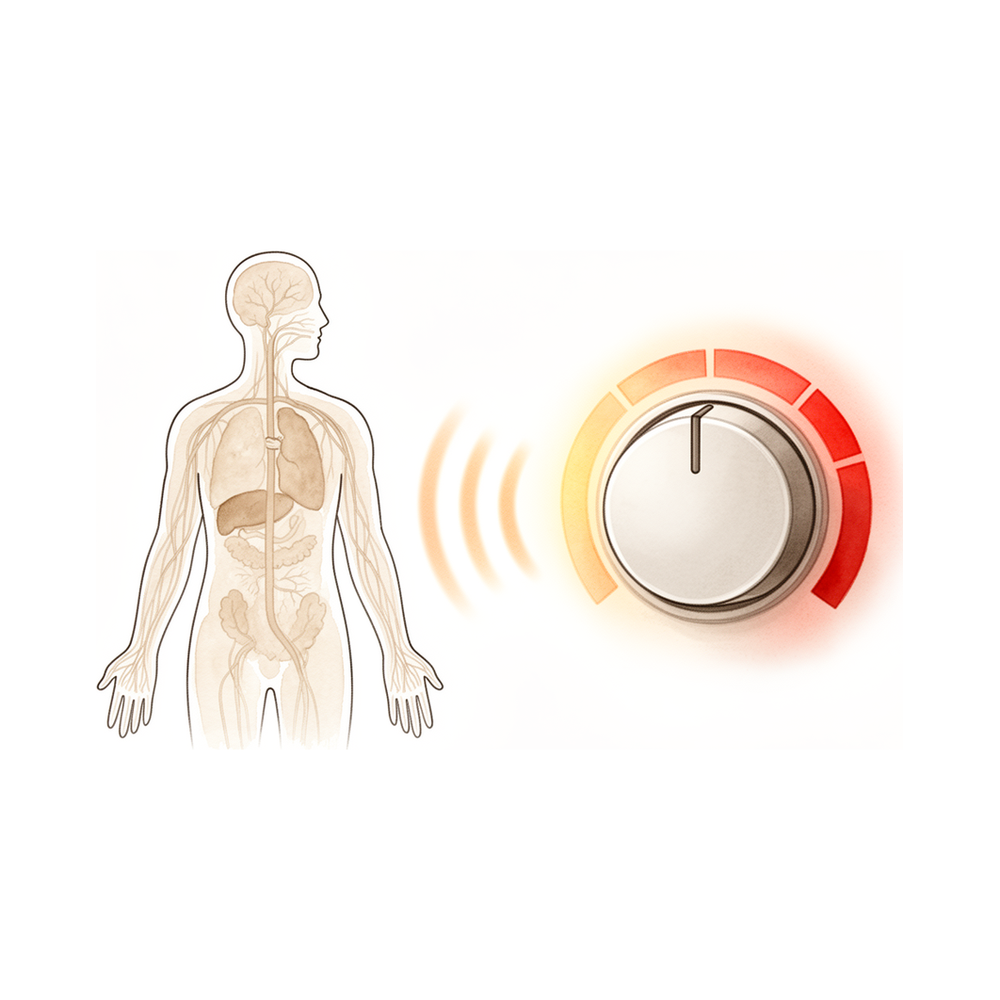
The condition is related to a general dysregulation of the central nervous system [1], with at least some symptoms associated with brain dysfunctions or alterations [5]. Specific genetic factors contribute to severity, as a disabling form of fibromyalgia is associated with a particular SCN9A sodium channel gene variant in a specific ethnic group [12]. The pathophysiology involves neurochemical, immunological, and nutritional factors [36], although the specific role of cytokines in fibromyalgia syndrome remains unclear [40]. Emerging research suggests the gut microbiota may play a role within the gut-musculoskeletal axis [7]. Additionally, both cardiac output and arteriovenous oxygen difference contribute to lower peak oxygen uptake in fibromyalgia patients [22].
Psychological and Environmental Factors
Psychological stressors significantly impact symptom severity. Repeated cognitive stress increases pain intensity in fibromyalgia patients [19]. In situations involving imposed stress, including sympathetic activation and putative anticipatory stress, patients exhibit elevated muscle activity, particularly in the trapezius [27]. Negative affectivity independently predicts both central sensitization symptoms and disease severity, as reflected by Fibromyalgia Impact Questionnaire scores [30]. Furthermore, the stage of chronicity serves as an important moderator of psychological vulnerability for fibromyalgia impact [31].
Symptoms & Presentation
Fibromyalgia is associated with a general dysregulation of the central nervous system [1]. The clinical presentation includes fatigue, sleep disturbance, and impaired cognition [13]. Patients also experience norepinephrine-evoked pain [3]. Sleep difficulty symptoms are independently associated with clinically-meaningful decrements in both mental and physical health-related quality of life [23]. Negative affectivity independently predicts central sensitization symptoms and disease severity [30].
Epidemiological data indicate a prevalence of 1.6% in the French population [4]. In low socioeconomic status populations assisted by the public primary health care system, the prevalence is 4.4% [9].
Sex-based differences: Men with fibromyalgia syndrome report more severe symptoms, decreased physical function, and lower quality of life compared to women [14].
Management
Pharmacological Interventions
Trazodone significantly improves fibromyalgia severity and associated symptomatology when used in combination with pregabalin [16]. In doses higher than those usually prescribed as hypnotic, the utility of trazodone in fibromyalgia management surpasses its hypnotic activity [32].
Exercise and Physical Therapy
Higher physical fitness is consistently associated with lower fibromyalgia severity in women with fibromyalgia [25]. Patients with fibromyalgia are able to activate skeletal muscle metabolism during a short, moderate bout of exercise and are not resistant to training effects [28]. For the prescription of exercises in the threshold intensity, 52% to 60% HRR or 75% to 80% HRMax must be used in sedentary women with fibromyalgia syndrome [34]. Traditional Chinese Exercise exhibits significant efficacy in ameliorating pain, enhancing sleep quality, and alleviating symptoms of anxiety and depression in fibromyalgia patients [35]. An intervention based on pain neuroscience education and exercise is feasible and seems effective in primary care [37]. High-quality scientific works are required to highlight physiotherapy as one of the most recommended treatment options for fibromyalgia syndrome [38].
Self-Management and Behavioral Interventions
It is feasible to recruit people with fibromyalgia from Primary Care to participate in a randomised controlled trial testing a Fibromyalgia Self-management Programme in a community setting [8]. In patients with fibromyalgia, a multidisciplinary inpatient self-management programme had no effect on psychological distress, functional and symptomatic consequences and self-efficacy, except for a small short-term effect on skills and behaviour that are important for managing and participating in health care [24]. Improvements from health and wellness coaching do not typically occur spontaneously in fibromyalgia patients, suggesting that health and wellness coaching deserves further consideration as an intervention for fibromyalgia [21]. Further studies with better treatment quality and adequate methodological quality assessing all key domains of fibromyalgia syndrome are necessary to clarify the efficacy of hypnosis/guided imagery in fibromyalgia syndrome [39].
Assessment and Monitoring
A multidimensional assessment for patients with fibromyalgia demonstrates comprehensiveness and validity, showing significant correlations between various assessment tools and the Fibromyalgia Impact Questionnaire [17]. The MDF-Fibro-17 reliably measures 5 domains of fibromyalgia-related fatigue and meets or exceeds predefined acceptable thresholds for evidence of reliability, validity, and responsiveness to changes in clinical status [18]. Sleep difficulty symptoms were independently associated with clinically-meaningful decrements in mental and physical health-related quality of life among the fibromyalgia population [23]. Daytime napping is commonly used by people with fibromyalgia, and evidence-based guidelines on the use of daytime napping in people with chronic pain are urgently needed [6].
Pathophysiology and Comorbidities
Fibromyalgia patients show elevated muscle activity, in particular trapezius activity, in situations with imposed stress, including sympathetic activation, and putative anticipatory stress [27].
Key Considerations
Epidemiology and Prevalence
Fibromyalgia is a common condition with a prevalence of 1.6% in the French population [4]. Prevalence is higher in low socioeconomic status populations assisted by the public primary health care system, where it reaches 4.4% [9]. Despite the severity of symptoms in persons identified with criteria-based fibromyalgia, most (73%) have not received a clinical diagnosis of fibromyalgia [2].
Pathophysiology and Neurobiology
Research indicating that the gut microbiota may play a role in fibromyalgia within the emerging field of the gut-musculoskeletal axis is currently of poor quality [7].
Assessment and Measurement
Psychological constructs related to pain in fibromyalgia have been evaluated for correlations and predictive validity regarding function and pain over a one-year follow-up [11].
Management and Interventions
Pharmacological and non-pharmacological interventions show variable efficacy. Trazodone significantly improved fibromyalgia severity and associated symptomatology in a two-phase, 24-week, open-label uncontrolled study [16]. A one-week multidisciplinary inpatient self-management programme had no effect on psychological distress, functional and symptomatic consequences, and self-efficacy, except for a small short-term effect on skills and behaviour important for managing and participating in health care [24]. Improvements from health and wellness coaching do not typically occur spontaneously in fibromyalgia patients, suggesting the intervention deserves further consideration [21]. Evidence-based guidelines on the use of daytime napping in people with chronic pain are urgently needed given the common use of daytime napping in people with fibromyalgia [6].
Patient Experience
Fibromyalgia syndrome is a condition that intrudes upon many aspects of patients' lives and is little understood, evoking uneasiness in health care staff and placing great demands on resources [33].
Key Evidence
- [L3] Our findings are consistent with the hypothesis that fibromyalgia is related to a general dysregulation of the central nervous system. [1] (10.1186/s12891-016-1331-1)
- [L3] Persons identified with criteria-based fibromyalgia have severe symptoms, but most (73%) have not received a clinical diagnosis of fibromyalgia. [2] (10.1371/journal.pone.0138024)
- [L2] Fibromyalgia patients have norepinephrine-evoked pain. [3] (10.1186/1471-2474-3-2)
- [L4] Fibromyalgia is a common condition with a prevalence of 1.6% in the French population, corroborating figures published in the European literature. [4] (10.1186/1471-2474-12-224)
- [L5] Current evidence supports the view that at least some fibromyalgia symptoms are associated with brain dysfunctions or alterations, giving the long-held 'it is all in your head' view of the disorder a new meaning. [5] (10.1155/2012/585419)
- [L4] Given the common use of daytime napping in people with fibromyalgia evidence based guidelines on the use of daytime napping in people with chronic pain are urgently needed. [6] (10.1186/s12891-015-0464-y)
- [L1] The results suggest there is a paucity of quality research in this area, with indications that the gut microbiota may play a role in fibromyalgia within the emerging field of the gut-musculoskeletal axis. [7] (10.1186/s12891-020-03201-9)
- [L2] It is feasible to recruit people with fibromyalgia from Primary Care to participate in a randomised controlled trial testing the FSMP in a community setting. [8] (10.1186/s12891-022-05529-w)
- [L4] Fibromyalgia is prevalent in the low socioeconomic status population assisted by the public primary health care system with a prevalence of 4.4%. [9] (10.1186/1471-2474-10-64)
- [L3] The prevalence of post-COVID-19 in fibromyalgia patients is similar to that in patients with other rheumatic diseases. [10] (10.1186/s12891-022-05436-0)
- [L3] The study aims to assess the importance of pain-related psychological constructs on function and pain in patients with fibromyalgia, specifically evaluating correlations and predictive validity over a one-year follow-up. [11] (10.1186/1471-2474-12-4)
- [L3] In this ethnic group, a disabling form of fibromyalgia is associated with a particular SCN9A sodium channel gene variant. [12] (10.1186/1471-2474-13-23)
- [L5] Fibromyalgia is a syndrome characterized by chronic widespread pain, hyperalgesia, and allodynia, along with symptoms such as fatigue, sleep disturbance, and impaired cognition. [13] (10.1016/b978-0-7020-4086-3.00033-3)
- [L3] Men with FMS reported more severe symptoms, decreased physical function, and lower quality of life compared to women. [14] (10.1053/sarh.2000.8363)
- [L3] The apparent paradox of fewer myoelectrical manifestations of fatigue in fibromyalgia is the electrophysiological expression of muscle remodelling in terms of the prevalence of slow conducting fatigue-resistant type I fibres. [15] (10.1186/1471-2474-10-78)
- [L4] Trazodone significantly improved fibromyalgia severity and associated symptomatology. [16] (10.1186/1471-2474-12-95)
- [L3] The study demonstrates the comprehensiveness and validity of a multidimensional assessment for patients with fibromyalgia, showing significant correlations between various assessment tools and the Fibromyalgia Impact Questionnaire. [17] (10.1186/s12891-025-09270-y)
- [L4] The MDF-Fibro-17 reliably measures 5 domains of FM-related fatigue and psychometric evaluation confirms that this measure meets or exceeds each of the predefined acceptable thresholds for evidence of reliability, validity, and responsiveness to changes in clinical status. [18] (10.1186/s12891-017-1545-x)
- [L3] Repeated cognitive stress increases pain intensity in fibromyalgia patients. [19] (10.1186/s12891-021-04013-1)
- [L4] The majority of individuals with FM who participated in this study experience fatigue and describe it as more severe than normal tiredness. [20] (10.1186/1471-2474-11-216)
- [L4] Such improvements do not typically occur spontaneously in FM patients, suggesting that HWC deserves further consideration as an intervention for FM. [21] (10.1186/s12891-016-1316-0)
- [L3] Both cardiac output and arteriovenous oxygen difference contribute to lower peak oxygen uptake in fibromyalgia patients. [22] (10.1186/s12891-023-06589-2)
- [L3] Among the FM population, sleep difficulty symptoms were independently associated with clinically-meaningful decrements in mental and physical HRQoL. [23] (10.1186/1471-2474-13-199)
- [L1] The study shows that in patients with fibromyalgia the self-management programme had no effect on psychological distress, functional and symptomatic consequences and self-efficacy, except for a small short-term effect on skills and behaviour that are important for managing and participating in health care. [24] (10.1186/1471-2474-13-189)
- [L4] Our results suggest that higher physical fitness is consistently associated with lower FM severity in women with FM. [25] (10.1016/j.apmr.2015.03.015)
- [L3] FM patients show elevated muscle activity (in particular trapezius activity) in situations with imposed stress, including sympathetic activation, and putative anticipatory stress. [27] (10.1186/1471-2474-14-97)
- [L2] Hence, patients with FM were able to activate their skeletal muscle metabolism during a short, moderate bout of exercise and were not resistant to training effects. [28] (10.1186/s12891-017-1402-y)
- [L4] In a sample of 88 patients with FM from France, we found that FM poses a substantial economic and human burden on patients and society. [29] (10.1186/1471-2474-13-22)
- [L4] Multivariate regression analyses revealed that negative affectivity—one of the core subcomponents of TDP—independently predicted both central sensitization symptoms and disease severity, as reflected by Fibromyalgia Impact Questionnaire (FIQ) scores. [30] (10.1186/s12891-026-09687-z)
- [L4] These findings provide preliminary evidence that stage of chronicity is an important moderator of psychological vulnerability for FM impact and should be taken into account by tailoring psychological interventions. [31] (10.1186/1471-2474-11-251)
- [L4] In doses higher than those usually prescribed as hypnotic, the utility of trazodone in fibromyalgia management surpasses its hypnotic activity. [32] (10.1186/1471-2474-11-204)
- [L4] FMS is a condition that intrudes upon many aspects of patients' lives and is little understood, evoking uneasiness in health care staff and placing great demands on resources. [33] (10.1186/1471-2474-10-124)
- [L2] For the prescription of exercises in the threshold intensity, 52% to 60% HRR or 75% to 80% HRMax must be used in sedentary women with fibromyalgia syndrome. [34] (10.1186/1471-2474-11-54)
- [L1] Traditional Chinese Exercise (TCE) exhibits significant efficacy in ameliorating pain, enhancing sleep quality, and alleviating symptoms of anxiety and depression in fibromyalgia patients. [35] (10.1186/s12891-024-07194-7)
- [L3] This research highlights FMS's complex nature, involving neurochemical, immunological, and nutritional factors. [36] (10.1186/s12891-025-08337-0)
- [L3] An intervention based on PNE and exercise in patients with FM is feasible and seems effective in PC. [37] (10.1186/s12891-022-05284-y)
- [L2] High-quality scientific works are required to highlight physiotherapy as one of the most recommended treatment options for this syndrome. [38] (10.1186/s12891-016-1364-5)
- [L1] Further studies with better treatment quality and adequate methodological quality assessing all key domains of FMS are necessary to clarify the efficacy of H/GI in FMS. [39] (10.1186/1471-2474-12-133)
- [L1] The pathophysiological role of cytokines in FMS is still unclear. [40] (10.1186/1471-2474-12-245)
References
[1] Are persons with fibromyalgia or other musculoskeletal pain more likely to report hearing loss? A HUNT study. BMC Musculoskeletal Disorders. 2016. DOI: 10.1186/s12891-016-1331-1
[2] The Prevalence and Characteristics of Fibromyalgia in the 2012 National Health Interview Survey. PLOS ONE. 2015. DOI: 10.1371/journal.pone.0138024
[3] Norepinephrine-evoked pain in fibromyalgia. A randomized pilot study ISCRTN70707830. BMC Musculoskeletal Disorders. 2002. DOI: 10.1186/1471-2474-3-2
[4] Prevalence of fibromyalgia in France: a multi-step study research combining national screening and clinical confirmation: The DEFI study (Determination of Epidemiology of FIbromyalgia). BMC Musculoskeletal Disorders. 2011. DOI: 10.1186/1471-2474-12-224
[5] Neurobiology Underlying Fibromyalgia Symptoms. Pain Research and Treatment. 2012. DOI: 10.1155/2012/585419
[6] Daytime napping associated with increased symptom severity in fibromyalgia syndrome. BMC Musculoskeletal Disorders. 2015. DOI: 10.1186/s12891-015-0464-y
[7] Determining the association between fibromyalgia, the gut microbiome and its biomarkers: A systematic review. BMC Musculoskeletal Disorders. 2020. DOI: 10.1186/s12891-020-03201-9
[8] A feasibility randomised controlled trial of a Fibromyalgia Self-management Programme for adults in a community setting with a nested qualitative study (FALCON). BMC Musculoskeletal Disorders. 2022. DOI: 10.1186/s12891-022-05529-w
[9] Prevalence of fibromyalgia in a low socioeconomic status population. BMC Musculoskeletal Disorders. 2009. DOI: 10.1186/1471-2474-10-64
[10] Prevalence of post-COVID-19 in patients with fibromyalgia: a comparative study with other inflammatory and autoimmune rheumatic diseases. BMC Musculoskeletal Disorders. 2022. DOI: 10.1186/s12891-022-05436-0
[11] Correlational analysis and predictive validity of psychological constructs related with pain in fibromyalgia. BMC Musculoskeletal Disorders. 2011. DOI: 10.1186/1471-2474-12-4
[12] A SCN9A gene-encoded dorsal root ganglia sodium channel polymorphism associated with severe fibromyalgia. BMC Musculoskeletal Disorders. 2012. DOI: 10.1186/1471-2474-13-23
[13] Fibromyalgia. Handbook of Clinical Neurology. 2014. DOI: 10.1016/b978-0-7020-4086-3.00033-3
[14] Fibromyalgia syndrome in men. Seminars in Arthritis and Rheumatism. 2000. DOI: 10.1053/sarh.2000.8363
[15] Central motor control failure in fibromyalgia: a surface electromyography study. BMC Musculoskeletal Disorders. 2009. DOI: 10.1186/1471-2474-10-78
[16] Trazodone plus pregabalin combination in the treatment of fibromyalgia: a two-phase, 24-week, open-label uncontrolled study. BMC Musculoskeletal Disorders. 2011. DOI: 10.1186/1471-2474-12-95
[17] Comprehensiveness and validity of a multidimensional assessment of patients with fibromyalgia: a prospective cohort study. BMC Musculoskeletal Disorders. 2025. DOI: 10.1186/s12891-025-09270-y
[18] Multidimensional daily diary of fatigue-fibromyalgia-17 items (MDF-fibro-17): part 2 psychometric evaluation in fibromyalgia patients. BMC Musculoskeletal Disorders. 2017. DOI: 10.1186/s12891-017-1545-x
[19] Muscle activity and acute stress in fibromyalgia. BMC Musculoskeletal Disorders. 2021. DOI: 10.1186/s12891-021-04013-1
[20] Fatigue in fibromyalgia: a conceptual model informed by patient interviews. BMC Musculoskeletal Disorders. 2010. DOI: 10.1186/1471-2474-11-216
[21] A pilot study of health and wellness coaching for fibromyalgia. BMC Musculoskeletal Disorders. 2016. DOI: 10.1186/s12891-016-1316-0
[22] Cardiac output and arteriovenous oxygen difference contribute to lower peak oxygen uptake in patients with fibromyalgia. BMC Musculoskeletal Disorders. 2023. DOI: 10.1186/s12891-023-06589-2
[23] The association of sleep difficulties with health-related quality of life among patients with fibromyalgia. BMC Musculoskeletal Disorders. 2012. DOI: 10.1186/1471-2474-13-199
[24] Effects of a one week multidisciplinary inpatient self-management programme for patients with fibromyalgia: a randomised controlled trial. BMC Musculoskeletal Disorders. 2012. DOI: 10.1186/1471-2474-13-189
[25] Association of Physical Fitness With Fibromyalgia Severity in Women: The al-Ándalus Project. Archives of Physical Medicine and Rehabilitation. 2015. DOI: 10.1016/j.apmr.2015.03.015
[27] Trapezius activity of fibromyalgia patients is enhanced in stressful situations, but is similar to healthy controls in a quiet naturalistic setting: a case-control study. BMC Musculoskeletal Disorders. 2013. DOI: 10.1186/1471-2474-14-97
[28] Acute effects of physical exercise on the serum insulin-like growth factor system in women with fibromyalgia. BMC Musculoskeletal Disorders. 2017. DOI: 10.1186/s12891-017-1402-y
[29] Societal and individual burden of illness among fibromyalgia patients in France: Association between disease severity and OMERACT core domains. BMC Musculoskeletal Disorders. 2012. DOI: 10.1186/1471-2474-13-22
[30] Psychosocial correlates of central sensitization and kinesiophobia: the role of Type D personality in fibromyalgia — a cross-sectional study. BMC Musculoskeletal Disorders. 2026. DOI: 10.1186/s12891-026-09687-z
[31] Stages of chronicity in fibromyalgia and pain catastrophising: a cross-sectional study. BMC Musculoskeletal Disorders. 2010. DOI: 10.1186/1471-2474-11-251
[32] Trazodone for the treatment of fibromyalgia: an open-label, 12-week study. BMC Musculoskeletal Disorders. 2010. DOI: 10.1186/1471-2474-11-204
[33] Patients' experiences of living with and receiving treatment for fibromyalgia syndrome: a qualitative study. BMC Musculoskeletal Disorders. 2009. DOI: 10.1186/1471-2474-10-124
[34] Intensity level for exercise training in fibromyalgia by using mathematical models. BMC Musculoskeletal Disorders. 2010. DOI: 10.1186/1471-2474-11-54
[35] Effects of traditional Chinese exercise therapy on pain scores, sleep quality, and anxiety-depression symptoms in fibromyalgia patients: a systematic review and meta-analysis. BMC Musculoskeletal Disorders. 2024. DOI: 10.1186/s12891-024-07194-7
[36] Serum choline, leptin and interleukin-6 levels in fibromyalgia syndrome-induced pain: a case–control study. BMC Musculoskeletal Disorders. 2025. DOI: 10.1186/s12891-025-08337-0
[37] Effectiveness of a group intervention using pain neuroscience education and exercise in women with fibromyalgia: a pragmatic controlled study in primary care. BMC Musculoskeletal Disorders. 2022. DOI: 10.1186/s12891-022-05284-y
[38] Effectiveness of Aquatic Therapy vs Land-based Therapy for Balance and Pain in Women with Fibromyalgia: a study protocol for a randomised controlled trial. BMC Musculoskeletal Disorders. 2017. DOI: 10.1186/s12891-016-1364-5
[39] Efficacy of hypnosis/guided imagery in fibromyalgia syndrome - a systematic review and meta-analysis of controlled trials. BMC Musculoskeletal Disorders. 2011. DOI: 10.1186/1471-2474-12-133
[40] Systematic review with meta-analysis: cytokines in fibromyalgia syndrome. BMC Musculoskeletal Disorders. 2011. DOI: 10.1186/1471-2474-12-245