Patients › Shoulder
SLAP and Biceps Pathology
Superior labral (SLAP) tears and disorders of the long head of biceps — assessment and treatment.
What you're feeling
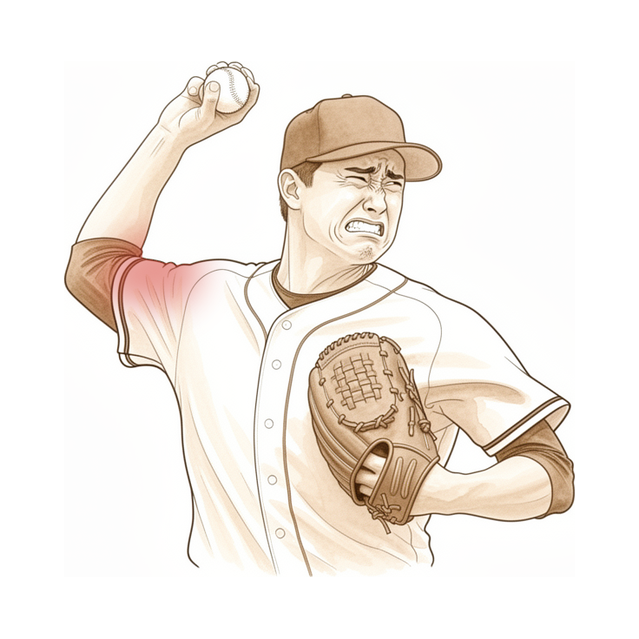
The pain from a SLAP tear usually sits deep inside the shoulder, at the top of the joint. You may not be able to point to it with one finger. It often flares during overhead actions: throwing a ball, serving in tennis, reaching up to a high shelf, or lifting something heavy above shoulder height. Some people notice a clicking or snapping when they move their arm overhead. Others describe a "dead arm" feeling, where the arm suddenly feels heavy, weak or unreliable during activity. Weakness in the shoulder can develop, and your arm may tire more quickly than it used to.
The biceps tendon runs from deep in the front of the shoulder down the front of your arm. When it is irritated or torn, the pain tends to sit at the front of the shoulder and upper arm. Pressing on that spot, or twisting a screwdriver, opening a stubborn jar, or lifting with your palm facing up, can bring the pain on. If the tendon has torn right through, you may see a firm lump low on the front of the arm that stands out more when you tighten the biceps muscle. This lump is sometimes mistaken for something more serious, but function is usually barely affected and many people need no treatment for it at all.
Symptoms can start suddenly after a fall or a forceful pull on the arm, or after the shoulder has slipped out of place. They can also creep in slowly over weeks or months, which is common in people who throw or swim a lot. Day to day, you might struggle with hanging washing, reaching behind the car seat, carrying shopping bags, or working with your arms above your head. Night pain and stiffness after activity are common reasons people seek help. Because these symptoms overlap with several other shoulder problems, including rotator cuff trouble and wear-and-tear arthritis, working out exactly what is causing your pain can take a careful examination and scans.
What's actually happening
Your shoulder is a ball-and-socket joint. Around the edge of the socket sits a ring of soft tissue called the labrum, which works a bit like a rubber gasket, deepening the socket and helping hold the ball in place. The tendon of the long head of the biceps anchors into the top of that ring. In a SLAP tear, this anchor at the top of the labrum peels away from the bone. The name comes from what surgeons see: Superior Labrum, Anterior to Posterior, meaning the tear runs from the front of the ring to the back.
Several things can pull that anchor loose. A fall onto the arm or a forceful yank can do it in one go. In people who throw a lot, the repeated strain of overhead motion gradually works on the same spot. As the shoulder tightens at the back over years of throwing, the ball shifts slightly towards the top and back during the throwing action, twisting and peeling the labrum loose. The biceps tendon then pulls at a steeper angle, which tugs on the torn edge and keeps it from settling.
The biceps tendon itself can also be the problem. It runs through a groove at the front of the shoulder, held there by a strap of tissue that works like a pulley. If that pulley is stretched or torn, often alongside rotator cuff damage, the tendon can slip out of the groove. That is the clicking or snapping you may feel overhead. The tendon can also fray or split from wear, and it has a patch near its anchor with a poor blood supply, which is why tears there tend not to heal well on their own.
Either way, the damaged tissue at the top of the joint is what produces the deep pain, the catching and the dead arm feeling described earlier.
What we can do about it
Dr Kieran Hirpara, an upper-limb surgeon at Mater Private Hospital Rockhampton, starts with the least invasive options that suit your condition. Patients are generally referred to our clinic by their GP; if a physiotherapist has suggested you see us, you will still need a referral from your GP in order to be eligible for the Medicare rebate. At your first visit we take a history, examine your shoulder and arrange scans where they are needed to work out what is causing your pain.
Most SLAP tears start without surgery. We usually begin with rest from sport, cooling the shoulder, anti-inflammatory medicine and physiotherapy. Physiotherapy aims to strengthen the rotator cuff and the muscles around the shoulder blade, and to stretch the tight tissues at the back of the shoulder that come from years of throwing. We ask most people to give this a fair go for a minimum of 3 months. If the first round of physiotherapy falls short, a second course aimed at your specific problem, such as tightness at the back of the shoulder or weakness around the shoulder blade, can still help. For biceps tendinitis, strengthening exercises are the starting point.
Anti-inflammatory tablets can settle the pain in the early weeks. We can also offer an injection of local anaesthetic with cortisone into the shoulder joint or into the groove the biceps tendon runs through. This does two jobs: it can ease the pain, and it helps us confirm that the SLAP tear is what is causing it. If a fluid-filled cyst next to the tear is pressing on a nerve and weakening your shoulder, that cyst can be drained.
Surgery comes into the picture when 3 months of non-operative care has not settled your symptoms. The operation is done through keyhole surgery, using a small camera inside the joint. What we do depends on the type of tear and your age and activity. Some tears are simply trimmed back to stable tissue. Others are repaired by stitching the labrum back down to the bone. When the biceps tendon itself is the main problem, we may secure it into a new spot lower down the arm, or release it from the anchor. We will talk through which option fits you best and decide together.
What to expect
Most SLAP tears settle with the right care, though it rarely happens overnight. If you start with physiotherapy and rest from the activities that flare your pain, you may need a fair few months before you notice real change. Some people get better with one course of treatment. Others need a second round aimed at their specific problem, such as tightness at the back of the shoulder or weakness around the shoulder blade. If your pain still hasn't settled after 3 months, surgery becomes an option worth discussing.
If surgery is needed, both main approaches work well for easing pain and getting your shoulder moving again. Many people return to the activities they love, including sport. For most people, recovery is a gradual climb: less pain first, then strength and confidence returning over weeks to months. Your surgeon will talk you through what your own recovery is likely to look like.
It helps to be honest about the limits too. Not every shoulder ends up pain free, and the reasons some repairs disappoint are not fully understood. A few people need further surgery down the track. After an isolated SLAP repair, 10.1% of people go on to have another operation, often because a second problem in the shoulder comes to light. Certain things raise that chance: being over 40, being a woman, smoking, carrying extra weight, or having biceps tendon trouble along with the tear. If you're a throwing athlete, the repeated strain of throwing can sometimes be too much for even a repaired labrum.
Leaving it alone is also a choice with consequences. The damaged tissue at the top of the joint often keeps producing pain with overhead use, and the tendon's poor blood supply means tears there tend not to heal by themselves. Some people manage fine by adjusting their activities. Others find the deep pain, catching and dead arm feeling gradually wear them down. The right path depends on your age, your sport and what you want your shoulder to do, and that decision is made together with your surgeon.
When to see someone
See your GP if you have deep shoulder pain that keeps flaring with overhead use, or pain at the front of the shoulder that worsens when you twist a screwdriver or lift with your palm up. Ask for a specialist review if rest and physiotherapy have not settled things after 3 months, if your arm keeps feeling heavy or unreliable, or if clicking and snapping stop you working or playing sport. Go to an emergency department if your shoulder slips out of place, or if a fall or forceful pull on the arm leaves you with sudden weakness or a dead arm feeling. If you notice a lump low on the front of your arm after a strain, see your GP to have it checked; it is usually a torn biceps tendon rather than anything serious, but it should be confirmed.
In more depth
Advanced reading: the deeper science (optional)
This section goes further than you need for your own treatment decisions. SLAP tears are worth the extra reading because they are the shoulder diagnosis where both the clinical tests and the scan are least reliable, and because the operation that has become preferred is not the one that repairs the tear.
The examination test does not carry the diagnosis
The Active Compression (O'Brien) test is the manoeuvre most associated with SLAP lesions. Assessed across 3,091 patients, it has both limited screening and limited confirmation ability, and the authors state plainly that they do not advocate for its use in clinical decision making [1].
That is about as negative a conclusion as a diagnostic review issues, and it applies to the test most often quoted as positive in referral letters.
And MRI cannot rule one out
Imaging is better but incomplete. Across 2,916 patients, MRI showed moderate sensitivity with excellent specificity and accuracy, making it valuable for confirming a SLAP lesion, while it cannot definitively rule one out, with arthroscopy remaining the reference standard [2].
Put the two findings together and the practical position is: a positive MRI is informative, a negative one is not conclusive, and the examination adds little either way. This is the main reason SLAP tears are over-diagnosed in shoulders whose pain has another cause, and why treating an incidental superior labral finding is a recognised error, particularly in older shoulders where fraying at that site is an expected age change.
Tenodesis has overtaken repair, on grounds worth understanding
Where an isolated type II tear is genuinely symptomatic, two operations compete: repairing the labrum back to the socket, or detaching the biceps tendon and reattaching it lower down, removing the pull that stresses the torn labrum.
Across 881 patients, SLAP repair and biceps tenodesis are both acceptable as index treatment, with repair still the most commonly performed but tenodesis equally efficacious and an attractive alternative [3]. A decision analysis across 908 patients went further: tenodesis is preferred over repair on greater expected value, with meta-analysis showing more frequent favourable outcomes [4].
The mechanical logic is that repair restores the anatomy but leaves the biceps pulling on a healing repair, which in an older or stiffer shoulder frequently produces persistent pain and loss of external rotation. Tenodesis abandons the anatomy and removes the deforming force. Outcomes have favoured removing the force.
The exception is the young overhead athlete, where sacrificing the biceps anchor is a bigger functional decision and repair retains a role.
Why the biceps and the labrum are one topic
The long head of biceps attaches directly to the superior labrum, they are continuous. A tear at that junction is therefore simultaneously a labral injury and a biceps anchor injury, which is why an operation on the biceps treats a labral lesion, and why symptoms overlap so completely with biceps tendinopathy that the two are often indistinguishable clinically.
References for the advanced reading
- Davis C, Immormino J, Higgins BM, Clark K, Engebose S, Garcia AN, et al. Diagnostic utility of the Active Compression Test for the superior labrum anterior posterior lesion: a systematic review with meta-analysis. Shoulder Elbow. 2018;11(5):321-31.
- Nosratpour M, Zarei H, Zaker Moshfegh M, Mahdavi M, Moteshakereh SM, Shirvani P, et al. Diagnostic accuracy of magnetic resonance imaging for detecting superior labrum anterior-posterior lesions: a systematic review and meta-analysis. JSES Int. 2025;9(6):1972-87.
- de SA D, Arakgi ME, Lian J, Crum RJ, Lin A, Lesniak BP. Labral repair versus biceps tenodesis for primary surgical management of type II superior labrum anterior to posterior tears: a systematic review. Arthroscopy. 2019;35(6):1927-38.
- Recker AJ, Waters TL, Bullock G, Rosas S, Scholten DJ, Nicholson K, et al. Biceps tenodesis has greater expected value than repair for isolated type II SLAP tears: a decision analysis and meta-analysis. Arthroscopy. 2022;38(10):2887-2900.
Evidence & references
This is the clinical evidence summary written for health professionals. It is technical, and it lists the research this page was built from. You do not need to read it to understand your treatment or to make a decision about it.
Overview
- Biceps tenodesis is a safe, effective, and technically straightforward alternative to primary SLAP repair in patients with type II and IV SLAP tears [3].
- Both arthroscopic repair and biceps tenotomy and tenodesis interventions had benefits in type II SLAP lesions [4].
- SLAP repairs are generally favored in younger, active patients [5].
- Treating the biceps is preferred in lower-demand patients aged >30 years [5].
- Biceps tenodesis has been increasingly used for the management of SLAP lesions [6].
- Recent studies report high rates of return to sport, high satisfaction, and good to excellent patient-reported outcomes for biceps tenodesis in carefully selected athletes [6].
- SLAP repair and biceps tenodesis both present viable treatment options with specific advantages and disadvantages [7].
- The decision between SLAP repair and biceps tenodesis is ultimately made individually with the patient [7].
- Primary subpectoral open biceps tenodesis for SLAP tears or pathology of the long head of the biceps tendon provides significant improvement in shoulder outcomes [8].
- Primary subpectoral open biceps tenodesis for SLAP tears or pathology of the long head of the biceps tendon provides a reliable return to activity level with low risk for complications [8].
- Biceps tenodesis is a predictable, safe, and effective treatment for failed arthroscopic SLAP tears at a minimum 2-year follow-up [9].
- Treatment of proximal biceps pathology is largely based on expert opinion and patient preferences rather than robust randomized evidence [25].
- Primary biceps tenodesis offers increased effectiveness when compared with both primary SLAP repair and nonoperative treatment [33].
- Primary biceps tenodesis offers lower costs than primary SLAP repair [33].
- The indications and technique of biceps tenodesis in the elite pitcher still need to be defined [36].
- High-demand patients with biceps tendonitis in the setting of a SLAP lesion with labral instability who undergo combined tenodesis and labral repair have significantly worse outcomes than patients who undergo either isolated labral repair for type II SLAP tears or isolated biceps tenodesis for a SLAP tear and biceps tendonitis [81].
Anatomy & Pathophysiology
Glenoid Labrum Anatomy
- The glenoid labrum consists of parallel collagen fibers that course around the circumference of the glenoid [27].
- The superior labrum inserts on the superior glenoid rim, medial to the articular cartilage margin, through a transitional zone of fibrocartilage [27].
- A normal synovial recess exists between the meniscoid or triangular superior labrum and the articular cartilage extension over the superior glenoid rim [27].
- The glenoid labrum is composed of fibrocartilaginous tissue [41].
- Vascularity to the glenoid labrum originates from the scapular, circumflex scapular, and posterior circumflex humeral arteries via capsular or periosteal vessels [27].
- The suprascapular artery, the circumflex scapular branch of the subscapular artery, and the posterior humeral circumflex artery provide the labrum’s vascular supply [41].
- These vessels arborize within the peripheral aspect of the labrum [41].
- The inner portion of the labrum is avascular [41].
- The superior labrum is less vascular compared with the inferior and posterior labrum [41].
- The superior labrum is usually triangular but can have a meniscoid shape [41].
- The superior labrum commonly attaches medial to the articular margin of the glenoid rim [41].
- This medial attachment at the supraglenoid tubercle creates a subsynovial recess [41].
Long Head of Biceps (LHB) Anatomy
- Of the biceps tendon, 40% to 60% attaches to the supraglenoid tubercle 5 mm medial to the superior glenoid rim [27].
- The remainder of the biceps tendon attaches directly to the superior glenoid labrum [27].
- The biceps tendon typically attaches entirely (type I) or predominantly posterior (type II) on the superior labrum [27].
- The labral attachment of the biceps tendon may have equal anterior and posterior contributions (type III) or, less commonly, predominantly anterior (type IV) [27].
- The LHB can have an entirely posterior, posterior-dominant, or equally anterior-posterior attachment at the superior labrum [41].
- In most cases, the LHB has a posterior-dominant or entirely posterior labral insertion [41].
- The biceps tendon is an intra-articular but extrasynovial structure within the glenohumeral joint [27].
- Vascularity of the biceps tendon is provided primarily by the ascending branch of the anterior humeral circumflex artery, which travels within the bicipital groove [27].
- An avascular zone exists at the proximal portion of the biceps tendon, close to the superior glenoid [27].
- Blood is supplied to the LHB tendon from the thoracoacromial and brachial arteries via the osteotendinous and musculotendinous junctions, respectively [41].
- A hypovascular zone found near the tendon origin at the superior glenoid attachment corresponds to where it commonly tears at the LHB pulley near the proximal groove [41].
- The biceps tendon passes through the bicipital groove, or intertubercular groove, between the greater and lesser tuberosities [27].
- The LHB courses intra-articularly over the humeral head before exiting the glenohumeral joint through the bicipital groove [41].
- The LHB anchor has some inherent physiologic motion, and overconstraint from repair can contribute to stiffness [41].
- The biceps tendon does not move up and down in the groove; rather, the humerus moves down and up with adduction and abduction relative to the tendon [29].
- The bicipital tendon is retained within the groove by a pulley made up of fibers from the coracohumeral and superior glenohumeral ligaments, with some reinforcement from adjacent tendons [29].
- Stability of the biceps within the bicipital groove is afforded by the biceps sling, or pulley, consisting of fibers from the subscapularis tendon, supraspinatus tendon, coracohumeral ligament, and superior glenohumeral ligament [27].
- The LHB pulley is a capsuloligamentous complex comprising the superior glenohumeral ligament, the coracohumeral ligament, and fibers from the subscapularis and supraspinatus tendons [41].
- The LHB pulley stabilizes the proximal LHB as the tendon enters the bicipital groove [41].
- The biceps pulley is composed of the superior glenohumeral ligament and coracohumeral ligament in combination with the subscapularis [30].
- The bicipital arch consists of the conglomerate of the superior glenohumeral ligament and the coracohumeral ligament attachment at the superior bicipital groove [38].
- The bicipital arch ligaments are reinforced anteriorly by the subscapular tendon attachment and posteriorly by the supraspinatus attachment [38].
- The LHB tendon is innervated by thinly myelinated sensory neurons [41].
- Most of the innervation of the LHB tendon occurs at the LHB origin [41].
- Pathology in the LHB origin region can generate pain [41].
Biceps-Labral Complex (BLC) Zones
- The biceps labral complex (BLC) consists of the superior glenoid labrum (SGL) and the long head of the biceps (LHB) tendon [78].
- The BLC is classified into three distinct zones: Inside, Junction, and Extra-articular [41].
- The Inside zone of the BLC consists of the SGL and the LHB anchor, which is closely associated with the SGL [41].
- The Junction zone includes the intra-articular portion of the LHB, as well as the stabilizing biceps pulley [41].
- The Extra-articular zone consists of the bicipital tunnel [41].
- The Extra-articular zone is further divided into three zones: zone 1 bony groove, zone 2 “No Man’s Land,” and zone 3 subpectoralis [41].
- Zone 1 and zone 2 of the bicipital tunnel contain synovial tissue, which may generate pain [41].
- Zone 2 of the bicipital tunnel cannot be visualized by arthroscopy from above or with an open approach from below the zone [41].
Anatomic Variants
- Anatomic variants in the superior labrum include a sublabral foramen or absence of the superior labrum, often seen together with a cordlike middle glenohumeral ligament (MGHL) [41].
- In a cohort of 73 shoulders, 3.3% had a sublabral foramen [41].
- In a cohort of 73 shoulders, 8.6% had a sublabral foramen with cordlike MGHL, also called a Buford complex [41].
- In a cohort of 73 shoulders, 1.5% had an absent anterosuperior labrum [41].
- Recognizing these anatomical variants intraoperatively is of critical importance, because surgical repair can result in loss of external shoulder rotation [41].
Pathophysiology of SLAP Tears
- SLAP tears can be caused by forceful traction to the arm, direct compression loads, and repetitive overhead throwing [20].
- Increased external rotation of the shoulder in the late cocking phase increases torsional force at the LHB root, resulting in a peel-back injury to the posterosuperior labrum [20].
- Injuries can result from repetitive contact of the posterosuperior labrum with the undersurface of the rotator cuff in the late cocking phase, known as internal impingement [20].
- SLAP tears are seen more frequently in the late cocking position, occurring because of an adaptive posterior capsular contracture [20].
- Throwing athletes demonstrate increased shoulder external rotation and decreased internal rotation in abduction, which causes posterosuperior migration of the humeral head in the late cocking phase [20].
- Posterosuperior migration of the humeral head in the late cocking phase can result in a peel-back SLAP tear [20].
- Increased external rotation results in greater torsional loads across the superior labrum from the more posteriorly oriented LHB tendon [20].
- Greater torsional loads cause the labrum and LHB tendon to displace medially over the glenoid rim, creating a SLAP tear [20].
- Type II SLAP lesions are thought to result from a peelback mechanism during maximum external rotation of the arm during the throwing motion that involves eccentric biceps contraction and a huge magnitude of tensile forces on the biceps anchor [62].
- SLAP tears may represent an adaptive process, because the peel-back of the SGL permits increased humeral external rotation needed to participate in overhead sporting activity [78].
- The pathogenesis of SLAP tears in throwers remains unknown although several theories have been expounded in the literature [35].
Pathophysiology of LHB Tendon Pathology
- Pathology of the LHB tendon includes tendinitis, tendinopathy, tears, subluxation, entrapment, delamination, and dislocation out of the bicipital groove [20].
- Because of the relatively anterior position of the bicipital groove along the humeral head combined with humeral retroversion, the tendon is exposed to medial instability [20].
- Medial instability of the LHB tendon can increase the risk of tendon degeneration [20].
- Variations of bicipital groove morphology can also increase the risk of LHB tendon pathology [20].
- Isolated LHB tendon pathology can occur but frequently is associated with other shoulder pathologies, especially rotator cuff pathology [20].
- When seen in isolation, primary LHB tendinitis usually occurs in younger patients who participate in overhead activities such as volleyball and baseball [20].
- With LHB tendon instability, the patient describes a clicking or snapping with overhead motions [20].
- A subscapularis tear is associated with LHB medial instability [20].
- A supraspinatus tear is associated with posterolateral instability of the LHB tendon [20].
- A subscapularis tear should be highly suspected in the setting of LHB instability, and vice versa [41].
- Biceps tendinitis is rarely the primary cause of shoulder pain [46].
- Biceps tendinitis is usually secondarily involved as a part of an impingement syndrome or degenerative lesions of the rotator cuff [46].
- In the context of rotator cuff disease, the etiology of anterior shoulder pain with macroscopic changes in the biceps tendon is related to the complex interaction of the tendon and surrounding soft tissues, rather than a single entity [12].
- Biceps tendon lesions may be inflammatory, degenerative, or traumatic as a result of repetitive microtrauma or macrotrauma [38].
- The injury site or sites for biceps tendon lesions may include the attachment to the supraglenoid tubercle, SLAP, the tendon (intraarticular or extraarticular), and the bicipital arch [38].
- Boileau et al. described an hourglass-shaped biceps deformity that is associated with inflammation and triggering through the proximal pulley [38].
- Persistence of the triggering can result in pulley instability [38].
- The proximal LHB tendon has been recognized as a source of substantial anterior shoulder pain [20].
- This clinical entity can be difficult to diagnose because it is known to occur with other pathologies including SLAP lesions, rotator cuff disorders impingement, bursitis, and acromioclavicular joint disorders [20].
- Biomechanical studies indicate that the long head of the biceps contributes to stability of the glenohumeral joint in all directions [49].
- In vivo studies have yet to establish the stabilizing effect of the long head of the biceps and the physiologic load required remains unknown [49].
- Human throwing capabilities largely result from several derived anatomical features that enable elastic energy storage and release at the shoulder [43].
Classification of Biceps Tendon Disorders
- The various disorders of the long head of the biceps tendon were classified into inflammatory, unstable, or traumatic, on the basis of the original initiating event [13].
- The distinction between inflammatory, unstable, and traumatic biceps disorders is not always clear [13].
- The degenerated and inflamed tendon is more prone to trauma [13].
- Repeated trauma may result in changes in the tendon indistinguishable from those of inflammation [13].
- Inflammatory biceps disorders include biceps tendinitis concurrent with rotator cuff disease and primary bicipital tendinitis [13].
- Instability biceps disorders include subluxation and dislocation [13].
- Subluxation types include Type I (superior subluxation), Type II (unstable at proximal portion of groove), and Type III (subluxation following melanin or nonunion of lesser tuberosity) [13].
- Dislocation types include Type I (extraarticular, combined with partial tear of subscapularis) and Type II (intraarticular, combined with full-thickness tear of subscapularis) [13].
- Traumatic biceps disorders include traumatic rupture and superior labral tears (SLAP lesion) [13].
- Traumatic rupture types include Type I (partial) and Type II (complete) [13].
- SLAP lesion types include Type I (significant fraying), Type II (complete detachment of biceps tendon and superior labrum from glenoid), Type III (“bucket-handle” tear of superior labrum), and Type IV (central superior labrum tear with extension into the biceps) [13].
- Habermeyer and Walch proposed a classification based upon the pathomorphologic features of the biceps tendon dislocation [45].
- Type I biceps dislocation is extraarticular dislocation combined with a partial tear of the subscapularis tendon [45].
- In Type I biceps dislocation, the long biceps tendon is completely dislocated to a point over the lesser tuberosity [45].
- In Type I biceps dislocation, the deeper portions of the subscapularis tendon still insert into the lesser tuberosity, separating the biceps tendon from the joint space [45].
- In Type I biceps dislocation, there is invariably a rupture of the common attachment of the superior glenohumeral ligament and coracohumeral ligament [45].
- In Type I biceps dislocation, the biceps tendon is displaced over the anterior wall of the groove and slips or glides medially over the torn fibres of the subscapularis tendon [45].
- The clavipectoral fascia covers the Type I lesion externally, which might give the impression that the subscapularis tendon is intact over its full-thickness [45].
- The outer attachment of the subscapularis tendon is always torn in Type I dislocation [45].
- Type I dislocation corresponds in its evolution to a type II subluxation but represents a more advanced stage [45].
- Besides the superficial lesion of the subscapularis tendon, there is frequently an associated tear of the rotator cuff in Type I dislocation [45].
- Extraarticular dislocation with an intact subscapularis tendon is very rare [45].
- In a series of 70 patients with subluxation and dislocations of the long biceps tendon, only 2 patients (3%) manifested extraarticular dislocation with an intact subscapularis tendon [45].
- Type II biceps dislocation is intraarticular dislocation of the long biceps tendon combined with a complete tear of the subscapularis tendon [45].
- In Type II biceps dislocation, the biceps tendon is widened and flattened as a result of its contact with the lesser tuberosity [45].
- In Type II biceps dislocation, the subscapularis tendon is torn from its attachment on the lesser tuberosity [45].
- In Type II biceps dislocation, the long biceps tendon is interposed into the joint space and displaced inferomedially [45].
- On the articular side, the biceps tendon is apposed to the glenoid labrum in Type II dislocation [45].
- Entrapment of the tendon in the anterior joint space occurs with each internal rotational movement of the humerus in Type II dislocation [45].
- Usually the proximal two-thirds of the subscapularis tendon is ruptured in Type II dislocation [45].
- Rarely is the distal, purely muscular insertion of the subscapularis tendon torn as well in Type II dislocation [45].
- The intraarticular dislocation is often associated with extensive tearing of the rotator cuff [45].
- Approximately half of these dislocations have a traumatic etiology [45].
Classification
- Long head of biceps tendon disorders are classified into inflammatory, unstable, or traumatic categories based on the original initiating event [13].
- The distinction between inflammatory, unstable, and traumatic biceps tendon disorders is not always clear, as degenerated and inflamed tendons are more prone to trauma and repeated trauma can result in changes indistinguishable from inflammation [13].
- Inflammatory biceps tendon disorders include biceps tendinitis concurrent with rotator cuff disease and primary bicipital tendinitis [13].
- Instability of the long head of the biceps tendon is classified into subluxation and dislocation [13].
- Subluxation of the long head of the biceps tendon includes Type I (superior subluxation), Type II (unstable at proximal portion of groove), and Type III (subluxation following melanin or nonunion of lesser tuberosity) [13].
- Dislocation of the long head of the biceps tendon includes Type I (extraarticular, combined with partial tear of subscapularis) and Type II (intraarticular, combined with full-thickness tear of subscapularis) [13].
- Traumatic biceps tendon disorders include traumatic rupture and superior labral tears (SLAP lesions) [13].
- Traumatic rupture of the long head of the biceps tendon is classified as Type I (partial) or Type II (complete) [13].
- Superior labral tears (SLAP lesions) are classified as Type I (significant fraying), Type II (complete detachment of biceps tendon and superior labrum from glenoid), Type III ("bucket-handle" tear of superior labrum), or Type IV (central superior labrum tear with extension into the biceps) [13].
- A positive subpectoral biceps test was associated with gross pathologic changes of the biceps in 93% of patients [2].
- There is no single pattern of pain that distinguishes biceps conditions from other shoulder abnormalities [18].
Clinical Presentation
History and Mechanism
- A history of acute trauma, consisting of sudden traction or compression to the affected extremity, may be present in patients with SLAP tears [61].
- SLAP tears can be associated with a previous subluxation or dislocation event [61].
- Insidious onset of symptoms associated with SLAP tears is most common in overhead throwing athletes [61].
- Increased external rotation of the shoulder in the late cocking phase increases torsional force at the long head of the biceps root, resulting in a peel-back injury to the posterosuperior labrum [20].
- Increased external rotation results in greater torsional loads across the superior labrum from the more posteriorly oriented long head of the biceps tendon, causing the labrum and tendon to displace medially over the glenoid rim [20].
- Patients who seem to do best with SLAP pathology are those with identifiable mechanisms of injury that can "push off" or "pull off" the labrum, followed by an identifiable "clunk" as the humeral head translates over the destabilized labrum [37].
- Patients who seem to do poorly with SLAP pathology are those without a history of injury, non-specific pain, no definite mechanical signs, and questionable pathology on MRI [37].
Symptoms
- Pain caused by a SLAP tear often is localized deep within the glenohumeral joint [61].
- SLAP tear pain can be associated with mechanical symptoms, fatigue or a "dead arm" sensation of the extremity during overhead activities [61].
- SLAP tear pain can be associated with frank weakness of the rotator cuff in a concomitant paralabral cyst [61].
- The proximal long head of the biceps tendon has been recognized as a source of substantial anterior shoulder pain [20].
- Clinical entity of proximal long head of the biceps tendon pain can be difficult to diagnose because it is known to occur with other pathologies including SLAP lesions, rotator cuff disorders, impingement, bursitis, and acromioclavicular joint disorders [20].
- With long head of the biceps tendon instability, the patient describes a clicking or snapping with overhead motions [20].
- Pain and tenderness in biceps tendinitis are localized to the bicipital groove [39].
- Stressing the biceps tendon via resisted elbow flexion and supination will provoke pain in biceps tendinitis [39].
Physical Examination Findings
- Clinical diagnosis of a SLAP tear or symptomatic long head of the biceps tendinopathy through physical examination is often challenging because examination findings are similar to other pathologies within the glenohumeral joint [54].
- No single physical examination finding produces a consistently accurate SLAP tear diagnosis [54].
- Isolated atrophy of the infraspinatus can indicate the presence of suprascapular neuropathy caused by a spinoglenoid cyst, which is often associated with a superior labral tear [54].
- Range of motion and rotator cuff strength are usually preserved in patients with SLAP tears [54].
- Long head of the biceps-specific tests such as the Speed and Yergason tests can elicit shoulder pain in patients with SLAP tears [54].
- Overt instability in the setting of an isolated SLAP tear is rare [54].
- Glenohumeral internal rotation deficit greater than 25° to 30° can predispose patients to internal impingement and SLAP tears [54].
- Clinical examination alone has been shown to be unreliable in diagnosing SLAP tears when multiple physical examination tests have been compared with intraoperative findings [54].
- A negative active compression test coupled with the absence of pain on bicipital tunnel palpation correlated with a negative predictive value of 93% to 96% for hidden extra-articular bicipital tunnel disease [54].
- The active compression test was reported to have a sensitivity of 95.7% and tenderness to palpation 97.8% when assessing the ability of these physical examination techniques to detect bicipital tunnel pathology [54].
- A deformity of the long head of the biceps tendon such as a Popeye sign indicates tendon rupture [54].
- The most common physical examination finding for long head of the biceps pathology is tenderness caused by palpating the tendon within the bicipital groove [54].
- An examiner can test for synovitis localized in the bicipital groove by palpating the long head of the biceps tendon medial to the pectoralis major insertion during internal rotation with resistance [54].
- Multiple physical examination maneuvers have been established to identify long head of the biceps tendinitis and associated pathologies, but none has a sufficiently high positive predictive value [54].
- Both the Yergason and Speed tests are specific but not sensitive in detecting long head of the biceps tendinitis, rupture, and SLAP lesions [54].
- A painful click or tenderness to palpation at full abduction and external rotation indicates medial long head of the biceps instability [54].
- If the long head of the biceps tendon is dislocated, it can be rolled under the examiner’s fingers [54].
- Speed and Yergason tests demonstrate poor sensitivity, moderate specificity, and poor accuracy for SLAP tears and biceps pathology [61].
- Including two sensitive tests (active compression and crank tests) and a specific test (Speed test) increases the overall accuracy of diagnosing SLAP tears [61].
- Physical examination should include assessment of rotator cuff strength and infraspinatus atrophy to identify patients who may have suprascapular nerve compression from a paralabral ganglion cyst [61].
- An instability examination should be performed for patients with suspected SLAP tears [61].
- Assessment of throwing athletes includes the total arc of rotation to identify those with a glenohumeral internal rotation deficit [61].
- The "3-pack" examination consists of the active compression test, the throwing test, and bicipital tunnel palpation [28].
- The "3-pack" tests were highly sensitive (73% to 98%) for biceps-labrum complex disease [28].
- Diagnosis of long head of the biceps tendon and subscapularis pathology in association with shoulder rotator cuff pathology can be challenging due to limitations in MRI and arthroscopic visualization [31].
- Surgeons should maintain a high level of suspicion and utilize specific techniques to prevent missing long head of the biceps tendon and subscapularis pathology [31].
Provocative Tests
- The O’Brien active compression test is performed by positioning the affected extremity in 90° of forward elevation, slight adduction, and maximum internal rotation, with the patient performing resisted forward elevation, then repeating in maximum external rotation [61].
- The O’Brien active compression test is positive if pain occurs deep within the shoulder in maximum internal rotation, then improves with maximum external rotation [61].
- The Crank test is performed by elevating the affected extremity to 160° in the scapular plane and applying axial force to the extremity while the humerus is passively rotated [61].
- The Crank test is positive if pain, clicking, or catching is reproduced [61].
- The Biceps load I and II test is performed with the affected extremity abducted to 90° to 120° and maximally externally rotated, the forearm maximally supinated, and the elbow flexed against resistance [61].
- The Biceps load I and II test is positive if pain or apprehension worsens with resisted elbow flexion [61].
- The Anterior slide test is performed by placing the hand of the affected extremity on the hip with the thumb posterior, exerting a slight anterior and axial force to the extremity at the elbow, and asking the patient to resist this force [61].
- The Anterior slide test is positive if pain, a pop, or a click is reproduced [61].
- The Speed test is performed by elevating the affected extremity to 90° in full supination with the elbow extended, with the patient resisting downward pressure on the extremity by the examiner [61].
- The Speed test is positive if pain is experienced in the anterior shoulder or glenohumeral joint [61].
- The Dynamic labral shear test is performed by externally rotating and progressively abducting the affected arm while horizontally extended [61].
- The Dynamic labral shear test is positive if a reproducible painful click deep in the shoulder is characterized in the mid-arc of abduction [61].
- The Yergason test is performed with the affected extremity adducted against the side with the elbow flexed to 90° in full pronation, and the patient supinating against resistance [61].
- The Yergason test is positive if pain is experienced in the bicipital groove or glenohumeral joint [61].
- The "saw test" involves contracting the biceps and flexing and extending the shoulder to reveal symptoms from fraying or instability [37].
Diagnostic Imaging and Confirmation
- MRI is the imaging modality of choice for SLAP tears [61].
- Diagnostic accuracy of MRI may be improved by positioning the arm in abduction and external rotation [61].
- Magnetic resonance arthrography improves the diagnostic performance of an MRI for the detection of a SLAP tear [61].
- Diagnostic accuracy of MRI ranges widely in the literature [61].
- Overdiagnosis of SLAP tears is common as normal anatomy can be misconstrued as pathologic [61].
- Accurate diagnosis of SLAP tears is predicated on clinical examination and concordant MRI findings and cannot be confirmed until the time of surgery [61].
- Ultrasonography can be useful in the dynamic assessment of the biceps tendon [61].
- Diagnostic injection of local anesthetic with or without corticosteroid into the glenohumeral joint or bicipital groove may aid in confirming the diagnosis of SLAP tears and biceps pathology [61].
- A subacromial cortisone injection is administered initially to differentiate pain caused by impingement from that arising from long head of the biceps tendinitis [54].
- If shoulder pain persists following a subacromial injection, a cortisone injection into the bicipital groove can be given to diagnose and manage long head of the biceps tendinitis [54].
- Physical examination, arthroscopy, and magnetic resonance imaging were used to diagnose SLAP pathology in systematic review studies [48].
- Only 3 studies (104 patients) reported using physical examination as part of their diagnosis of SLAP pathology [48].
- The remainder of the studies used arthroscopy (7 studies, 233 patients), magnetic resonance imaging or arthrogram (4 studies, 97 patients), or both (7 studies, 380 patients) to diagnose SLAP pathology [48].
- Two studies (70 patients) did not report their method of diagnosis for SLAP pathology [48].
Associated Pathology and Differential Diagnosis
- Isolated long head of the biceps tendon pathology can occur but frequently is associated with other shoulder pathologies, especially rotator cuff pathology [20].
- When seen in isolation, primary long head of the biceps tendinitis usually occurs in younger patients who participate in overhead activities such as volleyball and baseball [20].
- A subscapularis tear is associated with long head of the biceps medial instability [20].
- A supraspinatus tear is associated with posterolateral instability of the long head of the biceps [20].
- The concomitant presence of SLAP and pulley lesions is significantly rare, occurring in only about 10% of all patients with SLAP and pulley lesions [34].
- If calcific tendinitis of the long head of the biceps brachii at its origin is suspected, it may be helpful to consider the presence of a concurrent SLAP lesion and its management [1].
- A 10.1% incidence of subsequent surgery after isolated SLAP repair was identified, often related to an additional diagnosis, suggesting that clinicians should consider other potential causes of shoulder pain when considering surgery for patients with SLAP lesions [17].
- Risk factors for revision surgery after SLAP repair include age >40 years, female sex, obesity, smoking, and diagnosis of biceps tendinitis or long head of the biceps tearing [22].
- Associated pathology was common at the time of arthroscopy in patients requiring tenodesis, with 40 patients (61%) having associated rotator cuff pathology and 28 (45%) having a SLAP lesion [47].
Investigations
Clinical Examination
- No single physical examination finding is completely accurate for the diagnosis of a SLAP tear [21].
- A combined physical examination approach aids in diagnosis of SLAP or LHB pathology [21].
- Clinical diagnosis and physical examination of a SLAP tear or symptomatic LHB tendinopathy is often challenging because the findings are similar to other pathologies within the glenohumeral joint [21].
- Diagnosis of long head biceps tendon and subscapularis pathology in association with shoulder rotator cuff pathology can be challenging due to limitations in MRI and arthroscopic visualization [31].
- Surgeons should maintain a high level of suspicion and utilize specific techniques to prevent missing pathology when diagnosing long head biceps tendon and subscapularis pathology [31].
Imaging
- Plain radiographs (scapular Y, AP, and axillary lateral views) should be obtained to assess the glenohumeral joint for abnormalities [50].
- MRI may be used to assess the LHB tendon, associated fluid and possible synovitis, and the morphology of bicipital groove and determine the presence of bony osteophytes [50].
- MRI can help identify concomitant shoulder and AC joint pathologies [50].
- Studies have demonstrated poor correlation between MRI and arthroscopic findings regarding LHB pathology [50].
- MRI has poor to moderate sensitivity for inflammation, partial-thickness tendon tears, and tendon ruptures of the LHB [50].
- Magnetic resonance arthrography (MRA) is more specific and sensitive for LHB pathology and SLAP tears than MRI [50].
- MRA helps diagnose LHB pathology and SLAP tears because it is more specific and more sensitive than MRI alone [21].
- Both MRI and MRA should be performed in the sagittal oblique and axial planes because LHB subluxation and dislocation are often associated with partial-thickness and full-thickness subscapularis tendon tears [50].
- Ultrasonography is accurate and cost-effective in the diagnosis of LHB dislocation, subluxation, and rupture [50].
- Ultrasonography is not as accurate in diagnosing partial-thickness tendon tears [50].
- The exact role of ultrasonography for the diagnosis of tendon inflammation has not been fully defined [50].
- Proton density–weighted sequences with fat suppression have the greatest sensitivity for detecting tendon degeneration [30].
- Tendon caliber change is more specific for detecting tendon degeneration than signal intensity alone [30].
- Diagnosing partial tears of the biceps tendon at the entrance to the bicipital groove can be challenging on MRI or MRA without directed effort [30].
- Biceps tendon partial tears at the groove entrance show abnormal signal intensity, but half have an associated caliber change [30].
- Evaluation in all imaging planes aids in identification of a biceps groove entrance lesion [30].
- MRA was found to have sensitivity of 82% to 89% and specificity of 87% to 98% in the evaluation of the biceps pulley [30].
- Diagnostic criteria for biceps pulley evaluation on MRA included nonvisualization or discontinuity of the superior glenohumeral ligament, medial subluxation of the biceps tendon on axial images, biceps tendinopathy, and inferior displacement on oblique sagittal images [30].
- The complex anatomy of the rotator cuff interval is best assessed with MRA because joint distension can separate the components of the rotator cuff interval [30].
- In patients with chronic long head biceps tendinopathy who underwent open subpectoral tenodesis, MRI and intraoperative assessment did not show significant structural abnormalities within the tendon despite significant histopathologic changes [24].
- Biceps tendon pain in the absence of tears is associated with microscopic changes consistent with tendinopathy, which are often missed by MRI [83].
- Most abnormal MRI findings were not different in frequency between symptomatic and asymptomatic shoulders [84].
- Bicipital groove morphology measured by MRI has no value as a predictor of biceps tendon or rotator cuff pathology at the time of surgery [85].
- Needle arthroscopy has been shown to be more accurate than magnetic resonance imaging in diagnosing pathology within the biceps tendon and rotator cuff [96].
- Preoperative MRI scans of the shoulder interpreted by orthopaedic surgeons with a described systematic approach resulted in improved accuracy in diagnosing subscapularis tendon tears compared with previous studies [91].
Treatment
Non-Operative Management
- Nonoperative treatment of SLAP tears is the mainstay of treatment, particularly in throwers, and has achieved good success [35].
- Even with initial failure of nonoperative treatment, a second course of physical therapy specifically designed to improve glenohumeral internal rotation deficit (GIRD), scapular dyskinesia, posterior capsular contracture, and any concomitant injuries has demonstrated reasonable success [35].
- Intra-articular injection of anesthetic agents or steroids serves both therapeutic and diagnostic roles and may help determine if the SLAP tear is indeed the pain generator [35].
- Initial management of biceps tendinitis includes strengthening exercises and local corticosteroid injection into the biceps sheath [71].
- Surgical release (with or without tenodesis) for biceps tendinitis is usually reserved for refractory cases [71].
- Diagnosis and nonoperative management of long head of biceps tendon disorders are categorized as inflammation, instability, and rupture, requiring specific protocols [77].
- Appropriate treatment for biceps pathology, whether conservative or surgical, should be based on established pathology [14].
Operative Management: SLAP Repair
- Surgical management of SLAP tears should be considered in patients with persistent symptoms following a 3-month period of nonsurgical treatment [51].
- Type I SLAP tears are usually managed with a débridement back to a stable base [51].
- Type II lesions should be repaired when the history and examination suggest a SLAP tear and the arthroscopic examination confirms existence of a type II tear [51].
- Arthroscopic diagnosis of SLAP tears is confirmed using the Snyder criteria, which includes separation of the chondrolabral junction, erythema at the LHB anchor junction, and a minimum 5 mm of labral excursion [51].
- Degenerative type II tears associated with concomitant shoulder lesions in older patients do not require repair but can be better addressed with débridement, tenodesis, or tenotomy [51].
- Type III SLAP tears are managed with either repair of the bucket handle or, depending on size and tissue quality, a resection of the unstable labral fragment and repair of the MGHL if it is attached to the torn fragment [51].
- If less than 30% of the tendon is involved in a type IV tear, these tears are usually managed with débridement [51].
- Tears of more than 30% of the LHB tendon in type IV lesions are usually managed with LHB tenodesis [51].
- SLAP repairs have had more beneficial results in patients younger than 40 years and if they are not associated with a rotator cuff repair [21].
- SLAP repairs are generally favored in younger, active patients, whereas treating the biceps is preferred in lower-demand patients aged >30 years [5].
- A revision surgery rate of 6.3%, with a 4.3% rate of revision SLAP repair, has been reported [51].
- Revision surgery and failure after index SLAP repair correlated with the use of absorbable poly-l/d-lactic acid suture anchors [51].
- Bulky suture knots should be avoided to prevent shoulder pain, impingement, and chondral injury [51].
- Knotless horizontal mattress suture fixation resulted in significantly better range of motion compared with vertical knot fixation, although no significant difference in functional outcomes scores was noted [51].
- Concomitant repair of rotator cuff tears and SLAP tears have shown good clinical outcomes with high patient satisfaction [51].
- In patients aged 50 years and older with a degenerative SLAP tear, a combined LHB tenotomy or tenodesis and rotator cuff repair has shown superior outcomes compared with rotator cuff and SLAP repair combined [51].
- Surgical results for SLAP tears are far less favorable in overhead athletes compared to the general population [35].
- Success of surgical intervention for SLAP tears in overhead athletes may be largely influenced by factors independent of the quality of surgical repair, such as age, associated pathology, position in sport, and the competitive level [35].
Operative Management: Biceps Tenodesis and Tenotomy
- Primary subpectoral open biceps tenodesis for SLAP tears or pathology of the LHBT provides significant improvement in shoulder outcomes with a reliable return to activity level with low risk for complications [8].
- An 81% return to sport and active duty was reported for patients who underwent open subpectoral tenodesis for a failed repair of type II SLAP tears in a military cohort [51].
- Biceps tenodesis has been increasingly used for the management of SLAP lesions, with recent studies reporting high rates of return to sport, high satisfaction, and good to excellent patient-reported outcomes in carefully selected athletes [6].
- Patients undergoing treatment for LHBT or SLAP pathology with either biceps tenodesis or tenotomy can be expected to experience similar improvements in patient-reported and functional outcomes [32].
- Primary biceps tenodesis offers increased effectiveness when compared with both primary SLAP repair and nonoperative treatment and lower costs than primary SLAP repair [33].
- Increased patient age correlates with the likelihood of treatment with biceps tenodesis or tenotomy versus SLAP repair [16].
- The number of biceps tenodesis procedures performed to address isolated SLAP tears increased, particularly in patients older than 40 years [51].
- Arthroscopic suprapectoral biceps tenodesis using a standard suture anchor is safe and effective in the management of symptomatic biceps pathology refractory to conservative management [59].
- Short-term follow-up of 20 procedures for subpectoral biceps tenodesis using an all-suture anchor fixation has not shown any failure of fixation or residual biceps discomfort [23].
- Biceps tenodesis to treat type 2 SLAP tears has been reported to be successful in approximately two thirds of athletes, comparable to primary SLAP repair [38].
- Pitchers treated with tenodesis tend to have persistence of some anterior shoulder pain [38].
- Subpectoral tenodesis has been recommended to prevent the groove pain reported in some series [38].
- The potential for plexus and musculocutaneous nerve injury or humeral diaphyseal stress fractures has been reported with subpectoral tenodesis techniques [38].
- Tenotomy without tenodesis is associated with subjective cramping and potential for cosmetic deformity ("Popeye deformity"), but weakness is not associated with tenotomy [71].
- Tenodesis may result in "groove pain" if the technique of the tenodesis retains a portion of the tendon in the intertubercular groove; a subpectoral tenodesis technique reduces the risk of groove pain [71].
- Biceps tenotomy has the advantage of being a fast and relatively simple procedure, with fewer restrictions on postoperative rehabilitation and the avoidance of potential complications associated with further surgical dissection and hardware placement involved in the tenodesis [74].
- The benefits of biceps tenodesis over tenotomy include the avoidance of a "Popeye deformity," which can occur in up to 70% of patients after a tenotomy, and the avoidance of persistent biceps spasm and fatigue that can be seen in up to 40% of patients [74].
- Recent literature suggests no difference in the outcome from biceps tenodesis and tenotomy procedures [74].
- Patient age should not be used as the sole criterion when deciding between biceps tenotomy and tenodesis [88].
- Although revision to subpectoral biceps tenodesis may be an effective strategy to address failed prior biceps surgery, the potential complication of persistent pain must be emphasized [94].
- SLAP repair and biceps tenodesis both present viable treatment options but come with specific advantages and disadvantages, with the decision ultimately made individually with the patient [7].
- The treatment option of biceps tenodesis is an appealing alternative to SLAP repair, but the indications and technique of biceps tenodesis in the elite pitcher still need to be defined [36].
- No clear clinical advantage has been reported when comparing LHB tenodesis and tenotomy [21].
- An increase in Popeye deformities is seen with biceps tenotomy [21].
- Current indications proposed for LHB tenodesis include patients with high levels of physical activity, patients concerned with cosmesis, and workers’ compensation cases [21].
- The location of tenodesis has shown substantial differences in clinical outcomes when comparing arthroscopic suprapectoral and open subpectoral LHB tenodesis [21].
- Decompression of the bicipital tunnel has demonstrated importance in diminishing postoperative shoulder pain [21].
- The method of fixation for biceps tenodesis seems to be less important than the quality of the tissue fixed [38].
- Multiple articles support various fixation techniques for biceps tenodesis, including interference screws, suture anchors, and soft-tissue fixation (percutaneous intraarticular transtendon [PITT] procedure) [38].
- In patients who have chronic impingement and persistent biceps tendinitis with more than 50% of the biceps tendon disrupted, or with biceps tendon subluxation, an arthroscopic or mini-open tenodesis can be used [38].
- For biceps tendon subluxation, operative treatment more often involves tenotomy or tenodesis with or without a subscapularis repair [71].
- There is a general consensus that if there is evidence of biceps pathology or if the tendon is subluxated or dislocated, a tenodesis or tenotomy is the preferred treatment [74].
- Edwards et al. suggested that a biceps tenodesis or tenotomy should be performed at the time of repair of a subscapularis tendon tear, regardless of any identified biceps tendon or pulley pathology [74].
- In certain subsets of patients such as younger patients with simple rupture of the pulley sling or those with acute injuries, comparable results have been reported with isolated repair of the biceps pulley [74].
Complications
Post-Surgical Outcomes and Revision
- The incidence of subsequent surgery after isolated arthroscopic SLAP repair is 10.1% [17].
- Subsequent surgery after isolated SLAP repair is often related to an additional diagnosis [17].
- Primary subpectoral open biceps tenodesis for SLAP tears or pathology of the long head of the biceps tendon provides a low risk for complications [8].
- Short-term follow-up of 20 subpectoral biceps tenodesis procedures using all-suture anchor fixation has not shown any failure of fixation or residual biceps discomfort [23].
Intraoperative and Diagnostic Findings
- The concomitant presence of SLAP and pulley lesions occurs in only about 10% of all patients with SLAP and pulley lesions [34].
Pathology Associations
Recovery
- Primary subpectoral open biceps tenodesis for SLAP tears or pathology of the long head of the biceps tendon provides significant improvement in shoulder outcomes with a reliable return to activity level with low risk for complications [8].
- The incidence of subsequent surgery after isolated SLAP repair is 10.1%, often related to an additional diagnosis, suggesting that clinicians should consider other potential causes of shoulder pain when considering surgery for patients with SLAP lesions [17].
- Short-term follow-up of 20 subpectoral biceps tenodesis procedures using an all-suture anchor fixation has not shown any failure of fixation or residual biceps discomfort [23].
- Biceps tenodesis may be considered a valid primary or revision surgery for patients suffering from symptomatic type II SLAP tears due to no detrimental effect on glenohumeral stability [26].
- Superior clinical outcomes are seen in nonsmokers, those with only 1 tendon affected, and those who undergo tenotomy instead of tenodesis for a damaged long head of biceps tendon [101].
Key Evidence
- [L4] The authors conclude that if calcific tendinitis of the long head of the biceps brachii at its origin is suspected, it may be helpful to consider the presence of a concurrent SLAP lesion and its management. [1] (10.1007/s00167-007-0323-y)
- [L3] A positive subpectoral biceps test was associated with gross pathologic changes of the biceps in 93% of patients. [2] (10.1016/j.arthro.2019.02.017)
- [L4] Based on these results, biceps tenodesis is a safe, effective, and technically straightforward alternative to primary SLAP repair in patients with type II and IV SLAP tears. [3] (10.1177/0363546514540273)
- [L1] Both arthroscopic repair and biceps tenotomy and tenodesis interventions had benefits in type II SLAP lesions. [4] (10.1186/s13018-019-1096-y)
- [L5] SLAP repairs are generally favored in younger, active patients, whereas treating the biceps is preferred in lower-demand patients aged >30 years. [5] (10.1016/j.jse.2024.09.040)
- [L5] Biceps tenodesis has been increasingly used for the management of SLAP lesions, with recent studies reporting high rates of return to sport, high satisfaction, and good to excellent patient-reported outcomes in carefully selected athletes. [6] (10.5435/jaaos-d-21-01199)
- [L5] SLAP repair and biceps tenodesis both present viable treatment options but come with specific advantages and disadvantages, with the decision ultimately made individually with the patient. [7] (10.1016/j.arthro.2019.02.026)
- [L4] Primary subpectoral open biceps tenodesis for SLAP tears or pathology of the LHBT provides significant improvement in shoulder outcomes with a reliable return to activity level with low risk for complications. [8] (10.1016/j.arthro.2019.06.035)
- [L4] Biceps tenodesis is a predictable, safe, and effective treatment for failed arthroscopic SLAP tears at a minimum 2-year follow-up. [9] (10.1177/0363546513520122)
- [L4] In the context of rotator cuff disease, the etiology of anterior shoulder pain with macroscopic changes in the biceps tendon is related to the complex interaction of the tendon and surrounding soft tissues, rather than a single entity. [12] (10.1016/j.jse.2008.05.044)
- [Paper] The article outlines that appropriate treatment for biceps pathology, whether conservative or surgical, should be based on established pathology. [14] (10.1016/j.csm.2009.12.003)
- [L3] Increased patient age correlates with the likelihood of treatment with biceps tenodesis or tenotomy versus SLAP repair. [16] (10.1177/0363546514534939)
- [L3] We identified a 10.1% incidence of subsequent surgery after isolated SLAP repair, often related to an additional diagnosis, suggesting that clinicians should consider other potential causes of shoulder pain when considering surgery for patients with SLAP lesions. [17] (10.1016/j.arthro.2016.01.053)
- [L5] There is no single pattern of pain that distinguishes biceps conditions from other shoulder abnormalities. [18] (10.1016/j.csm.2015.08.004)
- [L3] Risk factors for revision surgery after SLAP repair include age >40 years, female sex, obesity, smoking, and diagnosis of biceps tendinitis or long head of the biceps tearing. [22] (10.1177/0363546517691950)
- [L5] Short-term follow-up of 20 procedures has not shown any failure of fixation or residual biceps discomfort. [23] (10.1007/s00167-014-3348-z)
- [L4] In patients with chronic long head biceps tendinopathy who underwent open subpectoral tenodesis, MRI and intraoperative assessment did not show significant structural abnormalities within the tendon despite significant histopathologic changes. [24] (10.1016/j.arthro.2018.01.021)
- [L5] Treatment of proximal biceps pathology is largely based on expert opinion and patient preferences rather than robust randomized evidence. [25] (10.1097/corr.0000000000002448)
- [L5] Biceps tenodesis may be considered a valid primary or revision surgery for patients suffering from symptomatic type II SLAP tears due to no detrimental effect on glenohumeral stability. [26] (10.1016/j.jse.2013.07.036)
- [L5] Diagnosis of long head biceps tendon and subscapularis pathology in association with shoulder rotator cuff pathology can be challenging due to limitations in MRI and arthroscopic visualization; surgeons should maintain a high level of suspicion and utilize specific techniques to prevent missing pathology. [31] (10.1016/j.arthro.2017.09.005)
- [L1] Patients undergoing treatment for LHBT or SLAP pathology with either biceps tenodesis or tenotomy can be expected to experience similar improvements in patient-reported and functional outcomes. [32] (10.1016/j.jse.2020.11.012)
- [L3] Primary biceps tenodesis offers increased effectiveness when compared with both primary SLAP repair and nonoperative treatment and lower costs than primary SLAP repair. [33] (10.1016/j.arthro.2018.01.029)
- [L4] The concomitant presence of SLAP and pulley lesions is significantly rare, occurring in only about 10% of all patients with SLAP and pulley lesions. [34] (10.1016/j.arthro.2011.01.005)
- [L5] The treatment option of biceps tenodesis is an appealing alternative to SLAP repair, but the indications and technique of biceps tenodesis in the elite pitcher still need to be defined. [36] (10.1016/j.arthro.2018.01.001)
- [L4] Human throwing capabilities largely result from several derived anatomical features that enable elastic energy storage and release at the shoulder. [43] (10.1038/nature12267)
- [L3] [47] (10.1016/j.arthro.2014.07.025)
- [L4] [48] (10.1016/j.arthro.2018.12.015)
- [L5] Biomechanical studies indicate that the long head of the biceps contributes to stability of the glenohumeral joint in all directions, though in vivo studies have yet to establish this stabilizing effect and the physiologic load required remains unknown. [49] (10.1016/j.arthro.2010.10.014)
- [L5] [62] (10.1016/j.arthro.2025.05.022)
- [L5] Diagnosis and nonoperative management of long head of biceps tendon disorders are categorized as inflammation, instability, and rupture, requiring specific protocols. [77] (10.1016/j.csm.2015.08.006)
- [L3] High-demand patients with biceps tendonitis in the setting of a SLAP lesion with labral instability who undergo combined tenodesis and labral repair have significantly worse outcomes than patients who undergo either isolated labral repair for type II SLAP tears or isolated biceps tenodesis for a SLAP tear and biceps tendonitis. [81] (10.1007/s00167-015-3774-6)
- [L5] Biceps tendon pain in the absence of tears is associated with microscopic changes consistent with tendinopathy, which are often missed by MRI. [83] (10.1016/j.csm.2015.08.002)
- [L3] Most abnormal MRI findings were not different in frequency between symptomatic and asymptomatic shoulders. [84] (10.1016/j.jse.2019.04.001)
- [L1] We do not find any value in bicipital groove morphology measured by MRI as a predictor of biceps tendon or rotator cuff pathology at the time of surgery. [85] (10.1016/j.jse.2010.04.044)
- [L4] Patient age should not be used as the sole criterion when deciding between biceps tenotomy and tenodesis. [88] (10.1016/j.arthro.2016.04.022)
- [L3] Preoperative MRI scans of the shoulder interpreted by orthopaedic surgeons with the described systematic approach resulted in improved accuracy in diagnosing subscapularis tendon tears compared with previous studies. [91] (10.1016/j.arthro.2012.04.142)
- [L4] Although this may be an effective strategy to address failed prior biceps surgery, the potential complication of persistent pain must be emphasized. [94] (10.1177/0363546519892922)
- [L5] Needle arthroscopy leads to less fluid inflow, potentially improving postoperative pain and shoulder range of motion, and has been shown to be more accurate than magnetic resonance imaging in diagnosing pathology within the biceps tendon and rotator cuff. [96] (10.1016/j.eats.2024.103414)
- [L4] Superior clinical outcomes are seen in nonsmokers, those with only 1 tendon affected, and those who undergo tenotomy instead of tenodesis for a damaged long head of biceps tendon. [101] (10.1016/j.jse.2019.12.011)
References
[1] A SLAP lesion associated with calcific tendinitis of the long head of the biceps brachii at its origin. Knee Surgery, Sports Traumatology, Arthroscopy. 2007. DOI: 10.1007/s00167-007-0323-y
[2] Clinical Outcomes After Biceps Tenodesis or Tenotomy Using Subpectoral Pain to Guide Management in Patients With Rotator Cuff Tears. Arthroscopy. 2019. DOI: 10.1016/j.arthro.2019.02.017
[3] Subpectoral Biceps Tenodesis for the Treatment of Type II and IV Superior Labral Anterior and Posterior Lesions. The American Journal of Sports Medicine. 2014. DOI: 10.1177/0363546514540273
[4] Is arthroscopic repair superior to biceps tenotomy and tenodesis for type II SLAP lesions? A meta-analysis of RCTs and observational studies. Journal of Orthopaedic Surgery and Research. 2019. DOI: 10.1186/s13018-019-1096-y
[5] Principles of the superior labrum and biceps complex: an expert consensus from the NEER Circle. Journal of Shoulder and Elbow Surgery. 2025. DOI: 10.1016/j.jse.2024.09.040
[6] Surgical Treatment of Superior Labral/Biceps Pathology in the Overhead Thrower. Journal of the American Academy of Orthopaedic Surgeons. 2023. DOI: 10.5435/jaaos-d-21-01199
[7] Editorial Commentary: Which to Fix—the Biceps or the Labrum? The Shoulder SLAP Tear Is Still Controversial. Arthroscopy. 2019. DOI: 10.1016/j.arthro.2019.02.026
[8] Outcomes of Primary Biceps Subpectoral Tenodesis in an Active Population: A Prospective Evaluation of 101 Patients. Arthroscopy. 2019. DOI: 10.1016/j.arthro.2019.06.035
[9] The Efficacy of Biceps Tenodesis in the Treatment of Failed Superior Labral Anterior Posterior Repairs. The American Journal of Sports Medicine. 2014. DOI: 10.1177/0363546513520122
[12] Biceps tendinitis in chronic rotator cuff tears: A histologic perspective. Journal of Shoulder and Elbow Surgery. 2008. DOI: 10.1016/j.jse.2008.05.044
[13] Classifications And Scores Of The Shoulder. 6.6 Classification of biceps tendon disorders according to Yamaguchi and Bindra [140].
[14] Rehabilitation of Biceps Tendon Disorders in Athletes. Clinics in Sports Medicine. 2010. DOI: 10.1016/j.csm.2009.12.003
[16] Surgical Trends in the Treatment of Superior Labrum Anterior and Posterior Lesions of the Shoulder. The American Journal of Sports Medicine. 2014. DOI: 10.1177/0363546514534939
[17] Subsequent Shoulder Surgery After Isolated Arthroscopic SLAP Repair. Arthroscopy. 2016. DOI: 10.1016/j.arthro.2016.01.053
[18] Examination of the Biceps Tendon. Clinics in Sports Medicine. 2016. DOI: 10.1016/j.csm.2015.08.004
[20] Orthopaedic Knowledge Update Sports Medicine 6. Superior Labrum and Biceps Pathology > Pathophysiology.
[21] Orthopaedic Knowledge Update Sports Medicine 6. Superior Labrum and Biceps Pathology > Summary.
[22] Risk Factors for Revision Surgery After Superior Labral Anterior-Posterior Repair: A National Perspective. The American Journal of Sports Medicine. 2017. DOI: 10.1177/0363546517691950
[23] Subpectoral biceps tenodesis: a new technique using an all‐suture anchor fixation. Knee Surgery, Sports Traumatology, Arthroscopy. 2014. DOI: 10.1007/s00167-014-3348-z
[24] Radiologic and Histologic Evaluation of Proximal Bicep Pathology in Patients With Chronic Biceps Tendinopathy Undergoing Open Subpectoral Biceps Tenodesis. Arthroscopy. 2018. DOI: 10.1016/j.arthro.2018.01.021
[25] Clinical Faceoff: Tenotomy Versus Tenodesis for the Treatment of Proximal Biceps Pathology. Clinical Orthopaedics & Related Research. 2022. DOI: 10.1097/corr.0000000000002448
[26] Role of the superior labrum after biceps tenodesis in glenohumeral stability. Journal of Shoulder and Elbow Surgery. 2014. DOI: 10.1016/j.jse.2013.07.036
[27] Aaos Comprehensive Orthopaedic Review 3. Superior Labrum Anterior to Posterior Tears and Lesions of the Proximal Biceps Tendon > II. Anatomy.
[28] Orthopaedic Knowledge Update Sports Medicine 6. Superior Labrum and Biceps Pathology > Annotated References.
[29] Rockwood And Matsen S The Shoulder. Developmental Anatomy of the Shoulder and Anatomy of the Glenohumeral Joint > Biceps Brachii.
[30] Orthopaedic Knowledge Update Sports Medicine 6. Magnetic Resonance Imaging of the Glenohumeral Joint > The Biceps Tendon and Rotator Cuff Interval.
[31] Editorial Commentary: You May Not Have Seen It, but It Has Seen You: Diagnosis of Long Head Biceps Tendon and Subscapularis Pathology in Association With Shoulder Rotator Cuff Pathology Can Be Challenging. Arthroscopy. 2017. DOI: 10.1016/j.arthro.2017.09.005
[32] Biceps tenodesis versus tenotomy: a systematic review and meta-analysis of level I randomized controlled trials. Journal of Shoulder and Elbow Surgery. 2021. DOI: 10.1016/j.jse.2020.11.012
[33] Treatment for Symptomatic SLAP Tears in Middle‐Aged Patients Comparing Repair, Biceps Tenodesis, and Nonoperative Approaches: A Cost‐Effectiveness Analysis. Arthroscopy. 2018. DOI: 10.1016/j.arthro.2018.01.029
[34] Is There an Association Between SLAP Lesions and Biceps Pulley Lesions?. Arthroscopy. 2011. DOI: 10.1016/j.arthro.2011.01.005
[35] Rockwood And Matsen S The Shoulder. Arthroscopic Management of Prearthritic and Arthritic Conditions of the Shoulder and the Postarthroplasty Shoulder > SLAP Tears.
[36] Editorial Commentary: The Shoulder Biceps Tendon and Baseball Continue Their Controversial Relationship. Arthroscopy. 2018. DOI: 10.1016/j.arthro.2018.01.001
[37] Rockwood And Matsen S The Shoulder. Arthroscopic Management of Prearthritic and Arthritic Conditions of the Shoulder and the Postarthroplasty Shoulder > SENIOR EDITOR COMMENTARY—cont’d > Biceps-Labral Complex.
[38] Campbell S Operative Orthopaedics 4 Volume Set. ANTERIOR CRUCIATE AND ANTROLATERAL LIGAMENT RECONSTRUCTION (BOX 51.8) > BICEPS TENDON LESIONS.
[39] Apley And Solomon S Concise System Of Orthopaedics And Trauma. LESIONS OF THE BICEPS TENDON.
[41] Orthopaedic Knowledge Update Sports Medicine 6. Superior Labrum and Biceps Pathology > Anatomy.
[43] Elastic energy storage in the shoulder and the evolution of high-speed throwing in Homo. Nature. 2013. DOI: 10.1038/nature12267
[45] Classifications And Scores Of The Shoulder. 6.9 Classification of dislocation of the long head of the biceps tendon according to Walch [54]*.
[46] Rockwood And Matsen S The Shoulder. Developmental Anatomy of the Shoulder and Anatomy of the Glenohumeral Joint > BICEPS TENDON.
[47] Arthroscopic Versus Open Comparison of Long Head of Biceps Tendon Visualization and Pathology in Patients Requiring Tenodesis. Arthroscopy. 2014. DOI: 10.1016/j.arthro.2014.07.025
[48] Labral Repair Versus Biceps Tenodesis for Primary Surgical Management of Type II Superior Labrum Anterior to Posterior Tears: A Systematic Review. Arthroscopy. 2019. DOI: 10.1016/j.arthro.2018.12.015
[49] Anatomy, Function, Injuries, and Treatment of the Long Head of the Biceps Brachii Tendon. Arthroscopy. 2011. DOI: 10.1016/j.arthro.2010.10.014
[50] Orthopaedic Knowledge Update Sports Medicine 6. Superior Labrum and Biceps Pathology > Imaging.
[51] Orthopaedic Knowledge Update Sports Medicine 6. Superior Labrum and Biceps Pathology > Surgical Management.
[54] Orthopaedic Knowledge Update Sports Medicine 6. Superior Labrum and Biceps Pathology > Physical Examination.
[59] 10.1002-ars2.70078. n.d..
[61] Aaos Comprehensive Orthopaedic Review 3. Superior Labrum Anterior to Posterior Tears and Lesions of the Proximal Biceps Tendon > V. Diagnosis.
[62] Biceps Tenodesis/Tenotomy Disrupts Biomechanical Glenohumeral Stability in the Setting of Superior Labrum Anteroposterior Tear and Repair. Arthroscopy. 2025. DOI: 10.1016/j.arthro.2025.05.022
[71] Miller S Review Of Orthopaedics. PROXIMAL BICEPS TENDON PATHOLOGY.
[74] Rockwood And Matsen S The Shoulder. Fractures, Dislocations, and Acquired Problems of the Shoulder in Children > Biceps Tendon.
[77] Nonoperative Management (Including Ultrasound-Guided Injections) of Proximal Biceps Disorders. Clinics in Sports Medicine. 2016. DOI: 10.1016/j.csm.2015.08.006
[78] Orthopaedic Knowledge Update Sports Medicine 6. Superior Labrum and Biceps Pathology > Introduction.
[81] Combined SLAP repair and biceps tenodesis for superior labral anterior–posterior tears. Knee Surgery, Sports Traumatology, Arthroscopy. 2015. DOI: 10.1007/s00167-015-3774-6
[83] How Accurate Are We in Detecting Biceps Tendinopathy?. Clinics in Sports Medicine. 2016. DOI: 10.1016/j.csm.2015.08.002
[84] Bilateral magnetic resonance imaging findings in individuals with unilateral shoulder pain. Journal of Shoulder and Elbow Surgery. 2019. DOI: 10.1016/j.jse.2019.04.001
[85] Bicipital groove morphology on MRI has no correlation to intra-articular biceps tendon pathology. Journal of Shoulder and Elbow Surgery. 2010. DOI: 10.1016/j.jse.2010.04.044
[88] Patients Have Strong Preferences and Perceptions for Biceps Tenotomy Versus Tenodesis. Arthroscopy. 2016. DOI: 10.1016/j.arthro.2016.04.022
[91] A Systematic Approach for Diagnosing Subscapularis Tendon Tears With Preoperative Magnetic Resonance Imaging Scans. Arthroscopy. 2012. DOI: 10.1016/j.arthro.2012.04.142
[94] Management of Failed Proximal Biceps Surgery: Clinical Outcomes After Revision to Subpectoral Biceps Tenodesis. The American Journal of Sports Medicine. 2019. DOI: 10.1177/0363546519892922
[96] Percutaneous Biceps Tenodesis Using Needle Arthroscopy and Regional Anesthesia: The Infinity Technique. Arthroscopy Techniques. 2025. DOI: 10.1016/j.eats.2024.103414
[101] Medium-term outcomes of a cohort of revision rotator cuff repairs. Journal of Shoulder and Elbow Surgery. 2020. DOI: 10.1016/j.jse.2019.12.011