Clinicians › Wrist
Ulnar-Sided Wrist Pain and Ulnar Impaction
Ulnar impaction / ulnocarpal abutment and ulnar-shortening osteotomy (corpus-synthesised).
For patients: a plain-language version of this topic is available. See the patient guide.
Overview
Ulnar impaction syndrome is a primary cause of ulnar-sided wrist pain, where clinical incidence likely reflects increased wear on a thinner, less durable triangular fibrocartilage complex rather than increased distal ulna loading in ulnar positive variant wrists [1]. A systematic approach to evaluation is imperative, as triquetrohamate impaction remains an underreported and often unrecognized etiology [9, 21]. Following surgery for distal radial fractures, the incidence of ulnar-sided wrist pain decreases significantly over time, with only 2.1% of patients experiencing pain at 12 months [23].
Operative intervention is indicated when nonoperative treatment fails, with the primary goals being ulnar-shortening osteotomy or partial resection of the distal ulna dome to decrease ulnocarpal load [18]. While arthroscopic decompression is increasingly relied upon, ulnar shortening osteotomy and open wafer resection remain valid options [2]. These procedures achieve similar clinical and radiologic outcomes [6], with ulnar shortening osteotomy altering load distribution and proving useful for ulnar-sided wrist pain in the presence of impaction [7]. Ulnar shortening osteotomy alone or combined with arthroscopic debridement is superior to debridement alone [11], yielding reliable long-term pain relief and satisfaction in both idiopathic and post-traumatic cases [8]. Specifically, 96% of patients consider themselves cured or improved [10], with satisfactory outcomes persisting for more than 5 years despite distal radioulnar joint osteoarthritic changes [22]. In post-traumatic settings, high satisfaction rates are achieved, though improved wrist function requires the absence of distal radioulnar joint arthrosis [17].
For malunited distal radius fractures, ulnar shortening is a reliable treatment for ulnar-sided wrist pain, although results tend to deteriorate with higher radial displacement [29]. Distal metaphyseal ulnar shortening osteotomy is a viable option that offers advantages such as more rapid osseous union and buried screw fixation, which minimizes the potential need for hardware removal [12, 41]. Similar postoperative functional scores and complications are observed regardless of plate placement localization [4]. Ulnar shortening procedures generally result in improved patient-reported outcome scores [14], and patients with persisting or recurrent pain benefit from this procedure as a secondary intervention [13]. For isolated stylocarpal impaction, partial resection of the ulnar styloid process is satisfactory [5]; however, for ulnar styloid impaction syndrome, excision suffices only when a long styloid is present, while treatment varies when multiple factors contribute [3]. Microfracture serves as a useful alternative for lunate articular defects secondary to ulnar impaction, providing durable relief for a minimum of 2 years in lieu of ulnar leveling [19]. Given clinical outcome equality, arthroscopic repair should be recommended first as the less invasive technique, with ulnar shortening reserved as a second step only if ulnocarpal symptoms persist [131].
Anatomy & Pathophysiology
Bony Anatomy
The wrist comprises the distal radioulnar, radiocarpal, and ulnocarpal joints, along with the eight carpal bones and their associated ligaments [61]. The proximal carpal row consists of the scaphoid, lunate, triquetrum, and pisiform, while the distal row includes the trapezium, trapezoid, capitate, and hamate [61]. The distal radius features two concave articular facets for the scaphoid and lunate, separated by the scapholunate ridge [63]. Along the ulnar border, the sigmoid notch forms a shallow concavity that accommodates the ulnar head through two-thirds of its arc at the distal radioulnar joint [61, 63]. The distal ulna is covered with hyaline cartilage on its dorsal, lateral, palmar, and distal surfaces [63]. The ulnar styloid projects distally and lies dorsal to the ulnar head, with its base forming the fovea for the triangular fibrocartilaginous complex (TFCC) insertion [61, 63]. The distal ulnar convexity articulates with the lesser sigmoid notch of the distal radius, exhibiting an inclination of approximately 20 degrees [61].
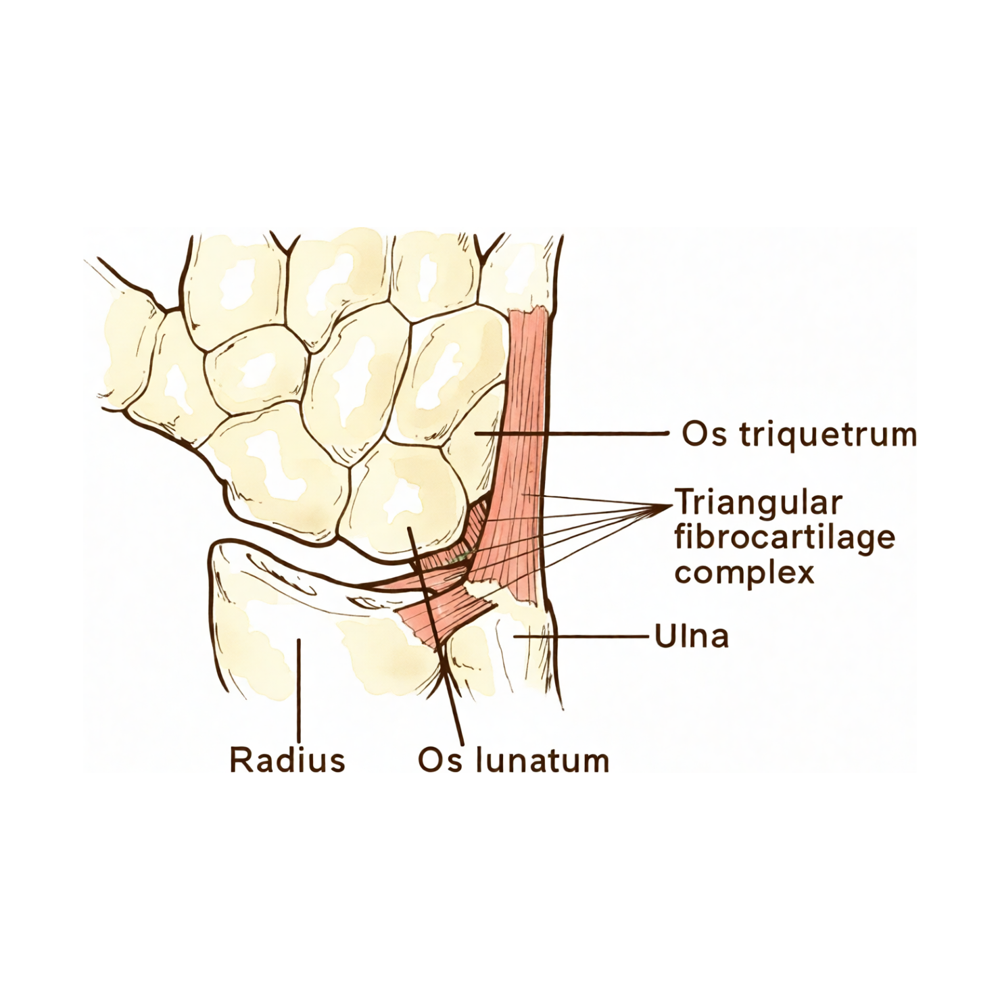
The distal radial articular surface possesses a double obliquity of 12–15 degrees in the lateral view and 15–20 degrees in the anteroposterior view [68]. This geometry provides a buttressing effect via the posterior lip and radial styloid [68]. The carpal articular surface has a smaller diameter of curvature than the radius [68]. The triquetrum does not contact the ulnar head directly; instead, a fibro-cartilage disc, known as the triangular ligament, separates the two bones [68]. This triangular ligament extends the distal radial articular surface to the ulnar styloid, serving as the principal link between the two bones [68].
Ligaments and TFCC
The chondroligamentous supports attaching the distal radius and ulnar side of the carpus to the distal ulna are designated as the triangular fibrocartilage complex (TFCC) [61]. The TFCC includes the ulnar collateral ligament, dorsal and volar radioulnar ligaments, articular disc, meniscal homologue, extensor carpi ulnaris sheath, and ulnolunate and ulnotriquetral ligaments [61]. Specifically, the TFCC is formed by the central meniscus homolog, dorsal and volar radioulnar ligaments, the floor of the extensor carpi ulnaris tendon sheath, and volar ulnocarpal ligaments [63]. It arises from the radial border of the distal radius and inserts into the base of the ulnar styloid and distal ulna via the ligamentum subcruentum [63]. The dorsal and volar radioulnar ligaments act as the primary stabilizers of the distal radioulnar joint [63]. Vascular supply is limited to the peripheral 10% to 40% of the volar, ulnar, and dorsal TFCC [63].
Extrinsic wrist ligaments include the dorsal intercarpal and dorsal radiocarpal ligaments [63]. Intrinsic wrist ligaments comprise the scapholunate interosseous ligament and the lunotriquetral interosseous ligament [63]. The scapholunate interosseous ligament is C-shaped in the sagittal plane, with the dorsal third being the thickest and strongest portion [63]. The volar portion of the lunotriquetral ligament is the thickest [63]. The ulnar collateral ligament extends from the base of the ulnar styloid to the pisiform [61]. The ulnotriquetral ligament originates from the volar radioulnar ligament and inserts on the triquetrum [63]. The ulnolunate ligament originates from the volar radioulnar ligament and inserts on the lunate [63]. The ulnocapitate ligament originates from the volar margin of the ulnar head and inserts on the capitate [63]. The dorsal radiocarpal ligament originates at the dorsal radius at Lister tubercle and inserts on the lunate and triquetrum [63]. The dorsal intercarpal ligament originates from the triquetrum and inserts on the scaphoid, trapezoid, and capitate [63]. The fibro-cartilage disc, or triangular ligament, separates the triquetrum from the ulnar head [68].
Biomechanics and Kinematics
The wrist functions as a two-joint system linking the hand to the forearm around the highly mobile proximal carpal row [64]. The two principal articulations are the radiocarpal and midcarpal joints, situated proximal and distal to this mobile segment [64]. The proximal carpal row lacks muscular or tendinous attachments, classifying it as an intercalary segment [63]. During ulnar deviation, the proximal row extends relative to the forearm and distal row [63]. Conversely, during radial deviation, the proximal row flexes relative to the forearm and distal row [63]. Under neutral axial loading, approximately 80% of forces transmit through the distal radius and 20% through the distal ulna [63]. Of the force transmitted through the distal radius, 60% passes via the scaphoid facet and 40% via the lunate facet [63]. Wrist flexion consists of 60% midcarpal motion and 40% radiocarpal motion [63]. Wrist extension consists of 33% midcarpal motion and 66% radiocarpal motion [63].
The extensor carpi ulnaris (ECU) tendon rotates around the ulnar head [69]. In forearm pronation, the ECU tendon is situated on the ulnar side of the styloid process [69]. In forearm supination, the ECU tendon is on the radial side in a dorsal position closer to the radius [69]. The ECU acts as a wrist extensor in supination and primarily causes ulnar deviation in pronation [69]. It works in synergy with the flexor carpi ulnaris to prevent radial deviation during pronation [69]. The moment arm for wrist extension is 16.30 mm for the extensor carpi radialis brevis (ECRB) and 12.50 mm for the extensor carpi radialis longus (ECRL) [69]. The ECU has the weakest moment of extension at 6.3 mm in supination, which becomes zero when the wrist is in complete pronation [69]. The ECRB is the most effective wrist extensor due to its greatest tension and favorable moment arm [69]. The axis of the most frequently used wrist movements is oblique between the ECRL and ECRB and the flexor carpi ulnaris [69]. The ulnocarpal ligaments are likely to be stretched tensely during wrist radial extension and wrist extension [100].
Axial loading of the wrist increases ulnar variance [25]. Mean ulnar variance measured 1.70 mm at 0 N and increased to 3.00 mm at 300 N during axial compression testing [119]. There is a positive correlation between load and variance change with a correlation coefficient of r = 0.67 [119].
Pathophysiology
Ulnar impaction syndrome involves ulnar-sided wrist pain and limited movement resulting from repeated impingement of the ulnar head and TFCC against the lunate and triquetrum [119]. Both static and dynamic factors contribute to its development [119]. Static factors include relative elongation of the ulna, known as ulnar positive variance, which may occur due to distal radius fractures or congenital abnormalities [119]. Dynamic factors refer to temporary increases in ulnar variance [119]. Ulnar styloid impaction syndrome (USIS) is produced by the tip of an oversized ulnar styloid inappropriately contacting the triquetrum [20]. USIS results in chondromalacia, synovitis, and ulnar-sided wrist pain [20]. It is most commonly seen in patients with excessively long or hypertrophic ulnar styloid processes and is not necessarily associated with positive ulnar variance [20]. USIS involves repetitive friction between an excessively long ulnar styloid and the carpus [26].
Ulnocarpal impaction syndrome was described initially in 1991 as a degenerative condition of the ulnar aspect of the wrist in patients with static or dynamic positive ulnar variance [26]. USIS was described in 1997 in a subset of eight patients exhibiting neutral or negative ulnar variance with a long ulnar styloid process [26]. Patients with USIS display radiographic evidence of chondromalacia of the proximal triquetrum and ulnar styloid [26]. Classic ulnocarpal impaction syndrome displays radiographic evidence of chondromalacia of the proximal pole of the lunate and ulnar head [26]. The ulnar styloid process index (USPI) is calculated as the difference between the ulnar styloid length and the ulnar variance divided by the width of the ulnar head [20]. The USPI controls for variability conferred by radiographic magnification, bone size, and ulnar variance [26]. The ulnar styloid-capitate ratio (SCR) is reported as a more reliable method to define and compare ulnar styloid length [26].
Determining the etiology of ulnar-sided wrist pain is often challenging due to overlapping history and physical examination findings [33]. A detailed history, systematic physical examination with provocative maneuvers, and appropriate diagnostic imaging are essential for diagnosis [33]. Reconstructed animation from four-phase grip MRI demonstrated impairment of the articular disc and longitudinal instability of the distal radioulnar joint simultaneously [34]. This imaging technique should be of value in investigating dynamic pathophysiology causing ulnar wrist pain [34]. Ulnar-sided wrist pain in athletes is a common problem often resulting from a combination of overuse and acute injury [89]. Effective diagnosis and treatment require careful understanding of sport-specific injuries and underlying biomechanics [89]. The fibrocartilage complex (FCC) is responsible for the normal function of the distal radioulnar joint (DRUJ) and the ulnar compartment of the wrist [94]. Distal radioulnar joint stiffness in dorsal translation decreased significantly with dorsal tilt of 10° and 20° in pronation following dorsally angulated distal radius fractures [98].
Classification
Terminological Distinctions: Ulnar impaction syndrome is a distinct entity from ulnar styloid impaction and ulnar impingement syndrome [47]. Ulnar styloid impaction results from impaction between the ulnar styloid and the proximal triquetrum [47]. Conversely, ulnar impingement syndrome is defined by a shortened ulna impinging on the distal radius [47]. Ulnar impaction syndrome may lead to degenerative lesions of the triquetrum, lunate, ulnar head cartilage, or the triangular fibrocartilage complex (TFCC) [47]. The triquetro-lunate ligaments may be disrupted concomitantly with ulnar impaction syndrome [47].
Palmer Classification: The Palmer classification distinguishes between traumatic and degenerative tear etiologies for TFCC lesions [120]. For traumatic TFCC tears, the classification assigns a stage based on the location of the tear [120]. For degenerative TFCC lesions secondary to ulnar impaction, the Palmer classification assigns a stage based on the presence of TFCC wear, lunate chondrosis, a TFCC perforation, a lunotriquetral ligament tear, and arthritis [120].
Geissler Classification: The Geissler classification categorizes TFCC lesions into Group A (normal) and Group B (grades I to IV) [117].
Other Considerations: Ulnar-sided wrist pain is a common cause of upper extremity disability with a complex differential diagnosis [30, 36]. Disorders of the distal radioulnar joint are a common source of ulnar-sided wrist pain [38]. Associated factors of ulnocarpal joint space narrowing include previous fracture of the distal radius, premature physeal arrest of the distal radius, or congenital ulna positive variance [47]. Ulnar impaction syndrome may present in ulnar-neutral or negative ulnar variance wrists with a thickened TFCC [47]. An inverse relationship may exist between ulnar variance and the thickness of the articular disk of the TFCC [120]. Triquetrohamate impaction syndrome is an underreported and often unrecognized cause of ulnar-sided wrist pain [9]. Hamato-lunate and triquetro-hamate impaction syndromes are poorly recognized and underdiagnosed causes of refractory ulnar-sided wrist pain [37].
Clinical Presentation
General Characteristics and Diagnosis
The "ulnar fovea sign" represents two common sources of ulnar-sided wrist pain [48]. Magnetic resonance imaging remains a powerful tool to help diagnose a variety of ulnar wrist conditions, but it is imperative that the surgeon correlates the imaging findings with physical examination [55]. While MRI is a useful adjunct for determining the cause of ulnar wrist pathologies, findings are often discordant when compared with diagnostic arthroscopy [57]. Pediatric ulnar-sided wrist pain requires a methodical, anatomic approach to diagnosis and treatment, accounting for skeletal immaturity and potential syndromes [121].
Ulnar Impaction Syndrome
Ulnar impaction syndrome was described initially in 1991 as a degenerative condition of the ulnar aspect of the wrist in patients with static or dynamic positive ulnar variance [26]. Once ulnar impaction becomes symptomatic, it remains so and recurs, especially on return to the athletic sport [15]. In a study of ulnar shortening for ulnar impaction syndrome, thirteen wrists had a positive ulnar impaction sign preoperatively [103]. Eight of these thirteen wrists had a negative ulnar impaction sign postoperatively [103]. Five wrists continued to show a positive ulnar impaction sign despite ulnar shortening, and four of these continued to complain of symptoms [103]. The persistence of symptoms in patients with a continued positive ulnar impaction sign after surgery was thought to be due to either a concurrent carpal instability, nonunion of the ulna or reflex sympathetic dystrophy [103].
Ulnar Styloid Impaction Syndrome
Ulnar styloid impaction syndrome involves impaction between the tip of the ulnar styloid process and the triquetrum bone [20]. This condition is most commonly seen in patients with excessively long or hypertrophic ulnar styloid processes and is not necessarily associated with positive ulnar variance [20]. Ulnar styloid impaction syndrome results in chondromalacia, synovitis, and ulnar-sided wrist pain [20]. In contrast to classic ulnocarpal impaction syndrome, ulnar styloid impaction syndrome displays radiographic evidence of chondromalacia of the proximal triquetrum and ulnar styloid as opposed to the classic chondromalacia of the proximal pole of the lunate and ulnar head [26]. Ulnar styloid impaction syndrome remains an uncommon cause of ulnar-sided wrist pain and a particularly difficult diagnosis to confirm [20]. It can be confidently approached using a combination of careful attention to patient history, physical examination, and various imaging methods [20]. Accurate assessment of the ulnar styloid length is quantified by the ulnar styloid process index (USPI), which controls for variability conferred by radiographic magnification, bone size, and ulnar variance [26].
Other Causes of Ulnar-Sided Wrist Pain
The recurrence of ulnar pain following an ulnar shortening osteotomy should raise the suspicion of possible extensor carpi ulnaris instability within the differential diagnosis [58].
Investigations
Clinical Evaluation
Ulnar styloid impaction syndrome (USIS) remains an uncommon cause of ulnar-sided wrist pain and a particularly difficult diagnosis to confirm [20]. The natural inclination to study radiographs or special imaging studies prior to a thorough history and physical examination should be avoided as it introduces cognitive bias [85]. Physical examination must be preceded by a thorough investigation of the patient’s medical history, with special emphasis on the mechanism of injury and acuity [85]. Palpation for areas of maximal tenderness is one of the most useful tools in the diagnosis of wrist pathology, especially in patients with chronic dysfunctions [85]. A thorough set of provocative maneuvers should be performed to rule out alternative or concurrent diagnoses [85]. Ulnar impaction and ulnar styloid impingement must be assessed in pronation and supination during physical examination [85]. Bilateral grip and pinch strength are useful to uncover underlying pathology in chronic cases of wrist pain [85]. A local injection of anesthetic to a painful joint or selected tendon sheath may help normalize dynamometer readings and narrow the diagnostic spectrum [85].
Imaging
Plain radiography: Conventional radiography should be the first imaging modality to exclude or diagnose wrist pathology [133]. The routine radiographic series for wrist evaluation consists of four views: posteroanterior, lateral, oblique, and ulnar-deviated posteroanterior scaphoid view [75].
MRI: When conventional radiography is inconclusive, high resolution 3 Tesla MRI is advised [133]. MRI should be added for evaluation of the triangular fibrocartilage, the distal radioulnar joint, and vascularity of the various carpal bones to confirm clinical suspicion [75]. A dedicated wrist coil provides enhanced resolution of wrist structures [75]. For young subjects, MRI is still valuable, especially in diagnosing ulnar detachment, although the ability to distinguish between proximal and distal laminae remains questionable [132]. Having a stable distal radioulnar joint upon clinical examination and normal MRI findings does not rule out foveal TFCC injury [135]. A high index of clinical suspicion is needed when managing patients with ulnar sided wrist pain to detect foveal TFCC injury [135]. Four-phase grip MRI should be of value in investigating dynamic pathophysiology causing ulnar wrist pain [34]. With proper technique, injuries to the triangular fibrocartilage complex (TFCC) can be demonstrated with MRI [71]. Perforations in the TFCC appear as linear defects or gaps filled with hyperintense fluid on coronal gradient-echo or T2-weighted pulse sequences [71]. The addition of arthrographic contrast improves the visualization of carpal ligaments on MR images [71]. MRI is useful in detecting additional marrow abnormalities in osteonecrosis, as seen in the lunate in Kienböck disease or in the scaphoid after fracture [71]. Asymmetry of marrow signal in proximal and distal fragments of a fractured scaphoid is suggestive of proximal pole ischemia [71]. MRI has an expanding role in the evaluation of inflammatory arthritis, providing earlier detection of synovitis and erosive bone changes associated with rheumatoid arthritis than do radiographs [71]. A high rate of false-positive findings on MR images of normal subjects has been reported [75].
CT: Further evaluation of direct multi-slice CT arthrography of the wrist in a larger patient population would be promising [136].
Arthroscopy
Arthroscopy is the gold standard for detection of TFCC tears [77, 78]. Arthroscopic assessment of intercarpal ligament injuries and instability is considered by many the “gold standard” for evaluation of these conditions [74]. Arthroscopy has been found to be more accurate than arthrography in identifying the location and size of triangular fibrocartilage and interosseous ligament injuries [74]. Arthroscopy is more accurate than triple-injection cinearthrography in detecting tears of the dorsal sensory branch of the ulnar nerve [74]. The arthroscopic trampoline test is performed to assess TFCC resiliency by balloting central portion with a small probe [77, 78]. The arthroscopic hook test can be used to demonstrate peripheral detachment of the TFCC [77, 78]. The arthroscopic suction test can show laxity of the TFCC when peripherally scarred in or foveal detachment when the DRUJ is clinically unstable [77, 78]. Indications for wrist arthroscopy include the evaluation of ligamentous injuries, examination of joint articular surfaces, removal of loose bodies, biopsy of synovium, irrigation and debridement of joints, and confirmation and supplementation of wrist arthrography [74].
Biomechanical and Physiological Factors
A progressive increase in load at the distal ulna was observed with increasing severity of malalignment following simulated distal radius fracture [60].
Treatment
Non-Operative
Nonoperative treatment serves as the initial management strategy for ulnar impaction syndrome [47]. Surgical intervention is generally considered when this conservative approach fails to resolve symptoms [18].
Operative
Indications: Surgery is indicated for patients with ulnar impaction syndrome who have failed nonoperative management [18]. In competitive athletes with radiographic or arthroscopic evidence of ulnocarpal abutment, surgical intervention is warranted if conservative management fails, with ulnar-shortening osteotomy yielding the most predictable results [84]. Once ulnar impaction becomes symptomatic, it remains so and recurs, especially upon return to athletic sport [15].
Surgical Approach / Technique: Ulnar shortening osteotomy (USO) is a primary surgical option that changes the load on the ulnar side of the wrist [18, 7]. USO is effective regardless of the distal radioulnar joint angle [27]. Distal metaphyseal ulnar shortening osteotomy (DMUSO) is a viable option that offers advantages such as more rapid osseous union and buried screw fixation, which minimizes the potential need for hardware removal [12, 41]. A modified partial wedge-shaped metaphyseal ulnar osteotomy is effective for treating ulnar impaction syndrome with a reverse oblique sigmoid notch [126]. In malunited distal radius fractures, ulnar shortening is a reliable method to treat ulnar-sided wrist pain, though results tend to deteriorate with higher radial displacement [29]. Careful attention to surgical indications and technique in distal radius malunion improves range of motion, pain scores, and patient-reported outcomes while reducing risks such as ulnar nonunion or symptoms related to unrecognized joint arthritis [129].
Implant Selection: A dorsally placed plate for USO yields similar postoperative functional scores and complications compared with other plate placement localizations [4].
Alignment / Balancing Strategy: The wafer procedure (WP) and USO for idiopathic ulnar impaction syndrome achieve similar clinical and radiologic outcomes [6]. In a randomized controlled trial, the arthroscopic wafer procedure (AWP) and USO yielded comparable outcomes for idiopathic ulnar impaction syndrome, with the AWP group experiencing fewer complications, an earlier return to work, and fewer secondary procedures [73]. The wafer procedure is easier to perform than an ulnar shortening osteotomy and avoids the risk of nonunion and hardware-related complications [31]. However, the wafer procedure should be avoided when there is a prominent ulnar styloid process, as residual stylocarpal impaction may compromise long-term results [31]. The wafer procedure has demonstrated efficacy in patients with ulnar wrist pain secondary to ulnar impaction with level or short ulnae [31].
Adjuncts: USO alone or combined with arthroscopic debridement is superior to debridement alone for ulnar impaction syndrome [11]. USO combined with arthroscopic débridement of the triangular fibrocartilage complex (TFCC) is effective for treating ulnar impaction syndrome [114]. Wrist arthroscopy is an essential diagnostic and therapeutic tool for the orthopaedic surgeon with an ever-expanding list of indications and procedures [130].
Other Considerations: USO yields reliable long-term pain relief and satisfaction in patients with idiopathic and post-traumatic ulnar impaction syndrome [8]. Clinical outcomes are satisfactory for more than 5 years after USO for idiopathic ulnar impaction syndrome, even in the presence of osteoarthritic changes of the distal radioulnar joint (DRUJ) [22]. In post-traumatic ulnar impaction syndrome, USO results in a high rate of satisfied patients and improved wrist function if there is no arthrosis of the DRUJ [17]. USO has proven efficacy in ulnar impaction syndrome, with 96% of patients considering themselves cured or improved [10]. Ulnar shortening procedures result in improvement in patient-reported outcome scores (PROS) in patients with ulnocarpal impaction (UCI) [14]. Patients with persisting or recurrent pain after initial treatment benefited from USO as a secondary procedure [13]. In neglected paediatric distal radial epiphyseal injury with ulnar impaction syndrome, a single-stage procedure combining inverted dome radial osteotomy and ulnar shortening effectively corrected ulnar variance to a neutral position, achieving anatomical restoration and improvements in range of motion, grip strength, and pain reduction [51]. In patients with ulnar impaction syndrome-based degenerative TFCC injury combined with DRUJ dorsal instability, USO may not stabilize the DRUJ sufficiently, requiring an additional DRUJ stabilizing technique [79]. For ulnar styloid impaction syndrome, excision of the ulnar styloid suffices in the presence of a long styloid [3]. Oblique ulnar styloid osteotomy is an effective means of relieving impaction of the ulnar styloid while preserving the integrity of the intrinsic ulnar styloid ligaments [39]. Ulnar styloidectomy resolves symptoms in ulnar styloid impaction syndrome, including in rare cases of bilateral presentation [20]. Microfracture is a useful technique for treating articular defects of the lunate secondary to ulnar impaction syndrome in lieu of an ulnar leveling procedure, providing durable relief of ulnar-sided wrist pain for a minimum of 2 years [19]. Effective treatment for ulnar impaction syndrome increasingly relies on arthroscopic decompression, though USO and open wafer resection remain options [2].
Complications
Ulnar Shortening Osteotomy (USO)
Hardware Irritation: Plate removal was required in four patients following ulnar shortening osteotomy fixed with a TriMed dynamic compression system [115]. Similarly, three patients required plate removal following ulnar shortening osteotomy using a dynamic compression plate on the ulnar surface of the ulna [125].
Nonunion: Two patients developed atrophic nonunions and required autologous bone grafting following ulnar shortening osteotomy fixed with a TriMed dynamic compression system [115]. One case showed nonunion and required further operation following ulnar shortening osteotomy using a dynamic compression plate on the ulnar surface of the ulna [125]. A trend toward a higher incidence of nonunion was observed in patients who had the freehand technique for ulnar shortening osteotomy, although no statistical difference was shown [116].
Persistent Pain: Two patients reported persistent ulnar-sided pain following ulnar shortening osteotomy fixed with a TriMed dynamic compression system [115]. Two patients reported persistent ulnar-sided wrist pain following ulnar shortening osteotomy using a dynamic compression plate on the ulnar surface of the ulna [125].
Infection: There were no infections in patients treated with ulnar shortening osteotomy fixed with a TriMed dynamic compression system [115].
Functional Recovery: Wrist function recovered after an initial decrease from week 8 onward in ulnar shortening with the UOL [35]. Improved wrist function can be achieved with ulnar shortening osteotomy in post-traumatic ulnar impaction syndrome if there is no arthrosis of the distal radioulnar joint [17]. Clinical outcomes are satisfactory for more than 5 years after ulnar shortening osteotomy for idiopathic ulnar impaction syndrome despite the osteoarthritic changes of the distal radioulnar joint [22].
Wafer Procedure
Complication Avoidance: The wafer procedure avoids the risk of nonunion and hardware related complications [31].
Contraindications: The wafer procedure should be avoided when there is a prominent ulnar styloid process since residual stylocarpal impaction may compromise long-term results [31].
Recovery
Light activity (weeks): Wrist function recovers after an initial decrease from week 8 onward in patients undergoing ulnar shortening with the UOL [35].
Functional milestones: Ulnar shortening procedures result in improvement in Patient-Reported Outcome Scores (PROS) in patients with ulnar carpal impaction (UCI) [14]. The incidence of ulnar-sided wrist pain decreases significantly with time after surgery, with only 2.1% of patients experiencing pain at 12 months [23].
Other Considerations: Ulnar shortening osteotomy yields reliable long-term pain relief and satisfaction in patients with idiopathic and post-traumatic ulnar impaction syndrome [8], achieving excellent long-term results in most cases [54]. Clinical outcomes remain satisfactory for more than 5 years after ulnar shortening osteotomy for treating idiopathic ulnar impaction syndrome, despite the osteoarthritic changes of the distal radioulnar joint [22]. Pain relief following distal ulnar resection is far more predictable in rheumatoid patients than in post-traumatic patients [138]. Prognosis for return to elite participation is guarded, particularly after distal ulnar resection [123]. Long-term follow-up of forearm shortening and volar radiocarpal capsulotomy for wrist flexion deformity in children with amyoplasia shows that the initial improvement in wrist position is not maintained [50].
Key Evidence
- [L5] The clinically observed incidence of ulnar impaction is more likely the result of increased wear on a thinner and less durable triangular fibrocartilage complex than due to increased distal ulna loading in ulnar positive variant wrists. [1] (10.1016/j.jhsa.2014.10.001)
- [L5] Effective treatment for ulnar impaction syndrome increasingly relies on arthroscopic decompression, though ulnar shortening osteotomy and open wafer resection remain options. [2] (10.1016/j.hcl.2005.08.011)
- [L5] For ulnar styloid impaction syndrome, excision of the ulnar styloid suffices in the presence of a long styloid, while surgical treatment varies when the condition results from a combination of factors. [3] (10.1016/j.hcl.2017.07.002)
- [L4] Similar postoperative functional scores and complications were seen in patients undergoing an ulnar shortening osteotomy with a dorsally placed plate for ulnar impaction syndrome, compared with other plate placement localizations. [4] (10.1055/s-0037-1608636)
- [L4] Partial resection of the ulnar styloid process is a satisfactory treatment for isolated stylocarpal impaction. [5] (10.1054/jhsb.2001.0591)
- [L1] The WP and USO for idiopathic ulnar impaction syndrome achieve similar clinical and radiologic outcomes. [6] (10.1016/j.jhsa.2022.08.029)
- [L4] Ulnar shortening osteotomy can change the load of the ulnar side of the wrist and appears useful for ulnar-sided wrist pain in the presence of ulnar impaction. [7] (10.1055/s-0034-1372516)
- [L4] Ulna shortening osteotomy yields reliable long-term pain relief and satisfaction in patients with idiopathic and post-traumatic ulnar impaction syndrome. [8] (10.1016/s0363-5023(12)60047-1)
- [L4] Triquetrohamate impaction syndrome remains an underreported and often unrecognized cause of ulnar-sided wrist pain. [9] (10.1177/1558944716670138)
- [L4] Ulna shortening osteotomy has proven efficacy in ulnar impaction syndrome with 96% of patients considering themselves cured or improved. [10] (10.1016/j.otsr.2021.102970)
- [L4] Ulnar-shortening osteotomy alone or combined with arthroscopic debridement is superior to debridement alone for ulnar impaction syndrome. [11] (10.1016/j.jhsa.2012.07.019)
- [L4] DMUSO is a viable option for patients with ulnar impaction syndrome. [12] (10.1055/s-0034-1384745)
- [L3] Patients with persisting or recurrent pain benefited from ulnar shortening osteotomy as a secondary procedure. [13] (10.1055/s-0037-1607073)
- [L2] Ulnar shortening procedures result in improvement in PROS in patients with UCI. [14] (10.1055/s-0038-1677534)
- [L5] Once ulnar impaction becomes symptomatic, it remains so and recurs, especially on return to the athletic sport. [15] (10.1016/j.hcl.2012.05.021)
- [L4] Ulnar shortening osteotomy in post-traumatic ulnar impaction syndrome results in a high rate of satisfied patients, and improved wrist function can be achieved if there is no arthrosis of the distal radioulnar joint. [17] (10.1007/bf00434545)
- [Paper] Surgery is indicated if nonoperative treatment fails, with the primary options being ulnar-shortening osteotomy or partial resection of the distal dome of the ulna to decrease ulnocarpal load. [18] (10.1016/j.hcl.2010.05.011)
- [L4] Microfracture has been shown to be a useful technique for treating articular defects of the lunate secondary to ulnar impaction syndrome in lieu of an ulnar leveling procedure and provides durable relief of ulnar-sided wrist pain for a minimum of 2 years. [19] (10.1016/j.jhsa.2014.06.034)
- [L4] [20] (10.1055/s-0038-1673408)
- [L4] A systematic approach to evaluating patients with ulnar-sided wrist pain is imperative. [21] (10.1016/j.jhsa.2014.07.004)
- [L4] The clinical outcomes are satisfactory for even more than 5 years after ulnar shortening osteotomy for treating idiopathic ulnar impaction syndrome despite the osteoarthritic changes of the DRUJ. [22] (10.4055/cios.2011.3.4.295)
- [L4] The incidence of ulnar-sided wrist pain decreased significantly with time after surgery, with only 2.1% of patients experiencing pain at 12 months. [23] (10.1177/1753193416630525)
- [L2] Axial loading of the wrist increases ulnar variance. [25] (10.1055/s-0038-1627458)
- [L4] [26] (10.1055/s-0035-1570743)
- [L4] Ulnar shortening osteotomy is a good option to treat patients with ulnar impaction syndrome regardless of the distal radioulnar joint angle. [27] (10.1177/17531934241262931)
- [Paper] Ulnar shortening is a reliable method to treat ulnar-sided wrist pain in malunited distal radius fractures, but results tend to deteriorate with higher radial displacement. [29] (10.1007/s00402-013-1892-5)
- [L5] Ulnar-sided wrist pain is a common cause of upper extremity disability with a complex differential diagnosis. [30] (10.1016/j.jhsa.2012.04.036)
- [L4] [31] (10.1054/jhsb.1999.0268)
- [L5] Determining the etiology of ulnar-sided wrist pain is often challenging due to overlapping history and physical examination findings; a detailed history, systematic physical examination with provocative maneuvers, and appropriate diagnostic imaging are essential for diagnosis. [33] (10.5435/jaaos-d-16-00407)
- [L4] Reconstructed animation from four-phase grip MRI demonstrated impairment of the articular disc and longitudinal instability of the distal radioulnar joint simultaneously and should be of value in investigating dynamic pathophysiology causing ulnar wrist pain. [34] (10.1177/1753193413476979)
- [L4] In ulnar shortening with the UOL, wrist function recovered after an initial decrease from week 8 onward. [35] (10.1177/1558944717702465)
- [L5] Ulnar-sided wrist pain is a common cause of upper-extremity disability with a complex differential diagnosis. [36] (10.1016/j.jhsa.2008.08.026)
- [L5] Hamato-lunate and triquetro-hamate impaction syndromes are potentially treatable with satisfactory results once identified, though they are poorly recognized and underdiagnosed causes of refractory ulnar-sided wrist pain. [37] (10.1016/j.jhsa.2024.07.016)
- [L5] Disorders of the distal radioulnar joint are a common source of ulnar-sided wrist pain, but increased understanding of anatomy and pathology has facilitated accurate diagnosis and successful treatment in most cases. [38] (10.5435/00124635-199503000-00005)
- [L4] Oblique ulnar styloid osteotomy is an effective means of relieving impaction of the ulnar styloid while preserving the integrity of the intrinsic ulnar styloid ligaments. [39] (10.1016/j.jhsa.2011.07.023)
- [L5] This technique offers advantages over other commonly used procedures for treatment of ulnar impaction, including more rapid osseous union and buried screw fixation minimizing the potential need for hardware removal. [41] (10.1016/j.jhsa.2012.02.031)
- [L4] [47] (10.1177/1753193414541749)
- [L2] The conditions represent 2 common sources of ulnar-sided wrist pain. [48] (10.1016/j.jhsa.2007.01.022)
- [L4] Long-term follow-up of the procedure shows that the initial improvement in wrist position is not maintained. [50] (10.1016/j.jhsa.2011.10.013)
- [L5] The single-stage procedure effectively corrected ulnar variance to a neutral position, achieving anatomical restoration and improvements in range of motion, grip strength, and pain reduction. [51] (10.1177/17531934241307501)
- [L4] Ulnar shortening osteotomy achieved excellent long-term results in most cases. [54] (10.1016/j.jhsa.2012.09.011)
- [L5] Magnetic resonance imaging remains a powerful tool to help diagnose a variety of ulnar wrist conditions, but it is imperative that the surgeon correlates the imaging findings with physical examination. [55] (10.1016/j.jhsa.2024.05.012)
- [L2] While MRI is a useful adjunct for determining the cause of ulnar wrist pathologies, findings are often discordant when compared with diagnostic arthroscopy. [57] (10.1016/j.jhsa.2024.04.015)
- [L4] The recurrence of ulnar pain following an ulnar shortening osteotomy should raise the suspicion of possible extensor carpi ulnaris instability within the differential diagnosis. [58] (10.1055/s-0036-1585068)
- [L5] A progressive increase in load at the distal ulna was observed with increasing severity of malalignment, which may be an important contributor to residual ulnar wrist pain and dysfunction. [60] (10.1016/j.jhsa.2014.10.012)
- [L2] [73] (10.1016/j.jhsa.2022.04.011)
- [L4] [79] (10.1177/17531934231197942)
- [L5] If conservative management fails, surgical intervention is warranted, with ulnar-shortening osteotomy yielding the most predictable results in athletes with radiographic or arthroscopic evidence of ulnocarpal abutment. [84] (10.1016/j.hcl.2012.05.018)
- [L5] Ulnar-sided wrist pain in athletes is a common problem often resulting from a combination of overuse and acute injury, requiring careful understanding of sport-specific injuries and underlying biomechanics for effective diagnosis and treatment. [89] (10.1016/j.csm.2019.12.008)
- [L4] The FCC is responsible for the normal function of the distal radioulnar joint (DRUJ) and the ulnar compartment of the wrist. [94] (10.1016/s0749-0712(21)00023-8)
- [L5] The distal radioulnar joint stiffness in dorsal translation decreased significantly with dorsal tilt of 10° and 20° in pronation. [98] (10.1177/1753193412473036)
- [L4] The ulnocarpal ligaments are likely to be stretched tensely in wrist radial extension and wrist extension. [100] (10.1016/j.jhsa.2008.04.033)
- [L4] [103] (10.1054/jhsb.1999.0062)
- [L4] Ulnar shortening osteotomy combined with arthroscopic débridement of the TFCC is effective for treating ulnar impaction syndrome. [114] (10.1097/blo.0b013e31815a9e21)
- [L4] [115] (10.1016/j.jhsa.2013.04.040)
- [L3] [116] (10.1016/j.jhsa.2005.09.017)
- [L4] [117] (10.1016/j.jhsa.2014.03.006)
- [L5] [119] (10.1016/j.jhsa.2026.02.032)
- [L5] [120] (10.1016/j.arthro.2017.11.008)
- [L5] Pediatric ulnar-sided wrist pain requires a methodical, anatomic approach to diagnosis and treatment, accounting for skeletal immaturity and potential syndromes. [121] (10.5435/jaaos-d-21-01029)
- [Paper] Prognosis for return to elite participation is guarded, particularly after distal ulnar resection. [123] (10.1016/j.hcl.2012.05.020)
- [L4] [125] (10.1055/s-0037-1608851)
- [L4] This technique is effective in treating the ulnar impaction syndrome with a reverse oblique sigmoid notch. [126] (10.1177/17531934241252302)
- [L4] Careful attention to detail related to surgical indications and to surgical technique typically will improve range of motion, pain scores, and patient-reported outcomes and will reduce the inherent risks of the procedure, such as ulnar nonunion or the symptoms related to unrecognized joint arthritis. [129] (10.1055/s-0034-1384747)
- [L5] Wrist arthroscopy is an essential diagnostic and therapeutic tool for the orthopaedic surgeon with an ever-expanding list of indications and procedures. [130] (10.1016/j.arthro.2007.11.002)
- [Letter] Arthroscopic repair should be recommended first as the less invasive technique given the clinical outcome equality with ulnar shortening; ulnar shortening should follow as a second step only if ulnocarpal symptoms persist. [131] (10.1016/j.jhsa.2011.01.014)
- [L3] For young subjects, MRI is still valuable, especially in diagnosing ulnar detachment, although the ability to distinguish between proximal and distal laminae remains questionable. [132] (10.1177/17531934221141986)
- [L2] Conventional radiography should be the first imaging modality to exclude or diagnose wrist pathology; when inconclusive, high resolution 3 Tesla MRI is advised. [133] (10.1177/1753193416683876)
- [L4] Having a stable distal radioulnar joint upon clinical examination and normal MRI findings does not rule out foveal TFCC injury, and a high index of clinical suspicion is needed when managing patients with ulnar sided wrist pain. [135] (10.1177/17531934231206426)
- [L4] Further evaluation of direct multi-slice CT arthrography of the wrist in a larger patient population would be promising. [136] (10.1007/s00330-008-1118-3)
- [L4] Pain relief following distal ulnar resection is far more predictable in rheumatoid patients than in post-traumatic patients. [138] (10.1054/jhsb.1999.0288)
See Also
- TFCC Injury
- Wrist Arthroscopy
- Distal Radius Fracture
References
[1] Force Variations in the Distal Radius and Ulna: Effect of Ulnar Variance and Forearm Motion. The Journal of Hand Surgery. 2015. DOI: 10.1016/j.jhsa.2014.10.001
[2] Ulnar Impaction Syndrome. Hand Clinics. 2005. DOI: 10.1016/j.hcl.2005.08.011
[3] Arthroscopic Management of Ulnocarpal Impaction Syndrome and Ulnar Styloid Impaction Syndrome. Hand Clinics. 2017. DOI: 10.1016/j.hcl.2017.07.002
[4] A Dorsal Approach for Ulnar Shortening Osteotomy. Journal of Wrist Surgery. 2017. DOI: 10.1055/s-0037-1608636
[5] Carpal Impaction with the Ulnar Styloid Process: Treatment with Partial Styloid Resection. Journal of Hand Surgery. 2001. DOI: 10.1054/jhsb.2001.0591
[6] Ulnar Shortening Osteotomy Versus the Wafer Procedure in the Treatment of Idiopathic Ulnar Impaction Syndrome: A Systematic Review and Meta-Analysis. The Journal of Hand Surgery. 2024. DOI: 10.1016/j.jhsa.2022.08.029
[7] Ulnar Shortening Osteotomy for Ulnar-Sided Wrist Pain. Journal of Wrist Surgery. 2014. DOI: 10.1055/s-0034-1372516
[8] Long-Term Subjective Satisfaction after Ulna Shortening Osteotomy for Ulnar Impaction Syndrome. The Journal of Hand Surgery. 2012. DOI: 10.1016/s0363-5023(12)60047-1
[9] Triquetrohamate Impaction Syndrome: An Unrecognized Cause of Ulnar-Sided Wrist Pain; Its Presentation Further Defined. HAND. 2016. DOI: 10.1177/1558944716670138
[10] Ulna shortening osteotomy for ulnar impaction syndrome: Impact of distal radioulnar joint morphology on clinical outcome. Orthopaedics & Traumatology: Surgery & Research. 2021. DOI: 10.1016/j.otsr.2021.102970
[11] Ulnar Shortening Osteotomy for Ulnar Impaction Syndrome. The Journal of Hand Surgery. 2013. DOI: 10.1016/j.jhsa.2012.07.019
[12] Distal Metaphyseal Ulnar Shortening Osteotomy: Technique, Pearls, and Outcomes. Journal of Wrist Surgery. 2014. DOI: 10.1055/s-0034-1384745
[13] Treatment of Ulnar Impaction Syndrome with and without Central TFC Lesion. Journal of Wrist Surgery. 2017. DOI: 10.1055/s-0037-1607073
[14] Clinical and Radiographic Correlates for the Treatment of Ulnocarpal Impaction. Journal of Wrist Surgery. 2019. DOI: 10.1055/s-0038-1677534
[15] Central TFC Tear/Ulnar Impaction Injuries in Professional Football Players. Hand Clinics. 2012. DOI: 10.1016/j.hcl.2012.05.021
[17] Mar shortening osteotomy in posttraumatic ulnar impaction syndrome. Archives of Orthopaedic and Trauma Surgery. 1996. DOI: 10.1007/bf00434545
[18] Ulnar Impaction. Hand Clinics. 2010. DOI: 10.1016/j.hcl.2010.05.011
[19] Microfracture for Ulnar Impaction Syndrome: Outcomes With Minimum Two-Year Follow-Up. The Journal of Hand Surgery. 2014. DOI: 10.1016/j.jhsa.2014.06.034
[20] Bilateral Ulnar Styloid Impaction Syndrome Treated with Ulnar Styloidectomy. Journal of Wrist Surgery. 2018. DOI: 10.1055/s-0038-1673408
[21] Examination of the Wrist: Ulnar-Sided Wrist Pain Due to Ligamentous Injury. The Journal of Hand Surgery. 2014. DOI: 10.1016/j.jhsa.2014.07.004
[22] Long-term Outcomes of Ulnar Shortening Osteotomy for Idiopathic Ulnar Impaction Syndrome: At Least 5-Years Follow-up. Clinics in Orthopedic Surgery. 2011. DOI: 10.4055/cios.2011.3.4.295
[23] Natural history and factors associated with ulnar-sided wrist pain in distal radial fractures treated by plate fixation. Journal of Hand Surgery (European Volume). 2016. DOI: 10.1177/1753193416630525
[25] The Effect of Axial Loading on Ulnar Variance. Journal of Wrist Surgery. 2018. DOI: 10.1055/s-0038-1627458
[26] Ulnar-Sided Wrist Pain due to Long Ulnar Styloid: A Case Report. Journal of Wrist Surgery. 2016. DOI: 10.1055/s-0035-1570743
[27] Does the distal radioulnar joint orientation influence the outcome of ulnar shortening osteotomy: a retrospective study. Journal of Hand Surgery (European Volume). 2024. DOI: 10.1177/17531934241262931
[29] Ulnar shortening osteotomy for malunited distal radius fractures: results of a 7-year follow-up with special regard to the grade of radial displacement and post-operative ulnar variance. Archives of Orthopaedic and Trauma Surgery. 2013. DOI: 10.1007/s00402-013-1892-5
[30] Ulnar-sided Wrist Pain: Evaluation and Treatment of Triangular Fibrocartilage Complex Tears, Ulnocarpal Impaction Syndrome, and Lunotriquetral Ligament Tears. The Journal of Hand Surgery. 2012. DOI: 10.1016/j.jhsa.2012.04.036
[31] Results of the Wafer Procedure for Ulnar Impaction Syndrome in the Ulnar Negative and Neutral Wrist. Journal of Hand Surgery. 1999. DOI: 10.1054/jhsb.1999.0268
[33] Evaluation of Ulnar-sided Wrist Pain. Journal of the American Academy of Orthopaedic Surgeons. 2017. DOI: 10.5435/jaaos-d-16-00407
[34] Reconstructed animation from four-phase grip MRI of the wrist with ulnar-sided pain. Journal of Hand Surgery (European Volume). 2013. DOI: 10.1177/1753193413476979
[35] Time-Dependent Recovery of Outcome Parameters in Ulnar Shortening for Positive Ulnar Variance: A Prospective Case Series. HAND. 2017. DOI: 10.1177/1558944717702465
[36] Ulnar-Sided Wrist Pain: Evaluation and Treatment of Triangular Fibrocartilage Complex Tears, Ulnocarpal Impaction Syndrome, and Lunotriquetral Ligament Tears. The Journal of Hand Surgery. 2008. DOI: 10.1016/j.jhsa.2008.08.026
[37] Midcarpal Impaction Syndromes as a Rare Cause of Ulnar-Sided Wrist Pain: A Review. The Journal of Hand Surgery. 2024. DOI: 10.1016/j.jhsa.2024.07.016
[38] The Distal Radioulnar Joint:Problems and Solutions. Journal of the American Academy of Orthopaedic Surgeons. 1995. DOI: 10.5435/00124635-199503000-00005
[39] Oblique Ulnar Styloid Osteotomy—A Treatment for Ulnar Styloid Impaction Syndrome. The Journal of Hand Surgery. 2011. DOI: 10.1016/j.jhsa.2011.07.023
[41] Distal Metaphyseal Ulnar-Shortening Osteotomy: Surgical Technique. The Journal of Hand Surgery. 2012. DOI: 10.1016/j.jhsa.2012.02.031
[47] Operative treatment of ulnar impaction syndrome: a systematic review. Journal of Hand Surgery (European Volume). 2014. DOI: 10.1177/1753193414541749
[48] The “Ulnar Fovea Sign” for Defining Ulnar Wrist Pain: An Analysis of Sensitivity and Specificity. The Journal of Hand Surgery. 2007. DOI: 10.1016/j.jhsa.2007.01.022
[50] Long-Term Results of Forearm Shortening and Volar Radiocarpal Capsulotomy for Wrist Flexion Deformity in Children With Amyoplasia. The Journal of Hand Surgery. 2012. DOI: 10.1016/j.jhsa.2011.10.013
[51] Inverted dome radial osteotomy and ulnar shortening for neglected paediatric distal radial epiphyseal injury with ulnar impaction syndrome. Journal of Hand Surgery (European Volume). 2024. DOI: 10.1177/17531934241307501
[54] Clinical, Radiographic, and Arthroscopic Outcomes After Ulnar Shortening Osteotomy: A Long-Term Follow-Up Study. The Journal of Hand Surgery. 2012. DOI: 10.1016/j.jhsa.2012.09.011
[55] Magnetic Resonance Imaging Assessment of Ulnar Wrist Pain: A Practical Guide for Surgeons. The Journal of Hand Surgery. 2024. DOI: 10.1016/j.jhsa.2024.05.012
[57] Etiology and Diagnostic Challenges of Ulnar Wrist Pain in Pediatric and Adolescent Patients. The Journal of Hand Surgery. 2024. DOI: 10.1016/j.jhsa.2024.04.015
[58] Extensor Carpi Ulnaris Instability Following Ulnar Shortening Osteotomy. Journal of Wrist Surgery. 2016. DOI: 10.1055/s-0036-1585068
[60] Load Transfer at the Distal Ulna Following Simulated Distal Radius Fracture Malalignment. The Journal of Hand Surgery. 2015. DOI: 10.1016/j.jhsa.2014.10.012
[61] Campbell S Operative Orthopaedics 4 Volume Set. NERVE INJURIES AT THE LEVEL OF THE HAND AND WRIST > ANATOMY.
[63] Aaos Comprehensive Orthopaedic Review 3. Anatomy of the Hand and Wrist > VII. The Wrist.
[64] Green S Operative Hand Surgery. WRIST BIOMECHANICS > Carpal Kinematics.
[68] Exam Of The Hand Wrist 2Ed. 1.2 SKELETON OF THE WRIST.
[69] Exam Of The Hand Wrist 2Ed. Extension of the wrist > Muscles of wrist extension.
[71] Campbell S Operative Orthopaedics 4 Volume Set. WRIST AND ELBOW.
[73] Arthroscopic Wafer Procedure Versus Ulnar Shortening Osteotomy for Treatment of Idiopathic Ulnar Impaction Syndrome: A Randomized Controlled Trial. The Journal of Hand Surgery. 2022. DOI: 10.1016/j.jhsa.2022.04.011
[74] Campbell S Operative Orthopaedics 4 Volume Set. NERVE INJURIES AT THE LEVEL OF THE HAND AND WRIST > ARTHROSCOPY OF THE WRIST.
[75] Campbell S Operative Orthopaedics 4 Volume Set. NERVE INJURIES AT THE LEVEL OF THE HAND AND WRIST > RADIOGRAPHIC TECHNIQUES.
[77] Miller S Review Of Orthopaedics. DISTAL RADIOULNAR JOINT, TRIANGULAR FIBROCARTILAGE COMPLEX, AND WRIST ARTHROSCOPY > 2. TFCC tears.
[78] Miller S Review Of Orthopaedics. SECTION 16 PATELLAR TRACKING IN TOTAL KNEE ARTHROPLASTY > DISTAL RADIOULNAR JOINT, TRIANGULAR FIBROCARTILAGE COMPLEX, AND WRIST ARTHROSCOPY > 2. TFCC tears.
[79] An alternative treatment for degenerative triangular fibrocartilage complex injuries with distal radioulnar joint instability: first experience with 48 patients. Journal of Hand Surgery (European Volume). 2023. DOI: 10.1177/17531934231197942
[84] The Management of Ulnocarpal Abutment and Degenerative Triangular Fibrocartilage Complex Tears in the Competitive Athlete. Hand Clinics. 2012. DOI: 10.1016/j.hcl.2012.05.018
[85] Green S Operative Hand Surgery. Diagnosis and Treatment > Assessment of the Symptomatic Wrist.
[89] Ulnar-Sided Wrist Pain in the Athlete. Clinics in Sports Medicine. 2020. DOI: 10.1016/j.csm.2019.12.008
[94] ARTHROSCOPIC REPAIR OF RADIAL-SIDED LESIONS OF THE FIBROCARTILAGE COMPLEX. Hand Clinics. 1995. DOI: 10.1016/s0749-0712(21)00023-8
[98] The effects of dorsally angulated distal radius fractures on distal radioulnar joint stability: a biomechanical study. Journal of Hand Surgery (European Volume). 2013. DOI: 10.1177/1753193412473036
[100] Change in the Length of the Ulnocarpal Ligaments During Radiocarpal Motion: Possible Impact on Triangular Fibrocartilage Complex Foveal Tears. The Journal of Hand Surgery. 2008. DOI: 10.1016/j.jhsa.2008.04.033
[103] The Results of Ulnar Shortening for Ulnar Impaction Syndrome. Journal of Hand Surgery. 1999. DOI: 10.1054/jhsb.1999.0062
[114] Factors Affecting Results of Ulnar Shortening for Ulnar Impaction Syndrome. Clinical Orthopaedics & Related Research. 2007. DOI: 10.1097/blo.0b013e31815a9e21
[115] Outcomes of Ulnar Shortening Osteotomy Fixed With a Dynamic Compression System. The Journal of Hand Surgery. 2013. DOI: 10.1016/j.jhsa.2013.04.040
[116] A Comparative Study of Ulnar-Shortening Osteotomy by the Freehand Technique Versus the Rayhack Technique. The Journal of Hand Surgery. 2006. DOI: 10.1016/j.jhsa.2005.09.017
[117] Ulnar Impaction Syndrome: Incidence of Lunotriquetral Ligament Degeneration and Outcome of Ulnar-Shortening Osteotomy. The Journal of Hand Surgery. 2014. DOI: 10.1016/j.jhsa.2014.03.006
[119] Influence of Dynamic Factors on Ulnar Impaction Syndrome: An Axial Compression Test Using Fresh-Frozen Cadavers. The Journal of Hand Surgery. 2026. DOI: 10.1016/j.jhsa.2026.02.032
[120] Editorial Commentary: Wrist Ulnar Impaction Syndrome: When I Use the Wafer Procedure and When I Do Not. Arthroscopy. 2018. DOI: 10.1016/j.arthro.2017.11.008
[121] Pediatric Ulnar-sided Wrist Pain: A Review of the Current Literature. Journal of the American Academy of Orthopaedic Surgeons. 2022. DOI: 10.5435/jaaos-d-21-01029
[123] Elite Athlete: Chronic DRUJ Instability or Central TFC Tears. Hand Clinics. 2012. DOI: 10.1016/j.hcl.2012.05.020
[125] Outcomes of the Ulnar Shortening Osteotomy Using a Dynamic Compression Plate on the Ulnar Surface of the Ulna. Journal of Wrist Surgery. 2017. DOI: 10.1055/s-0037-1608851
[126] A modified partial wedge-shaped metaphyseal ulnar osteotomy for the treatment of ulnar impaction syndrome with reverse oblique sigmoid notch. Journal of Hand Surgery (European Volume). 2024. DOI: 10.1177/17531934241252302
[129] Ulnar Shortening Osteotomy for Distal Radius Malunion. Journal of Wrist Surgery. 2014. DOI: 10.1055/s-0034-1384747
[130] New Advances in Wrist Arthroscopy. Arthroscopy. 2008. DOI: 10.1016/j.arthro.2007.11.002
[131] Comment on “Management of Peripheral Triangular Fibrocartilage Complex Tears in the Ulnar Positive Patient: Arthroscopic Repair Versus Ulnar Shortening”. The Journal of Hand Surgery. 2011. DOI: 10.1016/j.jhsa.2011.01.014
[132] Abnormal MRI signal intensity of the triangular fibrocartilage complex in asymptomatic wrists. Journal of Hand Surgery (European Volume). 2022. DOI: 10.1177/17531934221141986
[133] Diagnostic modalities for distal radioulnar joint. Journal of Hand Surgery (European Volume). 2016. DOI: 10.1177/1753193416683876
[135] Foveal triangular fibrocartilage complex pathology: a potentially under-recognized injury. Journal of Hand Surgery (European Volume). 2023. DOI: 10.1177/17531934231206426
[136] Depiction of the triangular fibro-cartilage in patients with ulnar-sided wrist pain: comparison of direct multi-slice CT arthrography and direct MR arthrography. European Radiology. 2008. DOI: 10.1007/s00330-008-1118-3
[138] Comparative Results of Resection of the Distal Ulna in Rheumatoid Arthritis and Post-Traumatic Conditions. Journal of Hand Surgery. 1999. DOI: 10.1054/jhsb.1999.0288