Patients › Shoulder
Subacromial Impingement and Bursitis
Subacromial impingement — causes of shoulder pain with overhead activity, diagnosis, and treatment options.
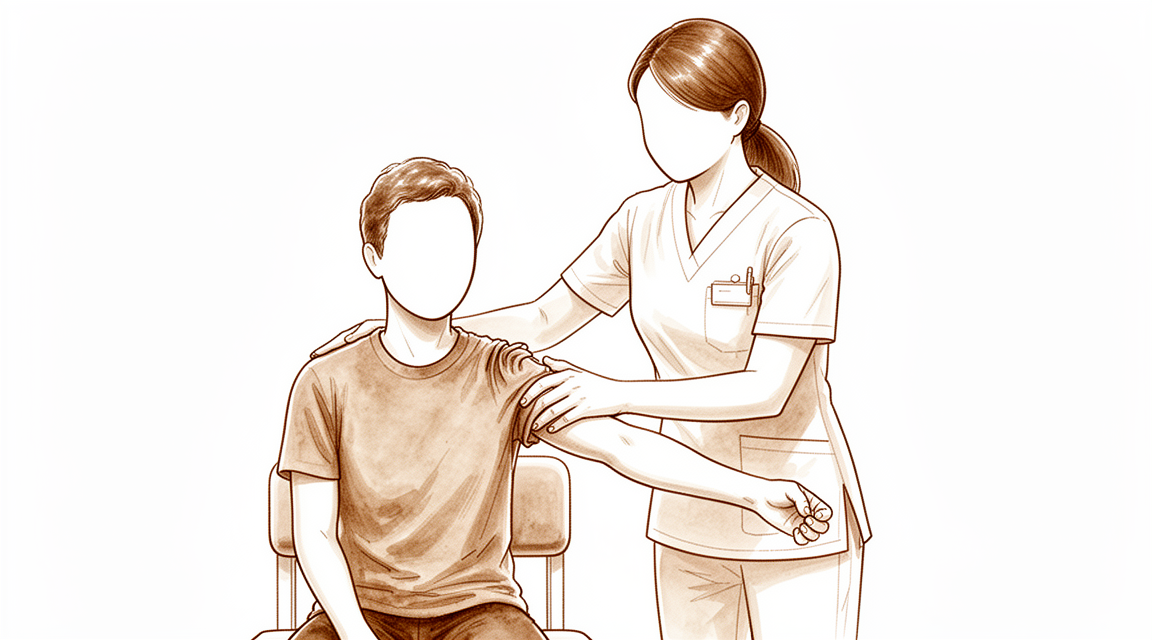
What you're feeling
The pain sits on the outside or top of your shoulder, and it shows up with certain movements rather than all the time. Reaching up, lifting your arm out to the side, or raising your arm in front of you can bring it on. Many people notice a band of pain partway through the movement: your arm is fine at your side, painful as you lift it, then easier again once it is up. Your shoulder may still move through its full range, even though it hurts on the way.
Certain patterns tend to repeat. The pain often flares after activity, and many people find it worse at night or first thing on waking. Lying on that shoulder can be uncomfortable. Everyday tasks that need your hands above shoulder height become the hard ones: hanging washing, reaching a high shelf, lifting a kettle or a hairdryer, or pulling on a coat.
The pain comes from the rotator cuff tendons, the small muscles that hold your shoulder together, being pressed against the bone above them as you move. That squeezing is what doctors call impingement. The fluid-filled cushion beside the tendons can become irritated and swollen, which is the bursitis part of the name.
Not all shoulder pain behaves this way, and a few other conditions can feel similar, so your surgeon will check the pattern of your pain and examine your shoulder before deciding what is going on.
What's actually happening
Your shoulder is a ball sitting in a shallow socket, held together by a group of four tendons called the rotator cuff. Above those tendons sits a bony arch, made by a shelf of bone called the acromion and a ligament joining it to another bone spur in front. Between the arch and the tendons lies a thin fluid-filled cushion, a bit like a small water balloon, that lets the tendons glide smoothly as you move.
When you lift your arm, the tendons slide under that arch. If the space is tight, the tendons and the cushion get pinched between them. The cushion becomes irritated and swollen, so it takes up more room and gets pinched even more. That swelling is the bursitis, and the pinching is the impingement. The sore spot is why reaching up or lying on that shoulder stings: every lift squeezes the same tender tissue in the same place.
The pinching usually happens because the space under the arch has narrowed over time, through the way you use your shoulder, your shape of bone, or simple wear. Sometimes a small extra piece of bone at the tip of the acromion never joined up properly during growth, which can crowd the space further.
The good news is that this problem often settles without surgery. Physiotherapy, exercises and time calm the swelling and retrain the muscles so the tendons glide with less pinching. Surgery to shave a little bone and widen that space is called a subacromial decompression, and it is generally kept for shoulders that stay painful despite a proper trial of the simpler treatments. Your surgeon will talk you through whether your shoulder is one of those.
What we can do about it
Dr Kieran Hirpara, an upper-limb surgeon at Mater Private Hospital Rockhampton, starts with the least invasive options that suit your condition. Patients are generally referred to our clinic by their GP; if a physiotherapist has suggested you see us, you will still need a referral from your GP in order to be eligible for the Medicare rebate. We confirm what is going on with a careful history, an examination, and imaging where it is needed. For a problem like this that builds up over time, we usually try non-operative care first and consider surgery only when that has not given enough improvement.
The first step is one you can begin yourself. Changing how you use the shoulder, easing off the overhead tasks that flare the pain, and giving the tissue time to settle all help. Physiotherapy aims to calm the swelling and retrain the muscles around your shoulder so the tendons glide under the arch with less pinching. This takes patience: give it a proper trial rather than a few weeks, because this problem often settles without surgery.
If simple measures are not enough, pain medication and anti-inflammatories can help take the edge off while you work on the exercises. These treat the symptoms rather than the pinching itself, so they work best alongside physiotherapy rather than instead of it.
Surgery comes into the picture when a good trial of these simpler treatments has not settled your pain. The operation is called a subacromial decompression, and it is usually done through small cuts using a camera, a method called arthroscopic surgery. The surgeon removes the swollen cushion, the bursa, and shaves away any bone spurs under the acromion to widen the space the tendons have to glide through. It is generally kept for shoulders that stay painful despite the steps above, and it is sometimes done alongside other shoulder repairs if those are needed too. Whether surgery is right for you is a decision we make together, once we have talked through your symptoms, your scan, and what you want your shoulder to do.
What to expect
For most people, this problem settles with time and the right exercises. The swelling around the tendons calms down, the muscles learn to move your arm with less pinching, and the pain fades. Many shoulders improve without any surgery at all. The catch is patience: this is a slow change measured in weeks and months, not days.
Recovery after surgery follows a similar rhythm. Most people are back to work within 6 weeks after arthroscopic subacromial decompression, and driving waits until your surgeon clears you, typically at the six-week review. Full recovery of how the shoulder feels and works takes closer to 3 months on average. Some people notice the improvement straight away once the sore tissue is settled, and a six-week exercise program can also improve how well the shoulder muscles switch on.
Surgery helps many but not all shoulders. It works for about 70% to 75% of cases, which means roughly one in four people still have pain afterwards. There is also an honest debate in the medical world about how much the operation adds beyond good exercise therapy, so your surgeon will only recommend it when the simpler treatments have genuinely failed and your scan shows the pinching is real.
If the problem is left alone, it does not always get worse, but it does not always settle either. Some people carry on with flare-ups after activity and sore nights for a long time. Getting on top of it early, with changes to how you use the arm and a proper course of physiotherapy, gives you the best chance of avoiding that.
Your surgeon will talk you through where your shoulder sits in this picture: how long the pain has been there, what you have already tried, and what you need the arm to do. From there you can weigh up whether to keep working on the exercises or whether surgery is worth considering.
When to see someone
See your GP if you have had shoulder pain for several weeks that is not settling with rest and simple changes, or if the pain keeps waking you at night. Ask for a specialist review if lifting your arm stays painful in one particular arc of movement, if the shoulder is getting weaker, or if a proper course of physiotherapy has not helped. Your GP can also check for other causes of shoulder pain that feel similar to this one. Go to an emergency department if you suddenly become short of breath or have chest pain after recent shoulder surgery, as this needs same-day assessment.
In more depth
Advanced reading: the deeper science (optional)
This section goes further than you need for your own treatment decisions. Subacromial impingement is worth the extra reading because it is the shoulder condition where surgery has been tested against a placebo operation, twice, in large randomised trials, and the result changed practice worldwide.
Two trials that compared the operation against pretending to do it
Most surgical evidence compares one operation with another, or with no treatment. Very rarely, a trial compares an operation with a sham, the patient is anaesthetised, the arthroscope is inserted, nothing is decompressed, and neither patient nor assessor knows which was done. That design removes the placebo effect of having had surgery, which is substantial.
The CSAW trial randomised 313 patients three ways: arthroscopic subacromial decompression, investigational arthroscopy only, and no treatment. Both surgical groups did better than no treatment, but the difference was not clinically important, and decompression offered no extra benefit over arthroscopy alone [1].
The FIMPACT trial reached the same conclusion independently. In patients with impingement syndrome, arthroscopic subacromial decompression provided no benefit over diagnostic arthroscopy at 24 months [2].
Two well-conducted trials, two countries, the same answer: the part of the operation that removes bone is not the part producing the improvement. Whatever benefit people experienced came from something the sham procedure also delivered.
What that does and does not mean
It does not mean the pain is imagined, or that nothing helps. It means the mechanical explanation — that a bone spur is rubbing on the tendon and shaving it away fixes the problem, is not supported as the mechanism of benefit.
That has consequences for how the condition is framed. The term "impingement" itself embeds the mechanical theory, which is why much of the literature has shifted to "subacromial pain syndrome": a description of where it hurts rather than an unproven claim about why.
So what is left
Non-operative treatment carries the weight, and the comparative evidence is mixed enough to be worth reading carefully. In a network analysis of 3,643 patients, arthroscopic decompression with acromioplasty and physical therapy showed better outcomes across pain, patient-reported measures and range of motion, while corticosteroid injection showed poor outcomes in all three domains, with the authors recommending physical therapy for patients with significant symptoms [3].
Set against the sham-controlled trials, the reasonable synthesis is that structured exercise is the core treatment; injection may relieve pain in the short term but does not perform well over the longer horizon; and surgery has not been shown to add anything beyond what inserting a camera adds.
Where surgery still has a role
None of this applies to a genuine, repairable rotator cuff tear, which is a different diagnosis with its own evidence, covered on the rotator cuff page. The trials above concern shoulders with pain attributed to impingement, not shoulders with a torn tendon. Distinguishing the two is the reason careful assessment matters more here than the choice of operation.
References for the advanced reading
- Beard DJ, Rees JL, Cook JA, Rombach I, Cooper C, Merritt N, et al. Arthroscopic subacromial decompression for subacromial shoulder pain (CSAW): a multicentre, pragmatic, parallel group, placebo-controlled, three-group, randomised surgical trial. Lancet. 2018;391(10118):329-38.
- Paavola M, Malmivaara A, Taimela S, Kanto K, Inkinen J, Kalske J, et al. Subacromial decompression versus diagnostic arthroscopy for shoulder impingement: randomised, placebo surgery controlled clinical trial. BMJ. 2018;362:k2860.
- Lavoie-Gagne O, Farah G, Lu Y, Mehta N, Parvaresh KC, Forsythe B. Physical therapy combined with subacromial cortisone injection is a first-line treatment whereas acromioplasty with physical therapy is best if conservative management fails for impingement syndrome: a systematic review and network meta-analysis. Arthroscopy. 2022;38(8):2511-24.
Evidence & references
This is the clinical evidence summary written for health professionals. It is technical, and it lists the research this page was built from. You do not need to read it to understand your treatment or to make a decision about it.
Overview
- Management of subacromial impingement syndrome includes physical therapy, injections, and surgery for some patients [1].
- There remains a need for high-quality studies of the pathology, etiology, and management of subacromial impingement syndrome [1].
- Current randomized, controlled trial evidence shows no difference in outcomes of shoulder function or pain between surgical and conservative treatment for subacromial impingement syndrome [3].
- Ultrasound guidance is not superior in subacromial bursa injections in pain or function [4].
- Ultrasound guidance is not superior in glenohumeral joint injections in pain or function [4].
- Subacromial pain syndrome should preferably be treated non-operatively [7].
- Subacromial injection with corticosteroids is indicated for persistent or recurrent symptoms of subacromial pain syndrome [7].
- Arthroscopic subacromial decompression provided no benefit over diagnostic arthroscopy at 24 months in patients with shoulder impingement syndrome [11].
- Arthroscopic subacromial decompression provided no benefit over diagnostic arthroscopy or exercise therapy at 5 years for patients with shoulder impingement syndrome [12].
- Arthroscopic subacromial decompression in the treatment of subacromial impingement yields good long-term results [13].
- Arthroscopic subacromial decompression provided no benefit over diagnostic arthroscopy or exercise therapy on return to work in patients with shoulder impingement syndrome [14].
- Adding a large dose of shoulder strengthening to current nonoperative care for patients with subacromial impingement did not result in superior shoulder-specific patient-reported outcomes [15].
- For patients who have a long-term disease course, operative treatments may be considered [16].
- Standard ASD surgery is preferred over arthroscopic bursectomy and the open surgical technique for subacromial decompression [16].
- Preserving the subacromial bursa during rotator cuff surgery may lead to better rotator cuff healing when secondary pain is manageable [22].
- Arthroscopic subacromial decompression is a valid treatment, reducing pain and improving quality of life for patients selected for surgery according to the Danish national guidelines [29].
Anatomy & Pathophysiology
Bony Anatomy
- The proximal humerus comprises the humeral head, greater tuberosity, lesser tuberosity, and humeral shaft [35].
- The articular head of the humerus is spherical with a diameter of 37 to 57 mm [35].
- The most superior portion of the articular surface of the humeral head averages 8 mm above the greater tuberosity [35].
- Humeral version averages 29.8 degrees, with a range of 10 to 55 degrees [35].
- The humeral head is inclined approximately 130 degrees with respect to the humeral shaft [35].
- The bicipital groove lies between the greater and lesser tuberosities and serves as a pathway for the long head of the biceps tendon [35].
- The distal aspect of the bicipital groove is internally rotated with respect to the proximal portion [35].
- The anatomic neck of the proximal humerus is located at the junction of the articular surface and the tuberosities [35].
- The surgical neck represents an indistinct region below the tuberosities but above the humeral shaft [35].
- The greater tuberosity is located in a posterior-superior location with respect to the humeral shaft and serves as the attachment site for the supraspinatus, infraspinatus, and teres minor tendons [35].
- The lesser tuberosity is located on the anterior aspect of the proximal humerus and serves as the attachment site for the subscapularis tendon [35].
- The glenoid is a convex structure of shallow depth shaped like an inverted pear [35].
- The glenoid cavity is a shallow socket, approximately one third the size of the humeral head [36].
- The neck-shaft angle measures an average of 135 degrees [36].
- The humeral head is retroverted an average of 30 degrees [36].
- The scapula is attached to the axial skeleton by the acromioclavicular and sternoclavicular joints [37].
- The scapular body is triangular when viewed anteroposteriorly, with its base situated superiorly and its apex inferiorly [37].
- The glenoid is connected with the flat body of the scapula by the scapular neck [37].
- The coracoid process curves forwards from the superior surface of the scapular neck [37].
- The acromion is a flattened bony process that curves forwards from the scapular spine [37].
- The lateral pillar connects the inferior border of the glenoid with the inferior angle of the scapula [37].
- The spinal pillar arises from the central part of the glenoid and continues medially to become part of the base of the scapular spine [37].
- The weakest bone in the scapula is located primarily in the central part of the biomechanical body, specifically in the infraspinous fossa [37].
- The weakest area of the circumference of the biomechanical body of the scapula is the spinomedial angle [37].
- The acromion has three ossification centers: the metacromion (base), the mesoacromion (middle), and the preacromion (tip) [38].
- Failure of fusion of the acromial ossification centers results in os acromiale [38].
- The glenoid averages 5° of retroversion in relation to the axis of the scapular body [38].
- The humeral head averages 19° of retroversion and 41° of inclination (neck-shaft angle) [38].
Soft Tissue Anatomy
- The rotator cuff consists of the subscapularis, supraspinatus, infraspinatus, and teres minor muscles [36].
- The teres major is not a rotator cuff muscle [36].
- The rotator cuff muscles serve as depressors of the humeral head to allow the deltoid to efficiently abduct the humerus [36].
- The infraspinatus and teres minor are external rotators of the humerus [36].
- The subscapularis is an internal rotator of the humerus [36].
- The acromion, coracoacromial ligament, and coracoid process form the coracoacromial arch [35].
- The rotator cuff, subacromial bursa, and subdeltoid bursa pass underneath the coracoacromial arch [35].
- The subscapular bursa lies between the subscapularis tendon and the neck of the scapula [39].
- The subscapular bursa communicates with the joint cavity between the superior and middle glenohumeral ligaments [39].
- The subscapular bursa is linked to the coracoid process by a suspensory ligament [39].
- In 28% of dissected specimens, the subscapular bursae merged with the subcoracoid bursae, forming a unique wide bursa [39].
- The rotator interval is defined medially by the base of the coracoid, superiorly by the supraspinatus tendon, and inferiorly by the subscapularis tendon [38].
- The rotator interval contains the coracohumeral ligament, the superior glenohumeral ligament, and the intra-articular portion of the long head of the biceps tendon [38].
- The glenoid labrum provides concavity and up to 50% of marginal glenoid socket depth [38].
- The superior glenohumeral ligament is a primary static restraint against anterior translation with the arm at the side [38].
- The coracohumeral ligament restricts external rotation in adduction and is a static restraint to inferior and posterior translation in adduction and external rotation [38].
- The middle glenohumeral ligament is a primary static restraint against anterior translation with the arm in external rotation and 45° of abduction [38].
- The anterior band of the inferior glenohumeral ligament is a primary static restraint against anterior-inferior dislocation of the glenohumeral joint in 90° of abduction and external rotation [38].
- The posterior band of the inferior glenohumeral ligament is a primary static restraint against posterior-inferior translation in internal rotation and adduction [38].
Vascular Anatomy
- The proximal humerus receives its blood supply from the anterior and posterior humeral circumflex branches from the third division of the axillary artery [35].
- The posterior humeral circumflex artery travels with the axillary nerve, enters the quadrilateral space posteriorly, and anastomoses with a branch of the anterior circumflex to supply the posterior cuff [35].
- The anterior humeral circumflex artery arises from the axillary artery at the inferior border of the subscapularis [35].
- The anterior humeral circumflex artery provides vascular inflow to the humeral head by way of its terminal anterolateral branch known as the artery of Laing or arcuate artery [35].
- The ascending branch of the anterior humeral circumflex artery courses parallel to the lateral aspect of the long head biceps tendon and enters the humeral head at the interface of the bicipital groove and greater tuberosity [35].
- Injury to the arcuate artery may result in osteonecrosis of the humeral head [35].
- Additional extraosseous collateral branches can permit humeral head perfusion despite complete ligation of the arcuate artery [35].
- The major blood supply to the humeral head is through the ascending branch of the anterior humeral circumflex artery, which penetrates the head at the bicipital groove and becomes the arcuate artery [36].
- The anterolateral ascending branch of the anterior humeral circumflex artery provides the primary blood supply to the humeral head [38].
- The terminal intraosseous portion of the anterior humeral circumflex artery enters at the proximal aspect of the intertubercular groove as the arcuate artery [38].
Pathophysiology
- The pathophysiology of impingement syndrome may have both extrinsic and intrinsic components [31].
- The extrinsic theory of impingement is mechanical and related to the anatomy of the coracoacromial arch [31].
- Patients with a flat (type-I) acromion had better results than those with a curved (type-II) or hooked (type-III) acromion in non-operative treatment [31].
- In a population of patients with rotator cuff lesions, there was a decreased prevalence of type-I acromial morphology and an increased prevalence of type-III acromial morphology [31].
- The outcome for patients with a type-II acromion was not significantly different than that for patients with a type-III acromion [31].
- Neer divided the impingement process into three stages [31].
- Stage I of impingement is characterized by acute bursitis with subacromial edema and hemorrhage and is usually observed in patients who are thirty years old or less [31].
- Stage II of impingement is characterized by inflammation of the rotator cuff and possible partial-thickness tears, resulting from the subacromial bursa losing its ability to lubricate and protect the underlying rotator cuff [31].
- Stage III of impingement results in a full-thickness tear of the rotator cuff due to wear of the anterior aspect of the acromion on the greater tuberosity and supraspinatus tendon [31].
- The progressive process of impingement can be interrupted with an acromioplasty [31].
- The term 'subacromial impingement syndrome' as a useful diagnosis is increasingly questioned in the literature [54].
- There is an emerging consensus that symptoms ascribed to subacromial impingement syndrome may arise from a number of shoulder pathologies associated with the soft tissues occupying the subacromial space [54].
- Traditionally, extrinsic factors were proposed as causing compression and abrasion of the bursal side of the rotator cuff, mechanically encroached between the acromion (or coracoid) and humeral head [54].
- The traditional extrinsic model is being challenged with intrinsic rotator cuff pathology suggested as more causative of symptoms [54].
- Cadaver studies have demonstrated that rotator cuff pathology occurs more frequently within the internal substance or on the joint side of the tendon [54].
- Internal impingement syndrome is a painful shoulder condition related to the impingement of soft tissue, including the rotator cuff, joint capsule, long head of the biceps tendon, and glenoid labrum [25].
- Two types of internal impingement syndrome can be differentiated: posterior-superior impingement and anterior-superior impingement [25].
- The aetiology of anterior-superior internal impingement appears to be related to the pulley lesion and instability of the long head of the biceps tendon [25].
- Anterior-superior internal impingement can be caused by trauma or degenerative factors [25].
- Anterior-superior internal impingement produces anterior shoulder pain in middle-aged patients, particularly when performing overhead activities [25].
- Anterior-superior internal impingement is probably more frequent than previously reported [25].
- There is no evidence to prove the efficacy of a specific treatment for anterior-superior internal impingement [25].
- Imaging abnormalities of the acromioclavicular joint and subacromial space are common in asymptomatic shoulders [8].
- Due to low certainty of evidence and significant variation among study populations, further research is needed to clarify prevalence estimates of imaging abnormalities in asymptomatic shoulders [8].
- There was no between group difference in acromiohumeral distance in neutral shoulder position, shoulder abduction at 45° or 60° in adults with subacromial pain syndrome [18].
- Subacromial notching following reverse shoulder arthroplasty is not associated with functional outcomes or range of motion at short-term follow-up [19].
- Displaced proximal humeral fractures can impede normal movement of the rotator cuff, subacromial bursa, and subdeltoid bursa, causing impingement and disruption of normal glenohumeral motion [35].
- In proximal humeral fractures, the subdeltoid and subacromial bursae can become thickened and fibrotic, forming adhesions that can limit normal glenohumeral motion [35].
- Early range of motion exercises after a fracture have been hypothesized to decrease the formation of bursal adhesions [35].
- The pathogenesis of shoulder stiffness is still elusive, but ongoing basic science research has provided insight into cellular and biochemical pathways that result in shoulder stiffness [23].
Classification
- Patients presenting with signs and symptoms of subacromial pain syndrome have a high prevalence of conflicting and concomitant diagnoses [2].
- A comprehensive classification of individualized impingements occurring around the anterior aspect of the shoulder has been proposed to address conflicting theories and improve understanding of etiologic factors, diagnosis, and treatment [6].
- Subacromial osteolysis following hook plate fixation for acromioclavicular dislocation has a relatively high and variable incidence [17].
- The primary factor influencing the reported incidence of subacromial osteolysis following hook plate fixation is the radiological assessment method [17].
- In a cohort of 138 patients with calcium deposits, 46.4% had bilateral deposits, with calcium visible in a total of 202 shoulders [66].
- Among patients with unilateral calcium deposits, the right shoulder was involved twice as often as the left [66].
- 51.5% of involved shoulders had calcium in the supraspinatus portion of the cuff [66].
- 44.5% of involved shoulders had calcium in the infraspinatus portion of the cuff [66].
- 23.3% of involved shoulders had calcium in the teres minor portion of the cuff [66].
- Only 5 shoulders showed calcium in the subscapularis [66].
- Calcium was visible in the subacromial bursa in 25 shoulders [66].
- There were 41 shoulders with an acute attack of bursitis in the cohort described by [66] [66].
Clinical Presentation
- Night pain is a common complaint of patients presenting with impingement of the shoulder [51].
- Night pain cannot be used in isolation as a diagnostic predictor for the presence of a rotator cuff tear [51].
- Women aged between 30 and 60 years with subacromial pain syndrome and a calcific deposit of >1.5 cm in length have the highest chance of suffering from symptomatic calcific tendinopathy of the rotator cuff [20].
- Examination of the cervical spine in patients with subacromial shoulder pain is variable in randomized controlled trials [27].
Investigations
Diagnostic Challenges and Clinical Assessment
- The history and physical examination are paramount in the diagnosis of a stiff shoulder, with ancillary studies helpful in certain circumstances [23].
- A Cochrane review includes 33 studies evaluating a total of 4002 shoulders in 3852 patients regarding physical tests for shoulder impingements and local lesions [5].
Radiography
- At least two X-ray views should be obtained: an anteroposterior in the plane of the glenoid and an axillary projection with the arm in abduction to show the relationship of the humeral head to the glenoid [43].
- Standardized plain films are almost always sufficient to garner the information needed for shoulder evaluation [24].
- The anteroposterior view in the plane of the scapula shows the superoinferior position of the humeral head relative to the glenoid, presence of osteophytes, narrowing of the joint space, and degree of medial displacement of the humerus [24].
- The axillary view taken with the arm in the functional position of elevation is referred to as the "truth view" because it demonstrates glenohumeral relationships in the functional position [24].
- The standardized axillary view enables the measurement of posterior subluxation or "functional decentering" that is not evident in images taken with the arm at the side [24].
- Due to the low certainty of evidence and significant variation among study populations, further research is needed to clarify prevalence estimates of imaging abnormalities in asymptomatic shoulders [8].
Magnetic Resonance Imaging
- Magnetic resonance imaging is useful to identify osteonecrosis of the humeral head, bone tumours, labral tears, and rotator cuff tears [43].
- The accuracy of MRI for identifying labral tears and rotator cuff tears is enhanced by combining the scan with arthrography [43].
- The acromiohumeral distance is significantly smaller in MRI compared to AP radiographs in shoulders with an intact rotator cuff [70].
- The acromiohumeral distance should not be used as a decision criterion on MRI to assess glenohumeral centering or subacromial space width in shoulders with an intact rotator cuff [70].
- Diagnostic and therapeutic practices regarding internal impingement of the shoulder differ between surgeons, with international surgeons favoring MRI [62].
Ultrasound
- Ultrasound is a simple and accurate test for identifying rotator cuff tears and calcific tendinitis [43].
- Ultrasound can be useful in guiding injections or barbotage [43].
- Ultrasound guidance is not superior in subacromial bursa and glenohumeral joint injections in pain or function [4].
- The subacromial space width is smaller in nearly all rotator cuff pathologies and becomes even smaller as the severity of the condition increases [74].
- The subacromial space width is smaller in the case of a complete cuff tear [74].
- Machine learning-based ultrasomics may be helpful in the preliminary screening of shoulder pain for subacromial impingement syndrome stages [73].
Computed Tomography and Arthroscopy
- Computed tomography is helpful for planning fracture surgery and shoulder joint replacement [43].
- French surgeons rely more on CT-arthrography for internal impingement of the shoulder compared to international surgeons [62].
- Arthroscopy is useful for diagnosing and treating subacromial impingement, intra-articular lesions, detachment of the glenoid labrum, and rotator cuff tears [43].
- CT scans may offer increased precision in the measurement of glenoid version, but this precision does not necessarily improve the quality of surgery or clinical outcome [24].
Treatment
Non-Operative Management
- Management of subacromial impingement syndrome includes physical therapy and injections [1].
- Most management regimes for subacromial impingement employ a minimum period of 12 weeks of conservative management incorporating physiotherapy and at least 2 subacromial steroid injections [10].
- There is little reproducible evidence to support the efficacy of subacromial corticosteroid injection in managing rotator cuff disease [58].
Injections
- Ultrasound guidance is not superior in subacromial bursa and glenohumeral joint injections regarding pain or function [4].
Operative Management
- Arthroscopic subacromial decompression provided no benefit over diagnostic arthroscopy at 24 months for patients with shoulder impingement syndrome [11].
- For patients who have a long-term disease course, operative treatments may be considered, with standard ASD surgery preferred over arthroscopic bursectomy and the open surgical technique for subacromial decompression [16].
- Five randomized trials found that formal subacromial decompression does not result in improved clinical outcomes up to 2 years after rotator cuff repair [30].
- ASD in the treatment of subacromial impingement yields good long-term results [13].
- There is no evidence from the available RCTs for differences in outcome in pain and shoulder function between conservatively and surgically treated patients with subacromial impingement syndrome [32].
- No clinically meaningful differences in pain or function were found between surgery plus physiotherapy and physiotherapy alone at 3-, 6-months, 1-, 2-, 5- or ≥10-years follow up [47].
- The evidence on effectiveness of surgical or conservative treatment of shoulder impingement was found to be limited based on the review of seven RCTs [49].
Complications
Post-operative Outcomes and Long-term Effects
- Arthroscopic subacromial decompression yields good long-term results in the treatment of subacromial impingement [13].
- Major improvements in pain and function were observed at mid- to long-term follow-up after isolated arthroscopic subacromial decompression and combined decompression with rotator cuff repair [28].
- There was no evidence of progression of intrinsic rotator cuff pathologic conditions at a mean follow-up of 4.5 years following acromioplasty without repair for partial-thickness rotator cuff tears [34].
Surgical Complications and Anatomical Changes
- Subacromial osteolysis has a relatively high and variable incidence following hook plate fixation for acromioclavicular dislocation, with the primary factor influencing reported incidence being the radiological assessment method [17].
- Subacromial notching is not associated with functional outcomes or range of motion at short-term follow-up when it occurs following reverse shoulder arthroplasty with a 135° inlay humeral component and a lateralized glenoid [19].
Diagnostic and Pathological Complications
- Synovitis in the subacromial space was milder and not associated with any clinical parameters in patients with rotator cuff tears [9].
Recovery
Non-Operative Management
- Variation exists in the management regimes offered to patients with subacromial impingement, but most employ a minimum period of 12 weeks of conservative management incorporating physiotherapy and at least 2 subacromial steroid injections [10].
- Adding a large dose of shoulder strengthening exercises to nonoperative care for 16 weeks did not significantly improve long-term outcomes in terms of shoulder disability, health-related quality of life, sick leave, or surgery rates at 1 year [33].
- More than half of patients diagnosed with subacromial pain syndrome in specialist care settings do not adhere to recommendations regarding duration of exercise-therapy, but this is not related to symptom improvement [26].
Operative Management
- Major improvements in pain/function were seen at mid- to long-term after isolated arthroscopic subacromial decompression and combined decompression/rotator cuff repair [28].
Diagnostic and Anatomical Considerations
- Synovitis in the subacromial space was milder and not associated with any clinical parameters [9].
- There was no between group difference in acromiohumeral distance (AHD) in neutral shoulder position, shoulder abduction at 45° or 60° [18].
Key Evidence
- [L5] Management of subacromial impingement syndrome includes physical therapy, injections, and surgery for some patients, but there remains a need for high-quality studies of the pathology, etiology, and management of the condition. [1] (10.5435/00124635-201111000-00006)
- [L3] Patients presenting with signs and symptoms of subacromial pain syndrome have a high prevalence of conflicting and concomitant diagnoses. [2] (10.1177/23259671251332942)
- [L1] Current randomized, controlled trial evidence shows no difference in outcomes of shoulder function or pain between surgical and conservative treatment for subacromial impingement syndrome. [3] (10.2106/jbjs.9202.ebo579)
- [L1] Ultrasound guidance is not superior in the subacromial bursa and glenohumeral joint injections in pain or function. [4] (10.1016/j.arthro.2021.12.013)
- [L1] The review includes 33 studies evaluating a total of 4002 shoulders in 3852 patients. [5] (10.1002/14651858.cd007427.pub2)
- [L4] The article proposes a comprehensive classification of all individualized impingements occurring around the anterior aspect of the shoulder, including newly described entities, to address conflicting theories and improve understanding of their etiologic factors, diagnosis, and treatment. [6] (10.1007/s00264-017-3515-1)
- [Paper] SAPS should preferably be treated non-operatively, with subacromial injection with corticosteroids indicated for persistent or recurrent symptoms. [7] (10.3109/17453674.2014.920991)
- [L2] Due to the low certainty of evidence and significant variation among study populations, further research is needed to clarify these prevalence estimates and to guide evidence-based management of shoulder abnormalities. [8] (10.1186/s13018-024-05378-4)
- [L4] Synovitis in the subacromial space was milder and not associated with any clinical parameters. [9] (10.1177/23259671231207818)
- [L4] Variation exists in the management regimes offered to patients with subacromial impingement, but most employ a minimum period of 12 weeks of conservative management incorporating physiotherapy and at least 2 subacromial steroid injections. [10] (10.1177/1758573215571010)
- [L1] In this controlled trial involving patients with a shoulder impingement syndrome, arthroscopic subacromial decompression provided no benefit over diagnostic arthroscopy at 24 months. [11] (10.1136/bmj.k2860)
- [L1] Arthroscopic subacromial decompression provided no benefit over diagnostic arthroscopy or exercise therapy at 5 years for patients with shoulder impingement syndrome. [12] (10.1136/bjsports-2020-102216)
- [L3] ASD in the treatment of subacromial impingement yields good long-term results. [13] (10.1016/j.jse.2007.06.020)
- [L1] Arthroscopic subacromial decompression provided no benefit over diagnostic arthroscopy or exercise therapy on return to work in patients with shoulder impingement syndrome. [14] (10.1186/s12891-021-04768-7)
- [L1] Adding a large dose of shoulder strengthening to current nonoperative care for patients with subacromial impingement did not result in superior shoulder-specific patient-reported outcomes. [15] (10.1177/03635465211016008)
- [L1] For patients who have a long-term disease course, operative treatments may be considered, with standard ASD surgery preferred over arthroscopic bursectomy and the open surgical technique for subacromial decompression. [16] (10.1097/md.0000000000000510)
- [L1] Subacromial osteolysis has a relatively high and variable incidence, and the primary factor influencing the reported incidence is the radiological assessment method. [17] (10.1016/j.jse.2024.03.018)
- [L1] There was no between group difference in acromiohumeral distance (AHD) in neutral shoulder position, shoulder abduction at 45° or 60°. [18] (10.1038/s41598-020-76704-z)
- [L3] When subacromial notching occurs, it is not associated with functional outcomes or range of motion at short-term follow-up. [19] (10.1016/j.jseint.2024.01.009)
- [L3] This study demonstrates that women aged between 30 and 60 years with subacromial pain syndrome and a calcific deposit of >1.5 cm in length have the highest chance of suffering from symptomatic calcific tendinopathy of the rotator cuff. [20] (10.1016/j.jse.2015.02.024)
- [L5] Preserving the subacromial bursa during rotator cuff surgery may lead to better rotator cuff healing when secondary pain is manageable. [22] (10.1530/eor-2024-0183)
- [L4] [25] (10.1007/s00167-010-1232-z)
- [L3] More than half of patients diagnosed with subacromial pain syndrome in specialist care settings do not adhere to recommendations regarding duration of exercise-therapy, but this is not related to symptom improvement. [26] (10.1016/j.msksp.2021.102322)
- [L1] Examination of the cervical spine in patients with subacromial shoulder pain is variable in randomized controlled trials. [27] (10.1177/1758573218798023)
- [L3] Major improvements in pain/function were seen at mid- to long-term after isolated arthroscopic subacromial decompression and combined decompression/rotator cuff repair. [28] (10.1016/j.jor.2018.03.004)
- [L4] Arthroscopic subacromial decompression is a valid treatment, reducing pain and improving quality of life for patients selected for surgery according to the Danish national guidelines. [29] (10.1016/j.jse.2017.03.028)
- [L1] Five randomized trials found that formal subacromial decompression does not result in improved clinical outcomes up to 2 years after rotator cuff repair. [30] (10.1016/j.arthro.2012.06.003)
- [L3] [31] (10.2106/00004623-199705000-00013)
- [L1] According to the best-evidence synthesis, there is no evidence from the available RCTs for differences in outcome in pain and shoulder function between conservatively and surgically treated patients with SIS. [32] (10.1016/j.jse.2009.01.010)
- [L1] Adding a large dose of shoulder strengthening exercises to nonoperative care for 16 weeks did not significantly improve long-term outcomes in terms of shoulder disability, health-related quality of life, sick leave, or surgery rates at 1 year. [33] (10.1177/23259671251374314)
- [L4] There was no evidence of progression of intrinsic rotator cuff pathologic conditions at a mean follow-up of 4.5 years. [34] (10.1177/03635465020300021801)
- [L1] [47] (10.1371/journal.pone.0216961)
- [L1] Based on the review of seven RCTs, the evidence on effectiveness of surgical or conservative treatment of shoulder impingement was found to be limited. [49] (10.3109/09638288.2014.907364)
- [L3] Night pain is a common complaint of patients presenting with impingement of the shoulder but cannot be used in isolation as a diagnostic predictor for the presence of a rotator cuff tear. [51] (10.1111/j.1758-5740.2011.00133.x)
- [L1] [54] (10.1177/1758573216660038)
- [L1] This systematic review of the available literature indicates that there is little reproducible evidence to support the efficacy of subacromial corticosteroid injection in managing rotator cuff disease. [58] (10.5435/00124635-200701000-00002)
- [L4] Diagnostic and therapeutic practices regarding internal impingement of the shoulder differ between surgeons in France and in other countries, with French surgeons relying more on CT-arthrography and intra-articular injections, while international surgeons favor MRI and physical therapy. [62] (10.1016/j.otsr.2019.09.007)
- [L4] [66] (10.1001/jama.1941.02820220019004)
- [L4] The acromiohumeral distance is significantly smaller in the MRI in comparison to AP radiographs in shoulders with an intact rotator cuff and should not be used as a decision criterion on MRI to assess glenohumeral centering or subacromial space width. [70] (10.1007/s00167-020-06090-6)
- [L4] This noninvasive and low-cost approach may be helpful in the preliminary screening of shoulder pain. [73] (10.1002/jum.15914)
- [L4] The subacromial space width is smaller in nearly all rotator cuff pathologies, but becomes even smaller as the severity of the condition increases and is smaller in the case of a complete cuff tear. [74] (10.1016/j.ultras.2003.11.015)
References
[1] Subacromial Impingement Syndrome. American Academy of Orthopaedic Surgeon. 2011. DOI: 10.5435/00124635-201111000-00006
[2] The Challenge of Diagnosing Patients Presenting With Signs and Symptoms of Subacromial Pain Syndrome: A Descriptive Study of 741 Patients Seen in a Secondary Care Setting. Orthopaedic Journal of Sports Medicine. 2025. DOI: 10.1177/23259671251332942
[3] Current Evidence Fails to Show Differences in Effectiveness Between Conservative and Surgical Treatment of Subacromial Impingement Syndrome. The Journal of Bone & Joint Surgery. 2010. DOI: 10.2106/jbjs.9202.ebo579
[4] Ultrasound Guidance Is Not Superior in Subacromial Bursa and Intraarticular Injections but Superior in Bicipital Groove: A Meta-analysis of Randomized Controlled Trials. Arthroscopy: The Journal of Arthroscopic & Related Surgery. 2022. DOI: 10.1016/j.arthro.2021.12.013
[5] Physical tests for shoulder impingements and local lesions of bursa, tendon or labrum that may accompany impingement. Cochrane Database of Systematic Reviews. 2013. DOI: 10.1002/14651858.cd007427.pub2
[6] Redefining anterior shoulder impingement: a literature review. International Orthopaedics. 2017. DOI: 10.1007/s00264-017-3515-1
[7] Guideline for diagnosis and treatment of subacromial pain syndrome. Acta Orthopaedica. 2014. DOI: 10.3109/17453674.2014.920991
[8] Imaging abnormalities of the acromioclavicular joint and subacromial space are common in asymptomatic shoulders: a systematic review. Journal of Orthopaedic Surgery and Research. 2025. DOI: 10.1186/s13018-024-05378-4
[9] Clinical Implication of Glenohumeral and Subacromial Synovitis in Rotator Cuff Tears. Orthopaedic Journal of Sports Medicine. 2023. DOI: 10.1177/23259671231207818
[10] Current UK practices in the management of subacromial impingement. Shoulder & Elbow. 2015. DOI: 10.1177/1758573215571010
[11] Subacromial decompression versus diagnostic arthroscopy for shoulder impingement: randomised, placebo surgery controlled clinical trial. BMJ. 2018. DOI: 10.1136/bmj.k2860
[12] Subacromial decompression versus diagnostic arthroscopy for shoulder impingement: a 5-year follow-up of a randomised, placebo surgery controlled clinical trial. British Journal of Sports Medicine. 2020. DOI: 10.1136/bjsports-2020-102216
[13] Small full-thickness tears do well ten to thirteen years after arthroscopic subacromial decompression. Journal of Shoulder and Elbow Surgery. 2008. DOI: 10.1016/j.jse.2007.06.020
[14] Return to work after subacromial decompression, diagnostic arthroscopy, or exercise therapy for shoulder impingement: a randomised, placebo-surgery controlled FIMPACT clinical trial with five-year follow-up. BMC Musculoskeletal Disorders. 2021. DOI: 10.1186/s12891-021-04768-7
[15] Effectiveness of Adding a Large Dose of Shoulder Strengthening to Current Nonoperative Care for Subacromial Impingement: A Pragmatic, Double-Blind Randomized Controlled Trial (SExSI Trial). The American Journal of Sports Medicine. 2021. DOI: 10.1177/03635465211016008
[16] Treatments for Shoulder Impingement Syndrome. Medicine. 2015. DOI: 10.1097/md.0000000000000510
[17] Subacromial osteolysis following hook plate fixation for acromioclavicular dislocation: a systematic review and meta-analysis. Journal of Shoulder and Elbow Surgery. 2024. DOI: 10.1016/j.jse.2024.03.018
[18] No relationship between the acromiohumeral distance and pain in adults with subacromial pain syndrome: a systematic review and meta-analysis. Scientific Reports. 2020. DOI: 10.1038/s41598-020-76704-z
[19] Rates of subacromial notching are low following reverse shoulder arthroplasty with a 135° inlay humeral component and a lateralized glenoid. JSES International. 2024. DOI: 10.1016/j.jseint.2024.01.009
[20] Prevalence of calcific deposits within the rotator cuff tendons in adults with and without subacromial pain syndrome: clinical and radiologic analysis of 1219 patients. Journal of Shoulder and Elbow Surgery. 2015. DOI: 10.1016/j.jse.2015.02.024
[22] Removal or retention: evolving views on possible roles of the subacromial bursa in rotator cuff disease. EFORT Open Reviews. 2025. DOI: 10.1530/eor-2024-0183
[23] Rockwood And Matsen S The Shoulder. Arthroscopic Management of Prearthritic and Arthritic Conditions of the Shoulder and the Postarthroplasty Shoulder > SUMMARY.
[24] Rockwood And Matsen S The Shoulder. Arthroscopic Management of Prearthritic and Arthritic Conditions of the Shoulder and the Postarthroplasty Shoulder > Radiographic Evaluation.
[25] Anterior‐superior internal impingement of the shoulder: an evidence‐based review. Knee Surgery, Sports Traumatology, Arthroscopy. 2010. DOI: 10.1007/s00167-010-1232-z
[26] Less than half of patients in secondary care adheres to clinical guidelines for subacromial pain syndrome and have acceptable symptoms after treatment: A Danish nationwide cohort study of 3306 patients. Musculoskeletal Science and Practice. 2021. DOI: 10.1016/j.msksp.2021.102322
[27] Screening of the cervical spine in subacromial shoulder pain: A systematic review. Shoulder & Elbow. 2018. DOI: 10.1177/1758573218798023
[28] Long-term results after surgical treatment of subacromial pain syndrome with or without rotator cuff tear. Journal of Orthopaedics. 2018. DOI: 10.1016/j.jor.2018.03.004
[29] Acromioplasty in patients selected for operation by national guidelines. Journal of Shoulder and Elbow Surgery. 2017. DOI: 10.1016/j.jse.2017.03.028
[30] The Changing Role of Acromioplasty. Arthroscopy. 2012. DOI: 10.1016/j.arthro.2012.06.003
[31] Non-Operative Treatment of Subacromial Impingement Syndrome. The Journal of Bone and Joint Surgery (American Volume)*. 1997. DOI: 10.2106/00004623-199705000-00013
[32] Conservative or surgical treatment for subacromial impingement syndrome? A systematic review. Journal of Shoulder and Elbow Surgery. 2009. DOI: 10.1016/j.jse.2009.01.010
[33] The Effect of Adding a Large Dose of Shoulder Strengthening to Nonoperative Care for Subacromial Impingement on Shoulder Disability, Quality of Life, Sick Days, and Surgery Rates: 1-Year Results From a Pragmatic, Double-Blind Randomized Controlled Trial (SExSI). Orthopaedic Journal of Sports Medicine. 2025. DOI: 10.1177/23259671251374314
[34] The Partial-Thickness Rotator Cuff Tear: Is Acromioplasty without Repair Sufficient?. The American Journal of Sports Medicine. 2002. DOI: 10.1177/03635465020300021801
[35] Rockwood And Matsen S The Shoulder. Shoulder and Elbow Specialty Clinic Workers’ Survey > ANATOMY.
[36] A Lange Medical Book Current Diagnosis Treatment In Orthopedics Fifth Edition. 2Musculoskeletal Trauma Surgery > SHOULDER AND ARM INJURIES.
[37] Rockwood And Green S Fractures In Adults. 29: Principles of Nonunion and Bone Defect Treatment > Applied Anatomy Related to Scapular Fractures.
[38] Aaos Comprehensive Orthopaedic Review 3. Anatomy of the Shoulder, Arm, and Elbow > I. Shoulder.
[39] Rockwood And Matsen S The Shoulder. Developmental Anatomy of the Shoulder and Anatomy of the Glenohumeral Joint > Bursae.
[43] Apley And Solomon S Concise System Of Orthopaedics And Trauma. INVESTIGATION.
[47] The effectiveness of surgical vs conservative interventions on pain and function in patients with shoulder impingement syndrome. A systematic review and meta-analysis. PLOS ONE. 2019. DOI: 10.1371/journal.pone.0216961
[49] Conservative treatment or surgery for shoulder impingement: systematic review and meta-analysis. Disability and Rehabilitation. 2014. DOI: 10.3109/09638288.2014.907364
[51] Night Pain is not a useful Diagnostic Indicator of Cuff Tear in Patients with Symptoms of Subacromial Impingement. Shoulder & Elbow. 2011. DOI: 10.1111/j.1758-5740.2011.00133.x
[54] Electromyographic activity of the shoulder muscles during rehabilitation exercises in subjects with and without subacromial pain syndrome: a systematic review. Shoulder & Elbow. 2016. DOI: 10.1177/1758573216660038
[58] The Efficacy of Subacromial Corticosteroid Injection in the Treatment of Rotator Cuff Disease: A Systematic Review. Journal of the American Academy of Orthopaedic Surgeons. 2007. DOI: 10.5435/00124635-200701000-00002
[62] Internal impingement of the shoulder: An international survey of 261 orthopaedic surgeons. Orthopaedics & Traumatology: Surgery & Research. 2019. DOI: 10.1016/j.otsr.2019.09.007
[66] CALCIUM DEPOSITS IN THE SHOULDER AND SUBACROMIAL BURSITIS. Journal of the American Medical Association. 1941. DOI: 10.1001/jama.1941.02820220019004
[70] The acromiohumeral distance in the MRI should not be used as a decision criterion to assess subacromial space width in shoulders with an intact rotator cuff. Knee Surgery, Sports Traumatology, Arthroscopy. 2020. DOI: 10.1007/s00167-020-06090-6
[73] Machine
[74] Sonographic evaluation of subacromial space. Ultrasonics. 2004. DOI: 10.1016/j.ultras.2003.11.015