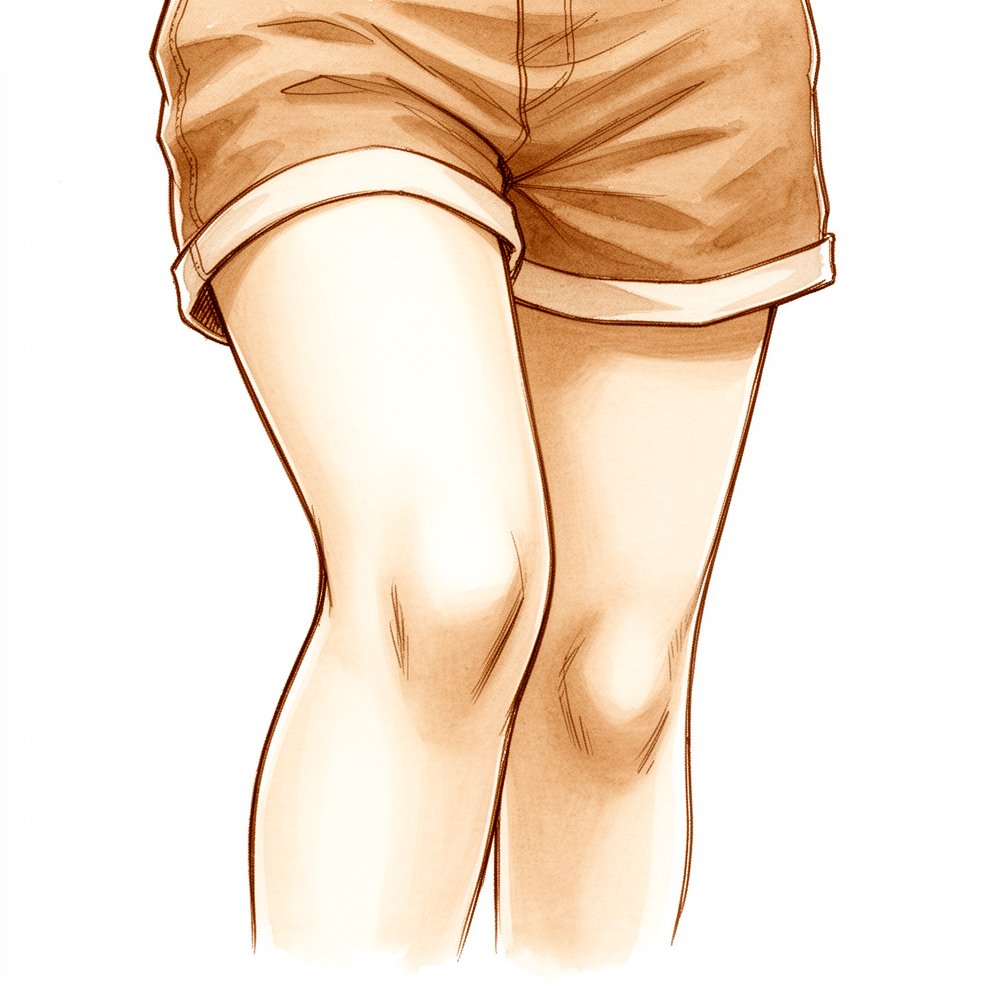
What you're feeling
The anterior cruciate ligament (ACL) is a strap of tissue deep inside your knee that keeps the shin bone from sliding forward. When it tears, most people feel or hear a "pop" at the moment it happens. About 70% of people notice this. Your knee often swells within 4 to 12 hours as blood fills the joint.
The pain sits deep in the knee itself, around the joint line. Twisting, pivoting, or changing direction quickly usually makes it worse. Resting and keeping the knee still tends to settle it. The swelling can feel tight and warm, and it may make the knee hard to bend fully.
The most troubling feeling is often not pain but instability. Your knee may feel like it "gives out" when you twist or turn. Going downstairs, stepping off a kerb, or landing after a jump can feel unsafe. Standing up from a squatting position may be difficult. You might avoid stairs or uneven ground without realising it.
If the injury happened some time ago, the pattern can change. The knee may give way repeatedly during twisting activities. It may also swell and ache after sport or a long day on your feet. Some people develop new catching or locking feelings inside the knee. This can happen when the cushioning cartilage rings (the menisci) are also torn, which is common with an ACL injury.
A knee that swells within 1 to 6 hours of a sporting injury needs careful checking for an ACL tear. If your knee is unstable, swollen, or giving way, it is worth having it assessed.
What's actually happening
Inside your knee, two bones meet: the thigh bone above and the shin bone below. The ACL is a strong strap of tissue that joins them, running from the thigh bone down to the shin bone. Think of it as a rope holding the two bones in line while you run, twist and land.
The rope has two strands. One strand is tight when your knee is bent, the other when your leg is straight. Together they stop the shin bone from sliding forward and stop the knee from twisting too far. When the ACL tears, that control is lost. The shin bone can slide and rotate, which is why your knee feels like it gives way.
Most tears happen in the middle of the strap, though some happen where it attaches to the thigh bone or the shin bone. The tear usually happens without anyone touching you, during a sudden stop or a quick change of direction. Sometimes a direct blow to the knee causes it. When the shin bone shifts suddenly, it can also bruise or dent the smooth surface of the bones, and the cushioning cartilage rings inside the knee can be torn at the same time.
The swelling you feel is blood filling the joint from the torn strap. The instability comes from the lost control of the shin bone. New catching or locking feelings later on often point to a torn cartilage ring rather than the strap itself.
There is one more thing worth knowing. A knee with a torn ACL, or with a torn cartilage ring, carries a real chance of wear-and-tear arthritis down the track. Roughly half of people with one of these injuries have arthritis with pain and stiffness 10 to 20 years later. Keeping the knee strong and stable, and treating the whole injury rather than just the strap, is aimed at protecting the joint for the long term.
What we can do about it
Some knees do well without surgery. We usually start with physiotherapy to rebuild movement and strength in the knee, along with a brace and changes to how you stay active. Short, progressive exercise programs are well tolerated and can be a first step, either to prepare the knee for surgery or as the main treatment itself. This path tends to suit people with lower activity demands or knees that rarely give way. It is worth knowing that a knee left without a working ACL has a higher chance of the cartilage rings being torn later, so we watch it closely and reassess if instability continues.
Pain relief in the early days is simple. Rest, ice, and keeping the knee elevated help the swelling settle. Simple pain medication and anti-inflammatories from your pharmacist or GP can ease the first weeks. Nothing else is needed at this stage.
Surgery is considered when the knee keeps giving way, when you play jumping, cutting, or pivoting sport, when your work involves heavy physical tasks, or when other parts of the knee need repair at the same time. Early reconstruction is also advised to protect the cartilage rings from further tearing. The operation replaces the torn strap with a new one, most often taken from your own body around the knee. We will talk through the choices with you, because each has different trade-offs in healing speed, soreness at the donor site, and strength. The aim is a stable knee that lets you return safely to the activities you value. This is a shared decision, made with you, based on your knee, your sport, and your goals.
What to expect
Most knees settle in the first few weeks. The swelling and sharp pain ease with rest, ice, and simple pain relief. But a torn ACL does not heal back to normal on its own. The feeling of the knee giving way usually stays unless the knee is treated and strengthened. Some people manage well with physiotherapy and changes to how they stay active, and good strength and knee function can be kept that way over time. Others keep having instability during twisting or pivoting, which is often the sign that surgery is worth considering.
Recovery is gradual, whether or not you have surgery. Over weeks to months, the aim is a knee that bends fully, feels steady, and is strong enough for what you ask of it. Getting back to sport takes longer than most people expect. About 55% of people return to competitive sport after ACL reconstruction surgery, and 83% of elite athletes return to their preinjury sport. How you feel about returning matters too. Fear of the knee giving way can hold people back even when the knee itself is strong, and meeting set strength and movement goals before returning to sport helps protect against another injury.
Being honest about the risks matters. In the 24 months after reconstruction and return to sport, you carry a greater chance of another ACL injury than someone who has never torn one. For people aged 18 years and younger, a further ACL injury happens in 1 in 3 patients over 15 years. Waiting a long time before surgery also has costs: more cartilage damage in the knee, and in female patients a delay beyond 12 months gradually raises the chance of a cartilage ring tear that cannot be repaired. Ideally, reconstruction should not be delayed more than five months from injury, particularly in younger people.
The longer picture deserves a mention too. An ACL injury can affect knee-related quality of life for up to 35 years, whichever way it is treated. Roughly half of people develop wear-and-tear arthritis 10 to 20 years later, as covered earlier. What you can influence is the strength, movement, and stability of the knee around that injury, and that is what treatment is aimed at.
When to see someone
Get your knee checked soon after the injury. A knee that swells within 1 to 6 hours of a sporting injury needs careful assessment for a torn ACL, and the sooner it is seen the better the examination tends to be. See your GP promptly if your knee swells quickly after a twist or landing, if it feels like it gives way when you turn, or if you heard or felt a "pop" at the time. Ask for a specialist review if the knee keeps giving way during twisting activities, if it locks or catches, or if it swells and aches after sport weeks or months later. These later feelings often mean a torn cartilage ring inside the knee, which is common with an ACL injury and is worth picking up early.
Evidence & references
This is the clinical evidence summary written for health professionals. It is technical, and it lists the research this page was built from. You do not need to read it to understand your treatment or to make a decision about it.
Anatomy & Pathophysiology
Ligament Anatomy
- The ACL is an intra-articular ligament that is technically extrasynovial as it is surrounded by synovium [23].
- The ACL runs from the femur to the tibia in an anterior–medial direction [23].
- The ACL has a variable length ranging from 22 to 41 mm [23].
- The ACL has a width ranging from 7 to 12 mm [23].
- The ACL is consistently narrowest in the midsubstance [23].
- The ACL is composed of two bundles: the anteromedial (AM) and posterolateral (PL) bundles [23].
- The AM and PL bundles are named according to their tibial insertion [23].
- The femoral origin of the ACL is on the posteromedial edge of the lateral femoral condyle [23].
- The femoral origin is located posterior to the lateral intercondylar ridge, also known as Resident’s ridge [23].
- The ACL femoral attachment is usually oval in shape [23].
- The AM bundle arises from the superior and anterior aspects of the femoral attachment [23].
- The PL bundle arises from the posterior and inferior aspects of the femoral attachment [23].
- The AM and PL bundles are often separated by the lateral bifurcate ridge, which runs from anterior to posterior on the femur [23].
- Based on a clock-face description of the posterior outlet of the femoral intercondylar notch, the bulk of the AM bundle is attached between 9:30 and 11:30 o'clock [23].
- Based on a clock-face description of the posterior outlet of the femoral intercondylar notch, the PL bundle is attached between 8:30 and 10:00 o'clock [23].
- The distance on the femur between the centers of the AM and PL bundles varies from 8 to 10 mm depending on knee size [23].
- The tibial footprint of the ACL is located in the anterior intercondylar fossa between the medial and lateral tibial spines [23].
- The tibial insertion of the ACL is 120% larger than the femoral insertion [23].
- The tibial insertion is anterolateral to the medial tibial spine [23].
- Some ACL fibers pass deep to the transverse meniscal ligament [23].
- Some ACL fibers merge with the anterior aspect of the lateral meniscus [23].
- The AM bundle attaches to the anteromedial portion of the tibial footprint [23].
- The PL bundle attaches to the posterolateral portion of the tibial footprint [23].
- The center of the PL bundle is 4 ± 1 mm from the medial tibial spine [23].
- The center of the AM bundle is 5 ± 1 mm from the medial tibial spine [23].
- The ACL is approximately 32 mm in length [28].
- The ACL is 7 to 12 mm wide [28].
- The ACL is composed of 90% type I collagen and 10% type III collagen [28].
- The strength of the ACL is 2,200 N [28].
- The AM bundle is tightest in flexion [28].
- The PL bundle is tightest in extension and looser in midflexion [28].
- The lateral intercondylar ridge demarcates the anterior edge of the ACL [28].
- The bifurcate ridge separates the AM and PL bundles on the femoral side [28].
- The ACL receives its blood supply from the middle geniculate artery [28].
- The ACL receives its innervation from the posterior articular nerve, a branch of the tibial nerve [28].
- The AM bundle is tighter in knee flexion [22].
- The PL bundle is tighter in extension [22].
- Both bundles are under tension during loading with anterior translation or combined anterior translation and internal rotation [22].
- The AM bundle maintains tension throughout the knee range of motion [22].
- The native ACL inserts on the tibia just anterior to the posterior part of the anterior horn of the lateral meniscus [22].
- The center of the ACL femoral footprint is 43% of the distance from the proximal to distal articular cartilage margin [22].
- The center of the AM bundle is 29.5% of the proximal to distal distance of the lateral femoral intercondylar notch [22].
- The center of the PL bundle is 50% of the proximal to distal distance of the lateral femoral intercondylar notch [22].
- The posterior edge of the ACL is 2.5 mm from the posterior articular cartilage border [22].
- Direct insertion fibers are more critical than indirect insertion fibers in linking ligaments to bone [22].
- The ACL inserts more anteriorly on a macroscopic level than on a histologic level [22].
- The direct insertion is in a narrow area extending from the intercondylar ridge to a second osseous ridge 4 mm posterior [22].
- Direct fibers do not continue to the posterior articular cartilage [22].
- Posterior fibers that extend to the articular cartilage are indirect fibers with a fanlike attachment [22].
Pathophysiology & Injury Mechanisms
- The ACL stabilizes the knee primarily by resisting anterior translation [20].
- The ACL secondarily resists varus and valgus forces [20].
- The AM bundle is primarily responsible for restraining anterior tibial translation [28].
- The PL bundle allows for rotation due to being looser in midflexion [28].
- The ACL prevents tibial rotation and varus/valgus rotation [28].
- Most ACL injuries are complete disruptions [19].
- Disruption of a single anatomic bundle (anteromedial or posterolateral) may occur [19].
- In the skeletally mature patient, the femoral insertion or the midsubstance is the most common site of disruption [19].
- In the skeletally mature patient, the tibial attachment may be avulsed with or without a piece of bone [19].
- ACL tears most commonly involve the mid fibers, occurring in approximately 70% of cases [20].
- 7% to 20% of ACL tears occur proximally at the femoral attachment [20].
- 3% to 10% of ACL tears occur distally at the tibial insertion [20].
- The most common noncontact ACL injury mechanism involves a deceleration and rotational injury during running, cutting, or jumping activities [9].
- The most common contact injury involves hyperextension and/or valgus forces to the knee by a direct blow [9].
- ACL injury is often associated with a "pop" heard by the patient at the time of injury [9].
- Substantial knee swelling secondary to hemarthrosis typically occurs within the first 4–12 hours following ACL injury [9].
- Approximately 70% of patients hear or feel a "pop" at the time of injury [19].
- Almost all patients notice swelling of the knee within 6 to 12 hours of the injury [19].
- Female athletes have a two-fold to eight-fold higher risk of ACL injury than male athletes when level of competition, age, and time exposed are considered [19].
- The higher rate of ACL injuries among females is felt to be due to differences in neuromuscular firing patterns in the quadriceps and hamstrings between males and females [19].
- Potential contributing factors to the higher ACL injury rate in females include ACL size, notch width anatomy, biomechanics, alignment, muscle strength, hormonal factors, and training [19].
- Pivot-shift bone contusion patterns often appear as bone marrow edema at the lateral condylopatellar sulcus and the posterior aspect of the lateral tibial plateau [20].
- The pivot-shift bone contusion occurs when the tibia is displaced anteriorly and impacts onto the lateral femoral condyle [20].
- The mechanism of ACL injury can produce an osteochondral impaction fracture, known as the deep femoral notch sign [20].
- A contrecoup bone contusion in the posterior aspect of the medial tibial plateau is a secondary MRI sign of an ACL tear [20].
- A Segond fracture is a small avulsion fracture of the peripheral lateral tibial plateau related to the lateral capsular ligament and/or slips from the iliotibial band or fibular collateral ligament [20].
- Patients with an ACL tear and an osteochondral depression/impaction fracture have an increased incidence of meniscal tears in the same knee [20].
- Patients with an ACL tear and an osteochondral depression/impaction fracture have a relatively poor clinical outcome 1 year after ACL reconstruction [20].
- An increased volume of bone marrow edema without fracture is not associated with a poor postoperative clinical outcome [20].
- Bone bruises of the lateral femoral condyle and lateral tibial plateau are noted in up to 80% of ACL injuries [9].
- A Segond sign, defined as an avulsion of the anterolateral capsule of the tibia, may be seen on plain radiographs [9].
- In the skeletally immature patient, an avulsion of the tibial insertion of the ACL can be seen radiographically [9].
- Chronic ACL deficiency increases the risk for meniscal and cartilage pathology [10].
- Within 10 years after ACL reconstruction, up to 80% of patients show signs of posttraumatic knee osteoarthritis [11].
- Altered psychosocial factors and movement patterns after ACL reconstruction can negatively influence rehabilitation outcomes [11].
- Neuroplasticity following ACL injury involves adaptations of the central nervous system that can affect functional outcomes following rehabilitation [3].
- Subjects with ACL reconstruction show increased brain activity in multiple regions compared with control subjects during active knee extension and flexion [3].
Clinical Presentation
History and Mechanism
- The most common noncontact mechanism for ACL injury involves deceleration and rotational forces during running, cutting, or jumping activities [9].
- The most common contact mechanism for ACL injury involves hyperextension and/or valgus forces to the knee from a direct blow [9].
- Substantial knee swelling secondary to hemarthrosis typically occurs within the first 4–12 hours following the injury [9].
- Patients with chronic ACL injury may report recurrent episodes of knee instability, mechanical symptoms from a secondary meniscal tear, or pain and swelling [19].
- The reason for the higher rate of ACL injuries among females is felt to be due to differences in neuromuscular firing patterns in the quadriceps and hamstrings between males and females [19].
Physical Examination
- The Lachman test is the most useful test for diagnosing ACL injuries in the acute setting [19].
- The Lachman test is performed with the knee in 20–30 degrees of flexion as an anterior force is applied to the tibia while the other hand stabilizes the distal femur [9].
- Grade 1 ACL laxity on the Lachman test is defined as 1–4 mm of increased translation compared to the uninjured contralateral knee [9].
- Grade 2 ACL laxity on the Lachman test is defined as 5–9 mm of increased translation compared to the uninjured contralateral knee [9].
- Grade 3 ACL laxity on the Lachman test is defined as more than 10 mm of translation compared to the uninjured contralateral knee [9].
- Grade 1 ACL injury is defined by an increase in anterior tibial translation of 3–5 mm determined by the Lachman test [19].
- Grade 2 ACL injury is defined by an increase in anterior tibial translation of 5–10 mm determined by the Lachman test [19].
- Grade 3 ACL injury is defined by an increase in anterior tibial translation of 10–15 mm determined by the Lachman test [19].
- The anterior drawer test is performed with the knee in 90 degrees of flexion to evaluate anterior tibial translation [9].
- The anterior drawer test is less sensitive than the Lachman test for diagnosing ACL injury [9].
- The pivot shift test is pathognomonic for ACL injury and is best performed in the chronic setting [19].
- The pivot shift test is considered the most functional test to evaluate knee stability after ACL injury [9].
- A positive pivot shift test occurs when the anterolateral tibial plateau reduces with a visible shift at the lateral joint line as the iliotibial band passes posterior to the axis of knee rotation at approximately 15° of knee flexion [19].
- There are three grades of pivot shift injury: grade I (pivot glide), grade II ("thud-clunk"), and grade III (impingement) [19].
- MCL injury and some meniscal tears may produce a false-negative pivot shift test [9].
- An examination under anesthesia is useful for obtaining a more accurate pivot shift test in patients with an unclear history of instability and an equivocal office examination [9].
- In the acute setting, aspiration of a hemarthrosis can help decrease pain and improve the quality of the physical examination [9].
- The knee should be palpated carefully with attention focused on the joint lines and the origins/insertions of the medial collateral ligament and posterolateral corner [19].
- Patient apprehension on movement of the patella should be noted because acute patellar dislocations often present with a history similar to ACL injury [19].
- The quadriceps and patellar tendons should be examined in the acute setting because tendon ruptures may be confused with ACL injuries [19].
- The medial collateral ligament and lateral collateral ligament must be assessed for stability by applying valgus and varus stress, respectively [19].
- The posterolateral corner must be examined for posterolateral rotatory laxity using the dial test, reverse pivot shift, and external rotation recurvatum test [19].
- The posterior cruciate ligament must be examined, ideally with the knee at 90° of flexion, though this is often difficult in the acute setting due to pain [19].
- Neurovascular injury must be ruled out by assessing motor and sensory function as well as pedal pulses [19].
- Multiligament disruptions (more than two ligaments disrupted) should raise suspicion for a knee dislocation [19].
- With a posterolateral corner injury resulting from a varus stress, peroneal nerve injuries may be detected by loss of ankle dorsiflexion and eversion, and sensory loss in the first web space and lateral aspect of the leg and foot [19].
Imaging
- Plain radiographs of the knee should be obtained to rule out fractures about the knee [9].
- The Segond sign, an avulsion of the anterolateral capsule of the tibia, may be seen on plain radiographs [9].
- Before skeletal maturity, an avulsion of the tibial insertion of the ACL can be seen radiographically [9].
- MRI is the most useful examination for the evaluation of associated injuries in ACL injury [9].
- MRI can diagnose an ACL tear with 95% or better accuracy [9].
- A typical "bone bruise" of the anterolateral femoral condyle and posterolateral tibial plateau is believed to result from an anterolateral rotational event of the tibia in reference to the femur secondary to an ACL injury [19].
Special Studies
- Instrumented laxity evaluations can augment the physical examination and provide an objective baseline for future comparison [9].
- The KT-1000 arthrometer uses a series of standard forces to measure anterior translation of the tibia with the knee in 20–30 degrees of flexion [9].
Investigations
Clinical History and Physical Examination
- The most common contact ACL injury mechanism involves hyperextension and/or valgus forces to the knee by a direct blow [9].
- Patients often report hearing a "pop" at the time of injury, though this history is not specific to ACL tears [9].
- Substantial knee swelling secondary to hemarthrosis typically occurs within the first 4–12 hours following an ACL injury [9].
- The Lachman test is the most useful and sensitive test for diagnosing anterior laxity of the knee [9].
- The Lachman test is performed with the knee in 20–30 degrees of flexion, applying an anterior force to the tibia while stabilizing the distal femur [9].
- Lachman test laxity is graded by comparison to the uninjured contralateral knee, with Grade 1 defined as 1–4 mm of increased translation [9].
- Grade 2 Lachman test laxity is defined as 5–9 mm of increased translation compared to the contralateral knee [9].
- Grade 3 Lachman test laxity is defined as more than 10 mm of translation compared to the contralateral knee [9].
- The anterior drawer test is performed with the knee in 90 degrees of flexion and is less sensitive than the Lachman test for evaluating anterior tibial translation [9].
- The pivot shift test (Losee test) evaluates rotational instability associated with an ACL tear [9].
- An examination under anesthesia is useful for obtaining a more accurate pivot shift test in patients with unclear history or equivocal office examination [9].
- Aspiration of a hemarthrosis can decrease pain and improve the quality of the physical examination in the acute setting [9].
- Approximately 90% of ACL tears can be diagnosed with a pertinent clinical history and a thorough orthopaedic physical examination [20].
Imaging Studies
- MRI is the imaging study of choice for the diagnosis of ACL pathology [20].
- The accuracy of MRI for the diagnosis of ACL tears has been shown to be 95% to 100% [20].
- T2-weighted sequences, preferably with fat saturation, are recommended over T1-weighted sequences for the evaluation of the ACL [20].
- An intact ACL demonstrates taut fibers paralleling the intercondylar roof on sagittal MRI studies [20].
- Confirmation of ACL integrity on both axial and coronal views is critical for accurate diagnosis [20].
- Proximal ACL tears at the femoral attachment occur in 7% to 20% of cases [20].
- Distal ACL tears at the tibial insertion occur in 3% to 10% of cases [20].
- The primary MRI feature of a complete ACL tear is the identification of complete disruption of ligament fibers [20].
- Anterior translation of the tibia is a secondary MRI sign of an ACL tear [20].
- Increased volume of bone marrow edema without fracture is not associated with a poor postoperative clinical outcome [20].
- MRI findings suggesting a partial ACL tear include increased T2 signal/edema along the course of the ligament with predominantly intact fibers [20].
- Abrupt angulation of intact fibers or marked attenuation of the fibers are MRI findings suggesting a partial ACL tear [20].
- On axial imaging, narrowing of the transverse dimension with a normal anterior-posterior dimension has been described as a stable partial tear [20].
- Complete absence of the anteromedial or posterolateral bundle on axial imaging suggests an unstable partial tear [20].
- A 2014 study reported that 32% of suspected ACL injuries were single bundle tears [20].
- There were three times as many anteromedial bundle tears as posterolateral bundle tears in a 2014 study of suspected ACL injuries [20].
- 3-Tesla MRI in the oblique coronal plane yielded significantly greater specificity (92% to 96%) for selective bundle tears than imaging in conventional orthogonal planes (67%) [20].
- Pitfalls in the diagnosis of ACL tears include increased T2-weighted signal abnormality resulting from chronic mucoid or cystic degeneration of the ACL [20].
- An ACL ganglion is best identified on MRI as a globular cystic structure within the ACL with intact fibers [20].
Special Studies
Associated Injuries and Pathology
- There is a high incidence of associated injuries, including meniscus tears, in ACL injury [9].
- Ramp lesions are frequently missed in ACL-deficient knees [18].
- Anterior knee laxity increases gapping of posterior horn medial meniscus tears [18].
- Medial patellar plicae have been reported in 5% to 70% of individuals [16].
- Suprapatellar plicae are present in approximately 17% of individuals [16].
- Infrapatellar plicae are usually reported to be the most common synovial plicae of the knee [16].
- A clinical test for medial patellar plica has a reported sensitivity of 90% and specificity of 89% [16].
- Dynamic ultrasonography has a reported diagnostic accuracy of 88%, sensitivity of 90%, and specificity of 83% in the evaluation of medial plica syndrome [16].
- Abnormal plica is diagnosed best by arthroscopic examination of the knee [16].
- Several authors have noted an association between the presence of plicae and the development of chondral lesions of the femoral condyle [16].
Treatment
Non-Operative Management
- Nonsurgical treatment is usually reserved for patients with low demand or few instability complaints [10].
- Nonsurgical treatment includes physical therapy to regain range of motion and strength, bracing treatment, and lifestyle modification [10].
- Chronic ACL deficiency has been shown to increase the risk for meniscal and cartilage pathology [10].
- Conservative management can be suitable for extreme sport athletes in the absence of concomitant meniscal or ligamentous injury when function is well conserved in performance tests such as the “hopping test” or when “giving way” (instability) is minimal or absent [36].
Surgical Indications and Repair
- Surgical treatment is indicated in young patients and those involved in jumping, cutting, and pivoting sports as well as manual laborers and patients with concomitant injuries requiring surgery [10].
- Surgical repair of the ACL historically has high failure rates [10].
- Newer methods for structural augmentation of the repair have shown promising results [10].
- A systematic review on ACL repair identified 89 papers describing preclinical and clinical studies [10].
- Proximal ACL tear patterns showed better healing potential with primary repair than distal or midsubstance tears [10].
- Some form of internal support of the repair with sutures or scaffolds increased the success rate of ACL repair [10].
- Biological characteristics of the repair could be improved by bone marrow access by drilling tunnels or microfracture [10].
- Augmentation with platelet-rich plasma was beneficial only in combination with a structural scaffold [10].
- Skeletally immature patients had the best outcomes along with patients where the repair was performed in the acute setting [10].
Reconstruction Techniques and Graft Selection
- The standard of care is anatomic reconstruction using either the patellar tendon, hamstring or quadriceps autograft or allograft tissue [10].
- Autograft has a faster healing time, less immune reaction, and no risk for disease transmission, but is associated with increased postoperative pain [10].
- The patellar tendon autograft has the advantage of bone to bone healing and is often considered the benchmark, but has the highest incidence of anterior knee pain [10].
- Hamstring autograft uses a smaller incision, but can result in permanent decreased hamstring strength which is a risk factor for graft rupture [10].
- Allograft has less donor site morbidity, but a higher failure rate in the young athletic population [10].
- The most common reason for graft failure is tunnel malpositioning [10].
- The tunnels for the graft should be placed in the center of anatomic ACL femoral and tibial footprint [10].
- Reconstruction can be done as a single- or double-bundle technique [10].
- Double-bundle reconstruction is technically more demanding but may result in improved stability [10].
- In a Swedish National Knee Ligament Registry study of 22,460 patients, single-bundle reconstruction had an increased risk of revision surgery compared with double-bundle (adjusted hazard ratio 1.98, 95% CI 1.12 to 3.51, P = 0.019) [10].
- The risk of revision surgery was slightly reduced when an anatomic single-bundle technique was used as compared with a nonanatomic single-tunnel technique (adjusted HR 1.87, 95% CI 1.04 to 3.38, P = 0.037) [10].
- An osteotomy should be considered if there is evidence of malalignment [10].
Pediatric and Skeletally Immature Considerations
- The physis needs to be taken into consideration in pediatric patients by using a physeal sparing method of tunnel drilling, such as all epiphyseal or over the top [10].
- Surgical management of ACL tears in active, skeletally immature patients has become the preferred treatment strategy to stabilize the knee, thereby protecting the knee from cartilage and meniscal injuries, and more safely allowing functional participation in activities with cutting and/or pivoting exposures [35].
- In adolescents approaching skeletal maturity who have minimal growth remaining (skeletal age: older than 13 years for girls, older than 14 years for boys), traditional transphyseal ACL reconstruction can be considered because the potential for clinically significant growth arrest is minimal at this stage of maturity [35].
- For younger patients, traditional techniques, particularly those involving the placement of graft bone plugs (eg, patellar tendon) or implants across the physis, can adversely affect the growing athlete’s physis [35].
- Multiple techniques have been described to avoid growth complications in prepubescent patients, which involve minimal to no epiphyseal plate violation and fixation away from the physes [35].
- High-level evidence suggests that allograft has a higher failure rate in young patients than autograft and should therefore be avoided in children undergoing ACL reconstruction [35].
- More recent literature has also shown higher graft failure rates in allograft-augmented grafts in adolescent patients [35].
- One study of 354 patients showed a 2.6 times risk of graft failure with allograft supplementation compared with no supplementation, when analysis was controlled for age and graft size [35].
- Patellar tendon grafts, which involve use of bone plugs on the graft, are generally also a suboptimal graft choice in young children because of the greater potential of forming a tethering bony bridge across the epiphyseal plate if bone plugs are placed or fixed in the area of the physis [35].
- Hamstring, soft-tissue quadriceps tendon, and iliotibial band (ITB) autograft are the most common graft choices in skeletally immature patients [35].
- Physeal-sparing techniques have demonstrated successful clinical results, with few reported instances of growth disturbance [35].
Rehabilitation and Return to Sport
- Postoperative rehabilitation is focused on early range of motion, immediate weight bearing, and regaining quadriceps control [10].
- Bracing treatment can be considered for postoperative rehabilitation, but there is no evidence this positively affects outcomes [10].
- Postoperative rehabilitation is followed by eccentric strengthening, isometric hamstring contractions and quadriceps strengthening [10].
- Functional training after 6 months is thought to aid in injury prevention and return to sports is usually achieved around 9 months [10].
- Functional bracing treatment at return to sports has been used but lacks high-level evidence [10].
- Patients typically begin rehabilitation immediately after either anterior cruciate ligament (ACL) injury or reconstruction focused on restoring passive and active range of motion of the knee joint, quadriceps strength, and decreasing joint effusion [33].
- Postoperative rehabilitation should be criterion based and progressive to prepare patients to enter the return to sport (RTS) phase of treatment [33].
- RTS decision making should not be based on time alone [33].
- The 2016 consensus group from the First World Congress in Sports Physical Therapy defined an RTS continuum emphasizing a criterion-based progression from return to participation to RTS to return to performance [33].
- Return to participation describes athletes who are participating in rehabilitation and training but at a lower level than the RTS goal [33].
- RTS means the athlete has returned to the desired sport but is not performing at optimal performance level [33].
- Return to performance extends RTS to include the athlete’s ability to perform at preinjury level, their peak performance [33].
- Evidence strongly supports that patients should pass stringent RTS criteria before beginning on-field rehabilitation and returning to participation [33].
- There is emerging evidence that assessment of psychologic readiness may also inform RTS decisions [33].
- Current literature recommends that full return to levels I or II sport be withheld until at least 9 months [30].
- Athletes who have passed all of the criterion-based RTS testing and returned after 9 months are 84% less likely to reinjure their knee within 2 years after ACL reconstruction [30].
- An athlete’s reinjury rate is reduced by 51% for each month that RTS is delayed until 9 months, and additional evidence shows similar levels of risk reduction persist until 12 months [30].
- Those who do not meet recommended RTS criteria may have up to a fourfold greater risk of rerupture [30].
- Not achieving a ≥90% quadriceps index and returning to level I sport before 9 months postoperatively are independent risk factors of rerupture [30].
- In assessing at 2-year rates of knee reinjury, patients who returned to level I sport after surgery had 30% rerupture rates, compared with 8% in those who returned to lower level sports [30].
- In a sample of more than 100 young athletes who were cleared by their physician or physical therapist for RTS, only 13.9% of the sample passed all combined measures (hop testing and strength), with 27.8% meeting strength cutoffs, and 53% meeting hop testing cutoffs individually [30].
- In a sample of 120 young athletes assessed at the same RTS time point after being cleared for cutting and pivoting sports, 56% returned to their preinjury level of sport at 1 year, 23% did not resume their preinjury level of sport, and 21% sustained second ACL injuries [30].
- A recent analysis from a 2019 study found that compared with athletes in whom RTS testing failed, those who pass RTS criteria demonstrate a lower risk of a second ACL injury, a lower risk of general knee reinjury, and a decreased risk of ACL graft rupture [30].
Complications and Outcomes
- Complications of ACL reconstruction include infection, loss of motion, arthrofibrosis, infrapatellar contracture syndrome, patellar tendon rupture and patella fracture from graft harvest, complex regional pain syndrome, hardware failure, tunnel osteolysis, local nerve irritation, cyclops lesion, graft failure, and late arthritis [10].
- Only approximately 63% of affected patients actually return to preinjury sports participation after ACL reconstruction [11].
- The rate of return to preinjury sports participation rises to 83% in elite athletes following ACL reconstruction [11].
- Within 2 years after ACL reconstruction, as many as 20% sustain a second ACL injury to either the surgical or nonsurgical knee, with a slightly higher risk to the nonsurgical knee [11].
- Within 10 years after ACL reconstruction, up to 80% show signs of posttraumatic knee osteoarthritis [11].
- The top reasons for reduced sports participation for the patients who do not return to their prior level include fear of reinjury, problems with structure/function of the knee, and family commitments or lifestyle changes [11].
- Altered psychosocial factors and movement patterns have been identified after ACL reconstruction, which can negatively influence rehabilitation outcomes [11].
- These impairments are not addressed routinely in most ACL reconstruction rehabilitation protocols [11].
- RTS rate, the second ACL injury rate, and the incidence of posttraumatic knee osteoarthritis are important ACL reconstruction rehabilitation outcomes that require improvement [15].
- Knee impairments (effusion, pain, loss of ROM, and quadriceps weakness) can negatively affect ACL reconstruction rehabilitation outcomes and are the focus of early rehabilitation [15].
- Movement patterns should be assessed for common deviations, particularly in late rehabilitation, when sport-specific tasks imparting high forces to the lower extremity are introduced [15].
- Psychosocial factors (such as patient expectations, the fear of reinjury, and self-efficacy) should be monitored throughout ACL reconstruction rehabilitation because they can negatively affect ACL reconstruction rehabilitation outcomes [15].
Complications
General Complication Rates and Risk Factors
- Reported frequencies of motion loss after ACL reconstruction range from 1% to 13% [38].
- Reported frequencies of postoperative pain after ACL reconstruction range from 0% to 34% [38].
- Cvetanovich et al. identified major complications in 27 patients (0.55%) and minor complications in 43 patients (0.87%) among 4933 patients after ACL reconstruction [38].
- The most common major complication in the Cvetanovich et al. cohort was symptomatic DVT requiring treatment, occurring in 27 patients (0.55%) [38].
- Return to the operating room occurred in 18 patients (0.36%) in the Cvetanovich et al. cohort [38].
- Superficial infections occurred in 10 patients (0.20%) in the Cvetanovich et al. cohort [38].
- Deep infections occurred in 7 patients (0.14%) in the Cvetanovich et al. cohort [38].
- Pulmonary embolism occurred in 6 patients (0.12%) in the Cvetanovich et al. cohort [38].
- Risk factors for developing DVT in the 30-day postoperative period include age over 30 years, concomitant high tibial osteotomy, microfracture, hypertension requiring medication, and presence of wound infection [38].
- Tobacco use is associated with increased complications after anterior cruciate ligament reconstruction [2].
- Diabetes has been identified as a significant risk factor for infection following ACL reconstruction [38].
- Diabetics had an 18.8-times higher odds of postoperative infection than healthy patients in a review of MOON data by Brophy et al. [38].
Infection
- Schuster et al. found 36 cases (0.51%) of postoperative septic arthritis among 7096 consecutive arthroscopic ACL reconstructions [38].
- The incidence of postoperative septic arthritis was 0.41% (n = 24) in primary reconstructions and 1.01% (n = 12) in revision reconstructions in the Schuster et al. study [38].
- The first irrigation and debridement for postoperative septic arthritis was performed a mean of 19.6 ± 10.6 days after the index procedure in the Schuster et al. study [38].
- Eradication of postoperative septic arthritis was achieved in all patients after a mean of 2.25 ± 1.22 procedures in the Schuster et al. study [38].
- Graft retention was achieved in all but one patient (97.2%) following treatment for postoperative septic arthritis in the Schuster et al. study [38].
- The mean duration of antibiotic treatment for postoperative septic arthritis was 5.4 ± 2.3 weeks in the Schuster et al. study [38].
- No recurrence of infection was seen in the Schuster et al. study [38].
- Coagulase-negative staphylococci were the most common pathogen (62.5%) in postoperative septic arthritis cases in the Schuster et al. study [38].
- Staphylococcus aureus was the second most common pathogen (21.9%) in postoperative septic arthritis cases in the Schuster et al. study [38].
- Two patients (6.9%) suffered recurrent nontraumatic ACL insufficiency at a mean follow-up of 4.7 ± 3.2 years after treatment for postoperative septic arthritis in the Schuster et al. study [38].
- All other patients (93.1%) had an intact graft at a mean follow-up of 4.7 ± 3.2 years after treatment for postoperative septic arthritis in the Schuster et al. study [38].
- The mean KT-1000 arthrometer side-to-side difference was 1.4 ± 0.9 mm at follow-up in the Schuster et al. study [38].
- The mean subjective IKDC score was 80.4 ± 11.2 at follow-up in the Schuster et al. study [38].
- No emergence or deterioration of osteoarthritis related to infections was seen in the Schuster et al. study [38].
Motion Deficits and Stiffness
- The most common postoperative complications are motion deficits, primarily extension, and persistent anterior knee pain [38].
- Motion loss after ACL reconstruction can result from preoperative factors including effusion, limited range of motion, and concomitant knee ligament injuries [38].
- Intraoperative factors associated with motion deficits include incorrect tunnel position and inadequate notchplasty [38].
- Incorrect tunnel position and inadequate notchplasty can result in overtightening or impingement of the graft, leading to loss of extension [38].
- Collateral ligament surgery and meniscal repair surgery have been reported to contribute to motion loss [38].
- Postoperative factors contributing to motion loss include prolonged immobilization and inadequate or inappropriate rehabilitation [38].
Graft Failure and Revision
- Recent reports suggest a range of 10% to 25% failures of ACL reconstruction [38].
- Recurrent instability because of graft failure is estimated to occur in 0.7% to 8% of reconstructions [38].
- Factors potentially involved in the failure of an ACL reconstruction include surgical technique, selection of graft material, problems with graft incorporation, integrity of the secondary restraints, condition of the articular and meniscal cartilage, postoperative rehabilitation, and motivation and expectations of the patient [38].
- Early failure, usually within the first 6 months, most often is the result of technical errors [38].
- The frequency of second ACL injuries in the first 12 months after reconstruction and return to sports in young, active patients has been reported to be 15 times greater than the overall frequency of a second ACL injury within 24 months after reconstruction and return to sports [38].
- The frequency of second ACL injuries in the first 12 months after reconstruction and return to sports in young, active patients was nearly six times greater than in healthy control participants [38].
- Within 2 years after ACL reconstruction, as many as 20% sustain a second ACL injury to either the surgical or nonsurgical knee [11].
- The risk of a second ACL injury is slightly higher to the nonsurgical knee within 2 years after reconstruction [11].
- Single-bundle reconstruction had an increased risk of revision surgery compared with double-bundle reconstruction, with an adjusted hazard ratio of 1.98 (95% CI 1.12 to 3.51, P = 0.019) in a Swedish National Knee Ligament Registry study [10].
- The risk of revision surgery was slightly reduced when an anatomic single-bundle technique was used as compared with a nonanatomic single-tunnel technique, with an adjusted hazard ratio of 1.87 (95% CI 1.04 to 3.38, P = 0.037) [10].
- The likelihood of a patient needing revision ACL reconstruction was 0.82 times lower for every 0.5 mm increase in the graft diameter from 7.0 to 9.0 mm in a Kaiser Permanente ACL Registry case-control study [37].
- Reports from the Norwegian and Danish ACL registries demonstrated higher risk of revision with hamstring grafts, with hazard ratios of 1.41 to 2.3, respectively [37].
Osteoarthritis
- Current evidence estimates that radiographic knee osteoarthritis appears in over 50% of patients from 10 to 20 years after ACL reconstruction [37].
- The current literature does not support the prophylactic benefit of ACL reconstruction in reducing the rate of osteoarthritis after ACL injury [37].
- The prevalence rate of developing moderate to severe osteoarthritis at more than 20 years of follow-up was 28.6% in a review of 1428 knees with primary ACL reconstruction without existing osteoarthritis or other ligamentous laxity and no reruptures [37].
- Significant factors predictive of long-term osteoarthritis include older age at surgery, medial meniscectomy, and knee extension loss [37].
- Holm et al. and Lecoq et al. found that the choice of a hamstring or patellar tendon-bone autograft had minimal effect on the prevalence of osteoarthritis at 10 years after surgery [37].
- In a randomized trial comparing hamstring and patellar tendon autografts, objective, subjective, and functional outcomes were similar 2 years after surgery [37].
- Webster et al. found no statistically significant differences between patellar tendon and hamstring graft groups for anterior knee pain, knee pain, knee laxity, or the degree of osteoarthritis at a mean of 15.3 years after ACL reconstruction [37].
- Extension deficits noted in the patellar tendon group at 3 years had resolved by 15 years in the Webster et al. study [37].
- A higher proportion of patients in the patellar tendon group were participating in sport on a weekly basis at 15 years in the Webster et al. study [37].
- Sajovic et al. reported no statistically significant differences with respect to graft failure and functional outcomes between patellar tendon and hamstring autografts at 17-year follow-up [37].
- More patients in the hamstring group had increased instrumented laxity (more than 3 mm) measured with KT-1000 arthrometer at 17-year follow-up in the Sajovic et al. study [37].
- Patients in the patellar tendon group had a higher grade of osteoarthritis according to the IKDC grading system at 17-year follow-up in the Sajovic et al. study [37].
- Bjornsson et al. identified more signs of radiographic osteoarthritis in patients reconstructed with patellar tendon [37].
- Belk et al. found no significant differences in clinical outcomes, including graft failure rate, radiographic signs of knee osteoarthritis, or patient-reported outcomes, between patients who had ACL reconstruction with bone-patellar tendon-bone autograft or hamstring autograft in a systematic review of eight randomized controlled trials with a mean follow-up of 11.5 years [37].
Intraoperative and Technical Complications
- Intraoperative complications include patellar fracture, inadequate graft length, mismatch between the bone plug and tunnel sizes, graft fracture, suture laceration, violation of the posterior femoral cortex, and incorrect femoral or tibial tunnel placement [38].
- Nonanatomical graft placement was prevalent in a series of failed anterior cruciate ligament reconstructions [2].
- Impingement pressure differs between anatomical and nonanatomical anterior cruciate ligament reconstruction [2].
Other Complications
- Patellar tendon ruptures after anterior cruciate ligament reconstruction have been described with specific tear patterns and surgical repair outcomes [1].
- Infections and patellar tendon ruptures after anterior cruciate ligament reconstruction have been compared between ipsilateral and contralateral patellar tendon autografts [1].
- Heterotopic ossification has been reported to occur in over 30% of patients with knee dislocations and may result in a stiff knee with loss of motion [21].
- PCL reconstruction was cited as the only independent predictor of heterotopic ossification in a study of 91 patients with knee dislocations [21].
- Knee stiffness and failure of some components of the ligamentous reconstruction are the most common complications after operative treatment of knee dislocation [21].
- In a series of 119 patients with knee dislocations treated at a Level 1 trauma center, 32% had early complications and 9% required amputations [21].
- 47 patients (39%) required at least one unplanned secondary operation to treat instability or other complications in the series of 119 patients with knee dislocations [21].
- Limitations in knee motion were associated with high Injury Severity Score, infection, and heterotopic ossification in the series of 119 patients with knee dislocations [21].
- Patients with popliteal artery injuries that require bypass grafting have significantly lower knee function scores than those with vascular injury [21].
- 10% of military members with knee injuries had developed posttraumatic arthritis at an average of 4 years after injury, with knee dislocation associated with the highest odds of developing posttraumatic arthritis [21].
- Posttraumatic arthritis developed in 42% of 65 operatively treated knee dislocations in one study [21].
Recovery
Return to Sport and Performance
- Fifty-five percent of patients return to competitive sport following anterior cruciate ligament reconstruction surgery [3].
- Eighty-three percent of elite athletes return to preinjury sport after anterior cruciate ligament reconstruction [3].
- Graft rupture rates and performance outcomes are reported in systematic reviews of return to sport rates in elite athletes [3].
- Factors used to determine return to unrestricted sports activities after anterior cruciate ligament reconstruction have been identified [3].
- Muscle strength and hop performance criteria are utilized prior to return to sports after ACL reconstruction [3].
- Gait patterns differ between ACL-reconstructed athletes who pass return-to-sport criteria and those who fail [3].
- Biomechanical measures during landing and postural stability predict second anterior cruciate ligament injury after anterior cruciate ligament reconstruction and return to sport [3].
- Self-reported fear predicts functional performance following anterior cruciate ligament reconstruction [3].
Psychological and Neurological Factors
- Psychological responses matter in returning to preinjury level of sport after anterior cruciate ligament reconstruction surgery [3].
- Neuroplasticity following anterior cruciate ligament injury provides a framework for visual-motor training approaches in rehabilitation [3].
- Kinesiophobia after anterior cruciate ligament rupture and reconstruction varies between noncopers and potential copers [3].
- Longitudinal examinations of athletes’ emotional and cognitive responses to anterior cruciate ligament injury have been conducted [3].
Rehabilitation Techniques
- Perturbation training has been evaluated for efficacy in nonoperative anterior cruciate ligament rehabilitation programs for physically active individuals [3].
- Neuromuscular training programs following anterior cruciate ligament reconstruction have been designed and implemented [3].
Long-Term Outcomes and Complications
- Knee function and the prevalence of knee osteoarthritis have been assessed in a prospective study with 10 to 15 years of follow-up after anterior cruciate ligament reconstruction [3].
- The incidence of second ACL injuries 2 years after primary ACL reconstruction and return to sport has been measured [3].
- Anterior cruciate ligament injury, return to play, and reinjury rates have been analyzed in an NCAA Division I cohort of elite collegiate athletes [3].
References
[1] Campbell S Operative Orthopaedics 4 Volume Set. ANTERIOR CRUCIATE LIGAMENT RECONSTRUCTION WITH BONE-PATELLAR TENDON-BONE GRAFT > ANTERIOR CRUCIATE LIGAMENT.
[2] Campbell S Operative Orthopaedics 4 Volume Set. ANTERIOR CRUCIATE AND ANTROLATERAL LIGAMENT RECONSTRUCTION (BOX 51.8) > ANTERIOR CRUCIATE LIGAMENT.
[3] Orthopaedic Knowledge Update Sports Medicine 6. Current Rehabilitation Concepts Following Anterior Cruciate Ligament Reconstruction > Annotated References.
[9] A Lange Medical Book Current Diagnosis Treatment In Orthopedics Fifth Edition. 3Sports Medicine > 3. Anterior Cruciate Ligament Injuries.
[10] Orthopaedic Knowledge Update 13 Ebook Without Multimedia. Soft-Tissue Injuries About the Knee > Anterior Cruciate Ligament > Treatment.
[11] Orthopaedic Knowledge Update Sports Medicine 6. Current Rehabilitation Concepts Following Anterior Cruciate Ligament Reconstruction > Introduction.
[15] Orthopaedic Knowledge Update Sports Medicine 6. Current Rehabilitation Concepts Following Anterior Cruciate Ligament Reconstruction > Summary.
[16] Campbell S Operative Orthopaedics 4 Volume Set. ANTERIOR CRUCIATE LIGAMENT RECONSTRUCTION WITH BONE-PATELLAR TENDON-BONE GRAFT > SYNOVIAL PLICAE.
[18] Campbell S Operative Orthopaedics 4 Volume Set. ANTERIOR CRUCIATE LIGAMENT RECONSTRUCTION WITH BONE-PATELLAR TENDON-BONE GRAFT > MENISCUS.
[19] Aaos Comprehensive Orthopaedic Review 3. Ligamentous Injuries of the Knee > I. Anterior Cruciate Ligament Injuries.
[20] Orthopaedic Knowledge Update Sports Medicine 6. Magnetic Resonance Imaging of the Knee > The Anterior Cruciate Ligament.
[21] Campbell S Operative Orthopaedics 4 Volume Set. ANTERIOR CRUCIATE LIGAMENT RECONSTRUCTION WITH BONE-PATELLAR TENDON-BONE GRAFT > OUTCOME OF OPERATIVE TREATMENT OF KNEE DISLOCATIONS.
[22] Orthopaedic Knowledge Update Sports Medicine 6. Cruciate Ligament Injuries > Anterior Cruciate Ligament Injury > Anatomy and Biomechanics.
[23] Rockwood And Green S Fractures In Adults. 59: Patellar Fractures and Dislocations and Extensor Mechanism Injuries > Anterior Cruciate Ligament Anatomy.
[28] Orthopaedic Knowledge Update 13 Ebook Without Multimedia. Soft-Tissue Injuries About the Knee > Anterior Cruciate Ligament > Anatomy.
[30] Orthopaedic Knowledge Update Sports Medicine 6. Return-to-Sport Criteria Following Anterior Cruciate Ligament and Lower Extremity Injury > RTS Timeline and Criteria > Patient Outcomes.
[33] Orthopaedic Knowledge Update Sports Medicine 6. Return-to-Sport Criteria Following Anterior Cruciate Ligament and Lower Extremity Injury > Introduction.
[35] Orthopaedic Knowledge Update Sports Medicine 6. Anterior Cruciate Ligament Tears in Skeletally Immature Athletes > Surgical Management.
[36] Extreme Sports Medicine. 34. Rehabilitation of Extreme Sports Injuries > 34.5 Anterior Cruciate Ligament Rupture.
[37] Campbell S Operative Orthopaedics 4 Volume Set. ANTERIOR CRUCIATE LIGAMENT RECONSTRUCTION WITH BONE-PATELLAR TENDON-BONE GRAFT > RESULTS OF ANTERIOR CRUCIATE LIGAMENT RECONSTRUCTION.
[38] Campbell S Operative Orthopaedics 4 Volume Set. ANTERIOR CRUCIATE LIGAMENT RECONSTRUCTION WITH BONE-PATELLAR TENDON-BONE GRAFT > COMPLICATIONS OF ANTERIOR CRUCIATE LIGAMENT SURGERY.