Patients › Hand
Hand Infections
Paronychia, deep-space and flexor sheath infections — recognition, antibiotics, drainage.
What you're feeling
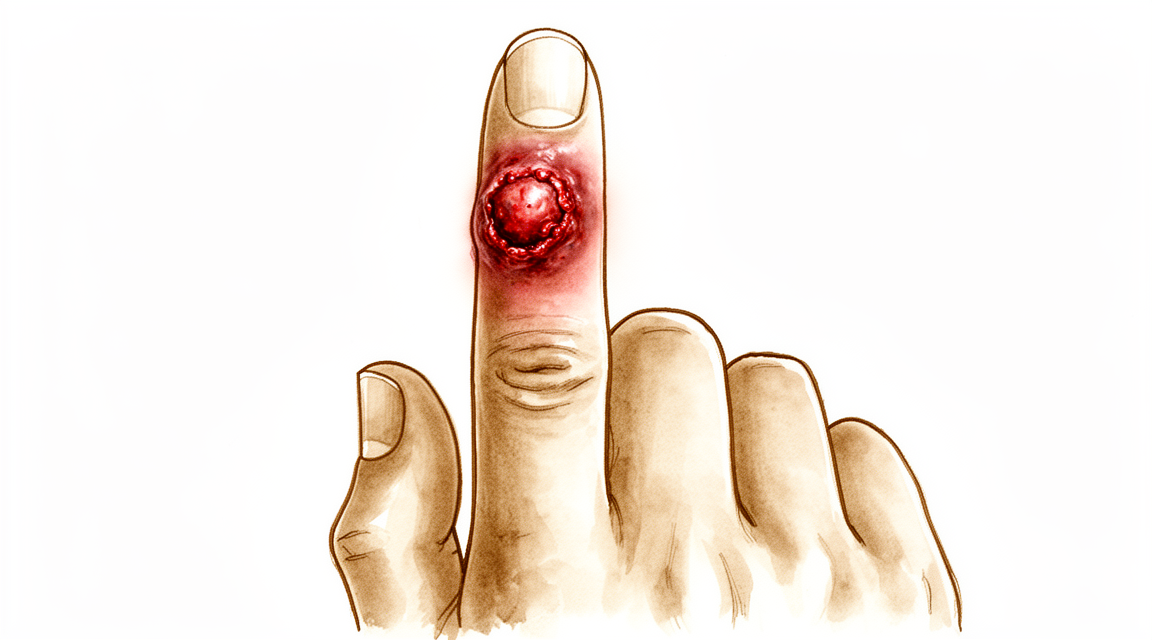
A hand infection usually hurts in one spot. The skin over it may be red, warm and swollen. The pain often gets worse when you move the finger or grip something. Resting the hand settles it a little, but the soreness does not go away on its own.
Everyday tasks become hard. Doing up buttons, turning a key, holding a cup of tea or typing can all sting. If the infection is in a finger tendon sheath (the tunnel the bending tendon slides through), the whole finger may be swollen and held slightly bent. Straightening it hurts, and the pain is there even when someone else tries to straighten it gently. If a joint is infected, that joint is swollen, tender and warm, and moving it either way is quite painful.
Some infections spread along the skin as red, tender streaks, and the glands in your armpit may become sore. Swelling can make the back of the hand look puffy, and it can be hard to tell where fluid has collected. Night-time can be uncomfortable because swelling builds up when the hand is still.
Most infections come on over hours or days rather than weeks. If the redness, swelling and pain are getting worse instead of better, that points to infection rather than a simple sprain. Some conditions look almost identical, including gout, an insect bite, a reaction to a splinter or a flare of arthritis, so the cause is not always obvious at first.
Tell your surgeon if you have diabetes, kidney disease, or a condition or medication that weakens your immune system. These change how an infection behaves and how it needs to be treated. The same goes for any infection that has not settled after antibiotics or after a wound has been cleaned out, as some slower-growing infections need special tests to identify.
With prompt care, most soft tissue hand infections resolve fully. The risk with waiting is that stiffness, permanent finger bending or, in severe cases, loss of the finger can follow.
What's actually happening
Your hand is a crowded place. Twenty-seven bones sit close together under skin that is thin on the back of the hand and tightly fixed in the palm. Tendons, the ropes that pull your fingers, slide through narrow tunnels. One of these tunnels, the flexor sheath, wraps around the bending tendon of a finger and is lined with a slick layer that feeds and lubricates the tendon. When bacteria get in through a cut, a splinter or a puncture wound, that closed space gives them nowhere to spread but along the tunnel.
The swelling is the real problem. Inside a tunnel like that, there is no room for swelling, so pressure builds up. If the pressure keeps rising, it can squeeze off the blood supply to the tendon itself. The tendon can then scar down to the tunnel around it, leaving the finger stiff even after the infection itself has cleared. That is why a tendon sheath infection needs treatment quickly rather than waiting a few days.
Other spots have their own traps. The fat pad at your fingertip is divided into small sealed pockets by tough strands, so an infection there (a felon) builds pressure fast and can spread to the bone or the nearby joint. The skin beside your fingernail can also harbour a slow, smouldering infection (chronic paronychia), often from a yeast, where moisture sneaks under the cuticle and keeps it inflamed. And in some people the tendon tunnels of the thumb and little finger connect, so infection can track from one side of the palm to the other.
Most hand infections are caused by bacteria that normally live on skin, entering through a break. Some come from bites, human or animal. Diabetes, steroid medicines or a weakened immune system make it easier for infection to take hold and reach deeper structures like tendon, bone or joint. That is why your surgeon will ask about your health history, and why early treatment matters: with prompt care, most soft tissue infections settle fully, while delay risks lasting stiffness.
What we can do about it
Dr Kieran Hirpara, an upper-limb surgeon at Mater Private Hospital Rockhampton, treats hand infections by acting quickly, because delay is what causes lasting damage. Patients are generally referred to our clinic by their GP; if a physiotherapist has suggested you see us, you will still need a referral from your GP in order to be eligible for the Medicare rebate. At that visit we take a history, examine your hand and arrange any tests needed to work out what is growing and how deep it has gone.
The first step in many early infections is non-surgical. If a tendon sheath infection is caught within 48 hours of symptoms starting, antibiotics and a splint may stop it spreading. You would then be watched closely, and if things do not settle quickly we would move to surgery rather than wait. After any treatment, splinting the hand in a protective position and then moving the fingers early helps prevent stiffness. Rehabilitation matters here: an infected hand that is not moved will stiffen, so therapy is part of the plan, not an optional extra.
Antibiotics are the other medical half of treatment. The first prescription is chosen to cover the bacteria most likely to be causing your infection, and once lab results show exactly which germ it is, we switch to the antibiotic that suits it. Some infections need antibiotics through a drip rather than tablets, and for serious infections a course can run 4 to 6 weeks. If your immune system is weakened by illness or medicines such as steroids, we treat faster and more aggressively, because these infections can become serious more quickly. Bites, human or animal, usually need preventive antibiotics as well.
Surgery is considered when there is pus to drain or when the infection has reached tendon, bone or joint. An abscess or a collection under the skin needs releasing so the pressure can escape, and the wound is often packed at first to keep draining. A fingertip infection (a felon) or an infection beside the nail (paronychia) is drained through a small cut, sometimes with part of the nail removed. A tendon sheath infection needs the tunnel washed out, and a bone infection (osteomyelitis) needs the dead tissue cleaned away along with long antibiotics. One important exception: if a blister on your finger turns out to be a viral infection (herpetic whitlow), surgery is not used for it, and cutting it open can make things worse.
What to expect
Most hand infections caught early settle fully with treatment. With prompt care, most soft tissue infections resolve completely, and the hand returns to normal. The sooner you are seen, the better your chances of avoiding stiffness or lasting damage.
How long recovery takes depends on how deep the infection went. A skin or nail infection may settle within days of drainage or antibiotics. A tendon sheath infection, a bone infection or an infection in a joint takes longer, and some need weeks of antibiotics. Even after the infection itself has cleared, the finger may stay stiff for a while. Moving your fingers early, once your surgeon says it is safe, helps prevent that stiffness from becoming permanent.
If treatment is delayed, the outlook is less certain. A tendon sheath infection that has been present for days can scar the tendon to its tunnel, leaving the finger stiff even after the infection is gone. Severe infections can still lead to lasting loss of function or, in some cases, loss of the finger despite thorough and timely treatment. That is why these infections are treated as urgent rather than watched for a few days.
Some infections behave differently. Infections in people with diabetes or a weakened immune system can spread faster and reach deeper structures, so they need more aggressive treatment and sometimes more than one operation. Slower-growing infections, such as those caused by mycobacteria (a family of germs related to the one that causes tuberculosis), need long courses of antibiotics combined with surgery to clear them, and recovery stretches over months rather than days.
You will usually be seen again after treatment to check that the infection is clearing and that your hand is moving well. Keep those appointments even if things feel better, because some problems only show up as swelling settles. If pain, redness or swelling return after an infection seemed to be settling, contact your surgeon rather than waiting it out.
When to see someone
Hand infections are time-critical. The damage from delay happens fast, so do not wait to see whether things settle.
Go to an emergency department if you have red streaks running up your hand or arm, if the whole finger is swollen, bent and too painful to straighten, or if the skin is rapidly darkening, blistering or breaking down. The same applies if you feel feverish and unwell alongside the hand symptoms, or if the hand has been injured and is now severely swollen and tense. These can signal a spreading or deep infection that needs same-day assessment and treatment.
Ask for urgent review, the same day if possible, if the pain is severe and worsening, if a finger joint is hot, swollen and too painful to move, or if you can see pus collecting under the skin or beside a nail. An infection that has not improved after a day or two of antibiotics also needs review rather than waiting out the prescription.
See your GP promptly for any hand infection at all, even a small one. This matters more if you have diabetes, kidney disease, or a condition or medication that weakens your immune system, because infections in these situations can spread faster and reach deeper. Tell your GP about any recent animal or human bite, puncture wound, or work and travel history that might point to an unusual germ.
If an infection keeps returning or never fully settles despite treatment, ask for a specialist review, as some slow-growing infections need specific tests to identify.
In more depth
Advanced reading: the deeper science (optional)
This section goes further than you need for your own treatment decisions. Hand infections are worth the extra reading because the antibiotics most people are given first are, in this specific setting, the wrong ones, and because one hand infection is a surgical emergency that is regularly mistaken for a minor one.
The commonest organism resists the commonest prescriptions
A ten-year longitudinal study of 815 urban hand infections found that although the annual incidence of MRSA has declined overall, it remains the most common pathogen, while resistance to clindamycin and levofloxacin consistently increased. The authors' conclusion is specific: empirical antibiotic therapy for hand infections should avoid penicillin, beta-lactams, clindamycin and levofloxacin [1].
That is a longer list of exclusions than most people expect, and it covers much of what is routinely prescribed for skin infection elsewhere on the body. The practical implication is that a hand infection not settling on a first-line antibiotic is a common and predictable event rather than an unusual one, and is a reason to seek review rather than to persist.
Local resistance patterns vary, so this is a principle rather than a prescription, but it explains why hand infections are often escalated faster than their size suggests.
Flexor sheath infection: the details that change the outcome
Pyogenic flexor tenosynovitis, infection inside the closed tunnel a flexor tendon runs through, is the one that behaves differently from other hand infections. The sheath is a confined space with a poor blood supply, so pus under pressure inside it can destroy the tendon's gliding surface within days.
Across 763 patients, two things improved range of motion: using antibiotics as a component of therapy, and catheter irrigation rather than open washout. The evidence supported both early treatment and systemic antibiotic use [2].
Note that the outcome measured is range of motion, not eradication of infection. The infection can be cured while the finger is left stiff, which is the real cost of delay here. The four classic findings, a uniformly swollen "sausage" finger, held slightly bent, tender along the whole tendon sheath, and severe pain on passively straightening it, are worth recognising, because that combination warrants same-day assessment rather than a course of tablets.
The one that is a true emergency
Necrotising fasciitis originating in the hand is rare and rapidly destructive. The systematic review of 161 cases concludes that early diagnosis is of paramount importance, and that early, decisive surgical intervention should have a low threshold, particularly where risk factors are present [3].
"Low threshold" is deliberate wording. This is a diagnosis where waiting for certainty costs limbs. The features that separate it from ordinary cellulitis are pain out of proportion to the appearance, rapid progression over hours rather than days, and systemic illness, fever, confusion, feeling profoundly unwell, alongside what may look like a modest area of redness.
Why a small wound can be misleading
Two mechanisms produce infections much deeper than the visible wound suggests. A bite over a knuckle sustained by striking a mouth drives oral organisms through skin, extensor tendon and joint capsule in one movement, and the skin then closes over the contamination. A puncture into the palm can seed the flexor sheath through an entry point that seals within a day.
In both, the visible wound is a poor guide to the depth of the problem, and the pattern of pain — particularly pain on moving the finger, rather than pain at the wound itself, is more informative than the appearance of the skin.
References for the advanced reading
- Kistler JM, Thoder JJ, Ilyas AM. MRSA incidence and antibiotic trends in urban hand infections: a 10-year longitudinal study. Hand (N Y). 2018;14(4):449-54.
- Giladi AM, Malay S, Chung KC. A systematic review of the management of acute pyogenic flexor tenosynovitis. J Hand Surg Eur Vol. 2015;40(7):720-8.
- Christopoulos G, Khoury A, Johnson M, Sergentanis TN. Necrotizing fasciitis originating in the hand: a systematic review and meta-analysis. Hand (N Y). 2022;19(4):568-74.
Evidence & references
This is the clinical evidence summary written for health professionals. It is technical, and it lists the research this page was built from. You do not need to read it to understand your treatment or to make a decision about it.
Overview
- Treatment of acute hand infections requires a combination of surgical intervention (incision and drainage) and appropriate antibiotic therapy tailored to the organism and infection severity [1].
- Fungal infections of the hand are most commonly cutaneous infections involving the skin and nails [2].
- Cutaneous fungal infections of the hand can be treated with topical or local therapy [2].
- Mycobacterium tuberculosis must be maintained in the differential diagnosis for subacute presentations of flexor tenosynovitis or carpal tunnel syndrome of the hand [3].
- Mycobacterium tuberculosis must be considered in the differential diagnosis of subacute flexor tenosynovitis or carpal tunnel syndrome even in nonendemic areas and in the absence of past tuberculosis infection or exposure [3].
- Stiffness and contracture are the most common sequela of pyogenic flexor tenosynovitis [4].
- Stiffness and contracture resulting from pyogenic flexor tenosynovitis benefit from early motion and hand therapy [4].
- Tuberculous tenosynovitis can be overlooked as a cause of chronic tenosynovitis [5].
- Tuberculous tenosynovitis is particularly easily overlooked in immunocompetent young people lacking risk factors [5].
- The majority of patients with fungal tenosynovitis of the hand and upper extremity were successfully treated with surgical debridement and antimicrobial therapy [6].
- Fungal tenosynovitis of the hand and upper extremity has a recurrence rate of 30% [6].
- A recurrence rate of 30% in fungal tenosynovitis highlights the need for close post-treatment follow-up [6].
- Management of fungal osteomyelitis and fungal septic arthritis is challenging, especially in immunocompromised patients [7].
- Outcomes for fungal osteomyelitis and fungal septic arthritis have historically been poor due to a lack of evidence-based treatment guidelines [7].
- Invasive infections may require a combination of serial surgical debridement and a multidrug antibiotic regimen [8].
Anatomy & Pathophysiology
General Principles & Diagnosis
- Chronic hand infections can be caused by viruses, bacteria, mycobacteria, fungi, Prototheca, protozoa, parasites, and insects [14].
- Hand infections may be superficial (skin or nails), subcutaneous, or deep (nerves, tendons/tenosynovium, joints/synovium, bone, and rarely muscles) [14].
- Chronic lesions of the hand have a nonspecific presentation, and early biopsy and cultures facilitate diagnosis [14].
- Infection must be included in the differential diagnosis for any chronic lesion of the hand, particularly in immunocompromised patients [14].
- An infection that does not respond to antibiotics, incision, drainage, or debridement is suspect for a chronic or atypical etiology [14].
- The adage "culture a tumor and biopsy an infection" is recommended when an unusual lesion is encountered to avoid diagnostic delay [14].
- Nontuberculous mycobacterial (NTM) infections of the hand are now more common than Mycobacterium tuberculosis infections [14].
- Tenosynovial infections are far more common than joint and bone infections in mycobacterial hand disease [14].
- Hansen disease is the most common chronic infection affecting the hand in developing countries and infects peripheral nerves [14].
- High suspicion for Hansen disease is warranted when peripheral neuropathy of the ulnar nerve, with or without nerve enlargement, is seen in an immigrant [14].
- Consultation with an infectious disease specialist, microbiology personnel, and a pathologist improves diagnostic accuracy for chronic hand infections where organisms are scarce or slow-growing [14].
Bacterial Pathophysiology
- Paronychia contains polymicrobial aerobic and anaerobic flora, with mixed aerobic/anaerobic flora isolated in half of the patients [9].
- Human bite injuries to the hand involve 42 different bacterial species identified in normal human mouth flora [48].
- The mechanism for introducing anaerobic bacteria into the joint during a clenched-fist injury involves the lacerated tendon gliding proximally when the finger is extended, creating a closed, anaerobic environment [48].
- Actinomycosis is caused by endogenous human flora, most commonly Actinomyces israelii, which is a normal inhabitant of the oral cavity [32].
- Actinomycosis spreads contiguously in a slow but progressive manner, ignoring tissue planes [32].
- The identification of "yellow sulfur granules" from a draining sinus or pus is diagnostic for actinomycosis [32].
- Actinomycosis cultures are positive in only 25% of cases, often because specimens were not sent in anaerobic media [32].
- Mycetoma presents with a clinical triad of tumification, draining sinuses, and granules in the discharging pus [33].
- Mycetoma grains are 0.2 to 5.0 mm in diameter and may be black, white, yellow, pink, or red depending on the causal organism [33].
- Mycetoma infection begins in the skin and subcutaneous tissues and tends to follow fascial planes as it spreads proximally and mediolaterally [33].
- With increasing depth, mycetoma progressively infects and destroys all connective tissues and eventually bone [33].
Fungal Pathophysiology
- Cutaneous fungal infections are caused by fungi that infect and metabolize keratin, preventing invasion beneath the skin [29].
- Candida albicans and dermatophytes (Trichophyton, Microsporum, and Epidermophyton) cause the majority of chronic cutaneous and nail infections [29].
- Chronic cutaneous C. albicans infection occurs in the moist palms and webs of a "clenched fist" in patients with spasticity [29].
- C. albicans involvement in chronic paronychia is characterized by mycelium in the outer epidermis with no involvement of the dermis [10].
- Fungal tenosynovitis has a recurrence rate of 30% despite treatment with surgical debridement and antimicrobial therapy [6].
- Management of fungal osteomyelitis and fungal septic arthritis is challenging, especially in immunocompromised patients, with historically poor outcomes due to a lack of evidence-based treatment guidelines [7].
Mycobacterial Pathophysiology
- Mycobacterium tuberculosis must be maintained in the differential diagnosis for subacute flexor tenosynovitis or carpal tunnel syndrome, even in nonendemic areas and without past exposure [3].
- Tuberculous tenosynovitis can be overlooked as a cause of chronic tenosynovitis, particularly in immunocompetent young people lacking risk factors [5].
- Extrapulmonary TB accounts for almost 20% of all TB cases in the general population and 72% of all cases in U.S. AIDS patients [30].
- Skeletal TB represents 1% of all TB and 10% of all extrapulmonary TB in the United States [30].
- Of skeletal TB cases, 10% occur in the upper extremity, with 4% specifically in the hand and fingers and an additional 3% in the hand accompanied by multifocal sites elsewhere [30].
- Tuberculous osteomyelitis of the hand typically occurs in the phalanges (tuberculous dactylitis) and metacarpals [30].
Anatomical Structures & Compartments
- The hand consists of 19 bones, 17 articulations, and 19 muscles situated entirely within the hand, plus approximately the same number of tendons activated by forearm muscles [11].
- The skeleton of the hand and wrist consists of 27 bones, of which 19 are long bones [19].
- The thumb ray is the shortest, composed of a metacarpal and two phalanges, and is more mobile and proximal than the other rays [19].
- The trapezium is angled out in front of the carpal plane, allowing the first metacarpal to make an angle of about 45 degrees with the second metacarpal in the sagittal plane [19].
- The transverse axis of the palm is oblique, forming an acute angle of approximately 75 degrees with the longitudinal axis [19].
- The extrinsic extensors run through six different fibroosseous retinacular compartments at the wrist level [18].
- The first extensor compartment contains the abductor pollicis longus and the extensor pollicis brevis [18].
- The second extensor compartment contains the extensor carpi radialis longus and the extensor carpi radialis brevis [18].
- The third extensor compartment contains the extensor pollicis longus, which turns abruptly radialward about Lister tubercle [18].
- The fourth extensor compartment contains the extensor indicis proprius lying deep to the four tendons of the extensor digitorum communis [18].
- The fifth extensor compartment contains the extensor digiti quinti [18].
- The sixth extensor compartment contains the extensor carpi ulnaris [18].
- The sagittal bands stabilize the digital extensor tendons over the midline of the metacarpophalangeal joint and transmit proximal extrinsic extensor tension to the proximal phalanx [18].
- Rupture or attenuation of the sagittal band fibers allows the extrinsic extensor tendon to sublux to the ulnar side of the metacarpal head, causing ulnar deviation of the finger [18].
- The flexor digitorum profundus inserts on the proximal volar aspect of the distal phalanx and flexes the distal, proximal interphalangeal, and metacarpophalangeal joints [18].
- The flexor digitorum superficialis inserts via radial and ulnar slips into the proximal metaphysis of the middle phalanx and primarily flexes the proximal interphalangeal joint [18].
- The tenosynovial sheath of the flexor pollicis longus is continuous with the radial bursa, and the sheath to the little finger is continuous with the ulnar digital bursa [28].
- In some patients, the radial and ulnar bursae communicate, allowing a horseshoe abscess to spread between the thumb and little finger if infection occurs in either flexor tendon sheath [28].
- The fibroosseous tunnel of the digital flexor sheath consists of annular pulleys for mechanical stability and cruciate pulleys for flexibility [28].
- The A2 and A4 annular pulleys are the most essential in maintaining the mechanical advantage of the flexor tendons [28].
- The tenosynovium lining the fibroosseous tunnel supplies nutrition and lubrication to the poorly vascularized flexor tendons [28].
- Within the flexor tendon sheath, tendon vascularity is supplied via the vincula system, specifically the vinculum longus and brevis [28].
- There are seven interosseous muscles in the hand: four dorsal and three volar [24].
- The dorsal interossei are abductors, while the volar interossei are adductors [24].
- The middle finger has two dorsal interossei (abductors) and no volar interossei (adductors) because the central axis of the hand lies within it [24].
- The deep head of each dorsal interosseous muscle forms a lateral band that flexes and weakly abducts the proximal phalanx while extending the middle and distal phalanges [24].
- The volar interossei form the ulnar lateral band of the index finger and the radial lateral band of the ring and little fingers [24].
- The abductor digiti quinti and flexor digiti quinti brevis are structurally and functionally similar to the superficial and deep heads of the dorsal interossei, respectively [24].
- The opponens digiti quinti arises from the pisohamate ligament and the hook of the hamate and inserts onto the ulnar side of the diaphysis of the fifth metacarpal [24].
- The flexor retinaculum maintains and restrains the tendons of the extrinsic flexors within the carpal canal, keeping them close to the axis of flexion–extension of the wrist [26].
- The metacarpal arch is adaptable due to the mobility of the peripheral metacarpals, which can deepen the palmar concavity as they approach each other [26].
- The index metacarpal is the most firmly fixed, while the fifth metacarpal is semi-independent with a range of flexion–extension of approximately 20 degrees [26].
- The metacarpophalangeal joints are the keystones of the longitudinal arches and are stabilized by collateral ligaments and the thick volar articular capsule (volar plate) [26].
- The volar plates are interconnected by the transverse interglenoid ligament, which ties together the anterior glenoid ligaments of the metacarpophalangeal articulations [26].
- The palmar skin is subdivided into two zones by the oppositional crease of the thumb: a radial mobile portion and an ulnar/distal fixed portion [23].
- The central triangular part of the palm has fixed, poorly vascularized skin covering almost directly the superficial palmar aponeurosis [23].
- Incisions made along the sides of the diamond-shaped cutaneous contact zones in flexed digits present a minimal chance of retraction [23].
- The dorsal slope of the web spaces has supple, non-adherent skin, while the palmar surface is flat and densely adherent to the commissural skeleton [23].
- The "princeps pollicis" artery is the terminal branch of the radial artery that crosses the first intermetacarpal space and runs along the ulnar side of the first metacarpal [27].
- Only 15% of anatomical dissections of the thumb palmar arteries fall into the classical "typical" category [27].
- In the second segment of the thumb, the ulnar collateral artery is often easier to dissect and larger than the radial collateral artery [27].
- The dorsal arteries of the thumb originate from palmar arteries (princeps, commissural, or anastomoses) at the level of the first metacarpal and head distally along the sides of the distal phalanges [27].
Classification
Flexor Tenosynovitis
- Kanavel identified four cardinal signs of suppurative flexor tenosynovitis: tenderness over the involved sheath, rigid positioning of the finger in flexion, pain on attempts to hyperextend the fingers, and swelling of the involved part [16].
- Of the four cardinal signs of suppurative flexor tenosynovitis, tenderness over the flexor sheath is considered the most significant [16].
- The Michon classification categorizes flexor tenosynovitis into three intraoperative stages based on characteristic findings [16].
- Michon stage I flexor tenosynovitis is characterized by increased fluid in the sheath, primarily serous exudate [16].
- Michon stage II flexor tenosynovitis is characterized by cloudy or purulent fluid and granulomatous synovium [16].
- Michon stage III flexor tenosynovitis is characterized by septic necrosis of the tendon, pulleys, or tendon sheath [16].
- The Michon classification has not been validated [16].
- Direct inoculation is the most common cause of infectious flexor tenosynovitis [16].
- Adjacent spread from a local infection or hematogenous spread are possible causes of infectious flexor tenosynovitis [16].
- While the flexor sheath is usually involved in infectious tenosynovitis, the radial and ulnar bursae may also be involved [16].
Subcutaneous Fungal Infections
- There are three major subcutaneous fungal infections of the hand: chronic paronychia, sporotrichosis, and phaeomycotic cysts [44].
- Chronic paronychia is usually initially misdiagnosed as a bacterial infection [44].
- A phaeomycotic cyst is a deep dermal or subcutaneous infection resulting from the traumatic implantation of a dematiaceous (pigmented) fungus such as Exophiala or Phialophora [44].
Mycetoma
- Mycetoma of the hand and upper extremity has been graded into five stages [47].
- Mycetoma stage I is the nodular stage, characterized by a small, firm, painless subcutaneous nodule or nodules under the skin [47].
- The duration of mycetoma stage I is 2 to 3 months [47].
- Mycetoma stage II is the sinusoidal stage, where nodules become abscesses and drain granules through sinuses to the surface of the skin or to the surface of an ulcerated nodule [47].
- The duration of mycetoma stage II is 4 to 12 months [47].
- Mycetoma stage III is the skeletal stage, where the infection progresses to osteomyelitis [47].
- Mycetoma stage IV is the skeletal stage, where limb deformity occurs over the course of a year or more [47].
- Mycetoma stage V is the metastatic stage, where lesions of the hand may metastasize to the axilla and the chest wall [47].
- Radiographic signs of mycetoma include thinning of the metacarpal, bone erosions and cavities, sclerosis, and periosteal reaction [47].
- A network of connected sinuses is present in the soft tissues from the bone to the skin in mycetoma [47].
- Constitutional symptoms are absent in mycetoma unless there is superimposed bacterial infection [47].
- Pain is not a predominant symptom in mycetoma [47].
- In 80% of cases, patients postpone seeking medical care for mycetoma until the second or third stage is reached due to lack of pain [47].
Clinical Presentation
General Principles and Diagnostic Approach
- Chronic lesions of the hand, both superficial and deep, have a nonspecific presentation [14].
- Early biopsy and cultures facilitate diagnosis of chronic hand infections [14].
- Infection must be included in the differential diagnosis for any chronic lesion of the hand [14].
- In an immunocompromised patient, infection must always be included in the differential diagnosis [14].
- An infection that does not respond to antibiotics, incision, drainage, or debridement is suspect [14].
- "Culture a tumor and biopsy an infection" is a useful adage when an unusual lesion is encountered [14].
- With a careful history and physical examination, the location of the infection, the extent of spread, and the presence of swelling, lymphangitis, lymphadenitis, and joint involvement can be determined [38].
- Fluctuance can be difficult to identify in the hand [38].
- Radiographs are helpful in revealing bone injury [38].
- Radionuclide scanning may show bone infection [38].
- MRI and ultrasound may localize an abscess [38].
- The specificity of all inflammation markers (WBC, C-reactive protein, ESR) was inadequate for diagnosis of finger infections [38].
- If any fluid or tissue is obtained, it is sent to the laboratory for Gram stain, crystals, culture, and antibiotic sensitivity determinations [38].
- Specific requests are usually made of the laboratory to culture for aerobic and anaerobic bacteria, mycobacteria, and fungi [38].
Specific Infection Types
- Tuberculous tenosynovitis can easily be overlooked as a cause of chronic tenosynovitis, particularly in immunocompetent young people lacking risk factors [5].
- M tuberculosis should be maintained in the differential diagnosis of a subacute presentation of flexor tenosynovitis or carpal tunnel syndrome of the hand, even in nonendemic areas and in the absence of past tuberculosis infection or exposure [3].
- In chronic paronychia lesions studied, C. albicans involvement was present with mycelium in the outer epidermis but no involvement of the dermis [10].
- Finger joint infections usually result from the spread of infection in adjacent structures, direct penetration of the joint, and less commonly, hematogenous spread [34].
- The involved joints in finger joint infections are usually swollen, tender, and warm, and the finger is usually held in slight flexion [34].
- Careful inspection and palpation may reveal a fluctuant joint effusion in finger joint infections [34].
- Active and passive motions are usually quite painful in finger joint infections [34].
- Fluid obtained from a septic joint is usually turbid, opaque, or grossly purulent [34].
- The joint fluid WBC is usually greater than 50,000/mm³ in septic joints [34].
- Lowering the cell count threshold to 17,500 increases the sensitivity of the diagnosis of septic arthritis to 83% [34].
- The polymorphonuclear count is usually greater than 75% in septic joint fluid [34].
- The synovial fluid glucose is 40 mg or less in septic joints [34].
- Blue nails and clubbing are both a sign of HIV infection [21].
- Red fingers syndrome has been reported in patients with HIV and hepatitis C infection [21].
- Fingers of patients with AIDS may be red with painless erythema and periungual telangiectasia [21].
- Nails in patients with AIDS may be blue with painless clubbing [21].
- Diagnosis of AIDS should be considered when there is an unusual hand infection [21].
- Diagnosis of AIDS should be taken into consideration for any patient who needs a repeat drainage or debridement procedure [21].
Differential Diagnosis Considerations
- Conditions that can be confused with hand infections include gout, acute calcium deposition, pseudogout, pyogenic granuloma, insect bites, pyoderma gangrenosum, foreign bodies, factitious lesions, herpetic gangrenes, metastatic lesions, silicone synovitis, granuloma annulare, rheumatoid arthritis, nonspecific tenosynovitis, reactions to intravenous medications (e.g., chemotherapeutic agents), and Sweet syndrome [38].
Investigations
- MRI, CT, and 3-phase bone scans may add to the radiographic diagnosis made on plain radiographs for hand osteomyelitis [42].
- MRI, CT, and 3-phase bone scans have poor sensitivity and specificity for the diagnosis of hand osteomyelitis [42].
- Deep tissue cultures are the most accurate method of diagnosis for hand osteomyelitis [42].
- The presence of an indolent course in hand osteomyelitis suggests a fungal or mycobacterial cause [42].
- Incisional biopsy is indicated for patients with lytic destructive lesions of the bones of the hand [46].
- Biopsy must be strongly considered before the initiation of treatment for presumed deep infection because misdiagnosis is the most common error in diagnosis [46].
- MRI is particularly useful in delineating the extent of bone and soft tissue involvement in Ewing’s sarcoma that may not be apparent on plain radiographs [46].
Treatment
General Principles
- Early suspicion, biopsy, and diagnosis of a chronic infection is the mainstay of all ensuing treatment principles [14].
- Pharmacologic treatment of a chronic hand infection requires close monitoring for serious side effects and drug resistance [14].
- Consultation with an infectious disease specialist, microbiology personnel, and a pathologist improves the accuracy of a diagnosis when organisms are scarce, slow to grow, and require special media and temperature to grow [14].
Fingertip Infections
- Early-stage paronychia can be managed with warm soaks and antistaphylococcal antibiotics [35].
- When paronychia has progressed to abscess formation, drainage, with or without removal of the involved portion of the nail plate from the fold, is required [35].
- Following drainage of paronychia, cultures should be taken whenever possible, and antibiotics as well as warm soapy soaks should be recommended [35].
- Routine oral antibiotics usually are not effective for chronic paronychia [35].
- Nail plate removal and eponychial marsupialization is the recommended treatment for chronic paronychia [35].
- The “Swiss roll” technique has also been described to treat chronic paronychia [35].
- Surgical drainage is the mainstay of treatment for felon [35].
- Drainage of a felon should be accomplished without violating the flexor sheath or DIP joint [35].
- A midaxial incision along the non–pressure-bearing side of the digit or a longitudinal incision over the volar pulp skin is preferred for felon drainage [35].
- The wound from a felon drainage is left open, and warm soapy soaks are initiated to allow drainage [35].
- Surgical drainage or débridement of herpetic whitlow lesions is contraindicated [35].
- When administered early, oral acyclovir may lessen symptom severity in herpetic whitlow [35].
- In children with herpetic whitlow, a 10-day course of a penicillinase-resistant oral antibiotic is required if cultures from blistering dactylitis reveal growth [35].
Cellulitis and Abscesses
- Empiric coverage for CA-MRSA should be provided if local prevalence rates exceed 10% to 15% [15].
- Ultrasonography has a 78.4% positive predictive value of identifying an abscess and a negative predictive value of 90% to rule out an abscess [15].
- Early antibiotic administration has not been shown to greatly reduce bacterial culture growth from hand abscess so long as decompression is performed within 24 hours [15].
- After surgical decompression, débridement, and irrigation of the abscess, packing is often used, at least initially, to allow for continued drainage [15].
- No difference has been shown between different soaks and daily dressing changes in clearing the infection postoperatively [15].
- Infections in immunosuppressed patients are more likely to involve deeper structures such as joints, bone, tendons, and muscle [15].
- Immunosuppressed patients with hand infections should be treated rapidly and aggressively as their potential for increased morbidity is high [15].
Flexor Tenosynovitis
- When early tenosynovitis is suspected, immediate treatment with antibiotics and splinting may abort the spread of infection if the patient’s symptoms have been present for less than 48 hours [16].
- If nonsurgical treatment is selected for early tenosynovitis, patients should be followed closely with a low threshold for hospital admission [16].
- Good results have been reported in patients with pyogenic flexor tenosynovitis treated with surgical drainage, followed by outpatient management with intravenous antibiotics, wound care, and rehabilitation [16].
- If gross pus is obtained from the aspiration of the digital flexor sheath, surgical drainage usually is indicated [16].
- Vancomycin is effective for infections caused by gram-positive bacteria [16].
- Ciprofloxacin is most effective for gram-negative organisms, including Pseudomonas [16].
- The Michon classification recommends minimally invasive drainage and catheter irrigation for stage I or II flexor tenosynovitis [16].
- The Michon classification recommends extensile open debridement and possible amputation for stage III flexor tenosynovitis [16].
- The use of a continuous postoperative irrigation catheter has not been shown to improve outcomes, but rather increases postoperative pain and adds difficulty to postoperative care [16].
- Stiffness and contracture are the most common sequela of pyogenic flexor tenosynovitis and benefit from early motion and hand therapy [4].
- Invasive infections may require a combination of a serial surgical debridement and a multidrug antibiotic regimen [8].
Fungal Infections
- Fungal infections of the hand are most commonly cutaneous infections involving the skin and nails and can be treated with topical or local therapy [2].
- Although the majority of patients with fungal tenosynovitis were successfully treated with surgical debridement and antimicrobial therapy, a recurrence rate of 30% highlights the need for close post-treatment follow-up [6].
- Fluconazole and AmB are the drugs of choice for use in patients with deep candidiasis [20].
- For periprosthetic fungal infection, radical synovectomy, tenosynovectomy, and removal of the implant are recommended in addition to chemotherapy combination of amphotericin B and 5-fluorouracil [20].
Mycobacterial Infections
- The case highlights the importance of maintaining M tuberculosis in the differential diagnosis of a subacute presentation of flexor tenosynovitis or carpal tunnel syndrome of the hand, even in nonendemic areas and in the absence of past tuberculosis infection or exposure [3].
Complications
Flexor Tenosynovitis
- Persistent tenosynovial infection can cause pressures within the flexor sheath to exceed 30 mm Hg, rendering tendons ischemic [16].
- Delay in treatment of flexor tenosynovitis may lead to damage to the flexor tendon, resulting in adhesion, loss of excursion, finger stiffness, and impaired function [16].
- The prognosis for function is poor if a flexor tenosynovitis infection produces pus that must be drained [16].
- If an open technique is used for flexor tenosynovitis drainage, healing and rehabilitation are prolonged and full motion may not be regained [16].
- Patients presenting with ischemic changes in flexor tenosynovitis had amputation rates of 59% [16].
- Patients presenting with subcutaneous purulence in flexor tenosynovitis had amputation rates of 8% [16].
- The use of a continuous postoperative irrigation catheter for flexor tenosynovitis has not been shown to improve outcomes, but rather increases postoperative pain and adds difficulty to postoperative care [16].
Fungal Infections
- Fungal infections following organ transplantation can have an associated mortality as high as 76% [40].
- Histoplasmosis necrotizing myofasciitis in severe burns of the upper extremity can result in fatality [40].
- Cutaneous histoplasmosis in a renal transplant patient with hand and forearm necrotizing myofasciitis required below-elbow amputation [40].
- Recurrent histoplasmosis infection after multiple antifungal medications and debridements may require above-elbow amputation to save the patient's life [40].
General Infection Complications
- Hand involvement is an independent risk factor for hospital admission for patients presenting to the emergency department with cellulitis [15].
- Patients with immunosuppression are at a higher risk for atypical infections [15].
- Patients with immunosuppression have a high potential for increased morbidity from hand infections [15].
- M tuberculosis must be maintained in the differential diagnosis of subacute flexor tenosynovitis or carpal tunnel syndrome, even in nonendemic areas and in the absence of past tuberculosis infection or exposure [3].
Recovery
- Stiffness and contracture following pyogenic flexor tenosynovitis benefit from early motion and hand therapy [4].
- A recurrence rate of 30% was observed in patients treated for fungal tenosynovitis of the hand and upper extremity [6].
- The 30% recurrence rate in fungal tenosynovitis highlights the need for close post-treatment follow-up [6].
- After surgical decompression, débridement, and irrigation of a hand abscess, packing is often used initially to allow for continued drainage [17].
- No difference has been shown between different soaks and daily dressing changes in clearing the infection postoperatively after hand abscess drainage [17].
- In a matched cohort study of upper extremity infections, the most frequent immunosuppressive medication was glucocorticoids [17].
- Infections in immunosuppressed patients were more likely to involve deeper structures such as joints, bone, tendons, and muscle [17].
- In a review of 74 HIV-seropositive patients treated for upper extremity infections, 26 infections (29%) required more than one operation [21].
- In a review of 74 HIV-seropositive patients treated for upper extremity infections, 11 infections (12%) resulted in amputation [21].
- Among 14 AIDS patients with hand infections, almost one-third needed multiple debridements and resulted in amputation of a finger or hand [21].
Key Evidence
- [L5] Treatment requires a combination of surgical intervention (incision and drainage) and appropriate antibiotic therapy tailored to the organism and infection severity. [1] (10.1016/j.jhsa.2014.03.031)
- [L5] Fungal infections of the hand are most commonly cutaneous infections involving the skin and nails and can be treated with topical or local therapy. [2] (10.1016/j.hcl.2020.03.009)
- [L5] The case highlights the importance of maintaining M tuberculosis in the differential diagnosis of a subacute presentation of flexor tenosynovitis or carpal tunnel syndrome of the hand, even in nonendemic areas and in the absence of past tuberculosis infection or exposure. [3] (10.5435/jaaosglobal-d-17-00083)
- [L5] Stiffness and contracture are the most common sequela and benefit from early motion and hand therapy. [4] (10.2106/jbjs.rvw.26.00015)
- [L5] Tuberculous tenosynovitis can easily be overlooked as a cause of chronic tenosynovitis, particularly in immunocompetent young people lacking risk factors. [5] (10.1007/s00402-012-1527-2)
- [L4] Although the majority of patients were successfully treated with surgical debridement and antimicrobial therapy, a recurrence rate of 30% highlights the need for close post-treatment follow-up. [6] (10.1016/j.jhsa.2016.11.014)
- [L5] Management of fungal osteomyelitis and fungal septic arthritis is challenging, especially in immunocompromised patients, and historically outcomes have been poor due to a lack of evidence-based treatment guidelines. [7] (10.5435/jaaos-22-06-390)
- [L5] Invasive infections may require a combination of a serial surgical debridement and a multidrug antibiotic regimen. [8] (10.5435/jaaosglobal-d-19-00024)
- [L4] Paronychia contains polymicrobial aerobic and anaerobic flora, with mixed aerobic/anaerobic flora isolated in half of the patients. [9] (10.1016/0266-7681(93)90063-l)
- [L4] Each lesion studied had C. albicans involvement with mycelium in the outer epidermis but no involvement of the dermis. [10] (10.1001/archderm.1962.01590090066015)
References
[1] Acute Hand Infections. The Journal of Hand Surgery. 2014. DOI: 10.1016/j.jhsa.2014.03.031
[2] Fungal Infections of the Hand. Hand Clinics. 2020. DOI: 10.1016/j.hcl.2020.03.009
[3] Flexor Tenosynovitis of the Hand Caused by Mycobacterium tuberculosis. JAAOS: Global Research and Reviews. 2018. DOI: 10.5435/jaaosglobal-d-17-00083
[4] Management of Pyogenic Flexor Tenosynovitis. JBJS Reviews. 2026. DOI: 10.2106/jbjs.rvw.26.00015
[5] Tuberculous extensor tenosynovitis of the hand. Archives of Orthopaedic and Trauma Surgery. 2012. DOI: 10.1007/s00402-012-1527-2
[6] A Rare Diagnosis: Recognizing and Managing Fungal Tenosynovitis of the Hand and Upper Extremity. The Journal of Hand Surgery. 2017. DOI: 10.1016/j.jhsa.2016.11.014
[7] Fungal Osteomyelitis and Septic Arthritis. Journal of the American Academy of Orthopaedic Surgeons. 2014. DOI: 10.5435/jaaos-22-06-390
[8] Finger Flexor Tenosynovitis From Stonefish Envenomation Injury. JAAOS: Global Research and Reviews. 2019. DOI: 10.5435/jaaosglobal-d-19-00024
[9] Paronychia: a Mixed Infection. Journal of Hand Surgery. 1993. DOI: 10.1016/0266-7681(93)90063-l
[10] Chronic Paronychia. Archives of Dermatology. 1962. DOI: 10.1001/archderm.1962.01590090066015
[11] Exam Of The Hand Wrist 2Ed. INTRODUCTION.
[14] Green S Operative Hand Surgery. GENERAL PRINCIPLES.
[15] Orthopaedic Knowledge Update 13 Ebook Without Multimedia. Bone and Soft-Tissue Infections of the Hand and Wrist > Soft-Tissue Infections > Hand Cellulitis and Abscesses.
[16] Campbell S Operative Orthopaedics 4 Volume Set. TUMORS AND TUMOROUS CONDITIONS OF THE HAND > TENOSYNOVITIS.
[17] Exam Of The Hand Wrist 2Ed. REFERENCES.
[18] A Lange Medical Book Current Diagnosis Treatment In Orthopedics Fifth Edition. 9Hand Surgery > Image DISORDERS OF THE MUSCULATURE OF THE HAND.
[19] Exam Of The Hand Wrist 2Ed. 1.1 SKELETON OF THE HAND > The osseous skeleton.
[20] Green S Operative Hand Surgery. Candidiasis.
[21] Green S Operative Hand Surgery. Clinical Manifestations of AIDS Infection in the Hands.
[23] Exam Of The Hand Wrist 2Ed. Functional cutaneous units.
[24] Green S Operative Hand Surgery. Interosseous and Hypothenar Muscles.
[26] Exam Of The Hand Wrist 2Ed. The arches of the hand > The metacarpal arch.
[27] Exam Of The Hand Wrist 2Ed. Techniques of investigation of the arterial supply by J P Melki > Vascularization of the thumb > Palmar aspect.
[28] A Lange Medical Book Current Diagnosis Treatment In Orthopedics Fifth Edition. 9Hand Surgery > FLEXOR TENDON INJURY.
[29] Green S Operative Hand Surgery. Cutaneous Fungal Infections > Etiology and Epidemiology.
[30] Green S Operative Hand Surgery. Mycobacterial Osteomyelitis.
[32] Green S Operative Hand Surgery. CHRONIC BACTERIAL INFECTIONS > Actinomycosis.
[33] Green S Operative Hand Surgery. Clinical Findings.
[34] Campbell S Operative Orthopaedics 4 Volume Set. TUMORS AND TUMOROUS CONDITIONS OF THE HAND > SEPTIC ARTHRITIS.
[35] Aaos Comprehensive Orthopaedic Review 3. Infections of the Hand* > I Fingertip Infections.
[38] Campbell S Operative Orthopaedics 4 Volume Set. TUMORS AND TUMOROUS CONDITIONS OF THE HAND > GENERAL APPROACH TO HAND INFECTIONS.
[40] Green S Operative Hand Surgery. Histoplasmosis.
[42] Orthopaedic Knowledge Update 13 Ebook Without Multimedia. Bone and Soft-Tissue Infections of the Hand and Wrist > Bone Infections.
[44] Green S Operative Hand Surgery. Subcutaneous Fungal Infections.
[46] Green S Operative Hand Surgery. BOX 59.1 Ganglions of the Hand and Wrist > Ewing's Sarcoma.
[47] Green S Operative Hand Surgery. Staging.
[48] Campbell S Operative Orthopaedics 4 Volume Set. TUMORS AND TUMOROUS CONDITIONS OF THE HAND > HUMAN BITE INJURIES.