Patients › Shoulder
Cuff Arthropathy
Rotator cuff arthropathy: shoulder arthritis following a long-standing, massive rotator cuff tear and its impact on function.
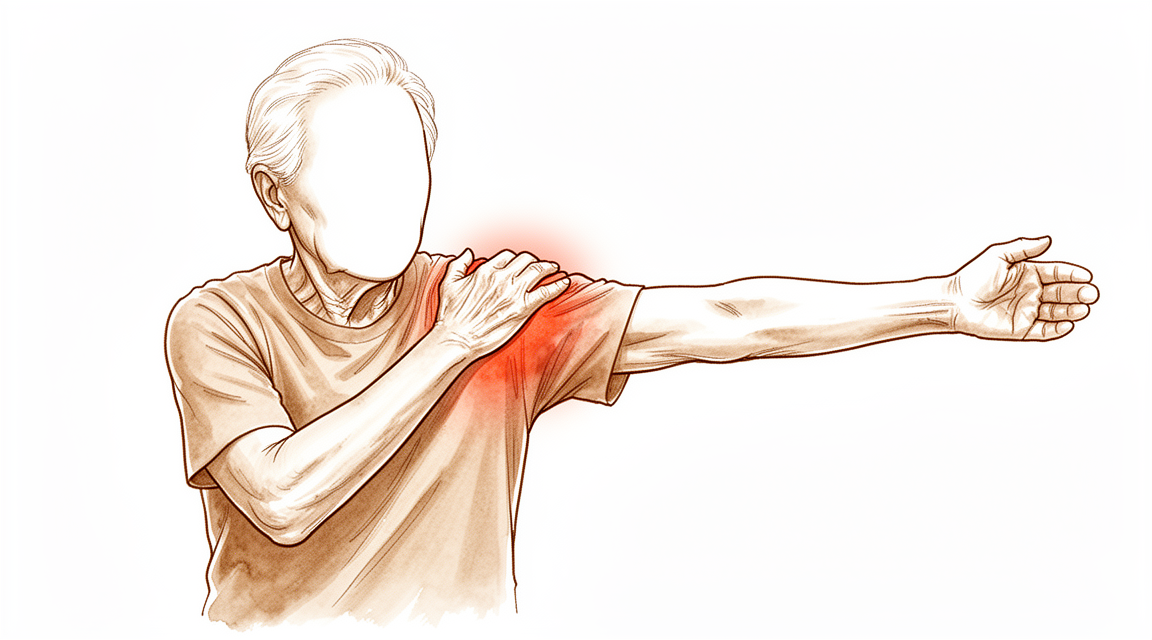
What you're feeling
Cuff arthropathy is wear-and-tear arthritis in a shoulder whose rotator cuff (the group of tendons that hold and move the joint) has worn away too. The pain sits deep in the shoulder, often at the point of the shoulder or just above it. It tends to flare at night and can wake you when you roll onto that side. Rest settles it for a while, but lifting your arm or reaching out brings it back.
Everyday movements become the hard part. Reaching a high shelf, lifting a kettle, hanging washing or pulling on a coat can all hurt or feel impossible. Your range of motion (how far the arm will move) shrinks, so tasks above shoulder height go first. Many people find themselves using the other arm to do things the sore shoulder used to manage.
The weakness comes from the missing cuff. Without those tendons, the ball of the joint slides up and grinds on the bone above it. That grinding can be felt or even heard, and it wears the joint surfaces further. Over time the shoulder may feel unstable, as though it might shift out of place, and the muscles around it work harder to compensate.
If you have already had a shoulder replacement, watch for a sudden increase in pain or a sudden loss of function after a period of smooth recovery. New pain at the base of the point of the shoulder, or tenderness along the shoulder blade ridge, needs checking. These changes can appear within 1 year of surgery but up to 2 years. A change in the shape of the shoulder, or a new feeling of looseness in the joint, also deserves a prompt review.
What's actually happening
Your shoulder is a ball-and-socket joint. The ball sits in a shallow socket, and the rotator cuff tendons act like guy ropes holding the ball centred while you move. In cuff arthropathy, those ropes have worn away. With nothing holding it down, the ball rides up and grinds against the bone above the socket. That grinding wears away the joint surfaces, and this is the arthritis part of the condition.
The bone above the socket can slowly change shape too, wearing into a hollow where the ball keeps rubbing. The joint loses its smooth surfaces and its natural centre. That is why lifting feels weak and why the grinding can be felt or heard: the muscles left around the joint are pulling on a ball that no longer sits where it should.
A normal shoulder replacement copies the original anatomy and still relies on those tendons to keep the ball centred. With the cuff gone, that design has nothing to work with. The operation used for this condition is a reverse shoulder replacement. It swaps the two halves of the joint around: the socket side becomes a round dome, and the ball side becomes a shallow cup. The joint is then held together by its own shape rather than by worn-out tendons.
This new design also moves the centre of the joint down and inward. That gives the big deltoid muscle, which caps the point of your shoulder, a longer lever to work with, so it can lift the arm without the cuff. The trade-off is that turning the arm inward or outward relies more on smaller muscles and may not be as strong.
Because the new joint pushes forces into the shoulder blade in ways the body is not used to, the thin bony ridge above the socket can sometimes crack under the load. This is more likely if your bones are thin, if you have used steroid medicines long term, or if you are in your 70s or 80s.
What we can do about it
Dr Kieran Hirpara, an upper-limb surgeon at Mater Private Hospital Rockhampton, starts with the least invasive options that suit your condition. Patients are generally referred to our clinic by their GP; if a physiotherapist has suggested you see us, you will still need a referral from your GP in order to be eligible for the Medicare rebate. At your first visit we take a history, examine the shoulder, and arrange imaging where it is needed. X-rays and a CT scan (a detailed scan that builds a three-dimensional picture of the bone) help us plan, because the shape of the socket and the bone above it guides what we recommend.
For a long-standing problem like this, we usually begin with non-operative care. Changing how you do things helps: using your other arm for lifting, keeping tasks below shoulder height, and pacing your day so the sore shoulder gets rests. Physiotherapy aims to keep the muscles around the joint working, maintain whatever movement you still have, and build the strength you can still use. We usually give this a fair trial over several months before talking about anything further.
Pain medicine is the other half of conservative care. Simple pain relief such as paracetamol can take the edge off flares, and anti-inflammatory medicines (tablets that settle swelling and pain) can help with night pain and aching. We discuss what suits you with your GP, because these medicines are not right for everyone.
If these steps have not given you enough improvement, surgery becomes the conversation. For cuff arthropathy, the operation is a reverse shoulder replacement, which swaps the two halves of the joint around so the joint holds itself together without the worn-out tendons. As set out on the page about what is happening, a normal replacement still needs a working rotator cuff, so this design is the one that fits your condition. We consider it when pain is limiting your sleep and daily tasks, and when conservative care has reached its limit.
Deciding on surgery is a shared decision. We will talk through what the operation involves, what it can and cannot fix, and the risks alongside the benefits. Reverse shoulder replacement restores function in the shoulder with significant improvements in function, though complications do occur at a moderate rate. It also carries a higher reported rate of infection compared with a normal anatomy replacement, and we will explain how we manage that risk. If you are younger than 60, we will discuss this with you carefully, because surgical complications in the first 90 days happen at significantly higher rates in that age group than in older patients. Smoking raises the risk of revision surgery, further operations, and complications, so it is worth addressing before any decision is made.
What to expect
Cuff arthropathy does not settle on its own. The tendons that have worn away do not grow back, so the grinding and the weakness tend to continue and slowly worsen without treatment. Conservative care such as physiotherapy, pacing your activities, and pain relief can keep you comfortable for a long time, and we usually give it a fair trial over several months first. But it manages the symptoms rather than the cause.
If you go ahead with a reverse shoulder replacement, the outlook is generally steady improvement in pain and movement over weeks to months. Most people who were active before the operation are able to return to their activities afterwards, and returning to sport is common. Physical therapy plays an important part in how much movement you regain and how well you manage daily tasks, and it matters for years afterwards, not just the first few weeks. Some people do well with a home programme they run themselves instead of formal supervised sessions.
The honest picture includes the things that may not come back fully. Turning your arm inward or outward relies on smaller muscles with this design, so that movement may stay weaker than lifting. Recovery from a fracture-related replacement can start more slowly than recovery from an arthritis-related one, but by 1 year the two groups reach similar levels of function and satisfaction.
Complications do happen. In one large group of shoulders, the overall complication rate was 5.1%. The problems seen include the joint becoming unstable, infection, the thin bony ridge above the socket cracking under load, nerve injury, and the implant working loose over time. Infection after this operation is reported at a higher rate than with a normal anatomy replacement, as covered earlier on this page. If an infection does take hold around the new joint, a staged treatment with a new implant clears it in 85% of shoulders. Blood clots are uncommon, occurring in 0.82% of reverse replacements.
Most people who have had this operation say they would choose it again.
When to see someone
Most shoulder trouble from cuff arthropathy builds slowly, and your GP can manage that pace with you. But some changes need a specialist review sooner. Ask for one if pain is stopping you sleeping, if you cannot manage daily tasks any more, or if the shoulder has become unstable or is grinding more than before. If you have already had a reverse shoulder replacement, a sudden increase in pain or a sudden loss of function after a smooth recovery needs prompt checking, as does new pain at the base of the point of the shoulder or tenderness along the shoulder blade ridge. Go to an emergency department if the shoulder changes shape suddenly, feels dislocated, or if you have a fever with a hot, red or increasingly painful shoulder, because infection around a new joint needs same-day assessment.
In more depth
Advanced reading: the deeper science (optional)
This section goes further than you need for your own treatment decisions. Cuff tear arthropathy and massive irreparable tears are worth the extra reading because the number of operations described for them is itself the most informative fact, when many procedures compete, none is clearly best.
Everything works a bit, and nothing works clearly better
Across 2,000 patients, clinically important treatment effects were seen for all eleven different treatment modalities studied for irreparable posterosuperior cuff tears, with variation in patient characteristics, co-interventions, outcome reporting and follow-up length complicating any sound comparison [1]. A separate review of 3,363 patients found all six non-arthroplasty options produced statistically significant improvements in range of motion and patient-reported outcomes at a year or more, with low revision rates [2].
Eleven modalities, six options, all producing improvement, none demonstrably superior. That pattern usually indicates two things: the natural history includes some improvement regardless, and the studies are too heterogeneous to separate the treatments.
Improvement early, decline later
One finding deserves emphasis because it is easily missed in short-term reports. Across 2,790 patients undergoing superior capsule reconstruction, partial repair, graft interposition and related procedures, there were large initial improvements in shoulder scores for all techniques despite high retear rates, and shoulder scores may decline at mid- to long-term follow-up [3].
So the same operation can look successful at one year and less so at five. When you read that a technique has good results, the follow-up interval matters as much as the number.
A 2026 analysis of 4,963 patients attempted to resolve this by ranking treatments on failure rate rather than outcome scores, and while it did not identify a single best treatment, it produced a hierarchy of reliability [4]. Ranking by failure is arguably the more honest measure when early scores converge.
Why the joint wears out once the cuff is gone
The mechanism explains why this is a distinct condition rather than simply a large tear. The rotator cuff holds the humeral head centred in the socket while the deltoid lifts. Without it, the deltoid's pull drives the head upwards against the underside of the acromion.
That produces a characteristic pattern: the head rides up on X-ray, the acromion and head wear against each other where they were never meant to contact, and the joint surfaces degenerate secondarily. It is arthritis caused by mechanics rather than by primary joint disease, which is why treating the arthritis without addressing the mechanics does not work.
It is also why reverse shoulder replacement solved the problem, it makes the deltoid sufficient without needing a cuff. Where the arthropathy is established, that operation is covered on its own page.
Reading the outcome figures with the right expectation
One caution for interpreting results: outcomes following reverse replacement in this setting are decreased compared with other indications across 6,698 patients [5]. The operation works, but a shoulder replaced for cuff arthropathy should not be expected to match one replaced for straightforward arthritis with an intact cuff, the starting point is worse.
References for the advanced reading
- Kooistra B, Gurnani N, Weening A, van den Bekerom M, van Deurzen D. Low level of evidence for all treatment modalities for irreparable posterosuperior rotator cuff tears. Knee Surg Sports Traumatol Arthrosc. 2019;27(12):4038-48.
- Hughes JD, Davis B, Whicker E, Sprowls GR, Barrera L, Baradaran A, et al. Nonarthroplasty options for massive, irreparable rotator cuff tears have improved patient-reported outcomes. Knee Surg Sports Traumatol Arthrosc. 2022;31(5):1883-902.
- Davies A, Singh P, Reilly P, Sabharwal S, Malhas A. Superior capsule reconstruction, partial cuff repair, graft interposition, subacromial balloon spacers or tuberoplasty: a systematic review. J Orthop Surg Res. 2022;17(1).
- Cooke SP, Koh JL, Amirouche F. An analysis of failure rates for treatment options for large to massive irreparable rotator cuff tears. J Shoulder Elbow Arthroplasty. 2026;10(1-2):100019.
- Yazdanpanah S, Soth BT, Eskew JR, Dancy M, Fu MC, Taylor SA, et al. Decreased clinical and functional outcomes following reverse total shoulder arthroplasty for cuff tear arthropathy: a systematic review. JSES Rev Rep Tech. 2026;6(2):100691.
Evidence & references
This is the clinical evidence summary written for health professionals. It is technical, and it lists the research this page was built from. You do not need to read it to understand your treatment or to make a decision about it.
Overview
- Short-term results of subacromial balloon spacers for massive rotator cuff tears demonstrate clinically relevant improvements in shoulder range of motion [1].
- Short-term results of subacromial balloon spacers for massive rotator cuff tears demonstrate substantial improvements in patient-reported outcome measures [1].
- Patients with irreparable massive rotator cuff tears without osteoarthritis have a high likelihood of achieving a painless shoulder after reverse shoulder arthroplasty [2].
- Patients with irreparable massive rotator cuff tears without osteoarthritis have a high likelihood of achieving functional improvements after reverse shoulder arthroplasty [2].
- In patients with rotator cuff-intact glenohumeral osteoarthritis, anatomic total shoulder arthroplasty and reverse total shoulder arthroplasty demonstrated similar short-term to midterm clinical outcomes after propensity score matching [3].
- In patients with rotator cuff-intact glenohumeral osteoarthritis, no significant differences in clinical outcomes were observed between anatomic and reverse total shoulder arthroplasty across age strata [3].
- Arthroscopic repairs of chronic, massive rotator cuff tears are associated with significant improvements in pain [5].
- Arthroscopic repairs of chronic, massive rotator cuff tears are associated with significant improvements in function [5].
- Arthroscopic repairs of chronic, massive rotator cuff tears are associated with significant improvements in objective outcome scores [5].
- Postoperative patient-reported outcomes in patients with prior rotator cuff repair undergoing reverse shoulder arthroplasty demonstrate a trend toward lower outcomes compared to those without prior repair [6].
- The difference in postoperative patient-reported outcomes between patients with and without prior rotator cuff repair undergoing reverse shoulder arthroplasty may be below the minimal clinically important difference [6].
- Reverse shoulder arthroplasty provides optimal outcomes for glenohumeral osteoarthritis with an intact rotator cuff [8].
- Reverse shoulder arthroplasty is associated with low complication rates for glenohumeral osteoarthritis with an intact rotator cuff across a short term of follow-up [8].
- Superior capsular reconstruction serves as a reasonable joint-preserving option for massive, irreparable rotator cuff tears irrespective of tissue source [12].
- Superior capsular reconstruction for massive, irreparable rotator cuff tears results in favorable short- to midterm improvements in patient-reported outcomes [12].
- Superior capsular reconstruction for massive, irreparable rotator cuff tears results in favorable short- to midterm improvements in range of motion [12].
- Tenodesis at the time of primary rotator cuff repair may be associated with a reduction in the utilization of ipsilateral shoulder revision surgery rates [14].
- All six nonarthroplasty treatment options for irreparable rotator cuff tears resulted in statistically significant improvements in range of motion at 1 year follow-up or more [17].
- All six nonarthroplasty treatment options for irreparable rotator cuff tears resulted in statistically significant improvements in patient-reported outcomes at 1 year follow-up or more [17].
- Nonarthroplasty treatment options for irreparable rotator cuff tears are associated with low rates of revision and conversion to arthroplasty [17].
- Higher revision rates were identified following anatomic total shoulder arthroplasty in patients aged over 70 without a full-thickness rotator cuff tear [20].
- Anatomic total shoulder arthroplasty displayed equal functional results compared to reverse total shoulder arthroplasty in patients over 70 without a full-thickness rotator cuff tear [20].
- Anatomic total shoulder arthroplasty displayed equal postoperative complications compared to reverse total shoulder arthroplasty in patients over 70 without a full-thickness rotator cuff tear [20].
- Augmentation strategies may improve outcomes in rotator cuff repairs, particularly in high-risk cases [21].
- There is a lack of consensus among surgeons on the most effective augmentation strategies for each rotator cuff repair scenario [21].
- Complications are within an acceptable range for primary reverse shoulder arthroplasty with augmented baseplates [37].
- Primary reverse shoulder arthroplasty with augmented baseplates has a low rate of revision [37].
Anatomy & Pathophysiology
Bony Anatomy
- The proximal humerus comprises the humeral head, greater tuberosity, lesser tuberosity, and humeral shaft [38].
- The articular head of the humerus is spherical with a diameter of 37 to 57 mm [38].
- The most superior portion of the articular surface of the humeral head averages 8 mm above the greater tuberosity [38].
- Humeral version averages 29.8 degrees, with a range of 10 to 55 degrees [38].
- The humeral head is inclined approximately 130 degrees with respect to the humeral shaft [38].
- The neck-shaft angle measures an average of 135 degrees [39].
- The humeral head is retroverted an average of 30 degrees [39].
- The glenoid is a convex structure of shallow depth shaped like an inverted pear [38].
- The glenoid cavity is a shallow socket, approximately one third the size of the humeral head [39].
- The subchondral bone of the glenoid is relatively flat, with articular concavity augmented by cartilage and a circumferential labrum [41].
- The glenoid averages 5° of retroversion in relation to the axis of the scapular body [41].
- The acromion, coracoacromial ligament, and coracoid process form the coracoacromial arch, a rigid bony-ligamentous structure that imparts stability to the shoulder girdle [38].
- The rotator cuff, subacromial bursa, and subdeltoid bursa pass underneath the coracoacromial arch [38].
- The scapula is attached to the axial skeleton by the acromioclavicular and sternoclavicular joints [40].
- The scapula is separated from the chest wall by thin gliding fibro-fatty tissue, allowing smooth excursion over the chest wall [40].
- The basic part of the scapula is the body, which is triangular when viewed anteroposteriorly with its base situated superiorly and its apex inferiorly [40].
- The glenoid is connected with the flat body of the scapula by the scapular neck [40].
- The hook-shaped coracoid process curves forwards from the superior surface of the scapular neck [40].
- The scapular spine arises from the posterior surface of the scapular body and ends in a flattened bony process, the acromion, which curves forwards [40].
- The highest concentration of bony mass in the scapula is located in the glenoid, the scapular neck (including the base of the coracoid process), and the lateral border of the scapular body [40].
- Two bony pillars extend between the glenoid and the scapular body to transmit compressive forces from the glenoid fossa [40].
- The lateral pillar connects the inferior border of the glenoid with the inferior angle [40].
- The spinal pillar arises from the central part of the glenoid and continues medially to become part of the base of the scapular spine [40].
- The two pillars, connected by a markedly thinner medial border of the scapular body, form the basic load-bearing structure of the scapular body [40].
- The weakest bone in the scapula is located primarily in the central part of the biomechanical body, specifically in the infraspinous fossa [40].
- The weakest area of the circumference of the biomechanical body of the scapula is the connection of the scapular spine and the medial border of the scapula, known as the spinomedial angle [40].
- The acromion has three ossification centers: the metacromion (base), the mesoacromion (middle), and the preacromion (tip) [41].
- Failure of fusion of the acromial ossification centers results in os acromiale [41].
- The humeral head averages 19° of retroversion and 41° of inclination (neck-shaft angle) [41].
Soft Tissue Anatomy
- The rotator cuff consists of the subscapularis, supraspinatus, infraspinatus, and teres minor muscles [39].
- The teres major is not a rotator cuff muscle [39].
- The rotator cuff muscles serve as depressors of the humeral head to allow the deltoid to efficiently abduct the humerus [39].
- The infraspinatus and teres minor are external rotators, while the subscapularis is an internal rotator of the humerus [39].
- The greater tuberosity serves as the attachment site for the supraspinatus, infraspinatus, and teres minor tendons of the rotator cuff [38].
- The lesser tuberosity serves as the attachment site for the subscapularis tendon [38].
- The rotator cuff is a sheet of conjoined tendons closely applied over the shoulder capsule and inserting mainly into the greater tuberosity of the humerus, with the subscapularis inserted into the lesser tuberosity [52].
- The subacromial bursa separates the rotator cuff tendons from the coracoacromial arch, allowing them to glide [52].
- The subscapular bursa lies between the subscapularis tendon and the neck of the scapula and communicates with the joint cavity between the superior and middle glenohumeral ligaments [42].
- The subscapular bursa protects the tendon of the subscapularis at the point where it passes under the base of the coracoid process and over the neck of the scapula [42].
- The rotator interval is defined medially by the base of the coracoid, superiorly by the supraspinatus tendon, and inferiorly by the subscapularis tendon [41].
- The rotator interval contains the coracohumeral ligament, the superior glenohumeral ligament, and the intra-articular portion of the long head of the biceps tendon [41].
- Laxity of the rotator interval results in inferior laxity (the sulcus sign), and contracture of the interval is seen with adhesive capsulitis [41].
- The coracohumeral ligament restricts external rotation in adduction and is a static restraint to inferior and posterior translation in adduction and external rotation [41].
- The superior glenohumeral ligament is a primary static restraint against anterior translation with the arm at the side [41].
- With the coracohumeral ligament, the superior glenohumeral ligament forms a pulley that provides restraint against medial subluxation of the long head of the biceps tendon [41].
- The middle glenohumeral ligament is a primary static restraint against anterior translation with the arm in external rotation and 45° of abduction [41].
- The anterior band of the inferior glenohumeral ligament is a primary static restraint against anterior-inferior dislocation of the glenohumeral joint in 90° of abduction and external rotation [41].
- The posterior band of the inferior glenohumeral ligament is a primary static restraint against posterior-inferior translation in internal rotation and adduction [41].
- The superior transverse scapular ligament arises from the medial base of the coracoid overlying the suprascapular notch [41].
- The suprascapular artery runs superior to the superior transverse scapular ligament, while the nerve runs deep to it [41].
- Entrapment of the suprascapular nerve at the superior transverse scapular ligament causes denervation of both the supraspinatus and the infraspinatus [41].
- The spinoglenoid ligament overlies the suprascapular nerve at the spinoglenoid notch [41].
- Entrapment, traction, or compression of the suprascapular nerve at the spinoglenoid notch causes denervation of the infraspinatus [41].
Vascular Anatomy
- The proximal humerus receives its blood supply from the anterior and posterior humeral circumflex branches from the third division of the axillary artery [38].
- The posterior humeral circumflex artery travels with the axillary nerve, enters the quadrilateral space posteriorly, and anastomoses with a branch of the anterior circumflex to supply the posterior cuff [38].
- The anterior humeral circumflex artery arises from the axillary artery at the inferior border of the subscapularis and provides vascular inflow to the humeral head by way of its terminal anterolateral branch known as the artery of Laing (also known as the arcuate artery) [38].
- The ascending branch of the anterior humeral circumflex artery courses parallel to the lateral aspect of the long head biceps tendon and enters the humeral head at the interface of the bicipital groove and greater tuberosity [38].
- Injury to the arcuate artery may result in osteonecrosis of the humeral head [38].
- Additional extraosseous collateral branches can permit humeral head perfusion despite complete ligation of the arcuate artery [38].
- The major blood supply to the humeral head is through the ascending branch of the anterior humeral circumflex artery, which penetrates the head at the bicipital groove and becomes the arcuate artery [39].
- The anterolateral ascending branch of the anterior humeral circumflex artery provides the primary blood supply to the humeral head [41].
- The terminal intraosseous portion of the anterior humeral circumflex artery enters at the proximal aspect of the intertubercular groove as the arcuate artery [41].
Pathophysiology
- Cuff tear arthropathy is the final stage of the shoulder impingement syndrome spectrum [54].
- Cuff tear arthropathy affects patients with long-term insufficient massive rotator cuff tears, superior migration of the humeral head toward the acromion, subchondral osteoporosis, humeral head collapse, and painful debilitating shoulder arthritis [54].
- Cuff tear arthropathy was initially known as Milwaukee shoulder syndrome due to the rapidly progressive destruction of cartilage and bone, noninflammatory joint effusion containing calcium hydroxyapatite crystals, synovial hyperplasia, and multiple loose bodies [54].
- Cuff tear arthropathy affects women at a 3:1 female to male ratio, more commonly in patients over 70 years old, and more commonly on the dominant shoulder [54].
- Risk factors for cuff tear arthropathy include chronic rotator cuff tears, hemorrhagic shoulder (oral anticoagulants and hematologic diseases), rheumatic disease, and crystal-induced arthropathy [54].
- Neer suggested mechanical, nutritional, and crystal-induced arthropathy pathways for cuff tear arthropathy, but no definitive pathogenesis has been identified [54].
- Mechanical factors in cuff tear arthropathy include insufficient cuff, superior migration of the humeral head, instability, eccentric wear of the glenoid, humeral head deformity, and decreased shoulder function [54].
- Nutritional factors in cuff tear arthropathy include hypomobility-induced cartilage atrophy, poor nutrition (decrease in glycosaminoglycans), dehydration, and subchondral osteoporosis [54].
- Crystalline-induced arthropathy involves synovial-based matrix proteins degradation destroying rotator cuff tendons and cartilage, with end-stage calcium-phosphate crystal deposition [54].
- The dysfunction of the rotator cuff results in loss of the concavity-compression mechanism, instability, and a predictable wear pattern with superior humeral migration and ultimate acetabularization of the acromion [97].
- The linear correlation between glenoid inclination and acromial angle suggests the presence of a balance between the glenoid inclination and the acromial coverage in a healthy shoulder [13].
- The critical shoulder angle should be considered as a “combined shoulder angle” with balanced contributions of glenoid inclination and acromial angle in shoulder arthritis progression [67].
- As 3D-GHSI increases, compressive forces rise while posterior shear forces decrease, causing posterior glenoid wear until severe retroversion and subluxation create a pathological balance that lowers the stabilizing compressive forces [75].
- The malcentering of the joint reaction force leads to posterior instability, posterior glenoid wear, and “rocking horse” loosening of prosthetic glenoid components [25].
- Rotator cuff pathology spans a spectrum of severity that includes rotator cuff tendinopathy, partial-thickness tears, full-thickness tears, and rotator cuff arthropathy [48].
- The term “tendinitis” implies inflammation and may be misleading because numerous studies have shown that little inflammation is actually present in these syndromes [48].
- There is no clear evidence that antiinflammatory medications can reliably improve symptoms related to more chronic “tendinitis,” indicating that the terms “tendinosis” or “tendinopathy” may be more appropriate in this setting [48].
- Neer initially described three different stages of cuff lesions: Stage 1 (reversible edema and hemorrhage in patients younger than 25 years), Stage 2 (fibrosis and tendinitis in patients typically 25 to 40 years old), and Stage 3 (bone spurs and tendon ruptures in patients older than 40 years) [48].
- Neer’s original classification of rotator cuff pathology has been subsequently modified by many other classification systems to include the structural integrity of the tendon and differentiate between articular-sided partial-thickness tears, bursal-sided partial-thickness tears, and intrasubstance delamination [48].
- As imaging techniques and technology advanced with time, classification systems began incorporating more tear characteristics, including tear size, tear shape, and muscular atrophy [48].
- Calcific tendinitis is a painful, largely self-limited disorder of the rotator cuff in which the tendons are infiltrated with calcium deposits [53].
- The most common site of occurrence for calcific tendinitis is within the supraspinatus tendon at a location 1.5 to 2 cm away from the tendon insertion on the greater tuberosity [53].
- Calcific tendinitis usually has its onset in individuals who are older than 30 years and affects approximately 10% of the population [53].
- An analysis of 1219 patients with and without subacromial pain found calcific deposits in 8% of asymptomatic patients and 43% of those with subacromial pain [53].
- Women between the ages of 30 and 60 years were the most frequently affected by calcific tendinitis [53].
- Ten percent of patients affected by calcific tendinitis have bilateral deposits [53].
- Microangiographic studies showed an area of hypovascularity near Codman’s “critical zone” just proximal to the supraspinatus insertion into the greater tuberosity [53].
- This hypoperfusion is believed to initiate degenerative changes, which subsequently lead to calcification or susceptibility to tearing [53].
- Other histologic studies showed no evidence of inadequate vascularization, and the supraspinatus, including the critical zone, was found to be well supplied with an anastomosis of vessels [53].
- One histologic study demonstrated neovascularization and neoinnervation in calcific tendonitis, with an associated substantial inflammatory response as the cause of pain [53].
- Calcific tendinitis follows a definite progression in most patients, and resolution is seen in almost all of them [53].
- Phase I of calcific tendinitis is the precalcification stage, where the site of predilection for calcification undergoes fibrocartilaginous metaplasia and patients are generally asymptomatic [53].
- Phase II of calcific tendinitis is the calcification stage, where calcium is deposited into matrix vesicles, which are excreted by the cells and coalesce into larger calcium deposits [53].
- The initial part of the calcification stage is known as the phase of formation [53].
- Increased age is associated with a higher prevalence of rotator cuff pathology [28].
- In a study using bilateral shoulder ultrasound in patients with bilateral shoulder pain, the average age of patients with bilaterally intact cuffs, unilateral cuff tears, and bilateral cuff tears formed an almost perfect 10-year distribution of 48.7, 58.7, and 67.8 years, respectively [28].
- Population-based studies have shown that one-quarter of patients above 60 years of age and half of patients above 80 years will have a rotator cuff tear [28].
- Tendon degeneration and tearing occur with aging [28].
- Rotator cuff tendons are intrasynovial and do not undergo the spontaneous healing that can be seen in extrasynovial tendons such as the Achilles tendon [48].
- Healing of tendon or ligament typically progresses through three phases: an inflammatory phase that lasts a few days, a proliferative phase that lasts a few weeks, and then a longer remodeling phase that lasts months [48].
- In the first phase of tendon healing, inflammatory cells release cytokines and growth factors that lead to recruitment of tendon fibroblasts that proliferate and produce, deposit, and crosslink collagen fibrils [48].
- Despite some remodeling, the resultant collagen scar is relatively disorganized and fails to replicate the normal zonal transition at the tendon-bone insertion site [48].
- The requisites for normal cuff function include healthy, strong cuff muscles, normal capsular laxity, intact cuff tendons, a smooth contour of the underside of the coracoacromial arch, a thin, lubricating bursa, a smooth upper surface of the cuff and tub
Classification
- Preoperative radiographs, computed tomographic arthrography (CTA), and/or magnetic resonance imaging (MRI) are used to confirm etiology and glenoid morphology in the transverse plane according to the classification of Walch et al. [70].
- Primary osteoarthritis is confirmed by glenohumeral joint narrowing on radiographs, sclerotic osteophytes on the humeral head, and an acromiohumeral distance >6 mm as defined by Neer et al. [70].
- Secondary osteoarthritis is confirmed by glenohumeral joint narrowing on radiographs and proximal humeral migration as a consequence of large or massive rotator cuff tears observed on MRI or CTA, using the classification of Hamada et al. [70].
- Secondary osteoarthritis includes cuff tear arthropathy (Hamada stage 5) and early stage of osteoarthritis combined with massive rotator cuff tears (Hamada stages 1 and 2) [70].
- Fatty infiltration of the supraspinatus, infraspinatus, and subscapularis is graded using the classification of Goutallier et al. [70].
- Fatty infiltration is dichotomized as functional (Goutallier classification 0, 1, or 2) or nonfunctional (Goutallier classification 3 or 4) [70].
- Current classifications exhibit poor reliability in categorizing glenoid defects post-reverse shoulder arthroplasty removal [69].
Clinical Presentation
History and Symptoms
- A comprehensive history is the first and arguably the most important aspect of a complex decision-making process in evaluating a patient with a suspected rotator cuff tear [60].
- Rotator cuff tears, even ones of substantial size, can be asymptomatic [60].
- The amount of shoulder discomfort experienced by the patient is not related to the size of the tear [60].
- Pain may not be the primary symptom of rotator cuff failure, which may also produce weakness, stiffness, crepitus, or instability [60].
- In cases of chronic rotator cuff disease, patients often describe an insidious onset of lateral and/or anterior shoulder pain associated with overhead activities [64].
- Night pain is a common presenting symptom in chronic rotator cuff disease [64].
- A patient may present with a clear history of trauma resulting in acute pain and weakness, strongly suggesting acute rotator cuff tear [64].
- Degenerative tearing typically occurs in older patients, while a greater injury is required to tear the cuff of persons at the younger end of the age distribution [60].
- Traumatic glenohumeral dislocations in persons older than 40 years have a strong association with rotator cuff tears [60].
- Acute rotator cuff tears from a distinct injury causing weakness often do well and have good healing potential with early surgery [60].
- Patients who present with a painful shoulder problem have often endured their symptoms for months or years as a result of cuff degeneration rather than injury [60].
- Any neck pain, numbness and tingling in the arm, symptoms radiating below the elbow, or medial scapular pain may be a sign of cervical radiculopathy [60].
Physical Examination
- Basic examination consists of assessment of range of motion in the adducted and abducted positions, assessment of strength, and examination of associated structures such as the biceps and acromioclavicular joint [64].
- The empty can test has a sensitivity of 71.7% and a specificity of 64.6% for full-thickness supraspinatus tears [64].
- The lift-off and belly-press tests have high specificity but low sensitivity for full-thickness subscapularis tears [64].
- Patients with an external rotation lag sign at the side likely have a large posterosuperior tear involving the infraspinatus [64].
- A positive hornblower sign suggests a massive posterosuperior cuff tear that prohibits the active positioning of the hand in space [64].
- The painful arc test has a sensitivity of 71% (95% CI 60–83) and a specificity of 81% (95% CI 68–93) for rotator cuff disease [64].
- The cross-body adduction test has a sensitivity of 75% (95% CI 64–85) and a specificity of 61% (95% CI 46–76) for rotator cuff disease [64].
- The Hawkins test has a sensitivity of 76% (95% CI 56–89) and a specificity of 48% (95% CI 23–74) for rotator cuff disease [64].
- The Neer test has a sensitivity of 64–68% and a specificity of 30–61% for rotator cuff disease [64].
- The Yocum test has a sensitivity of 79% (95% CI 61–97) and a specificity of 40% (95% CI 10–70) for rotator cuff disease [64].
- The passive abduction test has a sensitivity of 74% (95% CI 54–93) and a specificity of 10% (95% CI 0–29) for rotator cuff disease [64].
- The external rotation lag test has a sensitivity of 47% (95% CI 21–71) and a specificity of 94% (95% CI 85–100) for full-thickness rotator cuff tears [64].
- The internal rotation lag test has a sensitivity of 97% (95% CI 88–100) and a specificity of 83% (95% CI 70–96) for full-thickness rotator cuff tears [64].
- The drop arm test has a sensitivity of 24% (95% CI 13–34) and a specificity of 93% (95% CI 85–100) for rotator cuff disease [64].
- The dropping sign has a sensitivity of 73% (95% CI 51–95) and a specificity of 77% (95% CI 62–92) for full-thickness rotator cuff tears [64].
- The Gerber (lift-off) test has a sensitivity of 34–68% and a specificity of 50–77% for rotator cuff disease [64].
- The external rotation resistance test has a sensitivity of 63% (95% CI 49–77) and a specificity of 75% (95% CI 69–82) for rotator cuff disease [64].
- The full can test has a sensitivity of 75% (95% CI 64–85) and a specificity of 68% (95% CI 54–83) for rotator cuff disease [64].
- The Patte test has a sensitivity of 58% (95% CI 36–80) and a specificity of 60% (95% CI 30–90) for rotator cuff disease [64].
- The resisted abduction test has a sensitivity of 58% (95% CI 36–80) and a specificity of 20% (95% CI 0–45) for rotator cuff disease [64].
- When both Hawkins and Neer tests are positive, the sensitivity is 78% (95% CI 66–90) and the specificity is 50% (95% CI 22–78) for rotator cuff disease [64].
Diagnostic Imaging
- The goal of diagnostic imaging is to determine the presence, size, and orientation of the rotator cuff tear, evaluate the healing capacity of the tendon, and assess associated pathology such as long head biceps tendinitis, acromioclavicular joint pathology, and arthrosis [64].
- For full-thickness rotator cuff tears, ultrasonography approaches the sensitivity and specificity of MRI for detecting the presence of a tear with an experienced practitioner [64].
- Ultrasonography is relatively inexpensive, allowing for dynamic testing, guided injections, and immediate feedback [64].
- MRI accurately assesses muscle, bone, and cartilage, which has advantages for surgical planning [64].
- MRI continues to be the imaging modality of choice for most providers, with ultrasonography becoming common in certain centers [64].
Investigations
Radiographic Evaluation
- The purpose of shoulder imaging is to help establish the diagnosis, determine the severity of the pathoanatomy, assist in surgical planning, and enable the surgeon to illustrate the condition of the shoulder to the patient [25].
- Standardized plain films are almost always sufficient to garner the information needed for shoulder arthroplasty planning [25].
- CT scans may offer a few degrees of increased precision in the measurement of glenoid version, but this precision does not necessarily improve the quality of the surgery or the clinical outcome [25].
- The first key radiographic view is the anteroposterior (AP) view taken in the plane of the scapula such that the x-ray beam passes through the glenohumeral joint [25].
- The AP view in the plane of the scapula shows the superoinferior position of the humeral head relative to the glenoid, the presence of osteophytes on the humeral head and glenoid, narrowing of the joint space, and the degree of medial displacement of the humerus in relation to the lateral acromial line [25].
- The AP view also shows the quality of the humeral and glenoid bone, the presence of loose bodies, and whether there is humeral head collapse or deformity [25].
- The second key radiographic view is the axillary view taken with the arm in the functional position of elevation in the plane of the scapula [25].
- The axillary view is oriented so that both the spinoglenoid notch and the scapular neck are visible [25].
- The axillary view demonstrates the glenohumeral relationships in the functional position of elevation, referred to as the "truth view" [25].
- CT scans have the disadvantage of being taken with the arm in the adducted position, unlike the axillary truth view [25].
- The standardized axillary view shows a different perspective of the humeral anatomy, the amount of glenoid bone, the shape of the glenoid, its version in relation to the plane of the scapula, and the relationship of the humeral head to the glenoid fossa [25].
- When taken properly, standardized anteroposterior and axillary views indicate the thickness of the cartilage space between the humerus and the glenoid, relative positions of the humeral head and the glenoid, presence of osteophytes, degree of osteopenia, and extent of bony deformity and erosion [25].
- Joint space narrowing is most evident on the axillary truth view as opposed to images made with the arm at the side [25].
- The axillary truth view shows posterior subluxation or "functional decentering" that is not evident in images taken with the arm at the side [25].
- The degree of posterior subluxation can be measured as the position of the center of the humeral head in relation to the plane of the scapula [25].
- The degree of posterior subluxation can be measured as the position of the center of the humeral head in relation to the glenoid face [25].
- The degree of posterior subluxation can be measured as the point of contact of the humeral articular surface on the glenoid articular surface [25].
- The point of contact of the humeral articular surface on the glenoid articular surface reflects the degree of centering of the net humeral joint reaction force on the glenoid [25].
- Malcentering of the joint reaction force leads to posterior instability, posterior glenoid wear, and "rocking horse" loosening of prosthetic glenoid components [25].
- At least two X-ray views should be obtained for shoulder imaging: an anteroposterior in the plane of the glenoid and an axillary projection with the arm in abduction to show the relationship of the humeral head to the glenoid [46].
- Computed tomography (CT) is helpful for planning fracture surgery and shoulder joint replacement [46].
- Three-dimensional reconstructions can reveal fine details of the shoulder anatomy, but this additional information rarely changes the planning or conduct of the arthroplasty [25].
- A robust approach to imaging the shoulder needs to recognize that the shoulder is a three-dimensional structure that cannot be represented by a single planar view [50].
- Critical relationships, such as the degree of centering of the humeral head, change with the position of the arm [50].
- Shoulder pathology may be found in a large number of different bones and soft tissues [50].
- Overlying and superimposed structures as well as metallic implants may complicate imaging the structures of interest [50].
- Surgeons need to develop a judicious approach to imaging that yields the information necessary to treat the patient while avoiding the tendency to "over-image" [50].
Magnetic Resonance Imaging
- Magnetic resonance imaging (MRI) is useful to identify osteonecrosis of the humeral head, or a bone tumour [46].
- MRI can identify labral tears and rotator cuff tears, although the accuracy for these is enhanced by combining the scan with arthrography [46].
Ultrasonography
- Ultrasonography is a simple and accurate test for identifying rotator cuff tears and calcific tendinitis [46].
- Ultrasonography can be useful in guiding injections or barbotage (aspirating calcific deposits in the rotator cuff) [46].
- The most commonly performed joint examination using ultrasonography is the shoulder examination [44].
- The accuracy of rotator cuff ultrasonography depends on the skill of the scanner operator and an awareness of pitfalls that are encountered [44].
Arthroscopy
- Arthroscopy is useful for diagnosing and treating subacromial impingement, intra-articular lesions, detachment of the glenoid labrum and rotator cuff tears [46].
Anatomical and Biomechanical Considerations
- Awareness of scapular orientation in addition to glenoid morphology is needed when evaluating and planning shoulder arthroplasty cases [32].
Treatment
Non-Operative Management
- Clinical decision-making for the management of rotator cuff tears lacks consensus among orthopedic surgeons [26].
- The American Academy of Orthopaedic Surgeons clinical practice guidelines and Cochrane systematic reviews do not provide guidance on the management of rotator cuff tears [26].
- Patients with rotator cuff pathology are generally divided into three categories based on the risk of nonoperative treatments and benefits of surgical intervention: those needing urgent or early operative repair, those who can benefit from a trial of conservative treatment, and those best suited for nonoperative treatment [26].
- Treatment of rotator cuff tears begins with nonsurgical measures such as activity modification, physical therapy, nonsteroidal anti-inflammatory medications, and corticosteroid injection [56].
- The Multicenter Orthopaedic Outcomes Network (MOON) Shoulder Group developed a standard physical therapy protocol for the management of rotator cuff disease based on a systematic review of evidence [27].
- In a prospective study of nonsurgical management of atraumatic full-thickness rotator cuff tears, fewer than 25% of patients underwent surgery within the next 2 years [27].
- Duration of symptoms, pain, and activity level were not correlated with the severity of rotator cuff disease in the MOON Shoulder Group population [27].
- The minimal duration of non-operative treatment prior to surgery for irreparable posterosuperior rotator cuff tears varied from 0 months to 6 months across studies, with 28 studies not reporting on prior non-operative treatment [77].
- Physical therapy resulted in a weighted mean increase in Constant Score of 13.0 points from pre-operative until last follow-up for irreparable posterosuperior rotator cuff tears [77].
Operative Management: Arthroplasty
- Reverse shoulder arthroplasty (rTSA) is a treatment option for patients with a deficient rotator cuff [58].
- Anatomic total shoulder arthroplasty (aTSA) is a treatment option for patients with an intact rotator cuff [58].
- Patients with irreparable massive rotator cuff tears without osteoarthritis have a high likelihood of achieving a painless shoulder and functional improvements after reverse shoulder arthroplasty [2].
- In patients with rotator cuff-intact glenohumeral osteoarthritis, anatomic total shoulder arthroplasty and reverse total shoulder arthroplasty demonstrated similar short-term to midterm clinical outcomes with no significant differences across age strata [3].
- Reverse shoulder arthroplasty provides optimal outcomes with low complication rates across a short term of follow-up for glenohumeral osteoarthritis with an intact rotator cuff [8].
- The presence of os acromiale does not appear to have a negative impact on clinical outcomes after reverse total shoulder arthroplasty [31].
- Differences in postoperative patient-reported outcomes and improvement from baseline demonstrate a trend toward lower outcomes in patients with prior rotator cuff repair undergoing reverse shoulder arthroplasty, but these differences may be below the minimal clinically important difference [6].
- Reverse shoulder arthroplasty provides the least benefit in forward flexion compared to other surgical treatments for massive irreparable rotator cuff tears in patients younger than 70 years [15].
- Pre-operative glenoid bone mineral density varies significantly by indication for reverse total shoulder arthroplasty, including rotator cuff arthropathy [78].
- The most commonly cited risk factors for acromial stress fractures following reverse total shoulder arthroplasty include osteoporosis, rheumatoid arthritis, female sex, and rotator cuff arthropathy [4].
- Contraindications to shoulder arthroplasty include nonfunctioning deltoid and rotator cuff deficiency, intractable instability, active infection, Charcot arthropathy, and poor patient compliance [58].
- The postoperative rehabilitation protocol for reverse total shoulder arthroplasty generally occurs in 4 phases: 0 to 2 weeks (immobilizer, non-weight-bearing), 2 to 6 weeks (active and passive ROM), 6 to 16 weeks (weight-bearing as tolerated, strengthening), and 16 to 24 weeks (gradual return to full activities) [35].
- Both keeled and pegged glenoid components in total shoulder arthroplasty yield similar pain relief, functional gains, and shoulder motion across most patient-reported outcome measures [18].
Operative Management: Joint-Preserving and Debridement Procedures
- Arthroscopic repairs of chronic, massive rotator cuff tears, whether complete or partial, are associated with significant improvements in pain, function, and objective outcome scores [5].
- Superior capsule reconstruction (SCR) serves as a reasonable joint-preserving option for massive, irreparable rotator cuff tears, with favorable short- to midterm improvements in patient-reported outcomes and range of motion irrespective of tissue source [12].
- SCR is associated with significantly improved functional outcome scores and preserved or increased mean acromiohumeral distance for patients with irreparable rotator cuff tears [91].
- Subacromial balloon spacer implantation for massive irreparable rotator cuff tears demonstrates clinically relevant improvements in shoulder range of motion and substantial improvements in patient-reported outcome measures in the short term [1].
- Subacromial balloon spacer implantation achieves satisfactory outcomes between 3 months and 3 years of follow-up for patients with massive irreparable rotator cuff tears [72].
- Patients undergoing subacromial spacer implantation for massive irreparable rotator cuff tears have satisfactory outcomes at 2- to 3-year follow-up with a low rate of complications [30].
- Placement of the subacromial balloon spacer is a minimally invasive, technically simple procedure with favorable patient-reported outcomes at limited short-term follow-up [92].
- In cadaveric studies, subacromial balloon spacers resist superior humeral head migration and reduce subacromial pressure [10].
- Arthroscopic debridement with a combination of subacromial decompression, tuberoplasty, subacromial bursectomy, and biceps tenotomy produces good functional outcomes and improvement in pain at mid to long term follow-up for the low-demand population greater than 65 years of age [93].
- All six nonarthroplasty treatment options for irreparable rotator cuff tears resulted in statistically significant improvements in range of motion and patient-reported outcomes at 1 year follow-up or more, with low rates of revision and conversion to arthroplasty [17].
- The weighted mean increase in Constant Score from pre-operative until last follow-up for subacromial spacer treatment of irreparable posterosuperior rotator cuff tears was 32.5 points [77].
- The weighted mean increase in Constant Score from pre-operative until last follow-up for superior capsule reconstruction of irreparable posterosuperior rotator cuff tears was 47.4 points [77].
- The weighted mean increase in Constant Score from pre-operative until last follow-up for partial repair of irreparable posterosuperior rotator cuff tears was 32.0 points [77].
- The weighted mean increase in Constant Score from pre-operative until last follow-up for reverse shoulder arthroplasty of irreparable posterosuperior rotator cuff tears was 34.4 points [77].
- Augmentation strategies may improve outcomes in rotator cuff repairs, particularly in high-risk cases, but there is a lack of consensus among surgeons on the most effective strategies [21].
- Arthroscopic debridement for glenohumeral arthritis lacks high-quality evidence to support its routine use [47].
- The American Academy of Orthopaedic Surgeons classifies the use of arthroscopy for the treatment of glenohumeral arthritis as grade I, implying an inability to recommend for or against this option [47].
- Nonarthroplasty surgical interventions for shoulder arthritis are generally reserved for relatively young patients [58].
- Comprehensive arthroscopic management for shoulder arthritis consists of glenohumeral débridement, capsular release, and removal of humeral osteophytes [58].
Complications
Acromial and Scapular Fractures
- Risk factors for acromial and scapular fractures following reverse shoulder arthroplasty include osteoporosis, inflammatory arthritis, female gender, and previous rotator cuff repair [11].
Revision and Functional Outcomes
- Higher revision rates were identified following anatomic total shoulder arthroplasty in patients over 70 without a full-thickness rotator cuff tear [20].
- Failed rotator cuff repair prior to reverse shoulder arthroplasty was associated with higher pain scores compared to primary reverse shoulder arthroplasty without prior rotator cuff repair [9].
- Failed rotator cuff repair prior to reverse shoulder arthroplasty was associated with worse range of motion compared to primary reverse shoulder arthroplasty without prior rotator cuff repair [9].
- Patients with prior rotator cuff repair undergoing reverse shoulder arthroplasty have worse postoperative pain scores than those without prior repair [23].
- Patients with prior rotator cuff repair undergoing reverse shoulder arthroplasty have worse postoperative functional scores than those without prior repair [23].
- Differences in postoperative patient-reported outcomes and improvement from baseline demonstrate a trend toward lower outcomes in patients with prior rotator cuff repair, but these differences may be below the minimal clinically important difference [6].
Complication Rates by Procedure
- Subacromial spacer implantation for the treatment of massive irreparable rotator cuff tears has a low rate of complications at 2- to 3-year follow-up [30].
- Reverse shoulder arthroplasty provides low complication rates across a short term of follow-up for glenohumeral osteoarthritis with an intact rotator cuff [8].
- Complications are within an acceptable range for primary reverse shoulder arthroplasty, with a low rate of revision [37].
- In patients older than 80 years, total shoulder arthroplasty carries an increased risk for perioperative medical complications [61].
Recovery
Reverse Shoulder Arthroplasty
- Shoulder function and outcome scores showed no significant deterioration between 5 and 20 years of follow-up for reverse total shoulder arthroplasty for rotator cuff dysfunction [19].
- In patients with rotator cuff-intact glenohumeral osteoarthritis, anatomic total shoulder arthroplasty and reverse total shoulder arthroplasty demonstrated similar short-term to midterm clinical outcomes after propensity score matching, with no significant differences observed across age strata [3].
- Failed rotator cuff repair prior to reverse shoulder arthroplasty was associated with lower functional outcomes scores, higher pain scores, and worse range of motion compared to primary reverse shoulder arthroplasty without prior rotator cuff repair [9].
- Patients with prior rotator cuff repair undergoing reverse shoulder arthroplasty have worse postoperative functional scores and pain scores than those without prior repair [23].
- Reverse shoulder arthroplasty provides the least benefit in forward flexion among multiple surgical treatments for massive irreparable rotator cuff tears in patients younger than 70 years of age [15].
- Further long-term studies are needed to assess the durability of stemless versus stemmed reverse total shoulder arthroplasty as primary treatment in the elderly [79].
Joint-Preserving Procedures
- The short-term results of subacromial balloon spacers for management of massive rotator cuff tears demonstrate clinically relevant improvements in shoulder range of motion and substantial improvements in patient-reported outcome measures [1].
- Superior capsular reconstruction serves as a reasonable joint-preserving option for massive, irreparable rotator cuff tears, with favorable short- to midterm improvements in patient-reported outcomes and range of motion irrespective of tissue source [12].
- Although early results for arthroscopic superior capsular reconstruction are promising, further studies are necessary to determine the long-term success of this technique and to better delineate the clinical indications, survivorship, and risk factors for failure in this population [104].
General Outcomes and Evidence Quality
- Better evidence from reports with greater detail will be necessary to show that patients are realizing progressively better outcomes from shoulder arthroplasty [7].
- Patients in the proximal humerus fracture cohort were less likely to report persistent shoulder pain at all evaluated time points compared to the osteoarthritis cohort, suggesting that symptom relief following treatment of traumatic pathology may differ fundamentally from that of chronic degenerative disease [103].
Key Evidence
- [L4] The short-term results of subacromial balloon spacers for management of massive rotator cuff tears demonstrate clinically relevant improvements in shoulder range of motion and substantial improvements in patient-reported outcome measures. [1] (10.1016/j.arthro.2023.05.028)
- [L1] Patients with irreparable massive rotator cuff tears without presence of osteoarthritis have a high likelihood of achieving a painless shoulder and functional improvements after reverse shoulder arthroplasty. [2] (10.1016/j.jse.2017.03.039)
- [L3] In patients with rotator cuff-intact glenohumeral osteoarthritis, aTSA and rTSA demonstrated similar short-term to midterm clinical outcomes after PSM, with no significant differences observed across age strata. [3] (10.1016/j.jsea.2026.100050)
- [L4] The most commonly cited risk factors for ASFs following rTSA include osteoporosis, rheumatoid arthritis, female sex, and rotator cuff arthropathy. [4] (10.1016/j.jse.2025.02.032)
- [L2] Arthroscopic repairs of chronic, massive RCTs, whether complete or partial, are associated with significant improvements in pain, function and objective outcome scores. [5] (10.1007/s00167-020-06190-3)
- [L4] Differences in postoperative patient-reported outcomes and improvement from baseline demonstrate a trend toward lower outcomes in patients with prior rotator cuff repair, but these differences may be below the minimal clinically important difference. [6] (10.1177/17585732241268712)
- [L2] Better evidence from reports with greater detail will be necessary to show that patients are realizing progressively better outcomes from shoulder arthroplasty. [7] (10.1007/s00264-017-3443-0)
- [L4] Reverse shoulder arthroplasty provides optimal outcomes with low complication rates across a short term of follow-up for glenohumeral osteoarthritis with an intact rotator cuff. [8] (10.1016/j.jse.2021.06.010)
- [L1] Failed rotator cuff repair prior to reverse shoulder arthroplasty was associated with lower functional outcomes scores, higher pain scores, and worse range of motion compared to primary reverse shoulder arthroplasty without prior rotator cuff repair. [9] (10.1177/17585732231194785)
- [L1] In cadaveric studies, subacromial balloon spacers resist superior humeral head migration and reduce subacromial pressure. [10] (10.1016/j.asmr.2020.06.011)
- [L1] Other risk factors identified included osteoporosis, inflammatory arthritis, female gender, and previous rotator cuff repair. [11] (10.1016/j.xrrt.2025.08.015)
- [L1] Irrespective of tissue source, SCR serves as a reasonable joint-preserving option for massive, irreparable rotator cuff tears, with favorable short- to midterm improvements in patient-reported outcomes and range of motion. [12] (10.1016/j.asmr.2020.09.002)
- [L4] However, the linear correlation between GI and AA suggests the presence of a balance between the glenoid inclination and the acromial coverage in a healthy shoulder. [13] (10.1016/j.jseint.2024.08.157)
- [L3] This suggests that tenodesis at the time of primary rotator cuff repair may be associated with a reduction in the utilization of ipsilateral shoulder revision surgery rates. [14] (10.5435/jaaosglobal-d-24-00046)
- [L3] Reverse shoulder arthroplasty provides the least benefit in forward flexion. [15] (10.1177/03635465231204623)
- [L4] All six nonarthroplasty treatment options for irreparable rotator cuff tears resulted in statistically significant improvements in range of motion and patient-reported outcomes at 1 year follow-up or more, with low rates of revision and conversion to arthroplasty. [17] (10.1007/s00167-022-07099-9)
- [L2] Both designs yield similar pain relief, functional gains, and shoulder motion across most patient-reported outcome measures. [18] (10.5397/cise.2025.01480)
- [L1] Shoulder function and outcome scores also showed no significant deterioration between 5 and 20 years of follow-up. [19] (10.1016/j.jse.2018.10.005)
- [L1] Higher revision rates were identified following aTSA in our study population, although admittedly this is within retrospective studies. aTSA displayed equal functional results and postoperative complications compared to rTSA in patients over 70 without a full-thickness rotator cuff tear. [20] (10.1177/24715492231206685)
- [L4] Augmentation strategies may improve outcomes in rotator cuff repairs, particularly in high-risk cases; however, there is a lack of consensus among surgeons on the most effective strategies for each scenario. [21] (10.2106/jbjs.rvw.25.00007)
- [L1] Patients with prior rotator cuff repair undergoing reverse shoulder arthroplasty have worse postoperative functional scores and pain scores than those without prior repair. [23] (10.1016/j.xrrt.2023.01.006)
- [L1] Patients undergoing subacromial spacer implantation for the treatment of massive irreparable rotator cuff tears have satisfactory outcomes at the 2- to 3-year follow-up with a low rate of complications. [30] (10.1016/j.arthro.2018.08.006)
- [L4] The presence of os acromiale does not appear to have a negative impact on the clinical outcomes after surgery and rTSA remains a safe and effective treatment option. [31] (10.1016/j.xrrt.2025.01.002)
- [L3] These findings underscore the need for awareness of scapular orientation in addition to glenoid morphology when evaluating and planning shoulder arthroplasty cases. [32] (10.1016/j.jseint.2024.08.153)
- [L3] [35] (10.5435/jaaosglobal-d-22-00264)
- [L4] Complications are within an acceptable range for primary reverse shoulder arthroplasty, with a low rate of revision. [37] (10.1016/j.xrrt.2022.08.008)
- [L4] Thus, CSA should indeed be considered as a “combined shoulder angle.” [67] (10.1016/j.xrrt.2026.100812)
- [Paper] Current classifications exhibit poor reliability in categorizing glenoid defects post-reverse shoulder arthroplasty removal. [69] (10.1016/j.jseint.2024.08.170)
- [L3] [70] (10.1016/j.jse.2023.07.027)
- [L1] Subacromial balloon spacer implantation for patients with massive irreparable rotator cuff tears may achieve satisfactory outcomes between 3 months and 3 years of follow-ups. [72] (10.1007/s00167-019-05834-3)
- [Paper] As 3D-GHSI increases, compressive forces rise while posterior shear forces decrease, causing posterior glenoid wear until severe retroversion and subluxation create a pathological balance that lowers the stabilizing compressive forces. [75] (10.1016/j.jseint.2025.101500)
- [L4] [77] (10.1007/s00167-019-05710-0)
- [L4] Pre-operative glenoid bone mineral density (BMD) varies significantly by indication for reverse total shoulder arthroplasty. [78] (10.1016/j.jseint.2026.101720)
- [L1] Further long-term studies are needed to assess durability. [79] (10.1177/17585732251388447)
- [L1] This review demonstrates that SCR is a useful treatment modality for patients with irreparable rotator cuff tears, associated with significantly improved functional outcome scores and preserved or increased mean AHD. [91] (10.1016/j.otsr.2019.07.022)
- [L4] Placement of the subacromial balloon spacer is a minimally invasive, technically simple procedure with favorable patient-reported outcomes at limited short-term follow-up. [92] (10.1177/2325967119875717)
- [L1] Arthroscopic debridement with a combination of subacromial decompression, tuberoplasty, subacromial bursectomy, and biceps tenotomy produces good functional outcomes and improvement in pain at mid to long term follow up for the low-demand population greater than 65 years of age looking for pain relief over substantial increase in function. [93] (10.1016/j.xrrt.2021.08.012)
- [L4] [97] (10.2106/jbjs.rvw.23.00238)
- [L3] Patients in the proximal humerus fracture (PHF) cohort were less likely to report persistent shoulder pain at all evaluated time points compared to the osteoarthritis (OA) cohort, suggesting that symptom relief following treatment of traumatic pathology may differ fundamentally from that of chronic degenerative disease. [103] (10.1016/j.jsea.2026.100012)
- [L1] Although early results are promising, further studies are necessary to determine the long-term success of this technique and to better delineate the clinical indications, survivorship, and risk factors for failure in this population. [104] (10.1016/j.arthro.2018.09.033)
References
[1] Subacromial Balloon Spacer Implantation Is a Promising Alternative for Patients With Massive Irreparable Rotator Cuff Tears: A Systematic Review. Arthroscopy. 2023. DOI: 10.1016/j.arthro.2023.05.028
[2] Reverse shoulder arthroplasty for irreparable massive rotator cuff tears: a systematic review with meta-analysis and meta-regression. Journal of Shoulder and Elbow Surgery. 2017. DOI: 10.1016/j.jse.2017.03.039
[3] Comparative outcomes of anatomic and reverse total shoulder arthroplasty for rotator cuff-intact glenohumeral osteoarthritis: a propensity score–matched, age-stratified exploratory analysis. Journal of Shoulder and Elbow Arthroplasty. 2026. DOI: 10.1016/j.jsea.2026.100050
[4] Inconsistent reporting of risk factors for acromial stress fractures following reverse total shoulder arthroplasty: a systematic review. Journal of Shoulder and Elbow Surgery. 2025. DOI: 10.1016/j.jse.2025.02.032
[5] Primary arthroscopic repair of massive rotator cuff tears results in significant improvements with low rate of re‐tear. Knee Surgery, Sports Traumatology, Arthroscopy. 2020. DOI: 10.1007/s00167-020-06190-3
[6] Is the impact of previous rotator cuff repair on the outcome of reverse shoulder arthroplasty clinically relevant? A systematic review of 2879 shoulders. Shoulder & Elbow. 2024. DOI: 10.1177/17585732241268712
[7] Is there evidence that the outcomes of primary anatomic and reverse shoulder arthroplasty are getting better?. International Orthopaedics. 2017. DOI: 10.1007/s00264-017-3443-0
[8] Glenohumeral osteoarthritis with intact rotator cuff treated with reverse shoulder arthroplasty: a systematic review. Journal of Shoulder and Elbow Surgery. 2021. DOI: 10.1016/j.jse.2021.06.010
[9] Reverse shoulder arthroplasty following failed rotator cuff repair: A systematic review and meta-analysis. Shoulder & Elbow. 2023. DOI: 10.1177/17585732231194785
[10] Implantable Subacromial Balloon Spacers in Patients With Massive Irreparable Rotator Cuff Tears: A Systematic Review of Clinical, Biomechanical, and Financial Implications. Arthroscopy, Sports Medicine, and Rehabilitation. 2020. DOI: 10.1016/j.asmr.2020.06.011
[11] Risk factors for acromial and scapular fractures following reverse shoulder arthroplasty: a meta-analysis of over 100,000 shoulders. JSES Reviews, Reports, and Techniques. 2026. DOI: 10.1016/j.xrrt.2025.08.015
[12] Clinical Outcomes of Superior Capsular Reconstruction for Massive, Irreparable Rotator Cuff Tears: A Systematic Review Comparing Acellular Dermal Allograft and Autograft Fascia Lata. Arthroscopy, Sports Medicine, and Rehabilitation. 2020. DOI: 10.1016/j.asmr.2020.09.002
[13] Critical Shoulder Angle: Impact Of Glenoid Inclination And Acromial Angle On Shoulder Arthritis?. JSES International. 2024. DOI: 10.1016/j.jseint.2024.08.157
[14] The Effect of Concomitant Biceps Tenodesis on Revision Surgery Rates After Primary Rotator Cuff Repair. JAAOS: Global Research and Reviews. 2024. DOI: 10.5435/jaaosglobal-d-24-00046
[15] Comparison of Multiple Surgical Treatments for Massive Irreparable Rotator Cuff Tears in Patients Younger Than 70 Years of Age: A Systematic Review and Network Meta-analysis. The American Journal of Sports Medicine. 2024. DOI: 10.1177/03635465231204623
[17] Nonarthroplasty options for massive, irreparable rotator cuff tears have improvement in range of motion and patient‐reported outcomes at short‐term follow‐up: a systematic review. Knee Surgery, Sports Traumatology, Arthroscopy. 2022. DOI: 10.1007/s00167-022-07099-9
[18] Keeled versus pegged glenoid components in total shoulder arthroplasty for primary osteoarthritis: a meta-analysis. Clinics in Shoulder and Elbow. 2026. DOI: 10.5397/cise.2025.01480
[19] Long-term results of reverse total shoulder arthroplasty for rotator cuff dysfunction: a systematic review of longitudinal outcomes. Journal of Shoulder and Elbow Surgery. 2019. DOI: 10.1016/j.jse.2018.10.005
[20] Anatomic Total Shoulder Arthroplasty Versus Reverse Total Shoulder Arthroplasty in Patients Aged Over 70 Without a Full-Thickness Rotator Cuff Tear: A Systematic Review and Meta-Analysis. Journal of Shoulder and Elbow Arthroplasty. 2023. DOI: 10.1177/24715492231206685
[21] Augmentation Techniques for Rotator Cuff Repairs. JBJS Reviews. 2025. DOI: 10.2106/jbjs.rvw.25.00007
[23] Outcomes of reverse shoulder arthroplasty in patients with previous rotator cuff repair: a systematic review and meta-analysis. JSES Reviews, Reports, and Techniques. 2023. DOI: 10.1016/j.xrrt.2023.01.006
[25] Rockwood And Matsen S The Shoulder. Arthroscopic Management of Prearthritic and Arthritic Conditions of the Shoulder and the Postarthroplasty Shoulder > Radiographic Evaluation.
[26] Rockwood And Matsen S The Shoulder. Fractures, Dislocations, and Acquired Problems of the Shoulder in Children > Indications for Rotator Cuff Repair.
[27] Orthopaedic Knowledge Update Sports Medicine 6. Research Studies and Registries in Sports Medicine > Multicenter and Registry-Based Research in Sports Medicine > Shoulder Research.
[28] Rockwood And Matsen S The Shoulder. Fractures, Dislocations, and Acquired Problems of the Shoulder in Children > NATURAL HISTORY OF ROTATOR CUFF PATHOLOGY AND IMPLICATIONS ON SURGICAL INDICATIONS.
[30] Subacromial Spacer Implantation for the Treatment of Massive Irreparable Rotator Cuff Tears: A Systematic Review. Arthroscopy. 2018. DOI: 10.1016/j.arthro.2018.08.006
[31] Clinical implications of reverse total shoulder arthroplasty with an os acromiale: a systematic review. JSES Reviews, Reports, and Techniques. 2025. DOI: 10.1016/j.xrrt.2025.01.002
[32] Three-Dimensional Scapular Orientation: A Comparison Of Glenohumeral Osteoarthritis And Cuff Tear Arthropathy To The Unaffected Shoulder. JSES International. 2024. DOI: 10.1016/j.jseint.2024.08.153
[35] Reverse Total Shoulder Arthroplasty for Younger Patients: A Comparable Analysis of Patients Older and Younger Than 65 Years. JAAOS: Global Research and Reviews. 2023. DOI: 10.5435/jaaosglobal-d-22-00264
[37] Augmented baseplates in reverse shoulder arthroplasty: a systematic review of outcomes and complications. JSES Reviews, Reports, and Techniques. 2023. DOI: 10.1016/j.xrrt.2022.08.008
[38] Rockwood And Matsen S The Shoulder. Shoulder and Elbow Specialty Clinic Workers’ Survey > ANATOMY.
[39] A Lange Medical Book Current Diagnosis Treatment In Orthopedics Fifth Edition. 2Musculoskeletal Trauma Surgery > SHOULDER AND ARM INJURIES.
[40] Rockwood And Green S Fractures In Adults. 29: Principles of Nonunion and Bone Defect Treatment > Applied Anatomy Related to Scapular Fractures.
[41] Aaos Comprehensive Orthopaedic Review 3. Anatomy of the Shoulder, Arm, and Elbow > I. Shoulder.
[42] Rockwood And Matsen S The Shoulder. Developmental Anatomy of the Shoulder and Anatomy of the Glenohumeral Joint > Bursae.
[44] Orthopaedic Knowledge Update Sports Medicine 6. Diagnostic Ultrasonography and Ultrasonography-Guided Procedures > Annotated References.
[46] Apley And Solomon S Concise System Of Orthopaedics And Trauma. INVESTIGATION.
[47] Rockwood And Matsen S The Shoulder. Arthroscopic Management of Prearthritic and Arthritic Conditions of the Shoulder and the Postarthroplasty Shoulder > INDICATIONS FOR ARTHROSCOPIC TREATMENT.
[48] Rockwood And Matsen S The Shoulder. Fractures, Dislocations, and Acquired Problems of the Shoulder in Children > Tendon Healing.
[50] Rockwood And Matsen S The Shoulder. Developmental Anatomy of the Shoulder and Anatomy of the Glenohumeral Joint > SENIOR EDITOR COMMENTARY.
[52] Apley And Solomon S Concise System Of Orthopaedics And Trauma. DISORDERS OF THE ROTATOR CUFF.
[53] Campbell S Operative Orthopaedics 4 Volume Set. ANTERIOR CRUCIATE LIGAMENT RECONSTRUCTION WITH BONE-PATELLAR TENDON-BONE GRAFT > CALCIFIC TENDINITIS.
[54] Aaos Comprehensive Orthopaedic Review 3. Rotator Cuff Tears and Cuff Tear Arthropathy > II. Cuff Tear Arthropathy.
[56] Orthopaedic Basic Science Fifth Edition Print Ebook. Lumbar Spondylosis, Degenerative Disk Disease, and Radiculopathy > Clinical Example: Rotator Cuff Repair.
[58] Miller S Review Of Orthopaedics. SECTION 16 PATELLAR TRACKING IN TOTAL KNEE ARTHROPLASTY > TREATMENT.
[60] Rockwood And Matsen S The Shoulder. Fractures, Dislocations, and Acquired Problems of the Shoulder in Children > CLINICAL EVALUATION AND PHYSICAL EXAMINATION.
[61] Campbell S Operative Orthopaedics 4 Volume Set. RECONSTRUCTIVE PROCEDURES OF THE SHOULDER AND ELBOW IN ADULTS > OSTEOARTHRITIS.
[64] Orthopaedic Knowledge Update 13 Ebook Without Multimedia. Shoulder Instability, Rotator Cuff Disorders, Muscular Ruptures, Adhesive Capsulitis, Calcific Tendinitis > Rotator Cuff Tears > Evaluation.
[67] Critical shoulder angle: a “combined shoulder angle”—balanced contributions of glenoid inclination and acromial angle in shoulder arthritis progression. JSES Reviews, Reports, and Techniques. 2026. DOI: 10.1016/j.xrrt.2026.100812
[69] Glenoid Defects In Revision Reverse Shoulder Arthroplasty: Are Current Classification Systems Appropriate?. JSES International. 2024. DOI: 10.1016/j.jseint.2024.08.170
[70] Reverse shoulder arthroplasty for primary glenohumeral osteoarthritis: significantly different characteristics and outcomes in shoulders with intact vs. torn rotator cuff. Journal of Shoulder and Elbow Surgery. 2024. DOI: 10.1016/j.jse.2023.07.027
[72] Subacromial balloon spacer implantation for patients with massive irreparable rotator cuff tears achieves satisfactory clinical outcomes in the short and middle of follow‐up period: a meta‐analysis. Knee Surgery, Sports Traumatology, Arthroscopy. 2020. DOI: 10.1007/s00167-019-05834-3
[75] Effect of posterior humeral subluxation on glenohumeral forces in osteoarthritic scapulae. JSES International. 2026. DOI: 10.1016/j.jseint.2025.101500
[77] Low level of evidence for all treatment modalities for irreparable posterosuperior rotator cuff tears. Knee Surgery, Sports Traumatology, Arthroscopy. 2019. DOI: 10.1007/s00167-019-05710-0
[78] Pre-operative glenoid bone density varies by indication for reverse shoulder arthroplasty: a comparison of glenoid bone density in proximal humerus fractures, glenohumeral osteoarthritis, and rotator cuff arthropathy. JSES International. 2026. DOI: 10.1016/j.jseint.2026.101720
[79] Stemless vs. stemmed reverse total shoulder arthroplasty as primary treatment in the elderly: A meta-analysis. Shoulder & Elbow. 2025. DOI: 10.1177/17585732251388447
[91] The role of Superior Capsule Reconstruction in the irreparable rotator cuff tear — A systematic review. Orthopaedics & Traumatology: Surgery & Research. 2019. DOI: 10.1016/j.otsr.2019.07.022
[92] Outcomes of Subacromial Balloon Spacer Implantation for Massive and Irreparable Rotator Cuff Tears: A Systematic Review. Orthopaedic Journal of Sports Medicine. 2019. DOI: 10.1177/2325967119875717
[93] Arthroscopic debridement for management of massive, irreparable rotator cuff tears: a systematic review of outcomes. JSES Reviews, Reports, and Techniques. 2022. DOI: 10.1016/j.xrrt.2021.08.012
[97] The Influence of Component Design and Positioning on Soft-Tissue Tensioning and Complications in Reverse Total Shoulder Arthroplasty. JBJS Reviews. 2024. DOI: 10.2106/jbjs.rvw.23.00238
[103] Complication rates following total shoulder arthroplasty for osteoarthritis versus proximal humerus fracture: a propensity-matched cohort comparison of 9,190 patients. Journal of Shoulder and Elbow Arthroplasty. 2026. DOI: 10.1016/j.jsea.2026.100012
[104] Arthroscopic Superior Capsular Reconstruction for Massive, Irreparable Rotator Cuff Tears: A Systematic Review of Modern Literature. Arthroscopy: The Journal of Arthroscopic & Related Surgery. 2019. DOI: 10.1016/j.arthro.2018.09.033