Skip to content

Patients › Hand

Glomus Tumour

13 citations
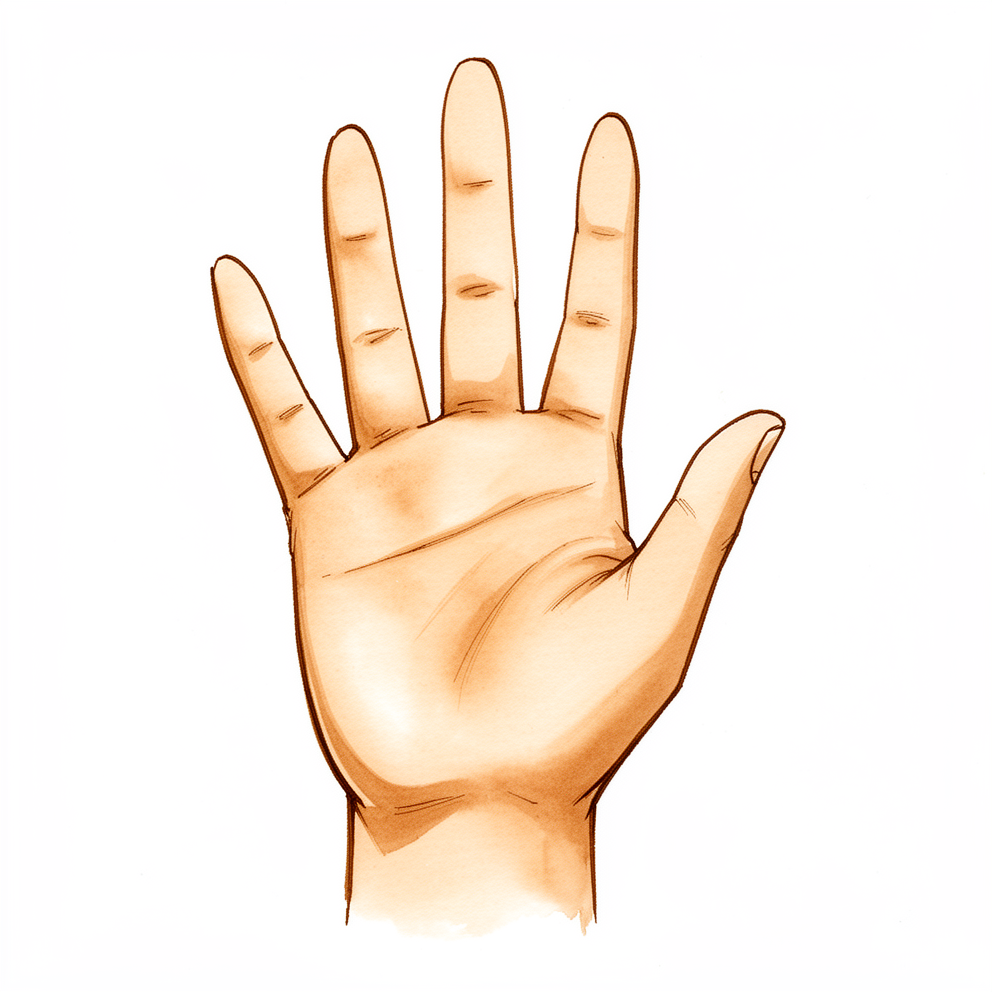
Illustration: hand

What you're feeling

The pain from a glomus tumour is usually felt at one small spot, most often under the fingernail or in the soft pad of the fingertip. It can be severe and out of proportion to how tiny the spot is. Pressing on that exact point hurts sharply. Cold sets it off: reaching into the fridge or freezer, washing your hands in cool water, or stepping outside on a chilly morning can bring on a wave of pain. Warmth tends to settle it.

The pain often flares at night and can wake you. Because the fingertip is packed with nerve endings, everyday tasks become hard. Doing up buttons, typing, holding a pen, turning a key, or gripping a saucepan handle can all press on the spot and hurt. You may find yourself protecting that finger without thinking about it.

You might notice a small bluish or pink spot under the nail, or a ridge running through the nail where the tumour sits. Sometimes there is nothing to see at all, which is part of why this condition is so often missed. The diagnosis is frequently delayed for years because the tumour is tiny and often cannot be seen, and some people are told for a long time that nothing is wrong.

A glomus tumour is benign, which means it is not a cancer and does not spread. Knowing that can bring some relief while you work out what is causing the pain.

If your symptoms are not settling, are getting worse over weeks, wake you at night, or stop you working or using your hand, see your GP or ask for a specialist review.

What's actually happening

Deep in your skin, mostly in your fingertips and nail beds, sit tiny structures called glomus bodies. Each one is a small coil of blood vessel wrapped in special muscle cells and nerve endings. Its job is to control blood flow to the skin, opening up when you need to release heat and narrowing when you need to keep it.

A glomus tumour is an overgrowth of those same cells. It is benign, which means it is not a cancer. It stays small, usually less than 1 cm, and there is normally just one. Most form under the nail or in the soft pad of the fingertip, though a few appear elsewhere in the hand or forearm.

The trouble is where these cells sit. A glomus body is built around blood vessels and sits in a dense bed of nerves. When the cells multiply, the tumour presses on those nerves and upsets the way the blood vessel behaves. That is why the pain is so severe at one pinpoint spot, why even light touch there hurts, and why cold sets it off: chilling the finger changes the blood flow through the tumour and triggers a flare. The bluish or pink spot under your nail, if you have one, is the tumour itself showing through.

Because the tumour is so small and often hidden, it is easy to miss. Many people spend years being treated for something else before anyone names it.

What we can do about it

Dr Kieran Hirpara, an upper-limb surgeon at Mater Private Hospital Rockhampton, starts with the least invasive options that suit your condition. Patients are generally referred to our clinic by their GP; if a physiotherapist has suggested you see us, you will still need a referral from your GP in order to be eligible for the Medicare rebate. A clinic assessment, which includes your history, an examination, and imaging where needed, establishes the diagnosis.

Because a glomus tumour is a growth of cells rather than an inflamed joint, there is no tablet, cream or injection that makes it go away. Warmth settles the pain for a while, so you can keep the finger out of the cold and wear a glove when you cannot avoid it. That eases the flares, but it does not treat the cause. We do not usually send this condition to hand therapy first, because therapy cannot remove the tumour.

The treatment that works is surgical removal of the whole tumour. Once it is out, the typical pain usually goes straight away. We plan the operation around where the tumour sits, most often under the nail or in the fingertip pad, and we remove it completely while protecting the surrounding skin and nail as much as we can. If you have more than one painful spot, we look for a tumour at each one, because occasionally there is more than one from the start.

Surgery is considered once the diagnosis fits your story and examination, together with an X-ray and an MRI scan. A normal scan does not rule the tumour out when the examination points to it, because these tumours are tiny and some are too small for the scan to show. If your symptoms are not settling, are getting worse over weeks, wake you at night, or stop you working or using your hand, see your GP or ask for a specialist review.

What to expect

Left alone, a glomus tumour does not settle. The pain tends to persist, and for many people it comes and goes for years before anyone names the cause. Some people live with it for a long time, sometimes many years, while the pain slowly wears down their quality of life. The constant flares can make you protect the finger, and that protection can spread into the hand and arm over time.

With treatment, the outlook is different. Complete removal of the tumour cures it. Once it is out, the typical pain usually goes straight away. Recurrence after removal is uncommon, and when pain does return later it is often a second small tumour in a new spot rather than the first one growing back. Occasionally there is more than one tumour from the start, which is why we check for a tumour at each painful spot. Removing the tumour can also improve your quality of life overall, not just the pain itself.

Recovery from the diagnosis is often the biggest change. After years of being told nothing is wrong, having a name for the pain and a clear plan can feel like a turning point. The relief after surgery is usually felt quickly, though the finger itself may take some time to settle and get back to full use.

If your symptoms are not settling, are getting worse over weeks, wake you at night, or stop you working or using your hand, see your GP or ask for a specialist review.

When to see someone

A glomus tumour is not an emergency, but it is worth naming early. The signs that point to it are the ones described earlier: severe pain at one pinpoint spot, sharp tenderness there, and pain set off by cold. You might also see a small bluish or pink spot under the nail, or a ridge in the nail.

See your GP if a fingertip has hurt like this for more than a few weeks, especially if cold water or cold air sets the pain off. Ask for a specialist review if your symptoms are not settling, are getting worse over weeks, wake you at night, or stop you working or using your hand.

This condition is often missed, sometimes for years, because the tumour is tiny and often cannot be seen. Some people are treated for other causes first, and some are told nothing is wrong. If that sounds like you, it is still reasonable to ask whether a glomus tumour could be the cause.

Go to an emergency department if a finger or hand becomes hot, red, swollen and painful, especially with a fever, or turns pale, cold, white or blue, or you suddenly lose feeling or movement after an injury. These signs are not typical of a glomus tumour and need same-day care.

In more depth

Advanced reading: the deeper science (optional)

This section goes further than you need for your own treatment decisions. A glomus tumour is worth the extra reading because it is one of the few conditions in hand surgery where the usual problem is not treatment but recognition: the tumour is tiny, often invisible, and cured by its removal, yet people commonly live with it for years before anyone names it.

Years of pain from something a few millimetres across

A glomus body is a small coil of blood vessel wrapped in specialised muscle cells that helps control blood flow to the skin, and the fingertips and nail beds are packed with them. A glomus tumour is a benign overgrowth of these cells, usually under the nail or in the pulp of the fingertip. Because the cells sit around blood vessels and nerve endings, a lump only a few millimetres across can produce pain out of all proportion to its size.

The delay in diagnosis is the defining feature of the condition. In a UK series of 73 tumours, more than 90% of patients had the classic symptoms, yet 31% had first been given another diagnosis, and the average time from first symptoms to diagnosis was 6 years [1]. In a Singapore series of 31 cases the average was 44 months; nearly everyone had pain (96.8%), but a visible lump was present in fewer than half (48.4%) [2]. In a review of 138 cases at a large American centre, the clinical diagnosis and the laboratory diagnosis agreed in only 45.4%; the commonest alternatives were a lipoma, a cyst or a blood vessel lump [3].

Three bedside tests, and why they are combined

The classic triad is severe pain at one spot, exquisite tenderness there, and pain set off by cold. Three simple tests build on it.

  • The pin test (Love's test): pressing with the head of a pin finds the single point of tenderness and maps it.
  • The cold test: chilling the finger reproduces the pain.
  • Hildreth's test: a cuff on the upper arm briefly stops blood flow; the tenderness fades while the cuff is up and returns when it comes down.

In a study of 24 patients Hildreth's test was 92% sensitive and 91% specific [4]. In a series of 18 people with fingertip pain, the cold test identified every tumour correctly, while the pin and Hildreth's tests were each 78% accurate [5]. The numbers come from small series and do not agree exactly, which is why the tests are used together rather than relied on one at a time.

What an MRI can and cannot do

An MRI scan is very good at confirming a tumour that is there. In a study of 42 hands it was 90% sensitive with a positive predictive value of 97%, but its negative predictive value was only 20%: all four tumours it missed were confirmed at surgery, and each measured just 2 to 3 mm [6]. In a second series of 36 MRI scans, about one in three did not make the diagnosis, more often when the tumour was small, unusual under the microscope, in an unusual place, or not suspected by the person requesting the scan [7]. An X-ray adds a little: a long-standing tumour under the nail can leave a small dent in the bone, and tumours without one were more likely to be missed on MRI [7]. A normal scan therefore does not rule out a glomus tumour when the history and examination fit; the clinical findings come first.

More than one tumour, and neurofibromatosis

Glomus tumours are not always single. In an early series of 28 patients, 7 (25%) had more than one, and 15% had their symptoms come back after surgery, which the authors put down to a second tumour missed at the first operation [8]. In a later series, all 5 recurrences among 12 patients appeared in new, separate places rather than where the first tumour had been removed [9]. Pain that returns months or years after a successful operation is therefore often a second tumour rather than regrowth.

People with neurofibromatosis type 1, a genetic condition that causes growths along nerves, are at much higher risk. In one study 6 of 21 people with a hand glomus tumour (29%) had neurofibromatosis, against none of 200 people with a wrist ganglion; the odds ratio was 168 [10]. A painful fingertip in someone with neurofibromatosis deserves a careful look for a glomus tumour.

What removal achieves

Complete removal cures the typical pain, usually at once. In a series of 53 people every one had relief by the day after surgery [11]. In a smaller French study that followed people for more than 10 years, the pain had gone in 91% [12]. Recurrence after removal is uncommon, at about 3 to 7% in the larger modern series [1] [13], and is covered in more detail on the operation page.

What this means for you

  • A small, very tender spot at the fingertip that hurts in the cold is worth naming early. The diagnosis is commonly missed for years.
  • The examination tests matter as much as the scan. A normal MRI does not rule out a small tumour when the story fits.
  • Removal is the only treatment that cures it, and the relief is usually immediate.
  • If the pain comes back later, it is often a second small tumour, and a repeat MRI is worth having.

References for the advanced reading
  1. Jabir S, Rodrigo T, Petkar M, Iwuagwu F. Glomus tumours of the upper limb and hand. A clinicopathological review of cases over two decades. J Hand Surg Eur Vol. 2021;47(4):419-20.
  2. Lee WQ, Li Y, Yeo NEM. Glomus tumour: an institutional experience of 31 cases. J Orthop Surg Res. 2023;18(1):741.
  3. Mravic M, LaChaud G, Nguyen A, Scott MA, Dry SM, James AW. Clinical and histopathological diagnosis of glomus tumor: an institutional experience of 138 cases. Int J Surg Pathol. 2015;23(3):181-8.
  4. Giele H. Hildreth's Test is a Reliable Clinical Sign for the Diagnosis of Glomus Tumours. J Hand Surg Br. 2002;27(2):157-8.
  5. Bhaskaranand K, Navadgi BC. Glomus Tumour of the Hand. J Hand Surg Br. 2002;27(3):229-31.
  6. Al-Qattan MM, Al-Namla A, Al-Thunayan A, Al-Subhi F, El-Shayeb AF. Magnetic Resonance Imaging in the Diagnosis of Glomus Tumours of the Hand. J Hand Surg Br. 2005;30(5):535-40.
  7. Trehan SK, Athanasian EA, DiCarlo EF, Mintz DN, Daluiski A. Characteristics of Glomus Tumors in the Hand Not Diagnosed on Magnetic Resonance Imaging. J Hand Surg Am. 2015;40(3):542-5.
  8. Maxwell GP, Curtis RM, Wilgis ES. Multiple digital glomus tumors. J Hand Surg Am. 1979;4(4):363-7.
  9. Gandhi J, Yang SS, Hurd J. The Anatomic Location of Digital Glomus Tumor Recurrences. J Hand Surg Am. 2010;35(6):986-9.
  10. Harrison B, Moore AM, Calfee R, Sammer DM. The Association Between Glomus Tumors and Neurofibromatosis. J Hand Surg Am. 2013;38(8):1571-4.
  11. Madhar M, Bouslous J, Saidi H, Fikry T, Schuind F. Which approach is best for subungual glomus tumors? Transungual with microsurgical dissection of the nail bed or periungual? Chir Main. 2015;34(1):39-43.
  12. Faisan Smilevitch D, Chaput B, Grolleau J, Rongieres M, Mansat P. Improvement in quality of life after surgery for glomus tumors of the fingers. Chir Main. 2014;33(5):330-5.
  13. Kim YJ, Kim DH, Park JS, Baek JH, Kim KJ, Lee JH. Factors affecting surgical outcomes of digital glomus tumour: a multicentre study. J Hand Surg Eur Vol. 2018;43(6):652-8.

Creative Commons BY-NC 4.0

CC Creative Commons licence
BY Attribution — you must credit the source
NC NonCommercial — not for commercial use

Attribution-NonCommercial 4.0 International


Creative Commons Corporation ("Creative Commons") is not a law firm and does not provide legal services or legal advice. Distribution of Creative Commons public licenses does not create a lawyer-client or other relationship. Creative Commons makes its licenses and related information available on an "as-is" basis. Creative Commons gives no warranties regarding its licenses, any material licensed under their terms and conditions, or any related information. Creative Commons disclaims all liability for damages resulting from their use to the fullest extent possible.

Using Creative Commons Public Licenses

Creative Commons public licenses provide a standard set of terms and conditions that creators and other rights holders may use to share original works of authorship and other material subject to copyright and certain other rights specified in the public license below. The following considerations are for informational purposes only, are not exhaustive, and do not form part of our licenses.

Considerations for licensors: Our public licenses are intended for use by those authorized to give the public permission to use material in ways otherwise restricted by copyright and certain other rights. Our licenses are irrevocable. Licensors should read and understand the terms and conditions of the license they choose before applying it. Licensors should also secure all rights necessary before applying our licenses so that the public can reuse the material as expected. Licensors should clearly mark any material not subject to the license. This includes other CC- licensed material, or material used under an exception or limitation to copyright. More considerations for licensors: wiki.creativecommons.org/Considerations_for_licensors

Considerations for the public: By using one of our public licenses, a licensor grants the public permission to use the licensed material under specified terms and conditions. If the licensor's permission is not necessary for any reason--for example, because of any applicable exception or limitation to copyright--then that use is not regulated by the license. Our licenses grant only permissions under copyright and certain other rights that a licensor has authority to grant. Use of the licensed material may still be restricted for other reasons, including because others have copyright or other rights in the material. A licensor may make special requests, such as asking that all changes be marked or described. Although not required by our licenses, you are encouraged to respect those requests where reasonable. More considerations for the public: wiki.creativecommons.org/Considerations_for_licensees


Creative Commons Attribution-NonCommercial 4.0 International Public License

By exercising the Licensed Rights (defined below), You accept and agree to be bound by the terms and conditions of this Creative Commons Attribution-NonCommercial 4.0 International Public License ("Public License"). To the extent this Public License may be interpreted as a contract, You are granted the Licensed Rights in consideration of Your acceptance of these terms and conditions, and the Licensor grants You such rights in consideration of benefits the Licensor receives from making the Licensed Material available under these terms and conditions.

Section 1 -- Definitions.

a. Adapted Material means material subject to Copyright and Similar Rights that is derived from or based upon the Licensed Material and in which the Licensed Material is translated, altered, arranged, transformed, or otherwise modified in a manner requiring permission under the Copyright and Similar Rights held by the Licensor. For purposes of this Public License, where the Licensed Material is a musical work, performance, or sound recording, Adapted Material is always produced where the Licensed Material is synched in timed relation with a moving image.

b. Adapter's License means the license You apply to Your Copyright and Similar Rights in Your contributions to Adapted Material in accordance with the terms and conditions of this Public License.

c. Copyright and Similar Rights means copyright and/or similar rights closely related to copyright including, without limitation, performance, broadcast, sound recording, and Sui Generis Database Rights, without regard to how the rights are labeled or categorized. For purposes of this Public License, the rights specified in Section 2(b)(1)-(2) are not Copyright and Similar Rights.

d. Effective Technological Measures means those measures that, in the absence of proper authority, may not be circumvented under laws fulfilling obligations under Article 11 of the WIPO Copyright Treaty adopted on December 20, 1996, and/or similar international agreements.

e. Exceptions and Limitations means fair use, fair dealing, and/or any other exception or limitation to Copyright and Similar Rights that applies to Your use of the Licensed Material.

f. Licensed Material means the artistic or literary work, database, or other material to which the Licensor applied this Public License.

g. Licensed Rights means the rights granted to You subject to the terms and conditions of this Public License, which are limited to all Copyright and Similar Rights that apply to Your use of the Licensed Material and that the Licensor has authority to license.

h. Licensor means the individual(s) or entity(ies) granting rights under this Public License.

i. NonCommercial means not primarily intended for or directed towards commercial advantage or monetary compensation. For purposes of this Public License, the exchange of the Licensed Material for other material subject to Copyright and Similar Rights by digital file-sharing or similar means is NonCommercial provided there is no payment of monetary compensation in connection with the exchange.

j. Share means to provide material to the public by any means or process that requires permission under the Licensed Rights, such as reproduction, public display, public performance, distribution, dissemination, communication, or importation, and to make material available to the public including in ways that members of the public may access the material from a place and at a time individually chosen by them.

k. Sui Generis Database Rights means rights other than copyright resulting from Directive 96/9/EC of the European Parliament and of the Council of 11 March 1996 on the legal protection of databases, as amended and/or succeeded, as well as other essentially equivalent rights anywhere in the world.

l. You means the individual or entity exercising the Licensed Rights under this Public License. Your has a corresponding meaning.

Section 2 -- Scope.

a. License grant.

1. Subject to the terms and conditions of this Public License, the Licensor hereby grants You a worldwide, royalty-free, non-sublicensable, non-exclusive, irrevocable license to exercise the Licensed Rights in the Licensed Material to:

a. reproduce and Share the Licensed Material, in whole or in part, for NonCommercial purposes only; and

b. produce, reproduce, and Share Adapted Material for NonCommercial purposes only.

2. Exceptions and Limitations. For the avoidance of doubt, where Exceptions and Limitations apply to Your use, this Public License does not apply, and You do not need to comply with its terms and conditions.

3. Term. The term of this Public License is specified in Section 6(a).

4. Media and formats; technical modifications allowed. The Licensor authorizes You to exercise the Licensed Rights in all media and formats whether now known or hereafter created, and to make technical modifications necessary to do so. The Licensor waives and/or agrees not to assert any right or authority to forbid You from making technical modifications necessary to exercise the Licensed Rights, including technical modifications necessary to circumvent Effective Technological Measures. For purposes of this Public License, simply making modifications authorized by this Section 2(a) (4) never produces Adapted Material.

5. Downstream recipients.

a. Offer from the Licensor -- Licensed Material. Every recipient of the Licensed Material automatically receives an offer from the Licensor to exercise the Licensed Rights under the terms and conditions of this Public License.

b. No downstream restrictions. You may not offer or impose any additional or different terms or conditions on, or apply any Effective Technological Measures to, the Licensed Material if doing so restricts exercise of the Licensed Rights by any recipient of the Licensed Material.

6. No endorsement. Nothing in this Public License constitutes or may be construed as permission to assert or imply that You are, or that Your use of the Licensed Material is, connected with, or sponsored, endorsed, or granted official status by, the Licensor or others designated to receive attribution as provided in Section 3(a)(1)(A)(i).

b. Other rights.

1. Moral rights, such as the right of integrity, are not licensed under this Public License, nor are publicity, privacy, and/or other similar personality rights; however, to the extent possible, the Licensor waives and/or agrees not to assert any such rights held by the Licensor to the limited extent necessary to allow You to exercise the Licensed Rights, but not otherwise.

2. Patent and trademark rights are not licensed under this Public License.

3. To the extent possible, the Licensor waives any right to collect royalties from You for the exercise of the Licensed Rights, whether directly or through a collecting society under any voluntary or waivable statutory or compulsory licensing scheme. In all other cases the Licensor expressly reserves any right to collect such royalties, including when the Licensed Material is used other than for NonCommercial purposes.

Section 3 -- License Conditions.

Your exercise of the Licensed Rights is expressly made subject to the following conditions.

a. Attribution.

1. If You Share the Licensed Material (including in modified form), You must:

a. retain the following if it is supplied by the Licensor with the Licensed Material:

i. identification of the creator(s) of the Licensed Material and any others designated to receive attribution, in any reasonable manner requested by the Licensor (including by pseudonym if designated);

ii. a copyright notice;

iii. a notice that refers to this Public License;

iv. a notice that refers to the disclaimer of warranties;

v. a URI or hyperlink to the Licensed Material to the extent reasonably practicable;

b. indicate if You modified the Licensed Material and retain an indication of any previous modifications; and

c. indicate the Licensed Material is licensed under this Public License, and include the text of, or the URI or hyperlink to, this Public License.

2. You may satisfy the conditions in Section 3(a)(1) in any reasonable manner based on the medium, means, and context in which You Share the Licensed Material. For example, it may be reasonable to satisfy the conditions by providing a URI or hyperlink to a resource that includes the required information.

3. If requested by the Licensor, You must remove any of the information required by Section 3(a)(1)(A) to the extent reasonably practicable.

4. If You Share Adapted Material You produce, the Adapter's License You apply must not prevent recipients of the Adapted Material from complying with this Public License.

Section 4 -- Sui Generis Database Rights.

Where the Licensed Rights include Sui Generis Database Rights that apply to Your use of the Licensed Material:

a. for the avoidance of doubt, Section 2(a)(1) grants You the right to extract, reuse, reproduce, and Share all or a substantial portion of the contents of the database for NonCommercial purposes only;

b. if You include all or a substantial portion of the database contents in a database in which You have Sui Generis Database Rights, then the database in which You have Sui Generis Database Rights (but not its individual contents) is Adapted Material; and

c. You must comply with the conditions in Section 3(a) if You Share all or a substantial portion of the contents of the database.

For the avoidance of doubt, this Section 4 supplements and does not replace Your obligations under this Public License where the Licensed Rights include other Copyright and Similar Rights.

Section 5 -- Disclaimer of Warranties and Limitation of Liability.

a. UNLESS OTHERWISE SEPARATELY UNDERTAKEN BY THE LICENSOR, TO THE EXTENT POSSIBLE, THE LICENSOR OFFERS THE LICENSED MATERIAL AS-IS AND AS-AVAILABLE, AND MAKES NO REPRESENTATIONS OR WARRANTIES OF ANY KIND CONCERNING THE LICENSED MATERIAL, WHETHER EXPRESS, IMPLIED, STATUTORY, OR OTHER. THIS INCLUDES, WITHOUT LIMITATION, WARRANTIES OF TITLE, MERCHANTABILITY, FITNESS FOR A PARTICULAR PURPOSE, NON-INFRINGEMENT, ABSENCE OF LATENT OR OTHER DEFECTS, ACCURACY, OR THE PRESENCE OR ABSENCE OF ERRORS, WHETHER OR NOT KNOWN OR DISCOVERABLE. WHERE DISCLAIMERS OF WARRANTIES ARE NOT ALLOWED IN FULL OR IN PART, THIS DISCLAIMER MAY NOT APPLY TO YOU.

b. TO THE EXTENT POSSIBLE, IN NO EVENT WILL THE LICENSOR BE LIABLE TO YOU ON ANY LEGAL THEORY (INCLUDING, WITHOUT LIMITATION, NEGLIGENCE) OR OTHERWISE FOR ANY DIRECT, SPECIAL, INDIRECT, INCIDENTAL, CONSEQUENTIAL, PUNITIVE, EXEMPLARY, OR OTHER LOSSES, COSTS, EXPENSES, OR DAMAGES ARISING OUT OF THIS PUBLIC LICENSE OR USE OF THE LICENSED MATERIAL, EVEN IF THE LICENSOR HAS BEEN ADVISED OF THE POSSIBILITY OF SUCH LOSSES, COSTS, EXPENSES, OR DAMAGES. WHERE A LIMITATION OF LIABILITY IS NOT ALLOWED IN FULL OR IN PART, THIS LIMITATION MAY NOT APPLY TO YOU.

c. The disclaimer of warranties and limitation of liability provided above shall be interpreted in a manner that, to the extent possible, most closely approximates an absolute disclaimer and waiver of all liability.

Section 6 -- Term and Termination.

a. This Public License applies for the term of the Copyright and Similar Rights licensed here. However, if You fail to comply with this Public License, then Your rights under this Public License terminate automatically.

b. Where Your right to use the Licensed Material has terminated under Section 6(a), it reinstates:

1. automatically as of the date the violation is cured, provided it is cured within 30 days of Your discovery of the violation; or

2. upon express reinstatement by the Licensor.

For the avoidance of doubt, this Section 6(b) does not affect any right the Licensor may have to seek remedies for Your violations of this Public License.

c. For the avoidance of doubt, the Licensor may also offer the Licensed Material under separate terms or conditions or stop distributing the Licensed Material at any time; however, doing so will not terminate this Public License.

d. Sections 1, 5, 6, 7, and 8 survive termination of this Public License.

Section 7 -- Other Terms and Conditions.

a. The Licensor shall not be bound by any additional or different terms or conditions communicated by You unless expressly agreed.

b. Any arrangements, understandings, or agreements regarding the Licensed Material not stated herein are separate from and independent of the terms and conditions of this Public License.

Section 8 -- Interpretation.

a. For the avoidance of doubt, this Public License does not, and shall not be interpreted to, reduce, limit, restrict, or impose conditions on any use of the Licensed Material that could lawfully be made without permission under this Public License.

b. To the extent possible, if any provision of this Public License is deemed unenforceable, it shall be automatically reformed to the minimum extent necessary to make it enforceable. If the provision cannot be reformed, it shall be severed from this Public License without affecting the enforceability of the remaining terms and conditions.

c. No term or condition of this Public License will be waived and no failure to comply consented to unless expressly agreed to by the Licensor.

d. Nothing in this Public License constitutes or may be interpreted as a limitation upon, or waiver of, any privileges and immunities that apply to the Licensor or You, including from the legal processes of any jurisdiction or authority.


Creative Commons is not a party to its public licenses. Notwithstanding, Creative Commons may elect to apply one of its public licenses to material it publishes and in those instances will be considered the “Licensor.” The text of the Creative Commons public licenses is dedicated to the public domain under the CC0 Public Domain Dedication. Except for the limited purpose of indicating that material is shared under a Creative Commons public license or as otherwise permitted by the Creative Commons policies published at creativecommons.org/policies, Creative Commons does not authorize the use of the trademark "Creative Commons" or any other trademark or logo of Creative Commons without its prior written consent including, without limitation, in connection with any unauthorized modifications to any of its public licenses or any other arrangements, understandings, or agreements concerning use of licensed material. For the avoidance of doubt, this paragraph does not form part of the public licenses.

Creative Commons may be contacted at creativecommons.org.