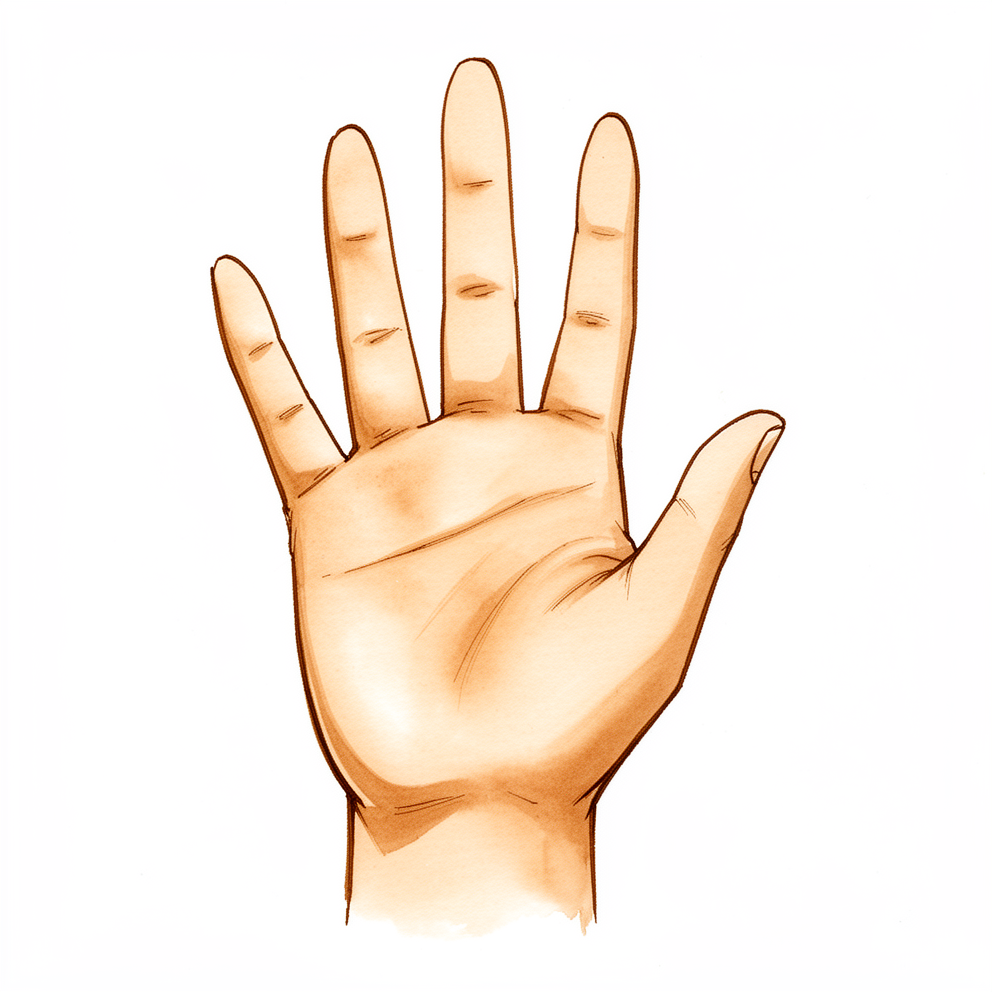
What you're feeling
The STT joint sits where the scaphoid bone of the wrist meets two smaller bones, the trapezium and the trapezoid, just behind the joint at the base of your thumb. When this joint wears, you feel an ache at the base of your thumb and along the thumb side of your wrist. Gripping and pinching make it worse.
Everyday tasks tend to set it off: turning a key, opening a jar, writing, carrying shopping, or holding a cup of tea. You may find yourself avoiding these movements without realising why.
Wear in this joint is common on X-rays, especially in older women. Many people with these X-ray changes feel nothing at all. So an X-ray that shows wear does not always mean the joint is the source of your pain. X-rays can also under- or over-estimate how much wear is there.
STT arthritis often comes with arthritis of the joint at the base of the thumb, and the two can be hard to tell apart. When both joints are worn, it is called pantrapezial arthritis. Knowing which joint is causing your pain matters, because it shapes the treatment. An injection of local anaesthetic and steroid into the joint, done under X-ray or ultrasound guidance, can show whether the pain is coming from it, and may settle your symptoms for a time.
In some people with STT arthritis the wrist bones tilt into a pattern called DISI. Your surgeon checks for this on X-ray before choosing an operation, because it affects which one suits you.
The worn joint lies right next to a tendon at the front of the wrist, the tendon of flexor carpi radialis. This tendon can become inflamed and cause further pain. Very rarely it ruptures.
See your GP if your symptoms are not settling, are getting worse over weeks, wake you at night, or stop you working or using your hand.
What's actually happening
Your wrist has many small bones that let it move in every direction. The STT joint is where one of these, the scaphoid, meets two of its neighbours, the trapezium and the trapezoid. Think of these three bones as a short stack of building blocks at the base of your thumb. In a healthy joint, the surfaces glide smoothly over each other, held in place by strong straps of tissue called ligaments.
With wear-and-tear arthritis, the smooth covering on the bone surfaces thins and frays. The joint loses its cushioning, so bone starts to rub on bone. That rubbing causes the ache you feel when you grip or pinch. The ligaments holding the stack together can also stretch or weaken, which lets the scaphoid tip out of its normal position. In some people this leads to a tilt of the wrist bones, the pattern called DISI that your surgeon checks for on X-ray.
Wear in this joint rarely happens alone. It often appears alongside arthritis at the base of the thumb, which is why the two can be hard to tell apart. The worn joint also sits right next to a tendon at the front of the wrist, and that tendon can become inflamed and add its own pain.
One more thing worth knowing: how much wear shows on an X-ray does not match how much pain you feel. Many wrists with clear wear on X-ray cause no trouble at all, while some painful joints look milder on the picture. That is why your surgeon does not rely on the X-ray alone, and may use a guided injection to work out whether this joint is truly the one causing your pain.
What we can do about it
Dr Kieran Hirpara, an upper-limb surgeon at Mater Private Hospital Rockhampton, starts with the least invasive options that suit your condition. Treatment begins without surgery. A splint that holds the thumb and wrist still can settle the ache, especially when you use your hand a lot. Changing how you do things helps too: easing off tasks that load the base of the thumb, and finding other ways to grip and carry. Hand therapy aims to keep the joint moving and build the strength around it, so everyday tasks put less strain on the worn surfaces. Simple pain relief from your pharmacy can take the edge off on busier days. We usually give these measures a fair go over several weeks or a few months before thinking about anything further.
The guided injection described earlier, with local anaesthetic and steroid placed into the joint under X-ray or ultrasound guidance, does two jobs. It helps confirm that this joint is the source of your pain, and the steroid may settle your symptoms for a time. If the thumb base joint is worn as well, the same approach applies there.
When non-operative care has done all it can and the pain still limits your grip, your work or the things you enjoy, we talk about surgery. The choice depends on which joints are worn. If the STT joint is worn on its own, the usual options are removing the worn end of the scaphoid, or placing a small pyrocarbon spacer to fill the gap and keep the scaphoid at its normal height. If the thumb base joint is worn too, the usual operation removes the trapezium along with part of the trapezoid. Before choosing, we check your X-rays for the DISI tilt and for how stable the middle row of wrist bones is, because that shapes which operation suits you. We weigh the options with you, and the decision is one you make together with us.
What to expect
STT arthritis is a long-term condition rather than a passing injury. The ache tends to come and go, and it often flares with heavy use of your thumb and wrist. For some people it settles with simple measures and stays quiet for long stretches. For others it grumbles on, slowly limiting grip and pinch over months or years. There is no set timeline, and how much trouble it causes does not always match what the X-ray shows.
Without treatment, the ache often persists or returns whenever you load the joint. Leaving it alone does not usually make the joint worse faster, but it also gives the pain nothing to settle. Non-operative care, a splint, easing off aggravating tasks, simple pain relief and a steroid injection, gives many people enough relief to keep doing what they need and enjoy. These measures are worth a fair go over several weeks or a few months. If your symptoms are not settling, are getting worse over weeks, wake you at night, or stop you working or using your hand, see your GP or ask for a specialist review.
One sign needs urgent care. If your hand becomes hot, red, swollen and painful, especially with a fever, go to the emergency department the same day. You do not need a referral.
When to see someone
Most of the time, this condition is not an emergency. One sign is. If your hand becomes hot, red, swollen and painful, especially with a fever, go to the emergency department the same day. You do not need a referral.
For everything else, start with your GP. See your GP if your pain is not settling with rest and simple measures, or if it is getting worse over weeks. The same applies if the pain wakes you at night, or stops you working or using your hand.
Ask for a specialist review if your grip or pinch is weakening, or if you find yourself dropping things when you grip or pinch. These can be signs the joint is wearing. Your GP can arrange X-rays and refer you on if the picture points to this joint.
If you cannot reach the clinic, out of hours or on a weekend, go to your nearest emergency department.
In more depth
Advanced reading: the deeper science (optional)
This section goes further than you need for your own treatment decisions. STT arthritis is worth the extra reading for two reasons: the X-ray is a poor guide to whether this joint is the one that hurts, and every operation for it trades pain relief against a change in the way the small bones of the wrist sit.
How common it is, and why the X-ray misleads
Wear in the STT joint is a frequent X-ray finding. Among 700 consecutive hand-clinic patients X-rayed for any complaint, 111 (16%) showed STT arthritis; it was more likely with age, with a gap between the scaphoid and lunate, and with arthritis of the thumb base joint [1]. In a random sample of Japanese residents aged 50 to 89, 5.3% of wrists showed it, again linked to thumb-base arthritis, female sex and age [2]. Most of these people have no symptoms from the STT joint.
The X-ray is unreliable in both directions. When surgeons looked directly at the joint during thumb-base surgery, 62% of thumbs had arthritis between the scaphoid and trapezoid, but the X-ray had detected only 44% of them [3]. A larger series of 257 patients found end-stage wear in 31% at operation, with an X-ray sensitivity of 47% and specificity of 94% [4]. Moderate STT wear left alone at the time of thumb-base surgery did not progress or cause symptoms over a mean of 8 years in one long-term series [5]. This is why the decision rests on where the tenderness is, and often on a guided injection, rather than on the X-ray alone.
The tilt of the wrist bones
STT arthritis is linked to a particular tilt of the wrist bones, called dorsal intercalated segment instability (DISI): the lunate tips backwards while the scaphoid sits more upright. In 135 wrists with STT arthritis, DISI was present in 5% of moderate cases and 60% of severe ones; unlike the tilt that follows a torn scapholunate ligament, the gap between the scaphoid and lunate stayed normal and the main wrist joint did not wear [6]. Some authors now describe a pattern of collapse driven by STT arthritis (SOAC wrist) as distinct from the better-known SLAC wrist [7].
It matters for surgery because an operation that removes bone can increase the tilt. A wrist that is already unstable in the middle row of bones can collapse after a simple excision, as in a reported case that needed a later fusion [8]. Surgeons therefore look for the tilt and for midcarpal instability before choosing an operation.
Distal scaphoid excision: relief, at the cost of a tilt
Removing the end of the scaphoid relieves pain in most series, and the wrist bones usually tilt afterwards. In one of the first series, 12 of 21 wrists developed DISI, none had further joint deterioration, and satisfaction was the same as in wrists that did not tilt [9]. A later series found DISI in 19 of 21 wrists (95%), with the angle of the lunate rising by a mean of 13°, and no relation between the tilt and the functional scores at a mean of 3 years [10].
How much bone is removed matters. After arthroscopic excision in 17 wrists, pain scores fell from 6.1 to 1.7 out of 10 and pinch strength rose from 2.5 kg to 4.4 kg; the tilt was more likely when more than 3 mm of bone was taken [11]. In cadaver wrists, removing a quarter of the scaphoid barely changed how the bones moved, half caused a clear tilt, and three-quarters made the wrist unstable [12]. An anatomical study found that the deep band of the scaphotrapezial ligament attaches about 3.3 mm from the end of the scaphoid, which gives an anatomical reason to keep the resection to about 3 mm [13]. A cadaver study of the same operation measured the capitate rotating back by about 14° and the lunate by 8° [14]. Rarely, a sharp edge left on the scaphoid has worn through a flexor tendon [15].
When the thumb base is worn as well
When both the thumb base and the STT joint are worn, the usual operation removes the trapezium and the worn end of the trapezoid. In 37 thumbs, adding a partial trapezoid excision caused no extra problems compared with trapezium removal alone [3]. How much trapezoid to remove is the debated point. In 79 hands followed for a median of 92 months, removing part or all of the trapezoid made a backward tilt of the lunate of 15° or more more likely (29% after partial and 26% after complete removal), and wrists with that tilt scored worse; symptomatic sinking of the index metacarpal occurred in 18% after complete and 10% after partial removal, and the authors advised against complete removal [16]. A cadaver study found that 4 to 6 mm of trapezoid has to be removed before the pressure between the scaphoid and trapezoid falls in bending and side-to-side movements [17]. In a series of 150 thumbs followed for a mean of 13.5 years, trapeziectomy with partial trapezoidectomy and a tendon reconstruction gave a mean DASH disability score of 8.7 and no revisions [18].
Pyrocarbon implants
A pyrocarbon spacer aims to relieve pain while keeping the height of the scaphoid, and so to limit the tilt. With the Pyrocardan disc, 20 patients (22 implants) followed for a mean of 3.8 years had less pain, better scores and stronger pinch, with some loss of wrist extension and no dislocations; the capitolunate angle improved rather than worsened [19]. A series followed for a mean of 5 years reported 95% of implants free of reoperation, one painless dislocation, calcium around the joint in 4 wrists, and a tilt that persisted in 3 and appeared in 1 [20]. Compared with STT fusion in a non-randomised study, results were similar except for better wrist extension with the implant (58° against 38°); 22% of implant wrists developed a tilt, and 9% of fusions failed to unite [21]. Most of these series come from a small number of French centres.
Results with other designs have been less consistent. With a different pyrocarbon implant shaped to replace the end of the scaphoid (the STPI), 7 of 29 implants were revised, mainly for pain, and the number of wrists with a tilt doubled from 6 to 12 over a median of 68 months [22]. A case report describes a Pyrocardan that broke twice in a tennis player, which is why heavy loading of the wrist in extension is discussed before surgery [23].
STT fusion, for comparison
Fusion joins the three bones into one. Across 1,429 operations in a systematic review, the fusion failed to unite in 6.3%, 4.2% were converted to a full wrist fusion, and grip strength averaged 76% of the other hand [24]. In 58 wrists followed for 10 years, 10% needed a further operation and 7% had a painful non-union [25]. Fusion typically keeps about three-quarters of wrist movement, and pain from the radial styloid catching on the fused scaphoid is common enough that some surgeons trim the styloid at the same time [26].
What is not known
There are no randomised trials comparing these operations. A survey of European hand surgeons found a wide spread of preferred operations for the same problem [27], and recent reviews conclude that no option has clear evidence of superiority; the choice depends on whether the STT joint is worn alone, whether the thumb base is worn too, and whether the wrist bones are already tilted [28] [29]. Most series follow fewer than 30 patients for less than 10 years, so the long-term effect of the tilt after excision, and the long-term survival of pyrocarbon implants, are still open questions.
References for the advanced reading
- Scordino LE, Bernstein J, Nakashian M, et al. Radiographic prevalence of scaphotrapeziotrapezoid osteoarthrosis. J Hand Surg Am. 2014;39(9):1677-82.
- Kitamura Y, Kato H, Hayashi M, et al. Prevalence and associated factors for primary osteoarthritis of the scaphotrapeziotrapezoid, radiocarpal, and distal radioulnar joints in the Japanese general elderly population. J Hand Surg Am. 2025;50(1):103.e1-103.e10. Epub 2023.
- Tomaino MM, Vogt M, Weiser R. Scaphotrapezoid arthritis: prevalence in thumbs undergoing trapezium excision arthroplasty and efficacy of proximal trapezoid excision. J Hand Surg Am. 1999;24(6):1220-4.
- Akoon A, Grandizio LC, Mookerjee GG, et al. Comparison of radiographic and intraoperative visual assessment of scaphotrapezoid joint arthritis in patients with end-stage carpometacarpal arthritis of the thumb base. Hand (N Y). 2019;14(5):609-13. Epub 2018.
- Glickel SZ, Kornstein AN, Eaton RG. Long-term follow-up of trapeziometacarpal arthroplasty with coexisting scaphotrapezial disease. J Hand Surg Am. 1992;17(4):612-20.
- Hattori Y, Sasaki J, Sakamoto S, et al. Radiographic characteristics of carpal instability associated with scaphotrapeziotrapezoid osteoarthritis. J Hand Surg Am. 2026;51(3):259-67.
- Rodriguez Fontan F, Netscher DT. Scaphotrapeziotrapezoid joint osteoarthritis: differentiating SOAC wrist from SLAC wrist. J Am Acad Orthop Surg. 2026.
- Corbin C, Warwick D. Midcarpal instability after excision arthroplasty for scapho-trapezial-trapezoid (STT) arthritis. J Hand Surg Eur Vol. 2009;34(4):537-8.
- Garcia-Elias M, Lluch AL, Farreres A, et al. Resection of the distal scaphoid for scaphotrapeziotrapezoid osteoarthritis. J Hand Surg Br. 1999;24(4):448-52.
- Brouwers D, Decramer A, Cornu P, Le Viet D. Does the DISI matter after distal scaphoidectomy with tendon interposition for STT osteoarthritis? Hand Surg Rehabil. 2020;39(4):284-90.
- Iida A, Omokawa S, Kawamura K, et al. Arthroscopic distal scaphoid resection for isolated scaphotrapeziotrapezoid osteoarthritis. J Hand Surg Am. 2019;44(4):337.e1-337.e5.
- Kadar A, Grewal R, Padmore CE, et al. How much scaphoid can be safely resected? A biomechanical analysis of the effects of distal scaphoid resection. Hand (N Y). 2022;17(5):885-92. Epub 2020.
- Yoshimura Y, Yokota A, Fujino K, et al. Anatomy of the scaphotrapezial ligament complex and its implications for distal scaphoid resection. J Hand Surg Am. 2026;51(1):25.e1-25.e8.
- Paeffgen L, Riederer J, Adler T, et al. Carpal instability after partial trapeziectomy, total trapeziectomy and the resection of the distal scaphoid pole: a cadaveric study. Arch Orthop Trauma Surg. 2024;144(3):1443-51. Epub 2023.
- Deren ME, Mitchell CH, Weiss AC. Flexor tendon ruptures after distal scaphoid excision for scaphotrapeziotrapezoid osteoarthritis. Hand (N Y). 2017;12(5):NP152-6.
- Renfree KJ, Odgers R, Tillinghast C, Zhang N. Effect of partial and complete trapezoid excision on radiographic and functional results after abductor pollicis longus suspensionplasty. J Hand Surg Am. 2020;45(4):364.e1-364.e9.
- Anz H, Roylance J, Ismaily S, et al. Correlation of scaphotrapezoid contact pressures with degree of trapezoid resection: does eliminating contact matter? J Hand Surg Glob Online. 2026;8(4):101049.
- Melone CP, Lovy AJ, Ciaglia M, Qin B. Trapeziectomy, partial trapezoidectomy, and abductor pollicis longus dual loop ligament reconstruction for advanced basal joint arthritis: long-term outcome of 150 cases. Hand (N Y). 2023;18(3):491-500. Epub 2022.
- Gauthier E, Truffandier M, Gaisne E, Bellemère P. Treatment of scaphotrapeziotrapezoid osteoarthritis with the Pyrocardan implant: results with a minimum follow-up of 2 years. Hand Surg Rehabil. 2017;36(2):113-21.
- Cholley-Roulleau M, Bouju Y, Lecoq FA, et al. Pyrocardan scaphotrapeziotrapezoid joint arthroplasty for isolated osteoarthritis: results after a mean follow-up of 5 years. J Wrist Surg. 2022;11(3):262-8. Epub 2021.
- Cholley-Roulleau M, Dautel G, Dap F, et al. Comparison between scaphotrapeziotrapezoid arthrodesis and Pyrocardan implant for isolated scaphotrapeziotrapezoid osteoarthritis. Orthop Traumatol Surg Res. 2025;111(5):103867.
- Zander M, Ibsen-Sörensen A, Nilsson A, Björkman A. Retrospective analysis of scaphoid trapezium pyrocarbon implant intervention in STT arthritis: a 3-year follow-up study. J Plast Surg Hand Surg. 2024;59:40-5.
- Sarigiannis CN, Axelsson P. Game, set… revision! A case report of a tennis player who smashed his scaphotrapeziotrapezoid-joint Pyrocardan implant twice. J Hand Surg Glob Online. 2026;8(3):100964.
- Stephens AR, Garcia BN, Rogers MJ, et al. Scaphotrapeziotrapezoid arthrodesis: systematic review. J Hand Surg Am. 2022;47(3):218-227.e2.
- Rogers MJ, Lu C, Stephens AR, et al. Scaphotrapeziotrapezoid arthrodesis: a 10-year follow-up study of complications in 58 wrists. Hand (N Y). 2022;17(5):919-25. Epub 2020.
- Deans VM, Naqui Z, Muir LT. Scaphotrapeziotrapezoidal joint osteoarthritis: a systematic review of surgical treatment. J Hand Surg Asian Pac Vol. 2017;22(1):1-9.
- Berkhout MJL, Yin Q, Ritt MJPF. Current trends in operative treatment of scaphotrapeziotrapezoid osteoarthritis: a survey among European hand surgeons. J Wrist Surg. 2020;9(2):94-9.
- Bellemère P, Ardouin L. Surgical options and outcomes for treatment of osteoarthritis of the scaphotrapeziotrapezoidal joint. J Hand Surg Eur Vol. 2025;50(1):58-67.
- Alder KD, Feroe AG, Karim KE. Management of scaphotrapeziotrapezoid osteoarthritis: a critical analysis review. JBJS Rev. 2023;11(10):e23.00093.