Clinicians › Hand
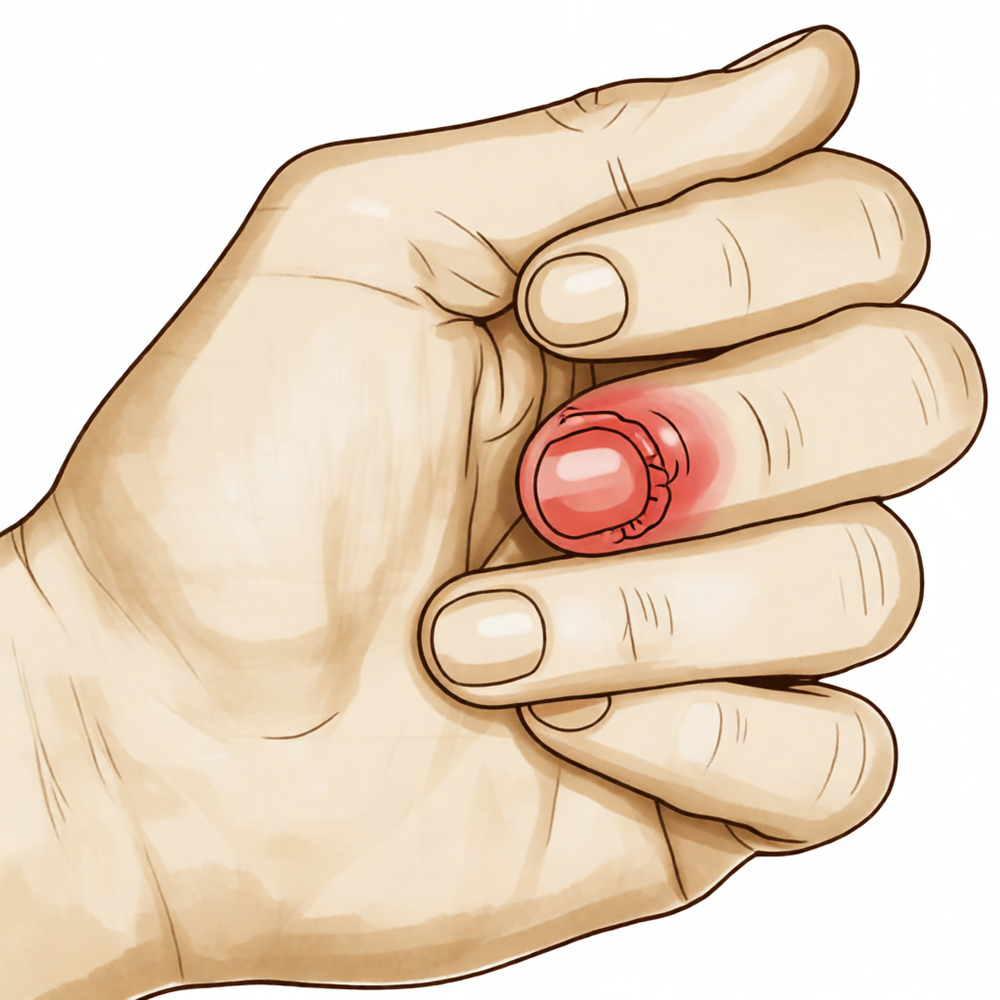
Fungal paronychia
Fungal hand infections: *Candida* paronychia, deep space infections, and increasing incidence in periprosthetic joint infections.
Overview
Hand infections encompass a diverse array of entities with significant potential for serious morbidity [2]. Management of acute hand infections necessitates a combination of surgical intervention, specifically incision and drainage, alongside antibiotic therapy tailored to the causative organism and infection severity [3]. While acute paronychial abscesses are generally treated operatively, no consensus currently exists regarding the optimal surgical technique [5]. Large, prospective studies are required to definitively identify the best treatment regimens for both acute and chronic paronychia [4].
Fungal infections present distinct management challenges, particularly in immunocompromised patients. Although the majority of patients with fungal tenosynovitis of the hand and upper extremity are successfully treated with surgical debridement and antimicrobial therapy, a 30% recurrence rate underscores the critical need for close post-treatment follow-up [6]. Management of fungal osteomyelitis and fungal septic arthritis remains difficult, with historically poor outcomes attributed to a lack of evidence-based treatment guidelines [9].
Pharmacologic efficacy varies by pathogen. Oral terbinafine is the most effective agent for dermatophyte onychomycosis [7], whereas itraconazole or fluconazole may be more effective than terbinafine for Candida onychomycosis [7]. Future high-quality studies are needed to develop standardized guidelines for the management of fungal periprosthetic joint infections [8].
Anatomy & Pathophysiology
Hand infections encompass a diverse array of entities with potential for serious morbidity [2]. Fungal tenosynovitis of the hand and upper extremity represents a rare diagnosis [6], while management of fungal osteomyelitis and fungal septic arthritis remains challenging, particularly in immunocompromised patients [9]. Historically, outcomes for these conditions have been poor due to a lack of evidence-based treatment guidelines [9].
Therapeutic Agents: Oral terbinafine is the most effective agent for dermatophyte onychomycosis [7], whereas itraconazole or fluconazole may be more effective than terbinafine for Candida onychomycosis [7]. Surgical Management: Two-stage exchange remains the most commonly used surgical approach for fungal periprosthetic joint infection [13], though the reliability of one- and three-stage exchange requires further evaluation due to small sample sizes [13]. Outcomes: A recurrence rate of 30% has been observed in patients treated for fungal tenosynovitis of the hand and upper extremity [6].
Classification
Hand infections encompass a diverse clinical spectrum with potential for serious morbidity, including paronychia [1, 2]. Acute and chronic paronychia are distinct entities requiring specific treatment regimens [4]. Acute paronychial abscesses are generally treated operatively [5]. Neonates with oral self-soothing behaviors may be at risk for developing paronychia of mixed anaerobic and aerobic infections [12]. Methicillin-resistant Staphylococcus aureus is the most common bacteria cultured from acute hand infections [10].
Fungal Pathology: Fungal tenosynovitis of the hand and upper extremity is a rare diagnosis [6]. A recurrence rate of 30% has been observed in patients treated for fungal tenosynovitis of the hand and upper extremity [6]. Fungal osteomyelitis and fungal septic arthritis are challenging to manage, especially in immunocompromised patients [9]. Historically, outcomes for fungal osteomyelitis and fungal septic arthritis have been poor due to a lack of evidence-based treatment guidelines [9].
Antifungal Agents: Oral terbinafine is the most effective agent for dermatophyte onychomycosis [7]. Itraconazole or fluconazole may be more effective than terbinafine for Candida onychomycosis [7].
Other Considerations: The management of fungal hand infections remains complicated by the rarity of the diagnosis and the specific challenges posed to immunocompromised hosts.
Clinical Presentation
Hand infections encompass a diverse array of entities with the potential for serious morbidity [2]. Specific risk profiles exist for certain populations; neonates exhibiting oral self-soothing behaviors are at increased risk for developing paronychia characterized by mixed anaerobic and aerobic infections [12]. In terms of microbiology, Methicillin-resistant Staphylococcus aureus has been identified as the most common bacteria cultured from acute hand infections at urban medical centers [10].
Deep-seated fungal infections present distinct clinical challenges. Fungal tenosynovitis of the hand and upper extremity carries a recurrence rate of 30% [6]. Management of fungal osteomyelitis and fungal septic arthritis is particularly challenging, especially in immunocompromised patients [9]. Historically, outcomes for these conditions have been poor due to a lack of evidence-based treatment guidelines [9].
Investigations
Laboratory: Empiric antibiotic coverage for acute hand infections should routinely cover methicillin-resistant Staphylococcus aureus, which was the most common bacteria cultured from acute hand infections at an urban medical center [10]. Neonates with oral self-soothing behaviors may be at higher risk for developing paronychia of mixed anaerobic and aerobic infections [12]. Hand infections include a diverse array of entities with potential for serious morbidity [2].
Other Considerations: Treatment of fungal tenosynovitis of the hand and upper extremity requires surgical debridement and antimicrobial therapy, with a recurrence rate of 30% observed in treated patients [6]. Close post-treatment follow-up is required for these patients [6]. Management of fungal osteomyelitis and fungal septic arthritis is challenging, especially in immunocompromised patients, and historically outcomes have been poor due to a lack of evidence-based treatment guidelines [9]. Two-stage exchange remains the most commonly used surgical approach for fungal periprosthetic joint infection, though the reliability of one- and three-stage exchange needs further evaluation due to small sample sizes [13].
Therapeutic Agents: Oral terbinafine is the most effective agent for dermatophyte onychomycosis [7]. Itraconazole or fluconazole may be more effective than terbinafine for Candida onychomycosis [7]. Treatment options for fungal nail infections include topical agents for mild disease, oral systemic agents for moderate to severe disease, and combination therapy strategies for severe, recurrent, and persistent disease [11].
Treatment
Management of hand infections necessitates a combination of surgical intervention, specifically incision and drainage, alongside antibiotic therapy tailored to the causative organism and infection severity [3]. Acute paronychial abscesses are generally treated operatively, though there is currently no consensus on the optimal surgical technique for acute paronychia [5]. Large, prospective studies are required to identify the most effective treatment regimens for both acute and chronic paronychia [4].
Non-Operative: Topical agents are indicated for mild fungal nail infections, whereas oral systemic agents are reserved for moderate to severe disease [11]. Combination therapy strategies are utilized for severe, recurrent, and persistent fungal nail infections [11].
Operative: Indications: Surgical debridement is indicated for fungal tenosynovitis of the hand and upper extremity, as well as for acute paronychial abscesses [6]. Management of fungal osteomyelitis and fungal septic arthritis remains challenging, particularly in immunocompromised patients [9].
Surgical Approach / Technique: Surgical debridement combined with antimicrobial therapy successfully treats the majority of patients with fungal tenosynovitis [6].
Adjuncts: Close post-treatment follow-up is mandatory for fungal tenosynovitis due to a documented recurrence rate of 30% [6].
Other Considerations: Oral terbinafine is the most effective agent for dermatophyte onychomycosis, while itraconazole or fluconazole may be more effective than terbinafine for Candida onychomycosis [7]. Historically, outcomes for fungal osteomyelitis and fungal septic arthritis have been poor due to a lack of evidence-based treatment guidelines [9]. Future high-quality studies are needed to develop standardized guidelines for the management of fungal periprosthetic joint infections [8].
Complications
Wound complications: Hand infections encompass a diverse array of entities with potential for serious morbidity [2]. Treatment of acute hand infections requires a combination of surgical intervention (incision and drainage) and appropriate antibiotic therapy tailored to the organism and infection severity [3]. Empiric antibiotic coverage for acute hand infections should routinely cover methicillin-resistant Staphylococcus aureus, the most common bacteria cultured from acute hand infections at an urban medical center [10]. While acute paronychial abscesses are generally treated operatively, there is no consensus on the best surgical technique [5].
Infection (PJI): Management of fungal osteomyelitis and fungal septic arthritis is challenging, especially in immunocompromised patients [9]. Historically, outcomes for fungal osteomyelitis and fungal septic arthritis have been poor due to a lack of evidence-based treatment guidelines [9]. Future high-quality studies are needed to develop standardized guidelines for the management of fungal periprosthetic joint infections [8].
Other Considerations: Although the majority of patients with fungal tenosynovitis of the hand and upper extremity were successfully treated with surgical debridement and antimicrobial therapy, a recurrence rate of 30% highlights the need for close post-treatment follow-up [6]. Oral terbinafine is the most effective agent for dermatophyte onychomycosis [7], whereas itraconazole or fluconazole may be more effective than terbinafine for Candida onychomycosis [7]. Large, prospective studies are needed to identify the best treatment regimen for acute and chronic paronychia [4].
Recovery
Light activity (weeks): Evidence does not specify a timeline for light activity or return to desk work following fungal paronychia or onychomycosis treatment.
Full activity (months): Evidence does not specify a timeline for manual work, sport, or full range of motion return.
Complete recovery / outcome plateau (months): Evidence does not specify a timeline for the stabilization of pain, strength, or final functional outcomes.
Rehabilitation protocol: Evidence does not provide specific data on physical therapy phasing, immobilisation duration, weight-bearing progression, or brace removal timing for these conditions.
Functional milestones: Evidence does not report validated patient-reported outcome measure (PROM) trajectories or benchmark scores (e.g., Constant, ASES, WOMAC) for recovery.
Other Considerations: Large, prospective studies are needed to identify the best treatment regimen for acute and chronic paronychia [4]. While acute paronychial abscesses are generally treated operatively, there is no consensus on the best surgical technique [5]. Although the majority of patients with fungal tenosynovitis of the hand and upper extremity were successfully treated with surgical debridement and antimicrobial therapy, a recurrence rate of 30% highlights the need for close post-treatment follow-up [6]. Oral terbinafine is the most effective agent for dermatophyte onychomycosis [7]. Itraconazole or fluconazole may be more effective than other agents for Candida onychomycosis [7]. Treatment options for fungal nail infections include topical agents for mild disease [11], oral systemic agents for moderate to severe disease [11], and combination therapy strategies for severe, recurrent, and persistent disease [11].
Key Evidence
- [L5] This article reviews the clinical spectrum and microbiology of the most common infections of the hand and discusses current concepts for their treatment to increase physician awareness of diagnosis and management. [1] (10.1302/2058-5241.4.180082)
- [L5] Hand infections include a diverse array of entities with potential for serious morbidity. [2] (10.1016/j.jhsa.2011.05.035)
- [L5] Treatment requires a combination of surgical intervention (incision and drainage) and appropriate antibiotic therapy tailored to the organism and infection severity. [3] (10.1016/j.jhsa.2014.03.031)
- [L5] Large, prospective studies are needed to identify the best treatment regimen for acute and chronic paronychia. [4] (10.5435/jaaos-22-03-165)
- [L5] While acute paronychial abscesses are generally treated operatively, there is no consensus on the best surgical technique. [5] (10.1016/j.jhsa.2011.11.021)
- [L4] Although the majority of patients were successfully treated with surgical debridement and antimicrobial therapy, a recurrence rate of 30% highlights the need for close post-treatment follow-up. [6] (10.1016/j.jhsa.2016.11.014)
- [L5] Oral terbinafine is the most effective agent for dermatophyte onychomycosis, while itraconazole or fluconazole may be more effective for Candida onychomycosis. [7] (10.1016/j.jhsa.2008.05.028)
- [L5] Future high-quality studies are needed to develop standardized guidelines for the management of fungal PJI. [8] (10.5435/jaaos-d-18-00331)
- [L5] Management of fungal osteomyelitis and fungal septic arthritis is challenging, especially in immunocompromised patients, and historically outcomes have been poor due to a lack of evidence-based treatment guidelines. [9] (10.5435/jaaos-22-06-390)
- [L4] Methicillin-resistant Staphylococcus aureus was the most common bacteria cultured from these infections, and empiric antibiotic coverage should routinely cover methicillin-resistant S aureus. [10] (10.1016/j.jhsa.2013.03.013)
- [L5] Treatment options include topical agents for mild disease, oral systemic agents for moderate to severe disease, and combination therapy strategies for severe, recurrent, and persistent disease. [11] (10.1016/j.jhsa.2013.11.017)
- [L4] Neonates with oral self-soothing behaviors may be more at risk for developing paronychia of mixed anaerobic and aerobic infections. [12] (10.1177/1558944717692092)
- [L2] Two-stage exchange remains the most commonly used surgical approach, though the reliability of one- and three-stage exchange needs further evaluation due to small sample sizes. [13] (10.1186/s12891-024-07616-6)
See Also
References
[1] Infections of the hand: an overview. EFORT Open Reviews. 2019. DOI: 10.1302/2058-5241.4.180082
[2] Hand Infections. The Journal of Hand Surgery. 2011. DOI: 10.1016/j.jhsa.2011.05.035
[3] Acute Hand Infections. The Journal of Hand Surgery. 2014. DOI: 10.1016/j.jhsa.2014.03.031
[4] Acute and Chronic Paronychia of the Hand. Journal of the American Academy of Orthopaedic Surgeons. 2014. DOI: 10.5435/jaaos-22-03-165
[5] Acute Paronychia. The Journal of Hand Surgery. 2012. DOI: 10.1016/j.jhsa.2011.11.021
[6] A Rare Diagnosis: Recognizing and Managing Fungal Tenosynovitis of the Hand and Upper Extremity. The Journal of Hand Surgery. 2017. DOI: 10.1016/j.jhsa.2016.11.014
[7] Current Management of Onychomycosis. The Journal of Hand Surgery. 2008. DOI: 10.1016/j.jhsa.2008.05.028
[8] Diagnosis and Management of Fungal Periprosthetic Joint Infections. Journal of the American Academy of Orthopaedic Surgeons. 2019. DOI: 10.5435/jaaos-d-18-00331
[9] Fungal Osteomyelitis and Septic Arthritis. Journal of the American Academy of Orthopaedic Surgeons. 2014. DOI: 10.5435/jaaos-22-06-390
[10] Epidemiology of Adult Acute Hand Infections at an Urban Medical Center. The Journal of Hand Surgery. 2013. DOI: 10.1016/j.jhsa.2013.03.013
[11] Fungal Nail Infections. The Journal of Hand Surgery. 2014. DOI: 10.1016/j.jhsa.2013.11.017
[12] Neonatal Acute Paronychia. HAND. 2017. DOI: 10.1177/1558944717692092
[13] The heavy burden and treatment challenges of fungal periprosthetic joint infection: a systematic review of 489 joints. BMC Musculoskeletal Disorders. 2024. DOI: 10.1186/s12891-024-07616-6