Skip to content

Clinicians › Wrist

Carpal Boss Excision
26 citationsUpdated Nov 2026
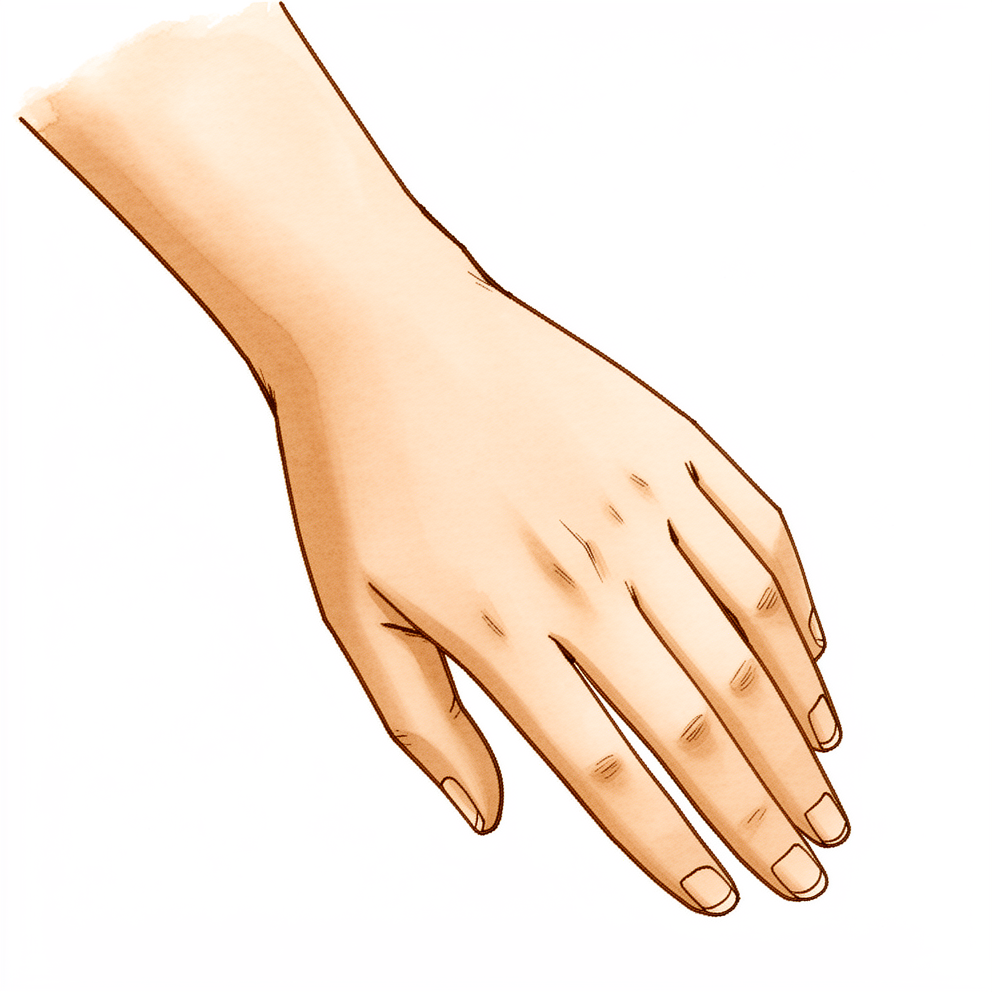
Illustration: wrist

For patients: a plain-language version of this topic is available. See the patient guide.

Overview

Carpal boss is a bony exostosis at the carpometacarpal joint that causes pain and functional limitation. Surgical outcomes for symptomatic carpal boss are frequently unpredictable [1], necessitating strict adherence to proper surgical indications to reduce the number of operations and enhance efficacy [4]. Treatment should be restricted to cases with a history of long-standing pain interfering with daily activities [2]. Indications also include preventing tendon rupture when irritation is clinically suspected [6] and managing os styloideum or third metacarpal partial coalition nonunion after traumatic fracture when medical treatment fails [15]. Ultrasound is useful for diagnosis and surgical planning in cases of extensor tendon rupture caused by carpometacarpal boss [16].

Simple resection of the bone exostosis and surrounding sclerotic bone is sufficient to effectively treat carpal boss [3]. Wedge excision is associated with significant improvement in pain and function scores of the PRWE three months after surgery [5]. Precisely executed operative treatment of traumatic carpal boss has resulted in favorable outcomes, with the vast majority of boxers experiencing relief of pain, restoration of function, and an unrestricted return to competition [12]. Simulated wedge excision approximately doubled the passive range of motion of the carpometacarpal joint [11]. Endoscopic resection allows titrated bone and joint resection under endoscopic guidance, which may reduce the risk of postoperative carpometacarpal instability compared to open wedge resection [10].

Primary fusion of the third carpometacarpal joint is supported as a method to reduce the incidence of recurrence of pain after simple resection, although follow-up and series are too short to give definite conclusions [7]. All patients who underwent CMC arthrodesis for traumatic carpal boss had successful fusion without the need for revision surgery [8]. Arthrodesis resulted in satisfactory functional outcomes for isolated post-traumatic osteoarthritis of the middle carpometacarpal joint [13]. Surgical treatment to stabilize the second CMC joint may be an option to improve symptoms when conservative treatment fails [9].

Anatomy & Pathophysiology

Etiology and Pathogenesis

Direct trauma to the dorsum of the wrist and repeated mechanical stress are implicated in the etiology of carpal boss in most cases [17]. The aetiology of symptomatic carpal boss is related to maldevelopment at the quadrangular capitate-trapezoid-metacarpal joint resulting from the persistence of an accessory ossification element [14]. O'Rahilly detailed the occurrence of accessory ossicles about the trapezoid-capitate-metacarpal joint in 1953 [19]. A possible relationship between ossicle anomalies and carpal boss was proposed by Bassoe in the radiological literature [19].

Anatomical Location and Structure

Carpal boss presents as a bony protuberance on the dorsum of the wrist at the base of the third metacarpal [19]. The capitate is the largest of the eight carpal bones [24]. Its distal articular surface is separated into three facets by two ridges for articulation with the metacarpals of the index, long, and ring fingers [31]. The trapezoid has two distal facets which articulate with the metacarpal of the index finger [31]. The distal row of carpal bones articulates with the metacarpals, allowing stability in the index and long finger metacarpals [24].

Biomechanics and Stability

The distal row of carpal bones acts as a rigid functional unit with little motion between its bones due to stout intercarpal ligaments [29]. Simulated wedge excision of the third carpometacarpal joint approximately doubles the passive range of motion of the joint [11]. A wedge excision of 35% depth does not create instability during flexion of the third CMC joint when loaded with physiologically relevant forces [18]. An extended 55% wedge excision results in a change in stability of the third CMC joint [18].

Complications

The evidence is entirely retrospective Level IV case series; rates below are given with their denominators.

Recurrence and re-operation: In the largest excision series, recurrence or persistence of symptoms occurred in 7 of 116 patients (6%), five of them within 24 months; six had a second operation and all were then symptom-free [14]. A 76-patient wedge-excision cohort found that 13% needed surgery for recurrent boss at a median follow-up of 4.8 years, mostly within the first two years [5]. Simple resection to the dorsal edge of normal cartilage produced no recurrence among 25 patients at a mean of 8 years [3]. In an early series, one of 14 excisions needed re-excision at six months because the first excision was insufficient [17]. Secondary citations of the Fusi series as a 10% or 12% re-operation rate use the reviewed subset as the denominator; the primary figure is 7/116 [14].

Persistent pain: At 8 years after simple resection, 16 of 24 unfused patients (67%) were pain-free and the rest had episodic pain averaging 2.3/10 [3]. A Sydney series reported equal numbers of good and poor results after both excision and CMC arthrodesis, and 24 of 31 respondents considered that surgery had failed to relieve their symptoms [1]. Only 58% of patients were satisfied at three months, although PRWE pain and function improved significantly [5].

Scar: A discrete persistent swollen scar was reported by 7 of 25 (28%) at 8 years [3]. A firm hypertrophic scar can mimic the original boss [4], and one painful hypertrophic scar was reported among 14 excisions [17].

Reactive synovitis: Mildly symptomatic synovitis confined to the operation site occurred in 14 of 116 (12%) and resolved within 10 weeks in all cases [14].

CMC instability: One of 25 (4%) developed carpometacarpal instability requiring fusion 5 years after resection [3]. Sectioning the dorsal ligament during wedge excision approximately doubled the passive range of motion of the third CMC joint in cadavers [11]; a 35%-depth wedge did not destabilise the joint whereas a 55% wedge did [18].

CRPS: One case of complex regional pain syndrome in 25 (4%) in the immediate postoperative period [3].

Infection: No wound infections or haematomas among 116 patients [14].

Superficial radial nerve and extensor tendons: No series reports a rate of sensory nerve injury or extensor tendon injury after excision. Extensor tendon attrition and rupture are complications of the untreated boss, not of its excision [6], [16].

Arthrodesis-specific: In 15 combat athletes (17 fusions) all fused at a mean of 7.5 weeks; two sustained sagittal band ruptures and one a fifth metacarpal fracture, with no revisions [8]. Primary fusion with a shape-memory staple fused in 7 of 7 by eight weeks without complications, but the staple left a visible prominence in three [7].

Recovery

Immobilisation: After wedge excision, a pressure dressing for 3 to 5 days gave the same PRWE outcomes as a plaster splint for 2 weeks, and patients were more satisfied with the pressure dressing [5]. Other series used a volar splint for 10 days to 3 weeks [17] or 4 weeks [3].

Return to work and activity: Average time off work was six and a half weeks and all patients returned to their original jobs [17]; 73% had returned to work by three months, and older age and worse baseline PRWE delayed return [5]. Return to full activity usually occurred within 2 to 3 months [14]; one series restricted sport for 3 months [3].

After arthrodesis: Splintage for 6 to 8 weeks with K-wire removal once united; mean return to competition 6 months in professional fighters [8]. Strenuous and contact activity was avoided for 2 months after staple fusion [7].

Key Evidence

  • [L4] The outcome of surgery for symptomatic carpal boss is frequently unpredictable. [1] (10.1054/jhsb.1999.0238)
  • [Paper] Carpal boss is amenable to surgical treatment, but this should be restricted to cases in which there is a history of long-standing pain interfering with daily activities. [2] (10.3109/17453678609014791)
  • [L4] Simple resection of the bone exostosis and surrounding sclerotic bone is sufficient to effectively treat carpal boss. [3] (10.1016/j.hansur.2016.12.004)
  • [L4] Correct diagnosis and proper surgical indications are necessary to reduce the number and enhance the efficacy of operations required to treat carpal boss. [4] (10.1016/j.jhsa.2007.11.029)
  • [Paper] The current findings support the relevance of wedge excision for patients with symptomatic carpal boss, with patients reporting a significant improvement in pain and function scores of the PRWE three months after surgery. [5] (10.1016/j.bjps.2024.02.067)
  • [L4] Advanced imaging may be considered when tendon irritation is clinically suspected, and carpal boss excision may be indicated to prevent rupture. [6] (10.1016/j.jhsa.2014.02.010)
  • [L4] The study supports the view that primary fusion of the third carpometacarpal joint is worthwhile to reduce the incidence of recurrence of pain after simple resection, although the follow-up and series are too short to give definite conclusions. [7] (10.1177/1753193408087068)
  • [Paper] All patients who underwent CMC arthrodesis had successful fusion, without the need for revision surgery. [8] (10.3928/01477447-20211101-05)
  • [Paper] When conservative treatment fails, surgical treatment to stabilize the second CMC joint may be an option to improve the symptoms of these patients. [9] (10.4081/or.2021.9085)
  • [Paper] The described endoscopic technique allows titrated bone and joint resection under endoscopic guidance, which may reduce the risk of postoperative carpometacarpal instability compared to open wedge resection. [10] (10.1016/j.eats.2018.10.018)
  • [L5] Analysis indicated that this simulated wedge excision approximately doubled the passive range of motion of the carpometacarpal joint. [11] (10.1016/s0266-7681(98)80225-8)
  • [L4] Precisely executed operative treatment of both injuries has resulted in an expectant favorable outcome, as in the vast majority of cases the boxers have experienced relief of pain, restoration of function, and an unrestricted return to competition. [12] (10.1016/j.csm.2009.06.004)
  • [L4] In these two cases, arthrodesis resulted in satisfactory functional outcomes. [13] (10.1177/17531934241245830)
  • [L4] The findings suggest that the aetiology of symptomatic carpal boss is related to maldevelopment at the quadrangular capitate-trapezoid-metacarpal joint as the result of the persistence of an accessory ossification element. [14] (10.1016/s0266-7681(05)80104-4)
  • [L4] When medical treatment fails, surgical excision is indicated with good results. [15] (10.1177/15589447251317232)
  • [L4] The authors highlight the utility of ultrasound for diagnosis and surgical planning in such cases. [16] (10.1007/s11552-014-9623-0)
  • [Paper] Direct trauma to the dorsum of the wrist as well as repeated mechanical stress to the wrist were implicated in the etiology of this deformity in most cases. [17] (10.2106/00004623-197355040-00008)
  • [L5] A wedge excision of clinically applicable depth of 35% does not create instability during flexion of the third CMC joint when loaded with physiologically relevant forces, whereas an extended 55% wedge excision results in a change in stability. [18] (10.1016/j.jhsa.2008.09.010)
  • [Paper] [19] (10.1097/00006534-197901000-00014)
  • [L4] Simple reduction and wiring may be appropriate for acute injury, but arthrodesis is the treatment of choice when instability and degenerative changes are present. [20] (10.1177/1753193413487469)
  • [Case_report] The fourth ECA VBG with reverse blood flow from the dorsal intercarpal arch allowed the graft to reach the CMC. [21] (10.1177/1558944716672203)

See Also

References

[1] The Symptomatic Carpal Boss. Journal of Hand Surgery. 1999. DOI: 10.1054/jhsb.1999.0238

[2] Carpal boss. Acta Orthopaedica Scandinavica. 1986. DOI: 10.3109/17453678609014791

[3] Surgical treatment of carpal boss by simple resection: Results in 25 cases at a mean of 8 years’ follow-up. Hand Surgery and Rehabilitation. 2017. DOI: 10.1016/j.hansur.2016.12.004

[4] The Carpal Boss: Review of Diagnosis and Treatment. The Journal of Hand Surgery. 2008. DOI: 10.1016/j.jhsa.2007.11.029

[5] Recurrence rate and patient-reported outcomes after wedge excision of carpal boss. Journal of Plastic, Reconstructive & Aesthetic Surgery. 2024. DOI: 10.1016/j.bjps.2024.02.067

[6] Attrition or Rupture of Digital Extensor Tendons Due to Carpal Boss: Report of 2 Cases. The Journal of Hand Surgery. 2014. DOI: 10.1016/j.jhsa.2014.02.010

[7] The Preliminary Results of Treatment of Symptomatic Carpal Boss by Wedge Joint Resection, Radial Bone Grafting and Arthrodesis with a Shape Memory Staple. Journal of Hand Surgery (European Volume). 2008. DOI: 10.1177/1753193408087068

[8] Carpometacarpal Arthrodesis for Traumatic Carpal Boss Among Combative Athletes. Orthopedics. 2022. DOI: 10.3928/01477447-20211101-05

[9] Surgical treatment for persistent second carpometacarpal joint pain. Orthopedic Reviews. 2021. DOI: 10.4081/or.2021.9085

[10] Endoscopic Resection of Carpometacarpal Boss and Synovectomy of the Second Carpometacarpal Joint. Arthroscopy Techniques. 2019. DOI: 10.1016/j.eats.2018.10.018

[11] Carpal Boss: Destabilization of the third Carpometacarpal Joint after a Wedge Excision. Journal of Hand Surgery. 1998. DOI: 10.1016/s0266-7681(98)80225-8

[12] Disabling Hand Injuries in Boxing: Boxer's Knuckle and Traumatic Carpal Boss. Clinics in Sports Medicine. 2009. DOI: 10.1016/j.csm.2009.06.004

[13] Isolated post-traumatic osteoarthritis of the middle carpometacarpal joint: a report of two cases. Journal of Hand Surgery (European Volume). 2024. DOI: 10.1177/17531934241245830

[14] The Carpal Boss. Journal of Hand Surgery. 1995. DOI: 10.1016/s0266-7681(05)80104-4

[15] Os Styloideum and Third Metacarpal Partial Coalition Nonunion After Traumatic Fracture: A Report of Three Cases. HAND. 2025. DOI: 10.1177/15589447251317232

[16] Carpometacarpal Boss: An Unusual Cause of Extensor Tendon Ruptures. HAND. 2014. DOI: 10.1007/s11552-014-9623-0

[17] The Carpometacarpal Boss. The Journal of Bone and Joint Surgery. American Volume. 1973. DOI: 10.2106/00004623-197355040-00008

[18] Carpal Boss: Effect of Wedge Excision Depth on Third Carpometacarpal Joint Stability. The Journal of Hand Surgery. 2009. DOI: 10.1016/j.jhsa.2008.09.010

[19] The Carpal Boss. Plastic and Reconstructive Surgery. 1979. DOI: 10.1097/00006534-197901000-00014

[20] Combined joint fusion for index and middle carpometacarpal instability in elite boxers. Journal of Hand Surgery (European Volume). 2013. DOI: 10.1177/1753193413487469

[21] The Fourth Extensor Compartment Artery Vascularized Bone Graft of the Distal Radius for CMC Fusion in the Treatment of Carpal Boss: A Case Report. HAND. 2016. DOI: 10.1177/1558944716672203

[24] Campbell S Operative Orthopaedics 4 Volume Set. NERVE INJURIES AT THE LEVEL OF THE HAND AND WRIST > ANATOMY.

[29] Aaos Comprehensive Orthopaedic Review 3. Carpal Instability* > II. Anatomy and Biomechanics (See Chapter 92).

[30] Orthopaedic Knowledge Update 13 Ebook Without Multimedia. Anatomy, Evaluation, Clinical Examination, and Imaging > Imaging: Advances in Imaging of the Hand and Upper Extremity > Magnetic Resonance Imaging.

[31] Aaos Comprehensive Orthopaedic Review 3. Anatomy of the Hand and Wrist > VII. The Wrist.

[36] Green S Operative Hand Surgery. Advanced Imaging.

Creative Commons BY-NC 4.0

CC Creative Commons licence
BY Attribution — you must credit the source
NC NonCommercial — not for commercial use

Attribution-NonCommercial 4.0 International


Creative Commons Corporation ("Creative Commons") is not a law firm and does not provide legal services or legal advice. Distribution of Creative Commons public licenses does not create a lawyer-client or other relationship. Creative Commons makes its licenses and related information available on an "as-is" basis. Creative Commons gives no warranties regarding its licenses, any material licensed under their terms and conditions, or any related information. Creative Commons disclaims all liability for damages resulting from their use to the fullest extent possible.

Using Creative Commons Public Licenses

Creative Commons public licenses provide a standard set of terms and conditions that creators and other rights holders may use to share original works of authorship and other material subject to copyright and certain other rights specified in the public license below. The following considerations are for informational purposes only, are not exhaustive, and do not form part of our licenses.

Considerations for licensors: Our public licenses are intended for use by those authorized to give the public permission to use material in ways otherwise restricted by copyright and certain other rights. Our licenses are irrevocable. Licensors should read and understand the terms and conditions of the license they choose before applying it. Licensors should also secure all rights necessary before applying our licenses so that the public can reuse the material as expected. Licensors should clearly mark any material not subject to the license. This includes other CC- licensed material, or material used under an exception or limitation to copyright. More considerations for licensors: wiki.creativecommons.org/Considerations_for_licensors

Considerations for the public: By using one of our public licenses, a licensor grants the public permission to use the licensed material under specified terms and conditions. If the licensor's permission is not necessary for any reason--for example, because of any applicable exception or limitation to copyright--then that use is not regulated by the license. Our licenses grant only permissions under copyright and certain other rights that a licensor has authority to grant. Use of the licensed material may still be restricted for other reasons, including because others have copyright or other rights in the material. A licensor may make special requests, such as asking that all changes be marked or described. Although not required by our licenses, you are encouraged to respect those requests where reasonable. More considerations for the public: wiki.creativecommons.org/Considerations_for_licensees


Creative Commons Attribution-NonCommercial 4.0 International Public License

By exercising the Licensed Rights (defined below), You accept and agree to be bound by the terms and conditions of this Creative Commons Attribution-NonCommercial 4.0 International Public License ("Public License"). To the extent this Public License may be interpreted as a contract, You are granted the Licensed Rights in consideration of Your acceptance of these terms and conditions, and the Licensor grants You such rights in consideration of benefits the Licensor receives from making the Licensed Material available under these terms and conditions.

Section 1 -- Definitions.

a. Adapted Material means material subject to Copyright and Similar Rights that is derived from or based upon the Licensed Material and in which the Licensed Material is translated, altered, arranged, transformed, or otherwise modified in a manner requiring permission under the Copyright and Similar Rights held by the Licensor. For purposes of this Public License, where the Licensed Material is a musical work, performance, or sound recording, Adapted Material is always produced where the Licensed Material is synched in timed relation with a moving image.

b. Adapter's License means the license You apply to Your Copyright and Similar Rights in Your contributions to Adapted Material in accordance with the terms and conditions of this Public License.

c. Copyright and Similar Rights means copyright and/or similar rights closely related to copyright including, without limitation, performance, broadcast, sound recording, and Sui Generis Database Rights, without regard to how the rights are labeled or categorized. For purposes of this Public License, the rights specified in Section 2(b)(1)-(2) are not Copyright and Similar Rights.

d. Effective Technological Measures means those measures that, in the absence of proper authority, may not be circumvented under laws fulfilling obligations under Article 11 of the WIPO Copyright Treaty adopted on December 20, 1996, and/or similar international agreements.

e. Exceptions and Limitations means fair use, fair dealing, and/or any other exception or limitation to Copyright and Similar Rights that applies to Your use of the Licensed Material.

f. Licensed Material means the artistic or literary work, database, or other material to which the Licensor applied this Public License.

g. Licensed Rights means the rights granted to You subject to the terms and conditions of this Public License, which are limited to all Copyright and Similar Rights that apply to Your use of the Licensed Material and that the Licensor has authority to license.

h. Licensor means the individual(s) or entity(ies) granting rights under this Public License.

i. NonCommercial means not primarily intended for or directed towards commercial advantage or monetary compensation. For purposes of this Public License, the exchange of the Licensed Material for other material subject to Copyright and Similar Rights by digital file-sharing or similar means is NonCommercial provided there is no payment of monetary compensation in connection with the exchange.

j. Share means to provide material to the public by any means or process that requires permission under the Licensed Rights, such as reproduction, public display, public performance, distribution, dissemination, communication, or importation, and to make material available to the public including in ways that members of the public may access the material from a place and at a time individually chosen by them.

k. Sui Generis Database Rights means rights other than copyright resulting from Directive 96/9/EC of the European Parliament and of the Council of 11 March 1996 on the legal protection of databases, as amended and/or succeeded, as well as other essentially equivalent rights anywhere in the world.

l. You means the individual or entity exercising the Licensed Rights under this Public License. Your has a corresponding meaning.

Section 2 -- Scope.

a. License grant.

1. Subject to the terms and conditions of this Public License, the Licensor hereby grants You a worldwide, royalty-free, non-sublicensable, non-exclusive, irrevocable license to exercise the Licensed Rights in the Licensed Material to:

a. reproduce and Share the Licensed Material, in whole or in part, for NonCommercial purposes only; and

b. produce, reproduce, and Share Adapted Material for NonCommercial purposes only.

2. Exceptions and Limitations. For the avoidance of doubt, where Exceptions and Limitations apply to Your use, this Public License does not apply, and You do not need to comply with its terms and conditions.

3. Term. The term of this Public License is specified in Section 6(a).

4. Media and formats; technical modifications allowed. The Licensor authorizes You to exercise the Licensed Rights in all media and formats whether now known or hereafter created, and to make technical modifications necessary to do so. The Licensor waives and/or agrees not to assert any right or authority to forbid You from making technical modifications necessary to exercise the Licensed Rights, including technical modifications necessary to circumvent Effective Technological Measures. For purposes of this Public License, simply making modifications authorized by this Section 2(a) (4) never produces Adapted Material.

5. Downstream recipients.

a. Offer from the Licensor -- Licensed Material. Every recipient of the Licensed Material automatically receives an offer from the Licensor to exercise the Licensed Rights under the terms and conditions of this Public License.

b. No downstream restrictions. You may not offer or impose any additional or different terms or conditions on, or apply any Effective Technological Measures to, the Licensed Material if doing so restricts exercise of the Licensed Rights by any recipient of the Licensed Material.

6. No endorsement. Nothing in this Public License constitutes or may be construed as permission to assert or imply that You are, or that Your use of the Licensed Material is, connected with, or sponsored, endorsed, or granted official status by, the Licensor or others designated to receive attribution as provided in Section 3(a)(1)(A)(i).

b. Other rights.

1. Moral rights, such as the right of integrity, are not licensed under this Public License, nor are publicity, privacy, and/or other similar personality rights; however, to the extent possible, the Licensor waives and/or agrees not to assert any such rights held by the Licensor to the limited extent necessary to allow You to exercise the Licensed Rights, but not otherwise.

2. Patent and trademark rights are not licensed under this Public License.

3. To the extent possible, the Licensor waives any right to collect royalties from You for the exercise of the Licensed Rights, whether directly or through a collecting society under any voluntary or waivable statutory or compulsory licensing scheme. In all other cases the Licensor expressly reserves any right to collect such royalties, including when the Licensed Material is used other than for NonCommercial purposes.

Section 3 -- License Conditions.

Your exercise of the Licensed Rights is expressly made subject to the following conditions.

a. Attribution.

1. If You Share the Licensed Material (including in modified form), You must:

a. retain the following if it is supplied by the Licensor with the Licensed Material:

i. identification of the creator(s) of the Licensed Material and any others designated to receive attribution, in any reasonable manner requested by the Licensor (including by pseudonym if designated);

ii. a copyright notice;

iii. a notice that refers to this Public License;

iv. a notice that refers to the disclaimer of warranties;

v. a URI or hyperlink to the Licensed Material to the extent reasonably practicable;

b. indicate if You modified the Licensed Material and retain an indication of any previous modifications; and

c. indicate the Licensed Material is licensed under this Public License, and include the text of, or the URI or hyperlink to, this Public License.

2. You may satisfy the conditions in Section 3(a)(1) in any reasonable manner based on the medium, means, and context in which You Share the Licensed Material. For example, it may be reasonable to satisfy the conditions by providing a URI or hyperlink to a resource that includes the required information.

3. If requested by the Licensor, You must remove any of the information required by Section 3(a)(1)(A) to the extent reasonably practicable.

4. If You Share Adapted Material You produce, the Adapter's License You apply must not prevent recipients of the Adapted Material from complying with this Public License.

Section 4 -- Sui Generis Database Rights.

Where the Licensed Rights include Sui Generis Database Rights that apply to Your use of the Licensed Material:

a. for the avoidance of doubt, Section 2(a)(1) grants You the right to extract, reuse, reproduce, and Share all or a substantial portion of the contents of the database for NonCommercial purposes only;

b. if You include all or a substantial portion of the database contents in a database in which You have Sui Generis Database Rights, then the database in which You have Sui Generis Database Rights (but not its individual contents) is Adapted Material; and

c. You must comply with the conditions in Section 3(a) if You Share all or a substantial portion of the contents of the database.

For the avoidance of doubt, this Section 4 supplements and does not replace Your obligations under this Public License where the Licensed Rights include other Copyright and Similar Rights.

Section 5 -- Disclaimer of Warranties and Limitation of Liability.

a. UNLESS OTHERWISE SEPARATELY UNDERTAKEN BY THE LICENSOR, TO THE EXTENT POSSIBLE, THE LICENSOR OFFERS THE LICENSED MATERIAL AS-IS AND AS-AVAILABLE, AND MAKES NO REPRESENTATIONS OR WARRANTIES OF ANY KIND CONCERNING THE LICENSED MATERIAL, WHETHER EXPRESS, IMPLIED, STATUTORY, OR OTHER. THIS INCLUDES, WITHOUT LIMITATION, WARRANTIES OF TITLE, MERCHANTABILITY, FITNESS FOR A PARTICULAR PURPOSE, NON-INFRINGEMENT, ABSENCE OF LATENT OR OTHER DEFECTS, ACCURACY, OR THE PRESENCE OR ABSENCE OF ERRORS, WHETHER OR NOT KNOWN OR DISCOVERABLE. WHERE DISCLAIMERS OF WARRANTIES ARE NOT ALLOWED IN FULL OR IN PART, THIS DISCLAIMER MAY NOT APPLY TO YOU.

b. TO THE EXTENT POSSIBLE, IN NO EVENT WILL THE LICENSOR BE LIABLE TO YOU ON ANY LEGAL THEORY (INCLUDING, WITHOUT LIMITATION, NEGLIGENCE) OR OTHERWISE FOR ANY DIRECT, SPECIAL, INDIRECT, INCIDENTAL, CONSEQUENTIAL, PUNITIVE, EXEMPLARY, OR OTHER LOSSES, COSTS, EXPENSES, OR DAMAGES ARISING OUT OF THIS PUBLIC LICENSE OR USE OF THE LICENSED MATERIAL, EVEN IF THE LICENSOR HAS BEEN ADVISED OF THE POSSIBILITY OF SUCH LOSSES, COSTS, EXPENSES, OR DAMAGES. WHERE A LIMITATION OF LIABILITY IS NOT ALLOWED IN FULL OR IN PART, THIS LIMITATION MAY NOT APPLY TO YOU.

c. The disclaimer of warranties and limitation of liability provided above shall be interpreted in a manner that, to the extent possible, most closely approximates an absolute disclaimer and waiver of all liability.

Section 6 -- Term and Termination.

a. This Public License applies for the term of the Copyright and Similar Rights licensed here. However, if You fail to comply with this Public License, then Your rights under this Public License terminate automatically.

b. Where Your right to use the Licensed Material has terminated under Section 6(a), it reinstates:

1. automatically as of the date the violation is cured, provided it is cured within 30 days of Your discovery of the violation; or

2. upon express reinstatement by the Licensor.

For the avoidance of doubt, this Section 6(b) does not affect any right the Licensor may have to seek remedies for Your violations of this Public License.

c. For the avoidance of doubt, the Licensor may also offer the Licensed Material under separate terms or conditions or stop distributing the Licensed Material at any time; however, doing so will not terminate this Public License.

d. Sections 1, 5, 6, 7, and 8 survive termination of this Public License.

Section 7 -- Other Terms and Conditions.

a. The Licensor shall not be bound by any additional or different terms or conditions communicated by You unless expressly agreed.

b. Any arrangements, understandings, or agreements regarding the Licensed Material not stated herein are separate from and independent of the terms and conditions of this Public License.

Section 8 -- Interpretation.

a. For the avoidance of doubt, this Public License does not, and shall not be interpreted to, reduce, limit, restrict, or impose conditions on any use of the Licensed Material that could lawfully be made without permission under this Public License.

b. To the extent possible, if any provision of this Public License is deemed unenforceable, it shall be automatically reformed to the minimum extent necessary to make it enforceable. If the provision cannot be reformed, it shall be severed from this Public License without affecting the enforceability of the remaining terms and conditions.

c. No term or condition of this Public License will be waived and no failure to comply consented to unless expressly agreed to by the Licensor.

d. Nothing in this Public License constitutes or may be interpreted as a limitation upon, or waiver of, any privileges and immunities that apply to the Licensor or You, including from the legal processes of any jurisdiction or authority.


Creative Commons is not a party to its public licenses. Notwithstanding, Creative Commons may elect to apply one of its public licenses to material it publishes and in those instances will be considered the “Licensor.” The text of the Creative Commons public licenses is dedicated to the public domain under the CC0 Public Domain Dedication. Except for the limited purpose of indicating that material is shared under a Creative Commons public license or as otherwise permitted by the Creative Commons policies published at creativecommons.org/policies, Creative Commons does not authorize the use of the trademark "Creative Commons" or any other trademark or logo of Creative Commons without its prior written consent including, without limitation, in connection with any unauthorized modifications to any of its public licenses or any other arrangements, understandings, or agreements concerning use of licensed material. For the avoidance of doubt, this paragraph does not form part of the public licenses.

Creative Commons may be contacted at creativecommons.org.